

Loading, please wait...
Loading, please wait...

The Rh blood group system represents one of the most clinically critical and polymorphic antigen systems in transfusion medicine and obstetrics. Routine serological evaluations often fail to identify complex antigenic modifications, particularly partial RHD genotypes. Consequently, clinicians encounter unexpected anti-D alloimmunization in patients previously classified as RhD-positive. When individuals lacking specific D epitopes encounter wild-type red blood cells, their immune systems recognize the missing epitopes as foreign antigens. Therefore, defining the frequency of these genetic alterations across diverse global populations is vital for patient safety and targeted immunoprophylaxis.
Conventional serology categorizes red blood cells as either RhD-positive or RhD-negative. However, molecular variations in the RHD gene generate atypical phenotypes termed weak D and partial D. Weak D expressions typically stem from intracellular or transmembrane amino acid substitutions that reduce overall antigen density without altering epitope structure. In contrast, partial RHD variants arise from extracellular mutations or genetic hybrid recombinations with the RHCE gene. As a result, critical external epitopes disappear from the surface of red blood cells. When individuals with partial D variants receive standard RhD-positive blood or carry an RhD-positive fetus, their immune system recognizes the missing epitopes. Consequently, alloimmunization occurs, producing clinically active anti-D antibodies. These alloantibodies can induce acute or delayed hemolytic transfusion reactions. Furthermore, in pregnant women, these antibodies cause severe hemolytic disease of the fetus and newborn. Accurately characterizing these alleles therefore prevents catastrophic immune-mediated hemolysis across clinical settings.
Large public genome aggregation platforms have revolutionized contemporary clinical genetics and population biology. Researchers utilized extensive datasets from the Genome Aggregation Database and the All of Us Research Program to estimate population-level variant distributions. Specifically, investigators extracted allele frequencies for single-nucleotide variants associated with partial RHD genotypes across distinct continental ancestries. To evaluate multivariant alleles and complex haplotypes, the investigators evaluated hemizygous and homozygous variant co-occurrence queries. They then compared database genotype frequencies directly against previous empirical surveys in American populations. Remarkably, the genomic database frequencies closely mirrored documented data from cohorts of Black individuals and patients with sickle cell disease. For example, individuals of African descent demonstrated significant frequencies of alleles such as DAU3, weak D type 4.0, DIIIa, DAU5, and DIVa, with prevalence rates spanning between 0.45% and 1.02%. Hence, large-scale genomic repositories provide dependable allele distributions for clinical risk models.
Allelic distributions vary considerably among distinct geographic and ancestral groups. Individuals of African ancestry show the highest burden of clinically meaningful partial alleles. Moreover, admixed American populations exhibit similar allele profiles, although their frequencies hover around 10% of those seen in African cohorts. In contrast, other geographic groups demonstrate distinct partial RHD variant signatures. European, Middle Eastern, and South Asian ancestries most frequently exhibit the DVII allele. Specifically, gnomAD identifies DVII at 0.15% in Europeans, 0.17% in Middle Eastern cohorts, and 0.03% in South Asian populations. Meanwhile, East Asian cohorts show an exceptionally low frequency of type 15, and Ashkenazi Jewish populations show enrichment for weak D type 4.0 at approximately 0.13%. However, database analysis encounters technical hurdles with complex structural rearrangements. Extended RHCE gene conversions, including the clinically notable DVI allele, evade detection in variant co-occurrence algorithms. Short-read sequencing pipelines frequently misalign these hybrid segments to RHCE. Therefore, clinicians must recognize these bioinformatic constraints when interpreting genomic repositories.
Understanding these ancestral variations directly transforms patient management in transfusion medicine and hematology clinics. Chronically transfused individuals, such as patients with thalassemia or sickle cell disease, face elevated risks of red cell alloimmunization. If a blood bank characterizes a partial D patient as conventionally RhD-positive based on standard serology, that patient might receive standard Rh-positive donor units. Subsequently, the patient develops allo-anti-D, complicating future crossmatching and provoking hemolytic episodes. Genotyping can resolve these discrepancies proactively. Once laboratories confirm a partial D genotype, transfusion protocols must require RhD-negative donor red blood cells. Additionally, knowing population-specific allele frequencies allows blood collection centers to anticipate phenotype needs across multiethnic communities. Transfusion services can implement ancestry-informed genotyping panels that specifically target the predominant alleles in their local patient demographics. As a result, hospitals optimize donor inventory, improve patient safety, and minimize delayed transfusion reactions.
In obstetric practice, misclassifying partial D pregnant women creates substantial clinical risks. Standard serology often yields weakly reactive or discrepant results, causing confusion among healthcare providers. If physicians assume a patient is RhD-positive because of a weakly reactive serological test, they may withhold antenatal and postnatal Rh immune globulin. Unfortunately, exposure to fetal red cells carrying the full RhD antigen readily provokes maternal alloimmunization. In subsequent pregnancies, maternal anti-D crosses the placenta, destroying fetal erythrocytes and causing life-threatening fetal hydrops. When clinical teams apply molecular testing to resolve serologic discrepancies, they can distinguish between benign weak D types and hazardous partial D alleles. Patients carrying weak D types 1, 2, or 3 safely avoid Rh immune globulin and manage as RhD-positive. Conversely, women carrying partial D alleles must receive standard Rh immune globulin prophylaxis and Rh-negative blood products. Consequently, precision genotyping protects maternal-fetal health while preventing unnecessary immunoprophylaxis.
The integration of population genomics into immunohematology bridges the gap between bioinformatic science and clinical transfusion protocols. Although current short-read sequencing struggles with gene conversions like DVI, advanced long-read sequencing technologies are actively resolving these structural complexities. Moreover, as genomic databases expand across underrepresented populations, our understanding of rare alleles in South Asian, Middle Eastern, and East Asian communities will sharpen. Clinicians and pathology services should collaborate to develop comprehensive testing algorithms. By combining high-throughput genotyping with automated serology, clinical centers can establish individualized transfusion plans. Furthermore, national transfusion committees can refine clinical practice guidelines to recommend targeted testing for high-risk demographics. Ultimately, these genetic insights empower clinicians to deliver safer blood products, protect pregnant individuals, and prevent alloimmunization across diverse healthcare settings.
Weak D phenotypes typically feature quantitative reductions in complete RhD antigen sites without structural alteration of external epitopes, usually secondary to transmembrane mutations. Consequently, individuals with weak D types 1, 2, and 3 rarely produce anti-D alloantibodies when transfused with Rh-positive blood. In contrast, partial D phenotypes involve qualitative structural alterations where specific extracellular epitopes are completely absent. Therefore, partial D individuals can readily develop anti-D alloantibodies upon exposure to standard RhD-positive red cells.
Genomic databases relying on standard short-read sequencing often struggle to map complex gene conversion events accurately. In alleles like DVI, entire segments of the RHD gene are replaced by homologous sequences from the adjacent RHCE gene. Consequently, automated alignment algorithms frequently misalign these hybrid donor-derived sequences to the RHCE locus rather than recognizing them as RHD variants. Therefore, variant co-occurrence queries in short-read databases can systematically fail to identify extended structural gene conversions.
Obstetricians must manage pregnant individuals carrying partial RHD genotypes as RhD-negative patients throughout their antenatal and peripartum care. Because maternal cells lack specific RhD epitopes, fetal-maternal hemorrhage with an RhD-positive fetus can stimulate anti-D alloimmunization. Clinicians should administer standard antenatal Rh immune globulin prophylaxis at 28 weeks of gestation and repeat postpartum prophylaxis after delivering an Rh-positive infant. Furthermore, any indicated red blood cell transfusions must strictly utilize RhD-negative donor blood.
Disclaimer: This content is for informational and educational purposes only. It is not intended to provide medical advice or to be used for diagnosing or treating a health problem or disease, or for prescribing any medication. Clinicians should refer to the relevant, up-to-date guidelines and consult qualified medical professionals before making any clinical decisions. Refer to the latest local and national guidelines for clinical practice.
References

Read summarized clinical updates, watch expert medical content, and earn CME certifications right from your smartphone.
Open your smartphone camera to scan and install.





Large genomic databases like gnomAD and All of Us offer crucial insights into the population prevalence of partial RHD genotypes. Identifying these variants helps clinicians mitigate anti-D alloimmunization risks in transfusion medicine and obstetric care across diverse ancestral populations.
Today
A rural study reveals that strong healthcare provider recommendations significantly diminish influenza vaccine hesitancy and dramatically boost immunization rates, highlighting the pivotal clinical role clinicians hold in countering vaccine skepticism.
Today

A 15-year-old patient presented with knee arthralgia and acute rheumatic fever, exhibiting complex arrhythmias including AV blocks and non-sustained ventricular tachycardia despite lacking severe valvulitis. This highlights the importance of extended Holter monitoring in pediatric rheumatic carditis.
Today
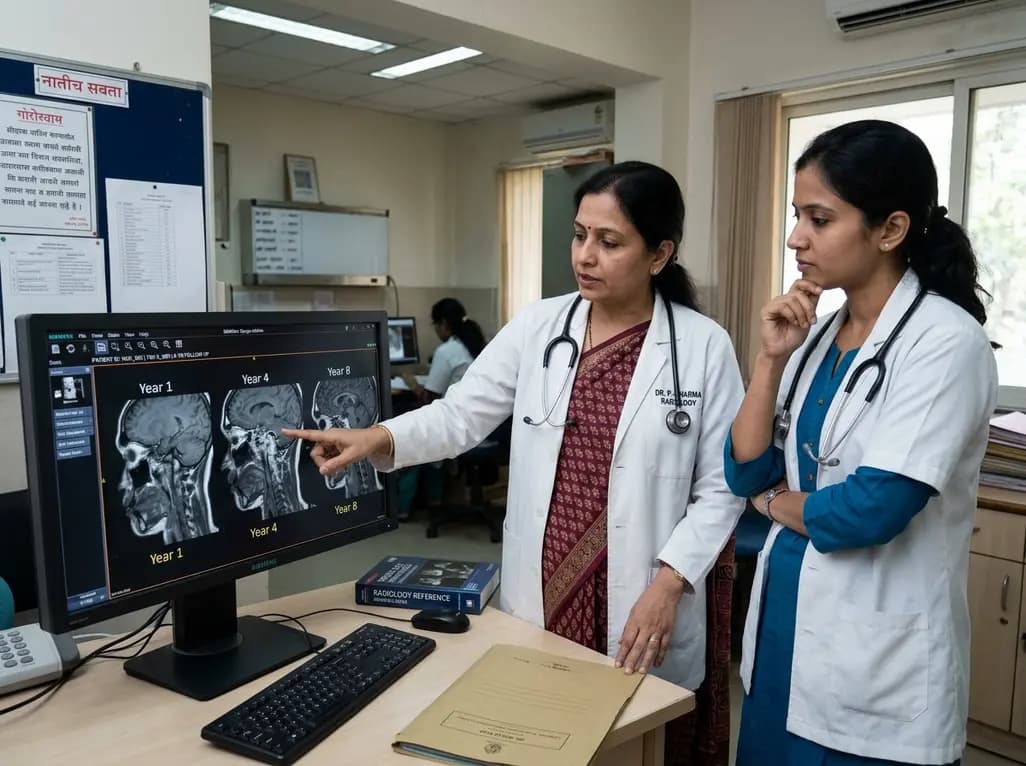
An eight-year longitudinal imaging follow-up reveals severe temporomandibular joint remodeling in nodulosis-arthropathy-osteolysis (NAO) syndrome. Despite extensive osseous destruction, the patient maintained functional jaw opening without TMJ interventions, highlighting the role of conservative management.
Today

Discover essential clinical insights into AGLP1-type amyloidosis, a rare localized complication of glucagon-like peptide-1 analog injections. Learn how histopathology and mass spectrometry differentiate benign iatrogenic amyloidomas from systemic disease, preventing misdiagnosis and unwarranted therapies.
Today
