.webp&w=384&q=75)

Loading, please wait...
Loading, please wait...

Adolescent development involves profound shifts in emotional, physical, and interpersonal dimensions. Understanding sexual fluidity in youth has therefore emerged as an essential priority in modern pediatric medicine, adolescent psychiatry, and primary care. Sexual fluidity describes shifts over time across sexual attraction, romantic desire, partner gender, or identity. Historically, traditional clinical frameworks viewed sexual orientation as a strictly fixed, lifelong trait established during pubertal development. However, contemporary empirical research demonstrates that many young people experience sexual orientation as dynamic and multifaceted. Healthcare professionals must recognize these evolving perspectives to deliver culturally competent, nonjudgmental, and affirmative clinical care across diverse healthcare settings.
Historically, medical literature categorized sexual orientation through static binary models. However, modern sexology recognizes that sexual orientation encompasses three distinct dimensions: self-identified orientation, emotional or romantic attraction, and sexual behavior. Sexual fluidity in youth captures longitudinal variations occurring across one or more of these interrelated domains. Consequently, a young individual might maintain a stable identity label while noticing fluctuations in attraction. Conversely, an individual might explore different labels as their interpersonal experiences and self-awareness evolve over time.
Recent qualitative investigations emphasize that sexual fluidity represents a normative developmental trajectory rather than confusion or pathology. When clinicians appreciate these nuances, they can foster stronger therapeutic rapport with young patients. Moreover, acknowledging fluidity prevents premature diagnostic labeling and eases the psychological distress caused by rigid identity expectations. Medical professionals across India and global healthcare systems increasingly recognize that sexual health discussions require updated, developmentally informed vocabularies. Therefore, clinical training must integrate contemporary models that accurately reflect youth experiences.
Recent qualitative evidence from the Sexual Orientation Fluidity in Youth Study provides critical insights into how young people conceptualize their developmental experiences. Researchers examined open-ended responses from adolescents and young adults aged fourteen to twenty-five years. Notably, two dominant conceptual themes emerged from this qualitative inquiry: fluidity as change and fluidity as openness.
First, many participants defined sexual fluidity as an ongoing capacity for change across time, desires, and relational circumstances. They described attractions as shifting rather than permanently anchored to a single category. Second, respondents linked fluidity to personal openness, describing an emotional willingness to connect with individuals regardless of traditional gender labels. Furthermore, several participants demonstrated highly sophisticated, nuanced understandings of human sexuality. They articulated that romantic attraction, physiological arousal, and identity labels do not always align in a uniform pattern. Consequently, these findings demonstrate that young people actively decouple sexual desire from rigid cultural constraints, viewing flexibility as an authentic expression of personal growth.
Despite growing public discussions about identity, significant knowledge gaps persist among young people. Indeed, approximately half of the surveyed participants in recent qualitative research expressed uncertainty or unfamiliarity regarding what sexual fluidity actually entails. Many adolescents selected exploratory options or stated that they did not know the formal definition of the term.
This finding carries vital clinical relevance for healthcare professionals. Although adolescents may live through dynamic shifts in attraction, they frequently lack the health literacy or conceptual vocabulary to describe these feelings. Consequently, young people may experience internal conflict, isolation, or anxiety when their desires diverge from rigid social expectations. Furthermore, societal stigma and cultural taboos can intensify this uncertainty, preventing timely engagement with health services. Medical professionals must bridge this gap by proactively offering neutral, educational explanations during routine health screenings. When healthcare providers demystify normal variations in sexual development, they empower adolescents to navigate their evolving identities with greater emotional resilience and confidence.
Understanding sexual fluidity has profound implications for clinical encounters in pediatrics, family medicine, and adolescent psychiatry. Historically, clinicians who assumed fixed orientations risked alienating young patients or misinterpreting psychological distress. For instance, adolescents experiencing changing attractions often worry about being labeled inconsistent or deceptive by peers and caregivers.
Affirmative clinical practice requires healthcare providers to create safe, confidential clinical spaces. Clinicians must validate that changes in attraction or identity represent common, healthy aspects of adolescent development. Additionally, providers should avoid imposing rigid categories during routine clinical history taking. When clinicians adopt a curious, empathetic approach, patients feel comfortable disclosing sensitive health behaviors, relationship challenges, and mental health concerns. Moreover, affirmative care directly reduces the burden of minority stress, which represents a major contributor to anxiety and mood disorders among sexual minority youth. Therefore, adopting fluid-affirming paradigms enhances diagnostic accuracy, improves treatment adherence, and strengthens overall therapeutic outcomes.
Implementing effective communication strategies in clinical practice requires structured, patient-centered protocols. First, clinicians should replace close-ended questions with open-ended inquiries about relationships, attraction, and identity. For example, asking about current emotional attractions yields far more nuanced clinical insight than asking for a static category label.
Second, healthcare professionals must conduct longitudinal assessments rather than treating sexual history as a one-time intake documentation. Because adolescent identity can evolve over years, periodic reviews during annual wellness visits help maintain accurate clinical records. Third, providers must ensure strict confidentiality, particularly when communicating with parents or guardians in conservative societal settings. Clinicians can explain medical boundaries clearly to family members while preserving adolescent autonomy and privacy. Finally, healthcare systems should update electronic medical record intake forms to include multidimensional measures of sexual orientation. These deliberate systemic changes ensure that healthcare environments remain welcoming, inclusive, and protective of adolescent health rights.
Sexual fluidity describes the capacity for change over time in attraction, behavior, or identity, whereas bisexuality typically denotes attraction to more than one gender. While a bisexual individual may experience stability in their attractions, a sexually fluid individual experiences longitudinal shifts across desires or partner choices. Clinicians must evaluate these dimensions separately to understand each patient's unique experience.
Many adolescents lack access to comprehensive, culturally competent sexual health education that covers diverse identity trajectories. Although young people frequently experience changing attractions, public discourse often emphasizes rigid identity categories. Consequently, adolescents may recognize their evolving feelings internally while lacking the specific terminology or conceptual frameworks necessary to articulate sexual fluidity during healthcare consultations.
Clinicians should adopt open-ended, nonjudgmental communication strategies and avoid assuming lifelong sexual orientations based on initial disclosures. Providers should assess attractions, partner gender, and self-identity as independent variables during periodic evaluations. Creating an empathetic, confidential environment allows adolescents to discuss emotional well-being without fear of judgment, ultimately improving clinical engagement and mental health outcomes.
Disclaimer: This content is for informational and educational purposes only. It is not intended to provide medical advice, diagnosis, or treatment. Always seek the advice of your physician or other qualified health provider with any questions you may have regarding a medical condition. Refer to the latest local and national guidelines for clinical practice.
References

Read summarized clinical updates, watch expert medical content, and earn CME certifications right from your smartphone.
Open your smartphone camera to scan and install.





A new qualitative study reveals how adolescents and young adults conceptualize sexual fluidity as change and openness. Learn the key clinical insights for pediatricians, psychiatrists, and family physicians to enhance affirmative adolescent healthcare.
last month

Abdominal aortic aneurysm rupture remains a catastrophic vascular emergency. Groundbreaking research reveals that USP53 accelerates aneurysm progression by reprogramming smooth muscle cell metabolism toward aerobic glycolysis, highlighting a promising target beyond conventional diameter-based surveillance.
Today

A pharmacometric and machine learning study reveals that specific vaginal bacteria alter cervical antiretroviral exposure, highlighting the need for precision HIV PrEP strategies.
Today

A nationwide Swedish cohort study shows oral glucocorticoid exposure over 1-2 years strongly predicts overall organ damage in SLE, while cardiovascular risk reflects cumulative doses across 3 years. These findings reinforce early steroid minimization and cautious long-term maintenance.
Today

A scoping review highlights neural mobilization as a promising adjunct in managing cervicogenic headache. Integrating neurodynamics into multimodal physical therapy improves pain, range of motion, and posture, though standardized protocols and larger clinical trials are still needed.
Today
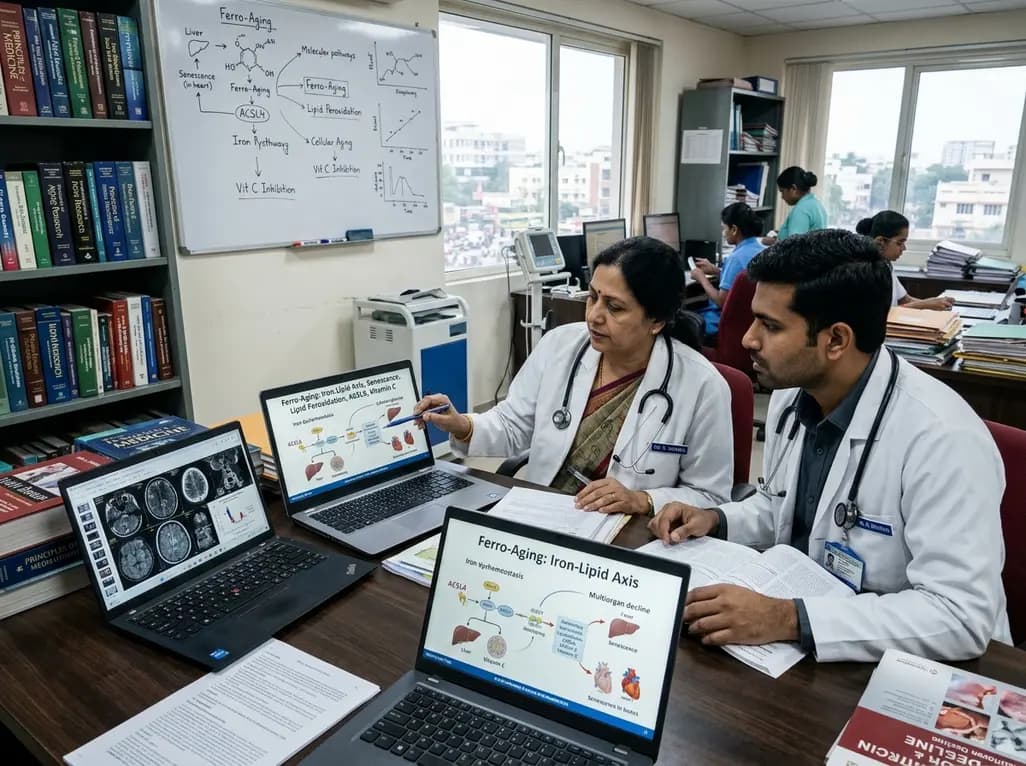
Recent research defines ferro-aging as a conserved iron-lipid axis driving organ decline across primates. Age-related iron dyshomeostasis stimulates ACSL4-mediated lipid peroxidation, promoting cellular senescence. Notably, vitamin C directly inhibits ACSL4, suppressing phospholipid oxidation and multi-organ decay.
Today
