.webp&w=384&q=75)

Loading, please wait...
Loading, please wait...

The impact of financial and educational disparities on childhood psychological development remains a significant public health challenge. Recent longitudinal evidence from 2017 to 2024 highlights persistent youth mental health inequalities that evolve during global crises. Consequently, healthcare providers must understand how socioeconomic status (SES) influences long-term recovery and resilience in children.
The BELLA and COPSY studies tracked participants aged 7 to 22 years across pre-pandemic, pandemic, and post-pandemic phases. Researchers found that youth from low-SES backgrounds consistently faced higher rates of mental health problems compared to their more affluent peers. Interestingly, the gap in mental health symptoms narrowed during the height of the pandemic as mental distress increased across all social strata. However, this equalization proved temporary.
Moreover, the post-pandemic recovery phase revealed a concerning trend. While youth in higher SES groups showed signs of mental health improvement, those from disadvantaged backgrounds experienced a re-emergence of symptoms. This "recovery gap" suggests that families with fewer resources struggle to bounce back from prolonged periods of stress. In India, where approximately 30% of adolescents report anxiety or depression linked to academic and socioeconomic pressure, these findings emphasize the need for targeted interventions.
Fortunately, the study identified specific resources that mitigate the effects of socioeconomic disadvantage. Personal resilience, social support, and family cohesion act as vital protective factors. Furthermore, clinicians can use these markers to identify which patients may require more intensive psychosocial support. Strengthening these social resources at an individual level can significantly improve outcomes for socially disadvantaged children.
Practitioners should integrate social determinants into routine screenings. Since mental health recovery is currently uneven, focusing on families with low parental education or income is essential. Finally, pediatric and psychiatric care must prioritize strengthening the family unit and social networks to ensure that no child is left behind during post-crisis recovery.
Low socioeconomic status often limits access to healthy living environments, educational resources, and early psychiatric interventions. This cumulative stress increases the prevalence of internalizing and externalizing problems in children.
While inequalities temporarily narrowed because mental health worsened for everyone during the crisis, the post-pandemic recovery has been unequal. Higher-SES families have recovered faster, while lower-SES families continue to show high levels of distress.
Strong family cohesion, consistent social support, and high personal resilience are the most effective buffers. These factors help mitigate the negative psychological impacts of economic hardship.
Disclaimer: This content is for informational and educational purposes only. It is not a substitute for professional medical advice, diagnosis, or treatment. Refer to the latest local and national guidelines for clinical practice.
References
Reiss F et al. Tracing socioeconomic inequalities in children's and adolescent's mental health: longitudinal study findings from 2017 to 2024. BMC Public Health. 2026 Feb 17. doi: 10.1186/s12889-026-26577-0. PMID: 41703520.
National Institute of Mental Health and Neurosciences (NIMHANS). Adolescent Mental Health in India: A 2024 Report. Bengaluru, India.
World Health Organization. Adolescent mental health: Global facts and disparities. 2021.
"
Read summarized clinical updates, watch expert medical content, and earn CME certifications right from your smartphone.
Open your smartphone camera to scan and install.





A longitudinal study from 2017-2024 explores how socioeconomic status affects youth mental health through the pandemic and into the recovery phase....
8 months ago
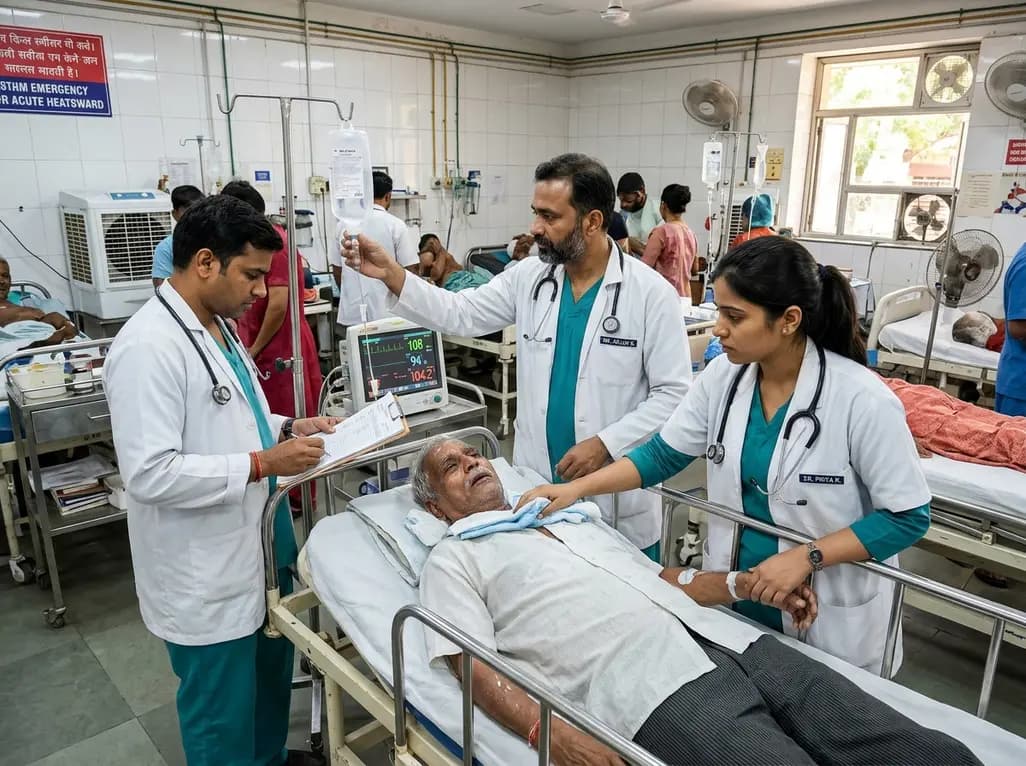
Recent epidemiological data reveals a dramatic surge in summer heat mortality driven by human-induced climate warming. This analysis explores the pathophysiological impacts on cardiac and renal systems, diagnostic dilemmas in death certification, and essential emergency cooling protocols for acute clinical care.
Today

Odisha has established India's first state-level clinical protocol specifically tailored for pregnant women with sickle cell disease. Developed with NHM and UNICEF, the framework provides structured antenatal screening, crisis mitigation, standardized referral pathways, and specialized interdisciplinary care.
Today

India is advancing preventive healthcare by integrating genomics, artificial intelligence, and quantum technologies. With the SANGAM programme sequencing one million Indian genomes, clinicians can unlock personalized therapies, detect cardiometabolic risks early, and curb the burden of diabetes and heart disease.
Today

A randomized controlled trial demonstrates that an eight-week dual-task training intervention significantly improves static and dynamic postural control over standard balance exercises in individuals with chronic ankle instability, addressing critical neurocognitive deficits during athletic and daily activities.
Today

A retrospective cohort study of 7,716 ICU patients from the MIMIC-IV database demonstrates that Gradient Boosting Decision Trees significantly outperform traditional SOFA scores in predicting in-hospital mortality among patients with sepsis and diabetes, with SHAP analysis providing clinical interpretability.
Today
