.webp&w=384&q=75)

Loading, please wait...
Loading, please wait...

Recent clinical evidence highlights the therapeutic benefits of yoga for Alzheimer's disease, particularly in the early stages. Specifically, a new AIIMS Delhi study offers fresh insights into this mind-body intervention. Researchers found that a structured 12-week yoga program significantly improves cognitive scores and emotional health. Furthermore, the practice helps restore microbial balance in the gut.
The study analyzed the clinical outcomes of patients with diagnosed mild Alzheimer's disease. Consequently, participants engaged in daily, supervised 60-minute yoga sessions. Prior to this intervention, scientists assessed their cognitive baselines, depressive symptoms, and gut microbiome profiles. Subsequently, the results demonstrated remarkable clinical shifts.
Importantly, participants experienced a notable rise in their Montreal Cognitive Assessment (MoCA) scores. At the same time, their depression levels dropped significantly on the Patient Health Questionnaire-9 (PHQ-9). Therefore, these findings suggest that daily yoga directly supports cognitive preservation and emotional well-being. Additionally, these benefits occurred alongside changes in the gut.
Interestingly, the gut-brain axis serves as a critical communication pathway in neurodegenerative diseases. Moreover, researchers observed a significant enrichment of beneficial, anti-inflammatory bacteria after the yoga program. Specifically, short-chain fatty acid-producing microbes like Faecalibacterium prausnitzii, Roseburia intestinalis, Bifidobacterium, and Akkermansia increased. In contrast, pro-inflammatory microbes like Collinsella aerofaciens and Klebsiella species declined. As a result, the gut microbiome profiles of patients moved closer to those of healthy control subjects.
Although yoga is not a cure, it functions as a highly valuable, low-cost adjunctive therapy. For instance, clinicians can comfortably integrate yoga into standard care protocols for early-stage cognitive decline. However, the study authors note limitations like small sample sizes and the lack of an active control group. Therefore, larger randomized controlled trials are necessary to fully confirm these causal mechanisms. Nonetheless, this research provides a hopeful non-pharmacological avenue for supporting brain health.
Q1: Can yoga cure Alzheimer's disease?
No, yoga is not a cure for Alzheimer's disease. However, clinical evidence suggests it can serve as a highly effective, low-cost adjunctive therapy to support memory and mood in the early stages.
Q2: How does yoga influence gut bacteria in early Alzheimer's?
Yoga appears to reduce stress and improve autonomic nervous system regulation. Consequently, this creates a more favorable gut environment, promoting beneficial bacteria like Bifidobacterium and reducing harmful, pro-inflammatory microbes.
Q3: How long was the yoga intervention in the AIIMS study?
The AIIMS study implemented a structured, supervised daily yoga program for 12 weeks, with each session lasting 60 minutes.
Disclaimer: This content is for informational and educational purposes only. It does not constitute medical advice or replace professional judgment. Refer to the latest local and national guidelines for clinical practice.
References

Read summarized clinical updates, watch expert medical content, and earn CME certifications right from your smartphone.
Open your smartphone camera to scan and install.





An AIIMS Delhi study reveals that a 12-week yoga program significantly improves cognitive performance and mood in mild Alzheimer's patients. Additionally, the practice promotes beneficial gut microbes, indicating a positive influence on the gut-brain axis as an accessible adjunctive therapy.
4 months ago

An elderly man with partially repaired Tetralogy of Fallot presented with STEMI caused by coronary embolism rather than atherosclerosis. Successful treatment with sustained mechanical aspiration thrombectomy underscores the vital need for high clinical vigilance in adult congenital heart disease.
Today

Demanding exhaustive hormonal profiling can inadvertently discourage clinical studies involving females. Methodological standards must align with the specific scientific question to expand, not restrict, equitable evidence for women.
Today

A recent study demonstrates that spinal oxygen sensors do not require mitochondrial electron transport to trigger sympathetic excitation during acute hypoxia, revealing new insights into how mitochondrial oxidative stress modulates autonomic tone in cardiovascular and neurological diseases.
Today
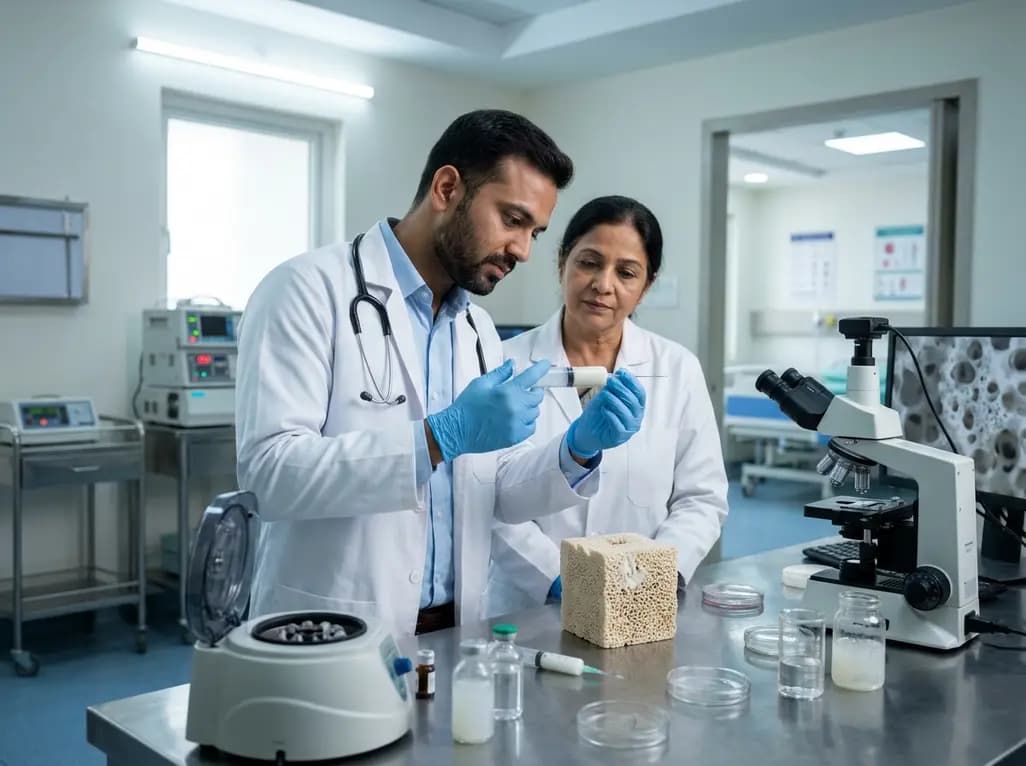
A novel calcium polyphosphate coacervate enables injectable bone implants with in situ hierarchical porosity via phase separation and gas foaming, significantly enhancing cell proliferation, energy metabolism, and osteogenic differentiation for minimally invasive bone defect repair.
Today

Following regulatory scrutiny from FSSAI regarding promotional representations and lean muscle preservation claims, Dr. Reddy's Laboratories and Nestlé Health Science are currently reviewing the branding and marketing strategy for their joint nutritional supplement Celevida GLP+.
Today
