.webp&w=384&q=75)

Loading, please wait...
Loading, please wait...

Regenerative endodontic procedures provide a vital pathway for treating non-vital immature permanent teeth in pediatric patients. Recent findings from a systematic review highlight the high success rates associated with bioceramic-based treatments. Specifically, researchers evaluated White Mineral Trioxide Aggregate (WMTA) to determine its clinical and radiographic outcomes in children. This meta-analysis offers critical insights into how these materials influence root development and aesthetic results.
The study reported an impressive radiographic success rate of 99% for WMTA-based treatments. However, the certainty of this evidence remains very low due to potential bias and imprecision in the original studies. In addition, comparative analyses showed that alternative bioceramics offer a 100% clinical success rate. Notably, these alternative materials significantly reduce the risk of tooth discolouration. While WMTA carries a 58.33% risk of staining, newer bioceramics show only a 7.69% risk. Consequently, practitioners may prefer alternative bioceramics when working in the aesthetic zone.
Clinicians often debate the selection between platelet concentrates (PC) and blood clot (BC) scaffolds during treatment. According to the research, platelet concentrates favored root lengthening more than traditional clots. Conversely, blood clot scaffolds were more effective at promoting the thickening of dentinal walls. This distinction allows dentists to tailor their therapeutic approach based on the specific anatomical requirements of the immature tooth. Furthermore, pulp sensibility was successfully restored in 60% to 86% of regenerative cases across all bioceramic treatments.
Yes, these procedures achieve remarkably high success rates. Research indicates nearly 99% radiographic success and comparable clinical success when utilizing bioceramic materials like WMTA.
The choice depends on the specific clinical goal. Platelet concentrates appear to favor root lengthening, whereas blood clot scaffolds are generally more effective for thickening the dentinal walls of the tooth.
WMTA is associated with a high risk of discolouration, affecting more than half of the treated cases. Using alternative bioceramic materials can reduce this aesthetic risk to approximately 7.7%.
Disclaimer: This content is for informational and educational purposes only. It does not constitute medical advice or establish a doctor-patient relationship. Always seek the advice of a qualified healthcare provider with any questions regarding a medical condition. Refer to the latest local and national guidelines for clinical practice.
References

Read summarized clinical updates, watch expert medical content, and earn CME certifications right from your smartphone.
Open your smartphone camera to scan and install.





A meta-analysis examines WMTA success in regenerative endodontics, comparing it with bioceramics and evaluating scaffold effects on root maturation....
5 months ago

Novel glucose-responsive mPEG-PSA nanocarriers deliver insulin aspart on demand, achieving dual postprandial and basal glycemic control without hypoglycemia in diabetic models. This biomaterial breakthrough offers promising clinical implications for physiologic diabetes management.
Today
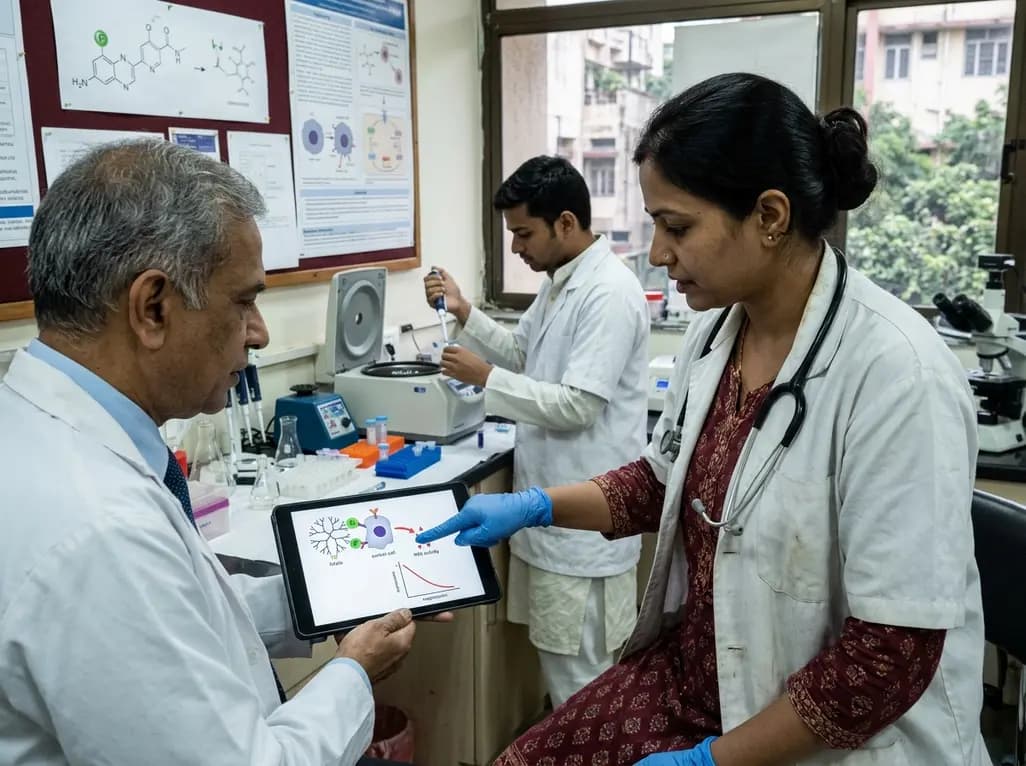
A novel folate-conjugated tecto-dendrimer nanoplatform successfully delivers siRNA to achieve targeted HK2 silencing, disrupting ovarian cancer glycolysis and suppressing lactate output.
Today

A comparative non-contact study reveals that high-power radiofrequency delivery with the QDOT MICRO catheter induces an artifactual contact force rise. Electrophysiologists must understand this power-dependent thermal and electrical phenomenon to avoid inadvertent catheter withdrawal and ineffective ablation.
Today

A novel proof-of-concept study presents a six-degree-of-freedom articulated manikin neck equipped with linear potentiometers. The system provides real-time kinematic motion feedback during cervical immobilisation, delivering sub-degree tracking accuracy to improve pre-hospital trauma training and patient safety.
Today

A retrospective comparative cohort study evaluated genitourinary safety in HFpEF between dapagliflozin and empagliflozin over six months. Rates of symptomatic UTI and asymptomatic bacteriuria showed no statistically significant differences, supporting comparable safety profiles across both SGLT2 inhibitors.
Today
