.webp&w=384&q=75)

Loading, please wait...
Loading, please wait...

Recent innovations in neurotechnology have led to the development of the M-CASS system, which significantly enhances deep brain stimulation efficiency. This single-stage, single-coil wireless system generates four separate adiabatic supplies. Consequently, it can independently regulate constant stimulus currents without relying on traditional, power-hungry sources. Moreover, the system maintains this regulation regardless of stimulus current levels or variations in load impedance.
The 0.25-μm CMOS M-CASS demonstrates remarkable performance in recent trials. Furthermore, it achieves a peak AC-to-stimulation efficiency of 82.2% when steering multiple 2-mA currents. This high efficiency remains stable, hovering around 80%, even when stimulus channels face different impedances. Therefore, it provides a compact and energy-efficient solution for multiple-source current-steering (MSCS) applications. This is particularly relevant for modern deep brain stimulation (DBS) devices that require high precision and long-term reliability.
Precise current steering allows clinicians to target specific neural circuits while minimizing unwanted side effects. By using a channel-optimized size control technique, the M-CASS system ensures energy-efficient delivery across all leads. Additionally, the adaptive offset control scheme optimizes power transfer across the wireless link. As a result, patients may benefit from devices that are smaller and require less frequent charging or replacement. These engineering advancements directly support the ongoing evolution of neurological care in clinical practice.
M-CASS utilizes an adiabatic supply stimulation method that avoids the use of power-hungry current sources. This approach dramatically reduces energy waste during power conversion, leading to higher overall stimulation efficiency compared to traditional designs.
Multi-channel current steering allows for more granular control of the electrical field within the brain. This precision helps in tailoring the therapy to the unique anatomy of the patient, which can potentially improve clinical outcomes in movement disorders.
Disclaimer: This content is for informational and educational purposes only. It does not constitute medical advice or professional services. Always seek the advice of a physician or other qualified health provider regarding a medical condition. Refer to the latest local and national guidelines for clinical practice.
References
Lee HS et al. A Single-Stage Single-Coil Wireless Multi-Channel Adiabatic Supply Stimulation System for Multiple Source Current Steering Deep Brain Stimulation. IEEE Trans Biomed Circuits Syst. 2026 Apr 22. doi: 10.1109/TBCAS.2026.3685780. PMID: 42019064.
Lozano AM et al. Deep brain stimulation: current challenges and future directions. Nat Rev Neurol. 2019;15(3):148-160.
"
Read summarized clinical updates, watch expert medical content, and earn CME certifications right from your smartphone.
Open your smartphone camera to scan and install.





Researchers have developed M-CASS, a wireless stimulation system for DBS that achieves 82.2% efficiency and independent multi-channel current regulation....
6 months ago
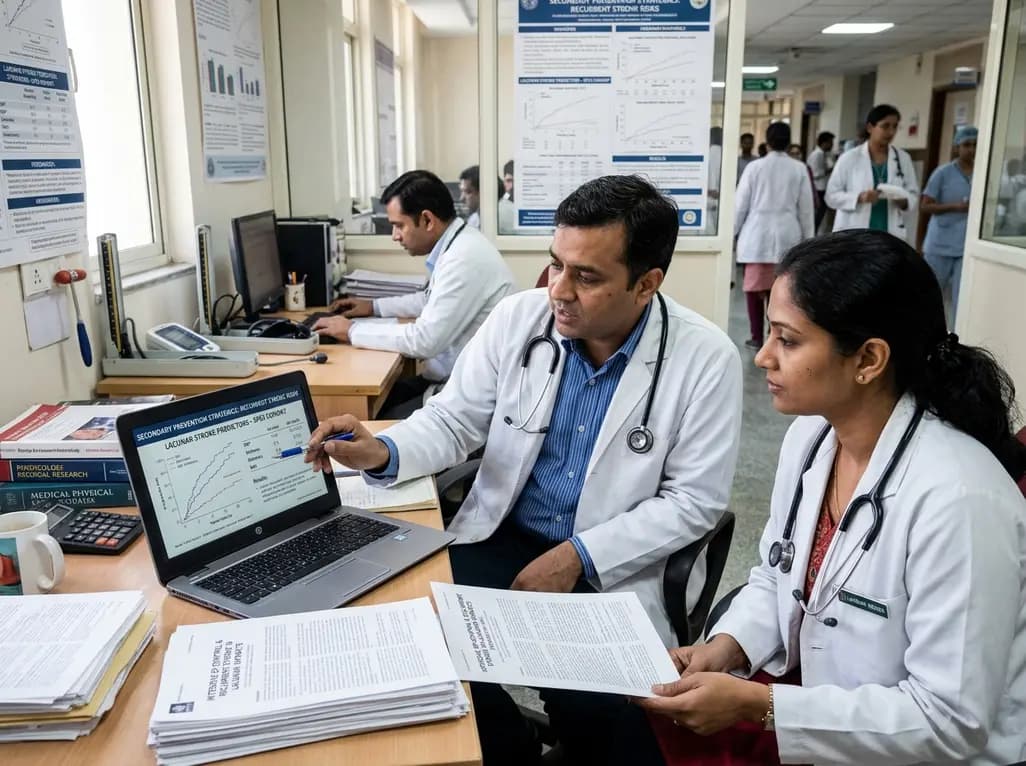
Explore vital recurrent stroke predictors in lacunar stroke patients managed with intensive blood pressure lowering. This analysis examines trial findings from SPS3 to uncover residual vascular risks, metabolic factors, and targeted secondary prevention strategies for high-risk neurological patients.
Today

Odisha has established India's first state-level clinical protocol specifically tailored for pregnant women with sickle cell disease. Developed with NHM and UNICEF, the framework provides structured antenatal screening, crisis mitigation, standardized referral pathways, and specialized interdisciplinary care.
Today

The Directorate General of Health Services directs Indian states to halt the hazardous reuse and reprocessing of single-use medical devices. Discover regulatory implications under the Drugs and Cosmetics Act, critical infection risks, legal liabilities, and operational changes required across clinical specialties.
Today

Mitochondria-targeted nanoparticles self-assembled from EGCG and L-glutamic acid effectively restore mitochondrial homeostasis, suppress synovial inflammation, and attenuate chondrocyte senescence in osteoarthritis, offering a promising disease-modifying nanotherapy.
Today

India is advancing preventive healthcare by integrating genomics, artificial intelligence, and quantum technologies. With the SANGAM programme sequencing one million Indian genomes, clinicians can unlock personalized therapies, detect cardiometabolic risks early, and curb the burden of diabetes and heart disease.
Today
