.webp&w=384&q=75)

Loading, please wait...
Loading, please wait...

Whole grain intake India is currently reaching only ten percent of the levels recommended by health authorities. Consequently, the country faces a significant rise in non-communicable diseases. Experts warn that substituting traditional grains with refined alternatives strips away essential nutrients. Therefore, a national dietary shift is necessary to improve metabolic health.
Recent data shows that Indians consume about 42 grams of whole grains daily. However, the Indian Council of Medical Research (ICMR) recommends 125 grams. This deficit primarily results from the widespread availability of refined flour and polished rice. Because refined grains lack the protective outer layers, they contribute to rapid glucose spikes. Furthermore, this trend correlates with increasing rates of obesity and type 2 diabetes.
Mechanical processing often removes the bran and the germ from cereals. Consequently, essential vitamins like B1, B6, and folate are lost during milling. Moreover, the removal of these layers depletes minerals such as zinc, magnesium, and iron. Although refined grains are calorie-dense, they are often nutritionally poor. Since India cultivates over 20 millet varieties, the agronomic resources for a healthier diet are abundant. Nevertheless, public awareness regarding these benefits remains relatively low.
To combat the NCD epidemic, health experts suggest fortifying whole grain flours. Additionally, community-based pilots and nutritionist counseling for vulnerable populations are vital. We must view nutrition as a public health imperative rather than a welfare add-on. Sustained research across all age groups is also necessary to evaluate long-term benefits. Ultimately, increasing whole grain consumption can significantly reduce the national burden of metabolic disorders.
Q1: What is the recommended daily intake of whole grains according to ICMR-NIN?
The ICMR-NIN recommends a daily intake of 125 grams of whole grains, while the current average consumption in India is approximately 42 grams.
Q2: Why are whole grains more beneficial than refined grains?
Whole grains retain the bran and germ, providing essential fiber, vitamins, and minerals that are stripped away during the refining process.
Q3: How can millets help improve the whole grain deficit in India?
With over 20 varieties available, millets are nutrient-dense and climate-resilient crops that can serve as a sustainable alternative to refined cereals.
Disclaimer: This content is for informational and educational purposes only. It does not constitute medical advice or replace professional judgment. Refer to the latest local and national guidelines for clinical practice.
References

Read summarized clinical updates, watch expert medical content, and earn CME certifications right from your smartphone.
Open your smartphone camera to scan and install.





India's low whole grain intake is linked to a rise in diabetes and obesity. Experts advocate for a shift to fibre-rich millets and ICMR-recommended guidelin...
6 months ago

A retrospective comparative cohort study evaluated genitourinary safety in HFpEF between dapagliflozin and empagliflozin over six months. Rates of symptomatic UTI and asymptomatic bacteriuria showed no statistically significant differences, supporting comparable safety profiles across both SGLT2 inhibitors.
Today
A novel folate-conjugated tecto-dendrimer nanoplatform successfully delivers siRNA to achieve targeted HK2 silencing, disrupting ovarian cancer glycolysis and suppressing lactate output.
Today
A comparative non-contact study reveals that high-power radiofrequency delivery with the QDOT MICRO catheter induces an artifactual contact force rise. Electrophysiologists must understand this power-dependent thermal and electrical phenomenon to avoid inadvertent catheter withdrawal and ineffective ablation.
Today
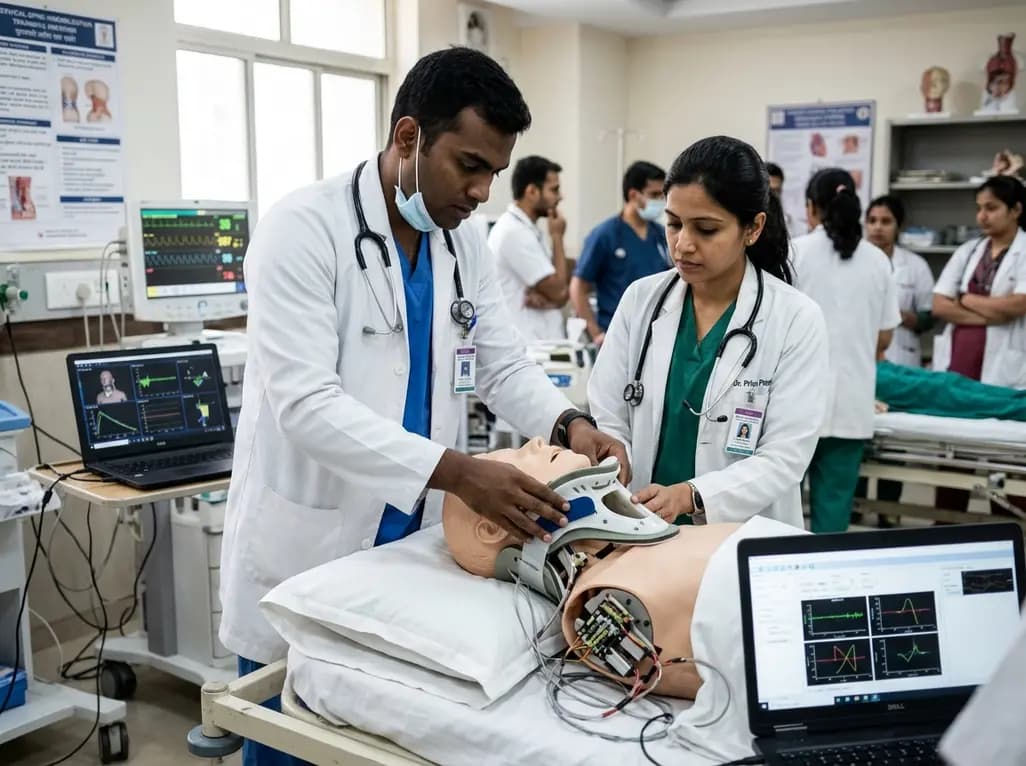
A novel proof-of-concept study presents a six-degree-of-freedom articulated manikin neck equipped with linear potentiometers. The system provides real-time kinematic motion feedback during cervical immobilisation, delivering sub-degree tracking accuracy to improve pre-hospital trauma training and patient safety.
Today
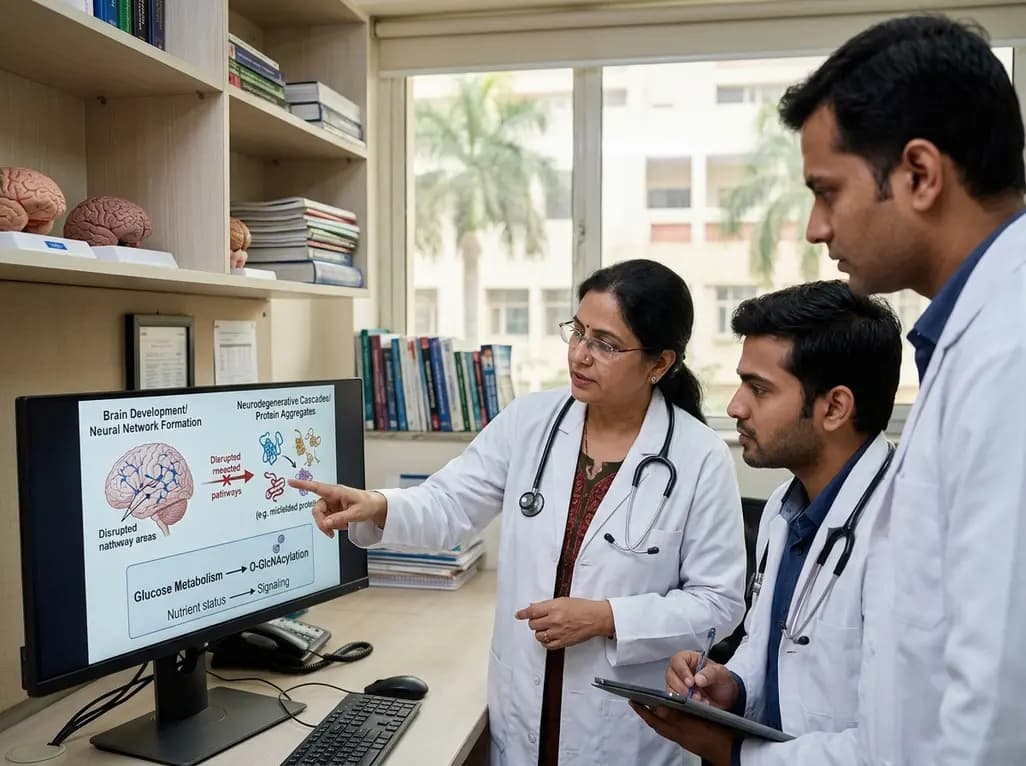
Protein O-GlcNAcylation couples cellular nutrient status to vital neuronal functions. This review explores how disrupted O-GlcNAc cycling drives both neurodevelopmental delays and neurodegenerative cascades, positioning metabolic post-translational modifications as therapeutic targets in clinical neurology.
Today
