.webp&w=384&q=75)

Loading, please wait...
Loading, please wait...
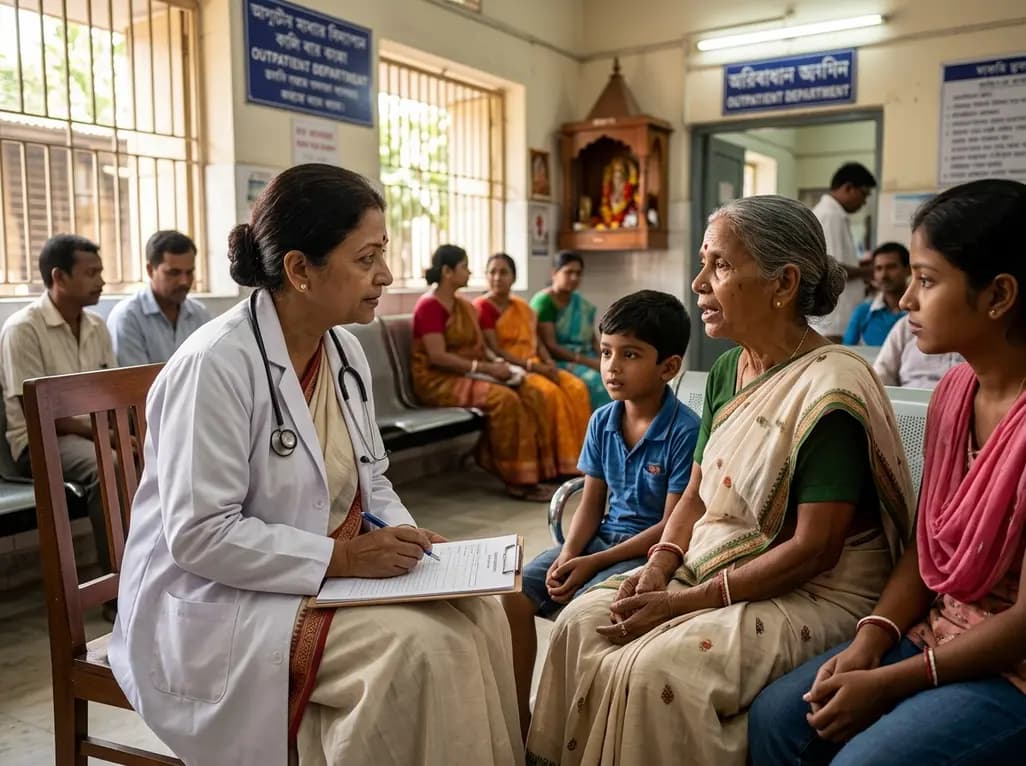
For decades, the field of behavioral science has relied on a remarkably narrow subset of humanity to build its foundational theories. Researchers have identified a pervasive WEIRD bias in psychology, referring to the over-representation of participants from Western, Educated, Industrialized, Rich, and Democratic societies. Specifically, studies suggest that while these populations represent only about 12% of the global population, they account for nearly 96% of the participants in top psychological journals. This demographic skew creates a significant validity gap when clinicians apply these findings to non-Western contexts like India. A recent argument by Sanches de Oliveira G et al. highlights that solving this problem requires more than just changing who we study. It necessitates a fundamental shift in the methodologies and theories we utilize to understand human behavior across different cultures.
Many researchers initially believed that increasing the diversity of participant samples would resolve the systemic imbalances in psychology. However, experts now argue that simply including non-Western individuals in Western-designed experiments is insufficient. Cross-cultural work requires a greater diversity of theories that can account for different social structures and cognitive styles. When we apply Western theoretical frameworks to Indian populations, we often overlook unique cultural nuances such as collectivist identities or spiritual worldviews. Consequently, the data collected might be statistically significant but culturally irrelevant or misinterpreted. To truly overcome the limitations of the current paradigm, the scientific community must embrace theories that originate from the cultures being studied. This theoretical pluralism ensures that the questions being asked are as diverse as the people being observed, leading to a more robust global science.
Experimental psychology traditionally favors controlled laboratory settings to isolate variables and determine causality. While this approach is powerful, it often strips human behavior of its natural context, making it difficult to understand the complex motivations behind actions. In contrast, ethnographic methods offer a solution by providing deep, immersive observation within a community's daily life. These non-experimental methods allow researchers to see how social norms, economic pressures, and historical backgrounds shape the individual psyche. Specifically, ethnography helps identify "local ontologies"—the ways different cultures define reality and the self. For a doctor in India, understanding these local contexts is vital for effective communication and treatment. By adopting ethnographic approaches, psychology can move beyond simple data points and begin to capture the rich, situated meanings that define human experience across the globe.
In the Indian clinical context, the WEIRD bias in psychology can lead to significant diagnostic challenges and treatment mismatches. For example, Western models of mental health often emphasize individual autonomy and self-actualization, which may clash with Indian values of familial duty and collective harmony. Furthermore, certain psychological phenomena, such as spirit possession or somatic distress idioms, might be pathologized by Western standards while being culturally normative in specific Indian communities. Misdiagnosis can occur when clinicians fail to distinguish between genuine psychopathology and culturally shaped expressions of stress. Therefore, integrating ethnographic insights into Indian medical practice is not just an academic exercise; it is a clinical necessity. Doctors who recognize the limitations of WEIRD-centric training can better tailor their interventions to the lived realities of their patients, ultimately improving therapeutic outcomes and patient trust.
To move forward, the medical community must actively support the development and implementation of indigenous psychological theories. This involves moving away from the assumption that Western psychology is the "universal" standard and all other perspectives are "cultural" outliers. In India, concepts like relational identity and holistic well-being offer valid alternatives to the reductionist approaches often found in Western literature. Moreover, clinicians should be encouraged to use qualitative tools that allow patients to describe their distress in their own cultural terms. This shift requires institutional changes, including diversifying medical curricula and providing incentives for research that uses non-experimental methods. By prioritizing diverse theories, we can build a psychology that is truly inclusive. This ensures that the mental health care provided in India is both scientifically rigorous and culturally sensitive, addressing the needs of a diverse and complex population.
The journey toward a less WEIRD psychology is long, but the roadmap is becoming clearer through the integration of ethnography and theoretical diversity. Researchers must collaborate across borders to create frameworks that are flexible enough to accommodate the variety of human life. This evolution will likely lead to more effective global health policies and a deeper understanding of human nature itself. Specifically, when we stop viewing Western participants as the default "normal," we open the door to discovering psychological mechanisms that are truly universal. For the Indian medical professional, this transition offers an opportunity to lead the way in creating a more authentic and impactful behavioral science. Ultimately, the goal is a psychology that serves all of humanity, regardless of their geographic or cultural background, by recognizing that our differences are as important as our similarities.
WEIRD bias often leads to the misinterpretation of cultural behaviors as psychopathology in India. For instance, spiritual experiences or collective family expressions may be wrongly labeled as psychotic or mood disorders if viewed through a purely Western lens. Recognizing this bias helps clinicians distinguish between normative cultural behaviors and true mental illness, ensuring that Indian patients receive culturally appropriate interventions rather than standardized Western treatments that might not resonate with their daily lived experience.
Ethnographic methods involve immersive observation and participation within a community to understand how social and cultural contexts shape human behavior. Unlike controlled laboratory experiments that isolate specific variables, ethnography captures the nuanced relationship between individuals and their environment. In psychology, these methods reveal local meanings of distress and social norms that quantitative surveys often miss. They provide the necessary context to build more inclusive psychological theories that reflect the true diversity of the world population.
Indian clinicians can integrate cultural theories by adopting a cultural-ecosocial perspective during their clinical assessments. This involves looking beyond individual biological symptoms to explore familial obligations, spiritual beliefs, and local idioms of distress. Engaging with indigenous psychological concepts, such as collective well-being and relational identity, allows for a more holistic diagnosis. By prioritizing the patient's cultural narrative alongside standard clinical guidelines, doctors can bridge the gap between their Western-based training and the actual experience of patients.
Disclaimer: This content is for informational and educational purposes only. It does not constitute medical advice or establish a doctor-patient relationship. Always seek the advice of a qualified healthcare provider for any questions regarding a medical condition. Refer to the latest local and national guidelines for clinical practice.
References
Sanches de Oliveira G et al. Ethnographic methods can help psychology overcome its WEIRD problems. Behav Brain Sci. 2026 Jul 03. doi: 10.1017/S0140525X25104007. PMID: 42396711.
Henrich J, Heine SJ, Norenzayan A. The weirdest people in the world? Behav Brain Sci. 2010 Jun;33(2-3):61-83; discussion 83-135. doi: 10.1017/S0140525X0999152X. PMID: 20550733.
Sinha JBP. Towards indigenization of psychology in India. Psychological Studies. 2000;45:3–13.
Thalmayer AG et al. The WEIRDest people in the world: A 10-year retrospective of samples in psychology. Am Psychol. 2021 Jan;76(1):116-129. doi: 10.1037/amp0000629. PMID: 32297805.

Read summarized clinical updates, watch expert medical content, and earn CME certifications right from your smartphone.
Open your smartphone camera to scan and install.





Psychology faces a major challenge known as WEIRD bias, where research over-relies on Western, Educated, Industrialized, Rich, and Democratic populations. This article explores how ethnographic methods and a greater diversity of theories can create a more inclusive and accurate psychological science for India.
3 months ago

Novel diimide and hydrazone scaffolds, particularly compound #C4, synergistically reactivate latent HIV-1 when combined with JQ1 or PKC activators. Demonstrating donor-matched proviral transcription ex vivo and non-canonical signaling, these findings advance shock and kill strategies toward reservoir eradication.
Today

A comparative cohort study evaluates vNOTES vs TLH hysterectomy for benign conditions, demonstrating shorter operative duration, faster return to daily activities, and equivalent female sexual function scores without increased dyspareunia.
Today

Review how tailored exercise programs benefit frail older patients with heart failure. Explore pathophysiological mechanisms, individualized training prescriptions, and strategies to overcome adherence barriers in clinical practice.
Yesterday

This comparative study evaluates posterior labral tears with and without glenohumeral instability, highlighting distinct demographic patterns, MRI underestimation in stable shoulders, and successful arthroscopic repair outcomes.
Yesterday

A clinical study demonstrates that early intervention with tocilizumab, either as monotherapy or bridged with corticosteroids, achieves significant proptosis reduction and resolves active inflammation in treatment-naive thyroid eye disease.
Today
