.webp&w=384&q=75)

Loading, please wait...
Loading, please wait...

Formulating a comprehensive, predictable restorative plan remains one of the most demanding skills in modern dentistry. Undergraduate students often struggle to weigh complex structural, periodontal, and endodontic compromises against patient-centered goals. Fortunately, modern pedagogical innovations offer objective frameworks to guide these nuanced clinical assessments. The Dental Practicality Index serves as an evidence-based clinical tool designed to structure decision-making systematically. A landmark international study across twelve dental institutions has now established that interactive digital instruction markedly sharpens diagnostic judgment. Consequently, dental educators are increasingly championing structured web modules to prepare future practitioners for independent patient care.
Dental students frequently encounter clinical ambiguity during comprehensive treatment planning. Novice clinicians commonly focus on single isolated tooth issues rather than synthesizing the overall oral environment. Furthermore, traditional didactic dental education rarely provides dynamic real-time feedback for borderline restorative decisions. When senior students encounter extensively broken teeth or compromised periodontal support, hesitation quickly sets in. This hesitation often leads to either overtreatment through unnecessary aggressive interventions or undertreatment through heroic attempts on non-retainable teeth. In addition, curriculum structures across different dental schools historically vary, creating inconsistent thresholds for patient referral. Therefore, educators need standardized, objective assessment frameworks that students can grasp intuitively and apply reliably across complex restorative scenarios.
The Dental Practicality Index categorizes clinical feasibility across four interdependent parameters: structural integrity, periodontal stability, endodontic status, and context. Within each domain, the clinician scores disease severity from zero to six. A score of zero signifies sound health, while scores of one or two indicate moderate restorative complexity that warrants advanced consideration. Crucially, a score of six indicates that the tooth is functionally or biologically unrestorable. The contextual domain examines both local anatomic factors and systemic patient considerations, including medical history, compliance, and socioeconomic constraints. Thus, the index prevents isolated tunnel vision. By assigning explicit numerical thresholds, the system transforms ambiguous restorative decisions into a coherent, reproducible clinical algorithm.
To evaluate educational efficacy, researchers coordinated a prospective, randomized interventional trial involving 426 final-year undergraduate students across twelve dental schools in ten countries. The investigators randomly assigned participants to complete either a self-directed interactive web-based module or routine curricular instruction without formal guidance. Subsequently, both cohorts assessed fifteen validated, standardized clinical cases. Students who completed the web-based intervention achieved significantly greater alignment with expert consensus decisions than their untrained counterparts. Specifically, the trained group achieved a median agreement score of seven compared to six in controls. Multivariable logistic regression revealed that the interactive module increased the odds of achieving expert-level diagnostic alignment by sixty-five percent, demonstrating robust educational value across diverse international settings.
Beyond technical diagnostic accuracy, psychological readiness represents an essential prerequisite for clinical independence. Novice clinicians regularly report severe anxiety when evaluating severely compromised teeth or discussing guarded prognoses with patients. In this global evaluation, trained students exhibited markedly higher decision-making confidence, recording a median confidence rating of eight out of ten versus seven among controls. Even after rigorous statistical adjustment for geographical background and regional curriculum variations, the training independently produced an impressive odds ratio of 2.51 for higher self-efficacy. Consequently, introducing clear algorithmic guidelines appears to alleviate cognitive overload, empowering young practitioners to defend treatment choices logically, communicate transparently with patients, and determine appropriate referral timing.
Integrating structured analytical tools into daily clinical practice yields tangible advantages for dental clinics and academic healthcare systems alike. When young clinicians apply the framework consistently, they document rationales thoroughly and protect patients from costly, unpredictable restorations. Furthermore, the objective scoring system establishes clear, universally understandable criteria when communicating with prosthodontic or endodontic specialists. Rather than submitting vague diagnostic summaries, clinicians provide quantifiable risk scores that expedite triage. As digital dental curricula expand globally, self-paced interactive modules offer an efficient, scalable mechanism to standardize clinical competencies. Moving forward, academic leaders should consider formalizing this practical index within undergraduate clinical syllabi to ensure newly graduated dental practitioners deliver ethical, patient-centered care.
The framework assesses remaining sound coronal tooth structure, axial wall thickness, and the availability of an adequate ferrule. Clinicians assign scores reflecting tissue loss, where mild loss rates low complexity and extensive subgingival damage or crown-root fractures score higher. If the remaining dentin cannot retain a definitive restoration or support predictable biological margins, the clinician assigns an unrestorable score of six.
Whenever an individual tooth receives a score of two or more within any structural, endodontic, periodontal, or contextual category, the index highlights elevated procedural complexity. Under these circumstances, general dental practitioners should consider consulting secondary care specialists. This scoring threshold prevents untimely complications, ensures high-risk interventions undergo advanced treatment, and fosters timely multidisciplinary collaboration for compromised dentitions.
Yes, educators can seamlessly incorporate digital web-based modules into preclinical simulations or clinical restorative rotations. Because the digital learning modules are self-directed and interactive, students can complete realistic patient case assessments asynchronously. Academic faculty can track individual student scores, identify diagnostic patterns, address decision-making misconceptions, and provide targeted feedback during clinical chairside conferences without adding significant teaching overhead.
Disclaimer: This content is for informational and educational purposes only and should not be considered as professional medical advice. Always seek the advice of a qualified healthcare provider with any questions you may have regarding a medical condition. Refer to the latest local and national guidelines for clinical practice.
References
Parolia A et al. A Multicentre Evaluation of Web-Based Dental Practicality Index Training for Undergraduate Treatment-Planning Education. Eur J Dent Educ. 2026 Sep 30. doi: 10.1111/eje.70300. PMID: 42816433.
Dawood A, Patel S. The Dental Practicality Index – assessing the restorability of teeth. Br Dent J. 2017;222(10):755-758.
Tifooni A, Al-Nuaimi N, Dawood A, Mannocci F, Patel S. Validation of the effectiveness of the Dental Practicality Index in predicting the outcome of root canal retreatments. Int Endod J. 2019;52(10):1403-1409.

Read summarized clinical updates, watch expert medical content, and earn CME certifications right from your smartphone.
Open your smartphone camera to scan and install.





A multicentre international trial shows that web-based Dental Practicality Index (DPI) training significantly improves treatment-planning accuracy and clinical confidence in undergraduate dental students, highlighting the value of structured decision frameworks in dental education.
Today
A cross-sectional investigation highlights the complex pathophysiological links between serum Klotho deficiency, secondary hyperaldosteronism, and vascular damage in CKD. Discover key insights into non-invasive vascular stiffness markers and targeted therapeutic pathways for cardiorenal protection.
Today
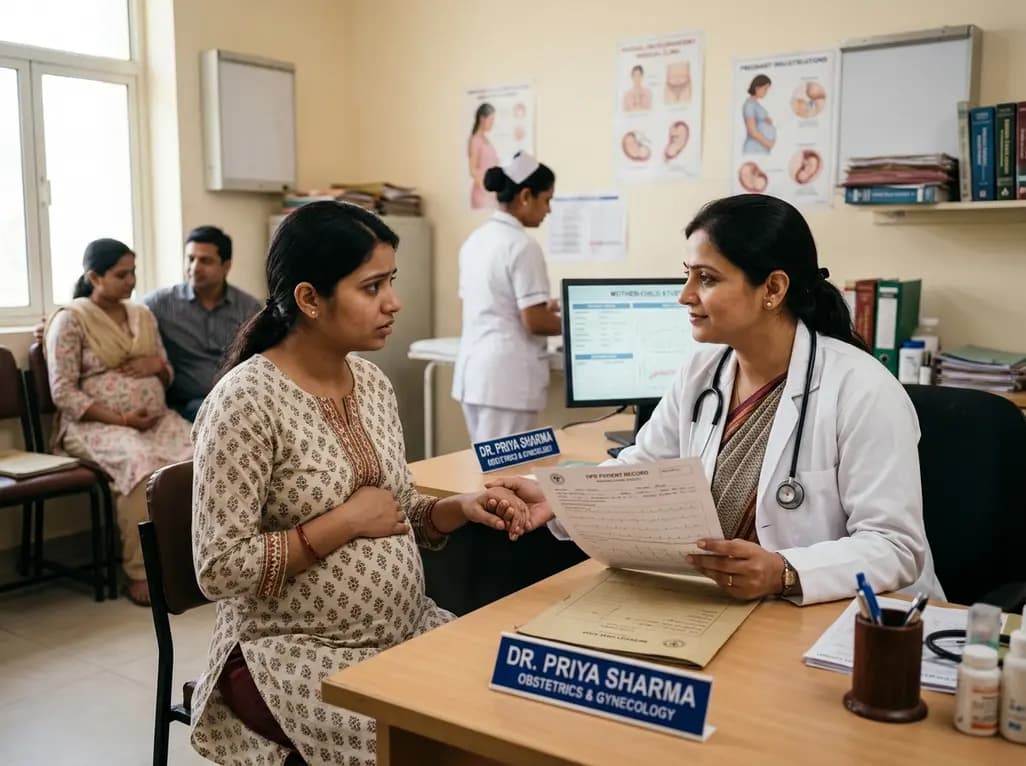
A large population cohort study evaluated over 167,000 mother-child pairs to assess the link between maternal mood disorders, pharmacotherapy, and long-term child neurodevelopment. The results underscore that maternal illness, rather than pharmacotherapy alone, drives most special educational needs in offspring.
Today
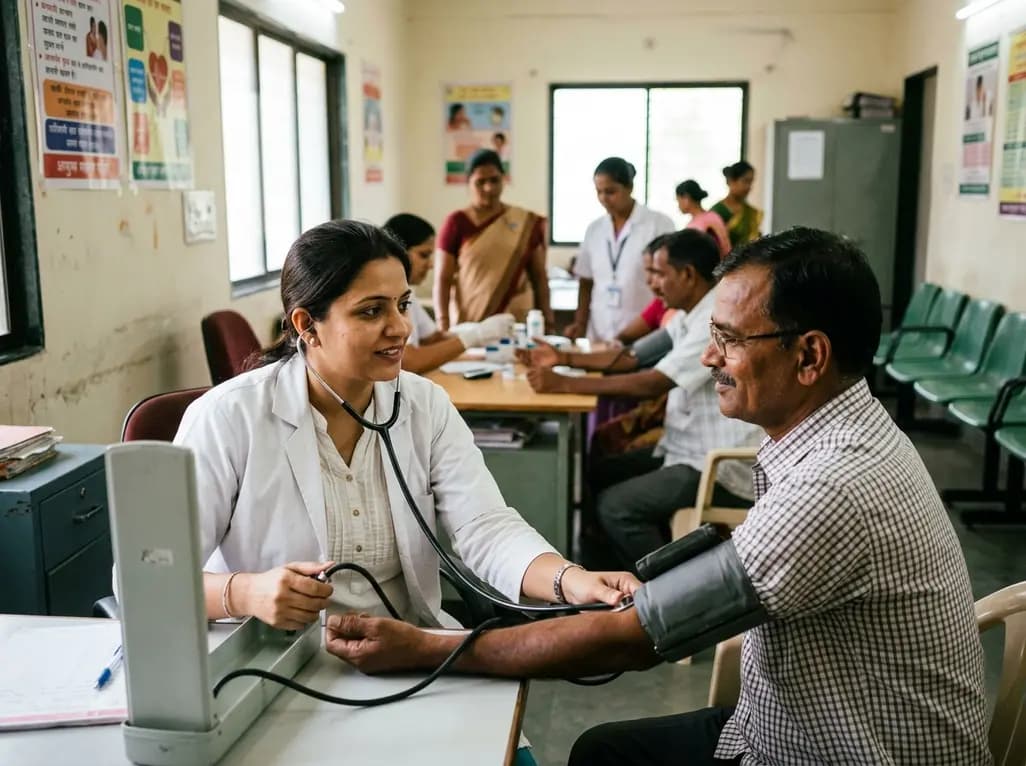
India has screened over 420 million adults for chronic metabolic conditions through its network of Ayushman Arogya Mandirs. This public health milestone underscores an aggressive shift toward early detection, decentralized primary care, and expanded insurance coverage under central health initiatives.
Today

A retrospective CBCT study reveals that superior TMJ space asymmetry correlates moderately with occipital condyle-atlas-axis asymmetry in unilateral TMJ osteoarthritis, highlighting an imaging correlate between jaw biomechanics and upper cervical alignment rather than a standalone diagnostic marker.
Today
This clinical overview reviews the pathogenic cascade of type 1 diabetes, spanning genetic susceptibility, gut dysbiosis, and cytotoxic insulitis. It details the 3-stage framework, evaluates disease-modifying immunotherapies, and addresses translational hurdles in stem-cell beta cell replacement.
Today
