.webp&w=384&q=75)

Loading, please wait...
Loading, please wait...
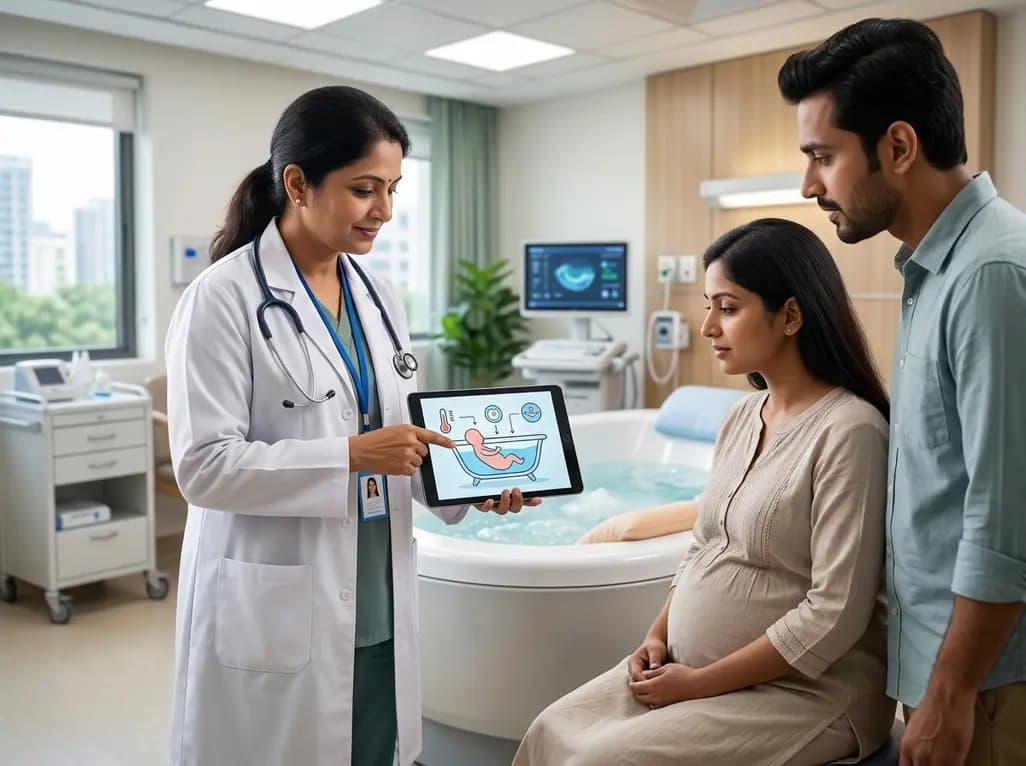
Expectant mothers are increasingly exploring alternative delivery methods. Many women are specifically interested in water birth benefits, such as natural pain management and enhanced relaxation during labor. A recent large-scale survey highlights high awareness levels and positive attitudes toward this birthing method. However, clinical implementation requires a thorough understanding of maternal expectations and potential safety concerns. First, doctors must evaluate maternal readiness. Second, facilities must ensure safety standards.
The majority of women obtain information about hydrotherapy through the internet. In fact, research indicates that approximately 98% of surveyed women are aware of water birth. Specifically, respondents often cite significant water birth benefits like reduced pharmacological intervention and shorter labor stages. Furthermore, women with higher education levels tend to express greater openness to this option. Consequently, healthcare providers must facilitate better access to evidence-based resources during prenatal counseling. Additionally, younger women may require more targeted education regarding contraindications. In light of this, clinics should update their educational brochures.
Experienced clinicians note that warm water immersion promotes the release of endorphins. Notably, this physiological response helps mothers manage the intensity of contractions more effectively. In addition, water birth potentially reduces the incidence of severe perineal tears. Nevertheless, some women worry about neonatal complications or a lack of professional expertise. Therefore, hospitals are standardizing protocols to ensure both maternal comfort and newborn safety. For instance, continuous fetal monitoring remains a vital component of safe practice. As a result, maternal satisfaction often increases significantly when these safety measures are clearly communicated. In contrast, poorly managed water births can lead to avoidable risks.
While interest is high, many women remain hesitant due to perceived risks. Common concerns include the possibility of infection or difficulty in emergency evacuations. Moreover, some patients feel that hospitals lack the necessary infrastructure for such procedures. Clinicians can mitigate these fears by discussing safety data and demonstrating the efficiency of modern birthing pools. Similarly, sharing success stories can build trust between the patient and the medical team. On the other hand, clinicians must remain honest about potential complications. Ultimately, providing a supportive environment empowers women to make informed choices that align with clinical needs. In summary, education is the key to expanding safe birthing options.
Water birth provides effective natural pain relief and increases the mother's mobility. It also fosters a more relaxing environment, which can shorten the first stage of labor.
Yes, water birth is safe for low-risk pregnancies when performed under professional supervision. Modern protocols ensure the baby's transition from the womb to the water is handled with extreme care to prevent complications.
Clinicians typically recommend water birth only for low-risk, full-term pregnancies. Medical conditions like preeclampsia or gestational diabetes generally serve as contraindications for this delivery method.
Disclaimer: This content is for informational and educational purposes only. It does not constitute medical advice or establish a doctor-patient relationship. Always seek the advice of your physician or other qualified health provider with any questions you may have regarding a medical condition. Refer to the latest local and national guidelines for clinical practice.
References

Read summarized clinical updates, watch expert medical content, and earn CME certifications right from your smartphone.
Open your smartphone camera to scan and install.





A large study reveals high awareness and positive attitudes toward water birth among women, though education and safety concerns remain key factors....
4 months ago

Novel diimide and hydrazone scaffolds, particularly compound #C4, synergistically reactivate latent HIV-1 when combined with JQ1 or PKC activators. Demonstrating donor-matched proviral transcription ex vivo and non-canonical signaling, these findings advance shock and kill strategies toward reservoir eradication.
Today

A comparative cohort study evaluates vNOTES vs TLH hysterectomy for benign conditions, demonstrating shorter operative duration, faster return to daily activities, and equivalent female sexual function scores without increased dyspareunia.
Today

Review how tailored exercise programs benefit frail older patients with heart failure. Explore pathophysiological mechanisms, individualized training prescriptions, and strategies to overcome adherence barriers in clinical practice.
Yesterday

This comparative study evaluates posterior labral tears with and without glenohumeral instability, highlighting distinct demographic patterns, MRI underestimation in stable shoulders, and successful arthroscopic repair outcomes.
Yesterday

A clinical study demonstrates that early intervention with tocilizumab, either as monotherapy or bridged with corticosteroids, achieves significant proptosis reduction and resolves active inflammation in treatment-naive thyroid eye disease.
Today
