.webp&w=384&q=75)

Loading, please wait...
Loading, please wait...

Accurate laboratory evaluation of hepatic function requires rapid and dependable biochemical measurement. Specifically, plasma ammonia detection plays an indispensable role in diagnosing acute liver failure, decompensated cirrhosis, and inborn metabolic disorders. Because circulating ammonia concentrations rise quickly after collection, clinicians demand analytical platforms with remarkable speed, precision, and operational simplicity. Consequently, multicenter investigators evaluated dry chemical colorimetry on the VITROS 350 platform, confirming its robust diagnostic performance across demanding clinical settings.
Ammonia represents a toxic nitrogenous byproduct generated primarily from intestinal bacterial protein catabolism. Under healthy physiologic conditions, periportal hepatocytes metabolize ammonia into water-soluble urea via the hepatic ornithine cycle. However, extensive hepatocellular damage or advanced cirrhosis severely impairs this vital clearance mechanism. Furthermore, spontaneous or surgical portosystemic shunts bypass hepatic parenchyma, allowing enteric toxins to escape directly into systemic circulation. Consequently, arterial and venous ammonia concentrations surge, readily penetrating the blood-brain barrier.
Within the central nervous system, excess ammonia promotes astrocyte swelling, neuroinflammation, and progressive cerebral edema. Therefore, emergency clinicians frequently order ammonia testing when assessing unexplained encephalopathy, acute liver failure, or neonatal inborn errors of metabolism. However, blood ammonia represents a notoriously labile analyte that degrades rapidly. Because erythrocytes continuously produce ammonia ex vivo through spontaneous deamination, delayed processing causes substantial false elevations. Diagnostic laboratories therefore require dependable analytical platforms that process samples rapidly without cumbersome pre-treatment steps.
The VITROS 350 chemistry system performs quantitation through sophisticated dry slide colorimetric technology. Specifically, each analytical slide contains multiple layered functional elements coated onto an inert polyester support. When an operator places a plasma droplet onto the slide, the upper spreading layer distributes the fluid uniformly. Subsequently, fluid traverses toward an underlying buffered reagent layer, where alkaline reagents convert ionic ammonium into gaseous ammonia.
Crucially, an intervening semipermeable membrane isolates this reaction chamber from the detection layer. This hydrophobic membrane permits only volatile gaseous ammonia to diffuse downward while actively repelling proteins, bilirubin, and cellular debris. Once inside the indicator layer, ammonia reacts with bromphenol blue indicator, producing a quantified blue dye complex. The instrument then measures reflection spectrophotometry at 600 nanometers. Because this mechanism separates volatile gas from serum chromogens, it effectively prevents optical interferences seen in conventional wet assays. Moreover, the self-contained dry format requires no onboard water plumbing, minimizing maintenance overhead and clinical downtime.
The multicenter evaluation rigorously tested the VITROS 350 analyzer following protocols from CLSI and CNAS organizations. First, investigators examined repeatability and within-laboratory precision across several concentration tiers. The platform demonstrated tight coefficients of variation, successfully satisfying strict international quality criteria. Even at low plasma ammonia concentrations, the system delivered consistent quantitative recovery without notable baseline drift.
Furthermore, the evaluation confirmed robust linearity across the entire reportable analytical range. The analyzer accurately captured marked elevations without requiring immediate manual dilution, preserving precious clinical time during acute medical crises. Additionally, researchers confirmed a broad reportable interval that accommodates severe metabolic decompensations. Importantly, the team evaluated sample carryover by analyzing alternating aliquots of high-titer and low-titer specimens. The resulting carryover rate remained negligible, verifying that high concentration samples do not distort subsequent tests. Thus, the system fulfills critical diagnostic demands for both routine outpatient work and urgent inpatient critical care.
Standardizing laboratory results across diverse healthcare facilities remains essential for unified clinical management. Accordingly, the multi-center trial compared the VITROS 350 standalone system with the larger VITROS 5600 integrated platform. Five distinct clinical laboratories participated in this extensive validation trial. Technicians evaluated five identical concentration pools across all participating testing sites to quantify inter-instrument comparability.
Encouragingly, the comparative analysis demonstrated strong inter-platform agreement across every evaluated concentration tier. All measured values fell well within predetermined total allowable error boundaries. Consequently, clinicians can reliably compare ammonia results originating from satellite emergency laboratories and centralized hospital facilities. Furthermore, this multi-center consistency proves that dry chemistry colorimetry produces reproducible data across distinct institutional operators. The findings also lay a valuable empirical groundwork for future external quality assessment schemes. Ultimately, this high level of inter-laboratory concordance fosters greater clinical confidence when managing acute hepatic decompensations across regional hospital networks.
The validation study also evaluated potential biological interferences that commonly plague hospital diagnostics. Reassuringly, high concentrations of conjugated bilirubin, unconjugated bilirubin, and triglycerides produced no significant analytical interference. The selective slide membrane successfully blocks these common serum chromogens. However, the researchers demonstrated that severe hemolysis exerts a clinically significant positive bias on test results. Because red blood cells store substantial intracellular ammonia, red cell lysis inevitably contaminates plasma aliquots.
Therefore, clinical facilities across India must enforce strict preanalytical handling protocols. Phlebotomists should draw blood without prolonged venous stasis, place tubes immediately on ice, and centrifuge samples within fifteen minutes. In Indian emergency wards and intensive care units, rapid access to dependable testing proves vital for managing acute liver failure and decompensated cirrhosis. Furthermore, the compact footprint and low water dependence of the dry chemistry platform suit peripheral healthcare settings. By eliminating liquid waste and complex calibration steps, this technology empowers Indian laboratories to deliver accurate diagnostic results with minimal operational downtime.
Prompt specimen processing is essential because erythrocytes rapidly generate ammonia through spontaneous deamination of proteins after phlebotomy. Consequently, delayed centrifugation produces falsely elevated ammonia concentrations that mislead clinical decision-making. Healthcare teams must collect blood in pre-chilled EDTA or heparin collection tubes, transport the specimen immediately on crushed ice, and separate the plasma within fifteen minutes. This rigorous preanalytical discipline preserves sample integrity, ensuring that reported values accurately reflect patient physiology.
Dry chemical colorimetry utilizes a specialized multi-layer analytical slide that selectively filters target analytes before detection. Specifically, an internal semipermeable membrane allows only volatile gaseous ammonia to penetrate into the dye indicator layer. Consequently, large interfering macromolecules such as bilirubin, lipemic droplets, and serum proteins remain trapped in upper layers. This physical separation prevents optical turbidity and non-specific chromogen reactions, allowing the analyzer to achieve reliable photometric measurements even in complex clinical samples.
Clinicians should measure plasma ammonia primarily when evaluating unexplained altered mental status, suspected acute liver failure, or suspected inborn errors of metabolism. Additionally, ammonia quantitation assists in diagnosing Reye syndrome and monitoring severe portosystemic shunting after surgical or radiological interventions. However, professional guidelines advise against ordering routine ammonia levels to grade established chronic hepatic encephalopathy. Instead, doctors should integrate laboratory values with bedside neurological exams, clinical history, and comprehensive organ function assessments.
Disclaimer: This content is for informational and educational purposes only and does not substitute professional medical advice, diagnosis, or treatment. Always consult a qualified healthcare provider for specific clinical questions or patient care decisions. Refer to the latest local and national guidelines for clinical practice.
References

Read summarized clinical updates, watch expert medical content, and earn CME certifications right from your smartphone.
Open your smartphone camera to scan and install.





A multicenter study validates dry chemical colorimetry on the VITROS 350 system for plasma ammonia detection, proving excellent precision, linearity, and cross-platform concordance.
Today

The government of Maharashtra is establishing a novel state-level Living Lab to elevate clinical outcomes, bridge public-private service gaps, and test real-world health interventions. By integrating digital innovations and frontline feedback, the platform fosters sustainable, equitable care models across communities.
Today
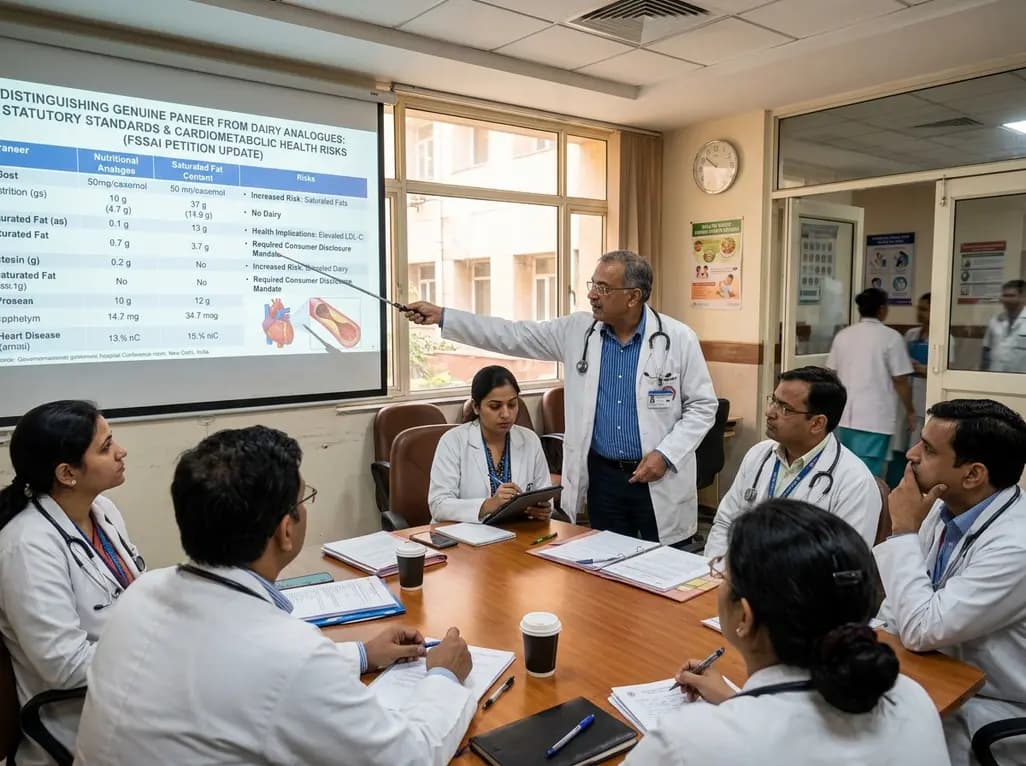
The Delhi High Court has directed the FSSAI and Centre to address petitions regarding dairy analogue products sold as genuine paneer. Learn about the statutory standards, nutritional differences, cardiometabolic health risks, and required consumer disclosure mandates in eateries across India.
Today

The state government is deploying helicopter emergency medical services across the Mumbai-Pune Expressway, Samruddhi Mahamarg, and Mumbai-Goa Highway. This initiative establishes unified standard operating procedures to enable rapid triage, advanced prehospital resuscitation, and seamless trauma care transfers.
Today
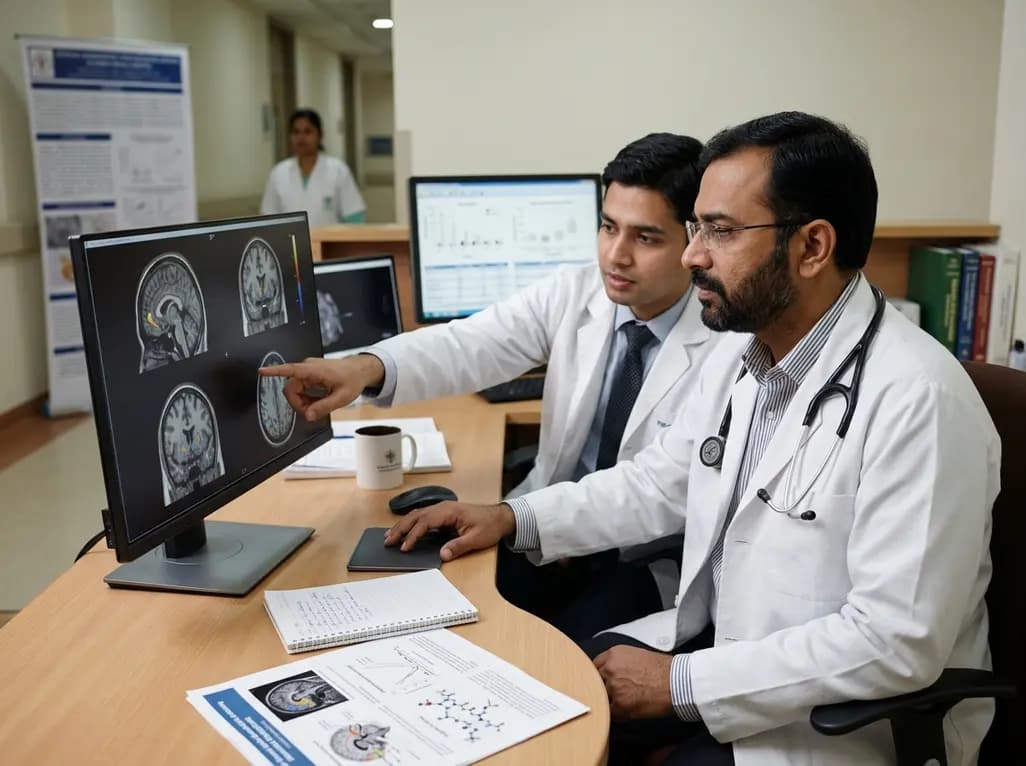
A systematic review of 66 preclinical studies reveals that GLP-1 mono-agonists modulate central reward processing. These findings demonstrate significant reductions in palatable food intake, substance self-administration, and compulsive behaviors, offering novel neurobiological targets for neuropsychiatry.
Today
