.webp&w=384&q=75)

Loading, please wait...
Loading, please wait...

Myopic traction maculopathy represents a major cause of progressive visual loss in individuals with pathological myopia. Consequently, vitreoretinal specialists frequently rely on vitrectomy for myopic foveoschisis to relieve mechanical traction and preserve central vision. Pathophysiologically, progressive axial elongation induces posterior staphyloma formation, which stretches the neurosensory retina over a rigid retinal pigment epithelium. Simultaneously, rigid inner retinal elements, premacular vitreous cortex remnants, and membrane stiffness prevent adaptive elongation. Therefore, these opposing vector forces drive layer cleavage, producing foveoschisis, lamellar defects, and eventual detachment.
Recent surgical investigations provide valuable insights into anatomical resolution and functional gains following modern vitreous surgery. Specifically, clinical analyses reveal that pars plana vitrectomy reliably resolves retinal cleavage in over ninety percent of affected eyes. However, restoring normal visual acuity remains challenging because baseline neuroretinal atrophy often restricts functional recovery. Surgeons must therefore carefully evaluate baseline traction and pre-existing chorioretinal degeneration before scheduling operative intervention. Furthermore, recognizing key prognostic variables allows clinicians to establish realistic postoperative expectations for patients with severe myopia.
To standardize the assessment of myopic traction maculopathy, researchers established the comprehensive ATN classification system. This grading matrix categorizes pathological eyes according to tractional maculopathy, chorioretinal atrophy, and macular neovascularization. In clinical practice, evaluating traction severity helps determine the precise urgency of surgical release. Higher tractional stages, such as foveal detachment and macular holes, demand prompt surgical intervention to prevent permanent photoreceptor loss. Conversely, milder schisis stages without central elevation allow careful observation before surgeons undertake operative repair.
In addition, baseline chorioretinal atrophy dictates ultimate visual potential regardless of structural reattachment success. Even when surgical procedures successfully flatten intraretinal schisis cavities, underlying chorioretinal atrophy limits meaningful visual gain. Investigators consistently observe that eyes with extensive degenerative changes demonstrate poorer postoperative visual outcomes. Thus, clinicians must not treat myopic foveoschisis solely as an isolated mechanical defect. Instead, retinal specialists should integrate tractional grading with meticulous atrophy staging during preoperative surgical counseling.
Surgeons actively debate the optimal technique for internal limiting membrane peeling during vitrectomy for myopic foveoschisis. Historically, vitreoretinal operators performed complete membrane removal across the entire macula to eliminate all tangential contractile vectors. Although conventional peeling achieves high anatomical success rates, it imposes mechanical trauma onto fragile, stretched foveal cones. Consequently, total peeling carries an established risk of iatrogenic full-thickness macular holes in up to fifteen percent of eyes. Furthermore, postoperative macular holes in highly myopic eyes often lead to devastating secondary retinal detachment.
To overcome this hazard, vitreoretinal surgeons pioneered fovea-sparing membrane peeling and inverted flap techniques. By deliberately preserving a small island of tissue over the foveola, the surgeon protects delicate photoreceptors from direct traction. Recent comparative investigations confirm that fovea-sparing approaches deliver anatomical resolution rates equivalent to conventional peeling. Moreover, leaving the central fovea untouched dramatically reduces the risk of unclosed postoperative macular holes. Therefore, adopting fovea-sparing protocols represents an indispensable strategy when managing eyes with precarious macular architecture.
Endotamponade selection represents another critical decision point during surgical planning for myopic foveoschisis repair. Vitreoretinal specialists typically choose among filtered air, sulfur hexafluoride gas, perfluoropropane gas, or silicone oil. Clinical trials demonstrate that anatomical foveoschisis resolution occurs across all tamponade categories in over ninety percent of patients. However, multivariable regression models reveal that using perfluoropropane gas correlates with poorer final visual acuity at one year. Notably, this statistical association reflects surgical selection bias rather than direct gas toxicity on retinal layers.
Specifically, vitreoretinal surgeons reserve longer-acting tamponades for eyes displaying severe traction, extensive detachment, or pronounced staphylomas. Because these advanced presentations harbor severe pre-existing photoreceptor damage, their visual recovery remains inherently limited. Additionally, prolonged gas contact can trigger intraocular pressure spikes and accelerate nuclear cataract development. Therefore, clinicians should match endotamponade agents to individual structural risk rather than applying aggressive gas regimens routinely. Ultimately, shorter-acting tamponades often provide sufficient support for resolving foveoschisis while minimizing postoperative positioning burdens.
Multivariable regression analyses highlight that baseline visual acuity and axial length serve as dominant predictors of functional recovery. Eyes with severe axial elongation, frequently exceeding twenty-nine millimeters, exhibit attenuated scleral support and profound chorioretinal stretching. Consequently, continuous mechanical strain weakens the retinal pigment epithelium and impairs microvascular perfusion across the choriocapillaris. Even after vitrectomy relieves traction, chronically compromised photoreceptors cannot regain complete physiological function. Therefore, excessive axial length imposes a biological ceiling on postoperative visual recovery.
Similarly, preoperative visual acuity reflects the microscopic integrity of the foveal photoreceptor layer before surgical intervention. Patients presenting with poor initial vision usually exhibit substantial ellipsoid zone disruption on optical coherence tomography scans. Although surgery restores retinal architecture, visual gains depend strictly on surviving neural tissue. Furthermore, delayed operative intervention permits ongoing neurosensory detachment to cause irreversible foveal thinning. Thus, identifying progressive foveoschisis early and operating before permanent photoreceptor damage occurs optimizes long-term patient outcomes.
Modern vitreoretinal practice requires integrating advanced multimodal imaging to optimize surgical outcomes in highly myopic patients. Swept-source optical coherence tomography allows detailed cross-sectional examination of intraretinal cleavage planes and outer retinal integrity. When longitudinal imaging reveals progressive retinal separation, clinicians should consider timely operative treatment before foveal detachment ensues. Moreover, discussing individual prognostic factors, including axial length and baseline atrophy, prepares patients for realistic postoperative outcomes.
During surgery, vitreoretinal specialists must tailor their technical approach to individual macular anatomy and tissue fragility. While conventional membrane peeling successfully relieves traction, fovea-sparing techniques provide an added safety margin against hole formation. Additionally, surgeons can avoid prolonged intraocular tamponades in uncomplicated foveoschisis cases lacking extensive subretinal fluid. In contrast, reserving expanding gases for advanced detachment minimizes unnecessary positioning burdens in lower-risk eyes. Ultimately, thoughtful surgical customization maximizes anatomical reattachment while safeguarding precious central vision in pathological myopia.
Preoperative axial length strongly correlates with the degree of scleral thinning and chorioretinal stretching in pathological myopia. As axial length increases, excessive mechanical deformation damages the underlying choriocapillaris, retinal pigment epithelium, and photoreceptor mosaic. Consequently, even after surgical vitrectomy successfully eliminates tractional forces and flattens intraretinal schisis, the chronically impaired photoreceptors exhibit restricted functional recovery. Therefore, longer axial dimensions serve as an independent biological predictor of poorer postoperative visual acuity.
Surgeons adopt fovea-sparing peeling to prevent iatrogenic full-thickness macular hole formation during traction release. In highly myopic eyes, the neurosensory foveola is extremely stretched, attenuated, and structurally fragile. Traditional complete peeling exerts direct mechanical shearing force across delicate central cones, which risks tearing the tissue. In contrast, leaving a small island of intact membrane over the foveola relieves perifoveal traction while safeguarding central photoreceptor architecture, ensuring excellent anatomical reattachment and visual safety.
The association between perfluoropropane gas and reduced visual acuity stems primarily from surgical selection bias rather than chemical toxicity. Retinal surgeons selectively administer long-acting gases like perfluoropropane in advanced cases featuring massive foveal detachment, secondary macular holes, or prominent posterior staphylomas. Because these severe eyes already harbor profound photoreceptor degeneration and chorioretinal atrophy, their visual baseline and functional ceiling remain inherently diminished. Consequently, the tamponade choice simply reflects greater underlying baseline disease severity.
Disclaimer: This content is for informational and educational purposes only and should not be taken as professional medical advice. Always consult a qualified healthcare provider for personalized diagnosis and treatment decisions. Refer to the latest local and national guidelines for clinical practice.
References

Read summarized clinical updates, watch expert medical content, and earn CME certifications right from your smartphone.
Open your smartphone camera to scan and install.





A retrospective study of 87 eyes reveals that vitrectomy for myopic foveoschisis achieves a 93.1% anatomical resolution rate. Baseline visual acuity, axial length, and long-acting gas tamponade significantly predict long-term visual outcomes, while peeling techniques offer comparable success.
Today

Pancreatic cancer cachexia affects over 80% of patients, driving severe muscle wasting, systemic inflammation, and treatment intolerance. This review highlights key pathophysiological drivers, exocrine insufficiency, objective CT imaging, and emerging therapies like GDF-15 inhibitors to improve clinical outcomes.
Today

A retrospective cohort study evaluated 1,000 low-risk singleton births to assess maternal and neonatal outcomes during office-hours versus off-hours. Off-hours deliveries were significantly associated with higher odds of intrapartum cesarean sections and episiotomies, highlighting critical obstetric staffing considerations.
Today
Procedural success in panvascular intervention does not guarantee vessel stability. The tri-ecological framework introduces vascular device suitcordance and the Suitcordance Score, matching mechanical, cellular, and physicochemical-immune dynamics to restore true vessel homeostasis and prevent late failures.
Today
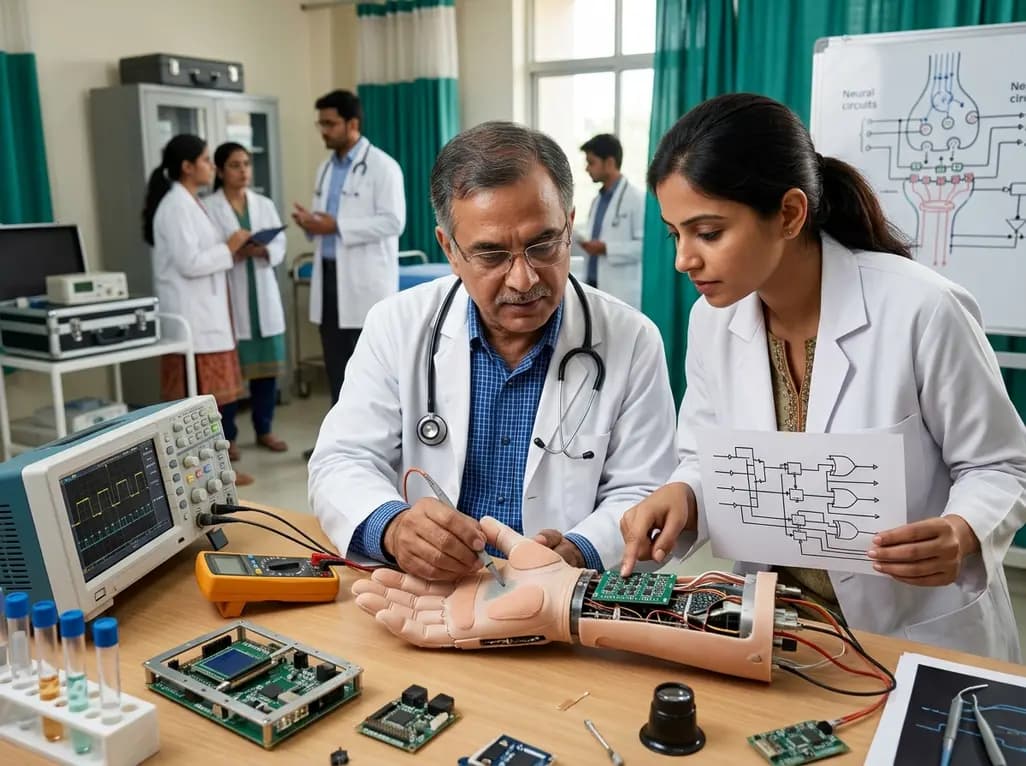
Researchers have engineered an artificial sensory-pain integrated receptor using a multi-threshold organic synaptic transistor. The system distinguishes benign touch from noxious stimuli, enabling safer, more responsive prosthetic limbs with built-in memory and simplified hardware architecture.
Today
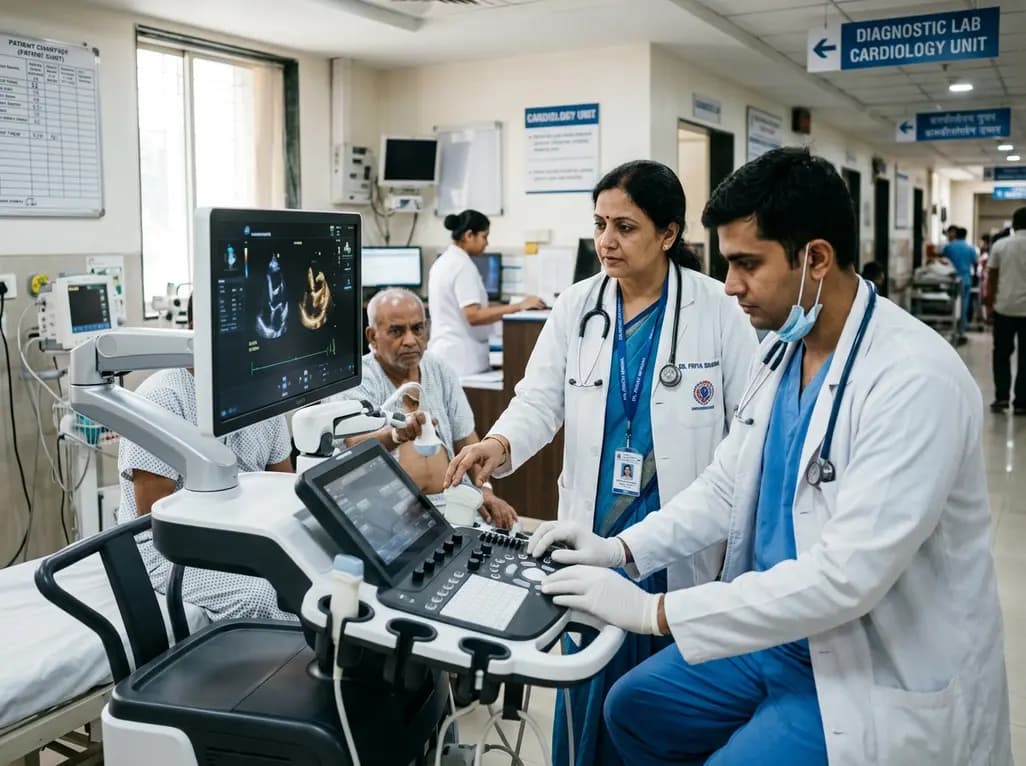
Medical robotics is transitioning beyond operative suites into diagnostics, cardiology, and endocrinology. Explore how innovations in tele-robotics, AI integration, and nanomedicine are overcoming geographical barriers and transforming precision healthcare delivery across India's evolving disease landscape.
Today
