.webp&w=384&q=75)

Loading, please wait...
Loading, please wait...

Obstetric teams constantly seek to ensure optimal intrapartum care regardless of arrival time. However, hospital workflow and physician coverage fluctuate significantly across different shifts. A newly published retrospective cohort study investigates the clinical consequences of off-hours deliveries compared to daytime care. The researchers evaluated maternal and neonatal adverse outcomes among low-risk singleton pregnancies. Consequently, their observations provide crucial evidence regarding systemic factors influencing perinatal safety and procedural decision-making across varied shift hours.
The investigation reviewed consecutive low-risk singleton births occurring at a specialized maternity hospital in Kahramanmaraş, Türkiye. Specifically, investigators evaluated deliveries between January 1, 2022, and January 1, 2023. The research team compiled data from 1,000 mother-newborn dyads to identify significant outcome differences. They divided the cohort equally into 500 office-hours births and 500 off-hours births. In this framework, researchers defined office-hours as weekday shifts between 08:00 and 15:59. Conversely, they designated off-hours as weekday shifts from 16:00 to 07:59 alongside all weekend hours. Because the authors deliberately restricted eligibility to low-risk pregnancies, baseline clinical differences between groups remained minimal. Therefore, preexisting medical maternal risks did not drive procedural variations. Clinicians routinely presume that healthy singleton births proceed smoothly without aggressive interventions. Nevertheless, operational variations across daily shift windows frequently reshape labor management pathways. By isolating standard obstetric cases, this study provides a clean assessment of operational timing effects.
The investigation demonstrated stark differences in surgical interventions during non-standard operational shifts. Most notably, off-hours deliveries showed a more than twofold rise in the odds of intrapartum cesarean section. Statistical analysis confirmed an odds ratio of 2.27, demonstrating a clear shift in delivery modalities. In addition, the odds of episiotomy rose dramatically during these off-peak periods, reaching an odds ratio of 2.19 with strong statistical significance. These procedural associations persisted despite identical baseline risk profiles between maternal groups. Hence, time of delivery served as an influential variable affecting intrapartum decisions. Attending physicians often encounter clinical fatigue, reduced ancillary staffing, and limited immediate back-up during night shifts. Consequently, providers may demonstrate a lower threshold for operative intervention when labor progress stalls. Furthermore, night-shift obstetric teams may accelerate delivery through surgical means to avoid protracted nocturnal complications. Thus, institutional constraints clearly tilt decision-making away from watchful waiting toward prompt procedural intervention.
Surgical delivery and perineal incisions carry tangible morbidity risks for low-risk parturients. Although episiotomy facilitates rapid fetal delivery, routine utilization conflicts with modern evidence-based guidelines. Indeed, major obstetric societies recommend selective rather than routine episiotomy to minimize perineal trauma. However, practitioners working during off-hours frequently perform episiotomies to accelerate delivery or prevent prolonged perineal distension. Consequently, women delivering during off-hours face higher rates of post-procedure perineal discomfort, bleeding, and infection. In addition, intrapartum cesarean section increases maternal blood loss, extends recovery times, and elevates infection risks. Therefore, unindicated surgical intervention imposes substantial physical and emotional burdens upon low-risk mothers. Furthermore, an unintended primary cesarean section permanently complicates future reproductive choices by necessitating subsequent repeat surgical deliveries. When clinical teams execute interventions for institutional convenience rather than strict fetal distress, maternal well-being suffers. Thus, maternity units must reevaluate protocols that inadvertently foster defensive surgical escalation during late hours.
Evaluating neonatal well-being remains essential when analyzing shift-dependent obstetric patterns. Interestingly, several large-scale international studies describe mixed neonatal outcomes between daytime and weekend deliveries. Some global registries report higher rates of low Apgar scores, neonatal intensive care admissions, and respiratory complications during off-hours. In contrast, this retrospective cohort identified stable neonatal safety metrics between the two operational groups. Because the study focused solely on uncomplicated, term pregnancies, severe asphyxia and neonatal mortality occurred rarely overall. Nevertheless, timely pediatric coverage during twilight hours remains a vital component of safe delivery ward infrastructure. When off-hours surgical interventions occur abruptly, neonatal resuscitation teams must respond promptly without delay. In addition, unexpected operative deliveries can predispose newborns to transient respiratory distress or birth trauma. Therefore, maternity facilities must ensure robust neonatal resuscitation capabilities twenty-four hours a day. Ultimately, maintaining equivalent neonatal safety requires continuous multidisciplinary readiness across every calendar day.
The observable disparity in intrapartum intervention highlights deep systemic challenges within maternity hospitals. Labor units operate continuously, yet staffing models rarely reflect equal resource distribution across twenty-four hours. During daytime office hours, hospitals provide abundant senior supervision, rapid operating room availability, and extensive nursing support. In contrast, off-hours shifts often depend on fewer staff members facing heavy patient loads and fragmented sleep cycles. Consequently, physician cognitive fatigue and reduced interpersonal communication directly affect intrapartum management choices. Therefore, healthcare leaders must prioritize balanced staffing ratios and structured handover routines to normalize care delivery. Furthermore, maternity networks should mandate identical supervisory guidelines during nights and weekends as implemented during weekdays. Implementing standardized clinical audit protocols can effectively reduce unjustified surgical escalation across all shifts. In addition, hospitals must foster collaborative labor cultures that empower midwives and nurses to advocate for physiologic progress. By transforming off-hours care delivery models, healthcare systems can ensure equitable, safe birth outcomes for every family.
Clinicians during off-hours frequently experience increased physical fatigue, reduced ancillary personnel, and limited senior consultant presence. Consequently, obstetricians maintain a lower tolerance for prolonged or ambiguous labor progression. When labor stalls during night shifts, providers often select surgical intervention defensively to avoid unpredictable nocturnal crises. Therefore, institutional time pressures, handover disruptions, and depleted support teams collectively drive higher intrapartum cesarean rates among otherwise healthy, low-risk parturients.
In strictly low-risk singleton pregnancies, overall neonatal mortality and severe anoxia rates generally remain low across both office-hours and off-hours. However, several international studies associate off-hours deliveries with elevated risks of neonatal intensive care admissions, transient respiratory complications, and delayed resuscitation. Although robust multidisciplinary teams can mitigate these disparities, variable night-shift staffing occasionally impedes rapid response times. Therefore, uniform clinical coverage around the clock remains vital for preserving consistently safe neonatal outcomes.
Maternity hospitals can minimize off-hours intervention disparities by establishing 24/7 on-site senior obstetric and anesthetic coverage. In addition, institutions should adopt standardized, audit-driven labor management protocols to prevent premature surgical decisions. Introducing structured shift handovers, optimizing midwife-to-patient staffing ratios, and managing clinician fatigue also protect physiologic labor progression. Finally, routine institutional reviews of off-hours cesarean indications help hold clinical teams accountable to evidence-based practices regardless of shift timing.
Disclaimer: This content is for informational and educational purposes only... Refer to the latest local and national guidelines for clinical practice.
References

Read summarized clinical updates, watch expert medical content, and earn CME certifications right from your smartphone.
Open your smartphone camera to scan and install.





A retrospective cohort study evaluated 1,000 low-risk singleton births to assess maternal and neonatal outcomes during office-hours versus off-hours. Off-hours deliveries were significantly associated with higher odds of intrapartum cesarean sections and episiotomies, highlighting critical obstetric staffing considerations.
Today

Pancreatic cancer cachexia affects over 80% of patients, driving severe muscle wasting, systemic inflammation, and treatment intolerance. This review highlights key pathophysiological drivers, exocrine insufficiency, objective CT imaging, and emerging therapies like GDF-15 inhibitors to improve clinical outcomes.
Today
Procedural success in panvascular intervention does not guarantee vessel stability. The tri-ecological framework introduces vascular device suitcordance and the Suitcordance Score, matching mechanical, cellular, and physicochemical-immune dynamics to restore true vessel homeostasis and prevent late failures.
Today

Researchers have engineered an artificial sensory-pain integrated receptor using a multi-threshold organic synaptic transistor. The system distinguishes benign touch from noxious stimuli, enabling safer, more responsive prosthetic limbs with built-in memory and simplified hardware architecture.
Today
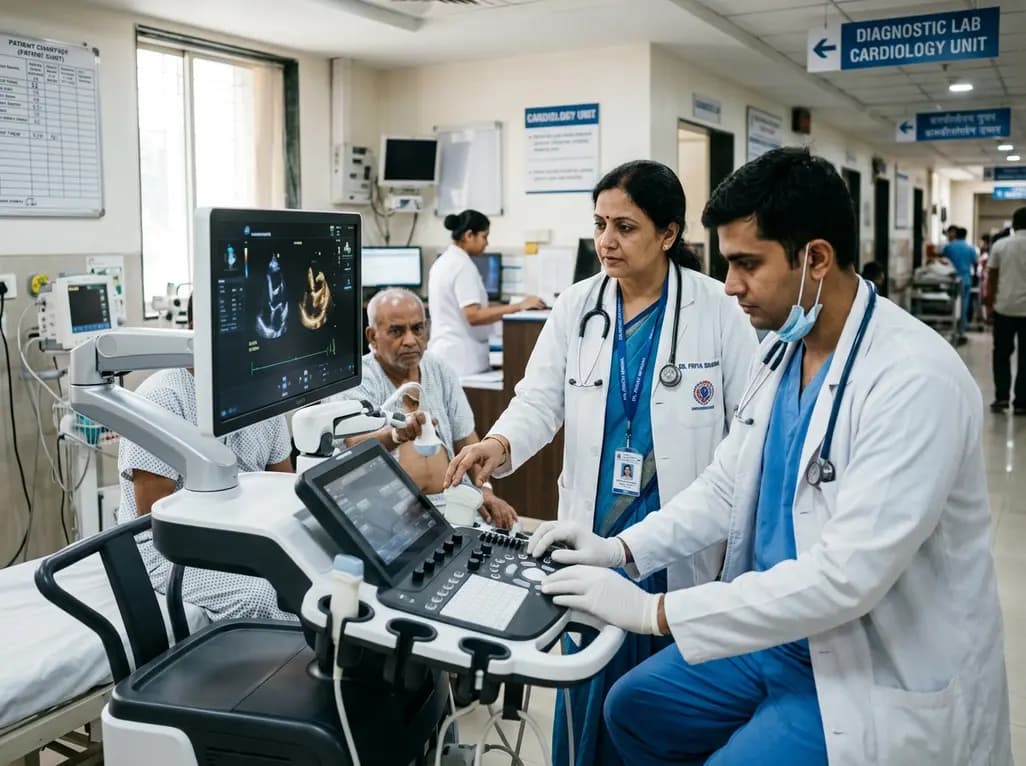
Medical robotics is transitioning beyond operative suites into diagnostics, cardiology, and endocrinology. Explore how innovations in tele-robotics, AI integration, and nanomedicine are overcoming geographical barriers and transforming precision healthcare delivery across India's evolving disease landscape.
Today
