.webp&w=384&q=75)

Loading, please wait...
Loading, please wait...

Obesity remains the most significant preventable risk factor for endometrial cancer worldwide. However, Body Mass Index (BMI) often fails to capture the metabolic complexity of obesity. Recent research focuses on visceral adipose tissue inflammation as a critical driver of tumor progression. This inflammatory state occurs when fat cells grow too large, leading to adipocyte hypertrophy and the formation of "crown-like structures" (CLS). These structures consist of macrophages surrounding dying adipocytes, signaling chronic low-grade inflammation within the omental fat.
Researchers recently conducted a retrospective study of ninety patients with endometrial cancer to evaluate these tissue markers. The study utilized deep learning algorithms to analyze preoperative computed tomography (CT) scans. Pathologists also examined omental biopsies to measure adipocyte size and identify the presence of CLS. Consequently, the team aimed to determine how these microscopic changes correlate with clinical outcomes and adipose distribution.
The findings revealed that adipocyte size strongly correlates with visceral adipose tissue areas. Furthermore, the presence of crown-like structures was significantly associated with hepatic steatosis and higher BMI. While these inflammatory markers did not directly correlate with tumor stage or grade, they showed a robust link with metabolic comorbidities. This suggests that visceral adipose tissue inflammation acts as a bridge between obesity and systemic metabolic dysfunction in cancer patients.
Interestingly, clinicians found that patients with larger fat cells were more likely to suffer from hypertension and insulin resistance. Therefore, evaluating the quality of adipose tissue may provide better insights than simply measuring weight. Although BMI is a useful screening tool, it does not account for the pro-inflammatory environment of visceral fat. This distinction is vital for personalizing care and understanding the long-term health risks for women surviving endometrial cancer.
Crown-like structures (CLS) are microscopic formations where macrophages surround a dead or dying fat cell. They serve as a primary marker for chronic inflammation in adipose tissue.
Visceral fat is more metabolically active and produces higher levels of pro-inflammatory cytokines. This contributes to insulin resistance and a systemic environment that can promote tumor growth.
While larger adipocytes correlate with metabolic issues like diabetes, current research is still investigating whether they directly impact the efficacy of chemotherapy or radiation in endometrial cancer.
Disclaimer: This content is for informational and educational purposes only. It does not constitute medical advice or a professional relationship. Always seek the advice of a physician or other qualified health provider regarding any medical condition. Refer to the latest local and national guidelines for clinical practice.
References

Read summarized clinical updates, watch expert medical content, and earn CME certifications right from your smartphone.
Open your smartphone camera to scan and install.





New research suggests that visceral adipose tissue inflammation, marked by adipocyte hypertrophy and crown-like structures, offers a deeper look into endometrial cancer risk than BMI alone. This metabolic dysfunction correlates with hepatic steatosis and systemic comorbidities in affected women.
4 months ago
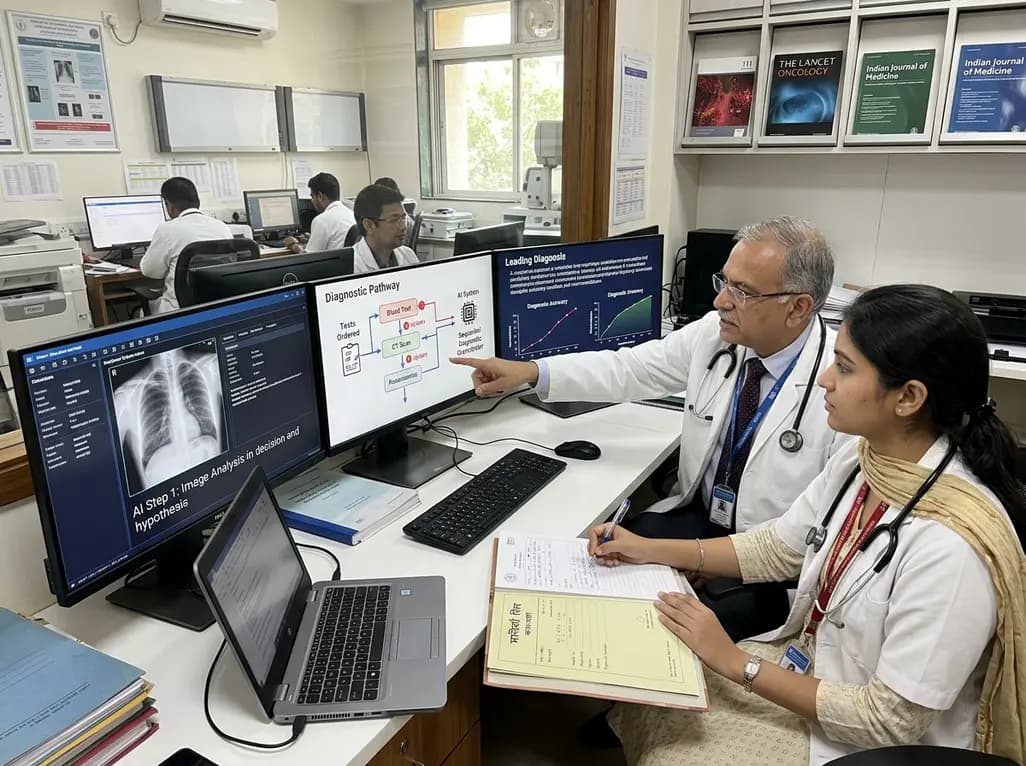
A breakthrough peer-reviewed study demonstrates that a sequential AI diagnosis system can mirror real-world clinical reasoning. By ordering stepwise tests and updating hypotheses dynamically, this multi-agent orchestrator achieved superior diagnostic accuracy while reducing investigative costs.
Today

A prenatal case highlights severe glutaric acidemia type II presenting as bilateral hyperechoic cystic kidneys at 18 weeks. Whole-exome sequencing revealed a novel homozygous ETFDH frameshift variant, demonstrating the power of rapid genetic testing in fetal renal anomalies.
Today

Review how tailored exercise programs benefit frail older patients with heart failure. Explore pathophysiological mechanisms, individualized training prescriptions, and strategies to overcome adherence barriers in clinical practice.
Yesterday

This comparative study evaluates posterior labral tears with and without glenohumeral instability, highlighting distinct demographic patterns, MRI underestimation in stable shoulders, and successful arthroscopic repair outcomes.
Yesterday

A clinical study demonstrates that early intervention with tocilizumab, either as monotherapy or bridged with corticosteroids, achieves significant proptosis reduction and resolves active inflammation in treatment-naive thyroid eye disease.
Yesterday
