.webp&w=384&q=75)

Loading, please wait...
Loading, please wait...

Understanding the virus maturation pathway is vital for the development of modern antiviral therapies and vaccines. Recent breakthroughs in cryo-electron microscopy (cryo-EM) allow scientists to visualize the structural changes that occur as a virus transitions from an immature procapsid to an infectious virion. By studying these transitions, researchers can identify specific vulnerabilities in the viral life cycle. This research is particularly relevant for virologists in India and globally who aim to tackle emerging viral threats.
Capturing the intermediate states of viral assembly has historically been difficult because these forms are transient and elusive. However, researchers have successfully used the omega virus (NωV) as a model to map these elusive steps. Moreover, by controlling environmental pH in vitro, scientists produced homogenous populations of intermediate particles. These findings provide a high-resolution map of how viruses refold and reorganize during maturation. This technology represents a significant leap forward in molecular structural biology.
During the virus maturation pathway, the NωV particle undergoes a significant size reduction. Specifically, the outer diameter shrinks from 482 Å at a neutral pH of 7.6 to 428 Å at an acidic pH of 5.0. Furthermore, structural models revealed unique refolding of the subunit N and C-terminal regions. This process includes the formation of an autocatalytic cleavage site at residue N570, which is necessary for infectivity. Consequently, these detailed structures allow for a comprehensive description of eukaryotic virus maturation for the first time.
Identifying the precise steps of maturation opens new avenues for therapeutic intervention. For instance, researchers can design drugs to stabilize intermediate states, effectively preventing the virus from reaching its infectious form. In addition, understanding these quaternary position-dependent trajectories helps clarify how complex protein shells assemble and function. Such insights remain fundamental for advancing infectious disease research and vaccine engineering.
The maturation process occurs when environmental pH levels decrease. In this model, lowering the pH from 7.6 to 5.0 mimics the environmental changes that drive the structural reorganization and contraction of the viral capsid.
Cryo-EM allows researchers to capture high-resolution snapshots of biological specimens in their native states. This technology is particularly effective at capturing fleeting intermediate states that occur too rapidly to be observed using traditional imaging methods in vivo.
Disclaimer: This content is for informational and educational purposes only. It does not constitute medical advice or professional services. Always consult a qualified healthcare provider for medical concerns. Refer to the latest local and national guidelines for clinical practice.
References
Castells-Graells R et al. Unraveling the maturation pathway of a eukaryotic virus through cryo-EM. Proc Natl Acad Sci U S A. 2026 Mar 03. doi: 10.1073/pnas.2420493123. PMID: 41739563.
Castells-Graells R et al. Decoding virus maturation with cryo-EM structures of intermediates. bioRxiv. 2024. doi: 10.1101/2024.08.31.610632.
Agrawal DK and Johnson JE. Mechanisms of viral maturation. Proc Natl Acad Sci U S A. 1995. PMID: 7479815.

Read summarized clinical updates, watch expert medical content, and earn CME certifications right from your smartphone.
Open your smartphone camera to scan and install.





A summary of the NωV virus maturation research using cryo-EM to identify five intermediate states, aiding antiviral therapy development....
7 months ago
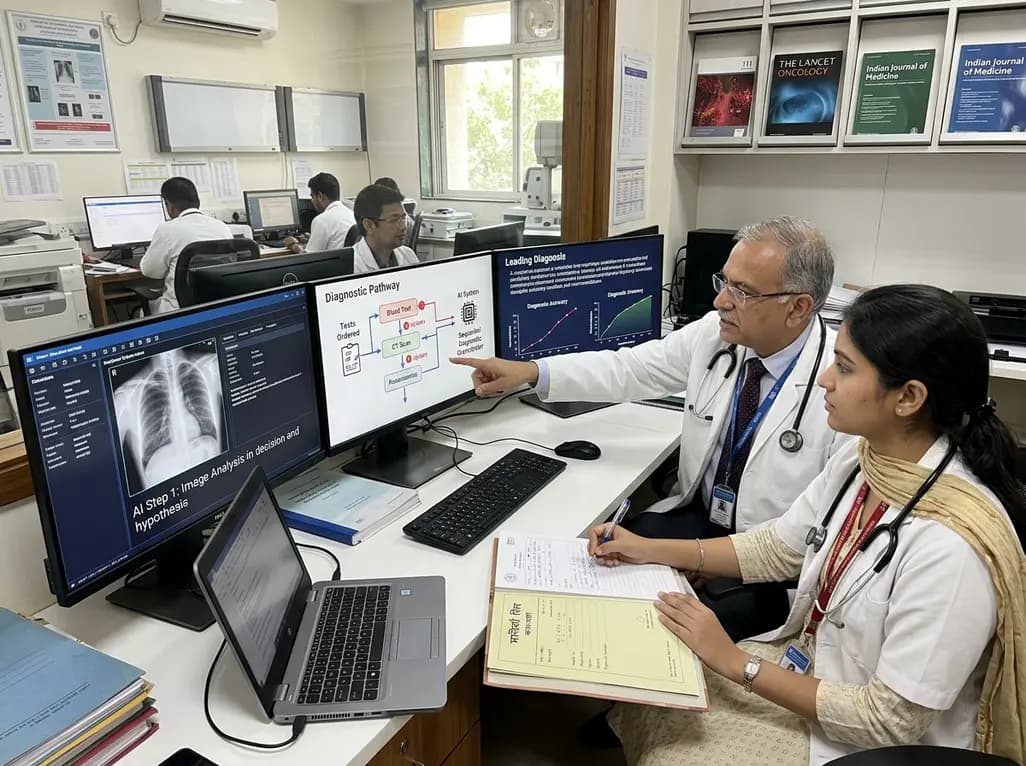
A breakthrough peer-reviewed study demonstrates that a sequential AI diagnosis system can mirror real-world clinical reasoning. By ordering stepwise tests and updating hypotheses dynamically, this multi-agent orchestrator achieved superior diagnostic accuracy while reducing investigative costs.
Today

A prenatal case highlights severe glutaric acidemia type II presenting as bilateral hyperechoic cystic kidneys at 18 weeks. Whole-exome sequencing revealed a novel homozygous ETFDH frameshift variant, demonstrating the power of rapid genetic testing in fetal renal anomalies.
Today

Review how tailored exercise programs benefit frail older patients with heart failure. Explore pathophysiological mechanisms, individualized training prescriptions, and strategies to overcome adherence barriers in clinical practice.
Yesterday

This comparative study evaluates posterior labral tears with and without glenohumeral instability, highlighting distinct demographic patterns, MRI underestimation in stable shoulders, and successful arthroscopic repair outcomes.
Yesterday

A clinical study demonstrates that early intervention with tocilizumab, either as monotherapy or bridged with corticosteroids, achieves significant proptosis reduction and resolves active inflammation in treatment-naive thyroid eye disease.
Yesterday
