

Loading, please wait...
Loading, please wait...
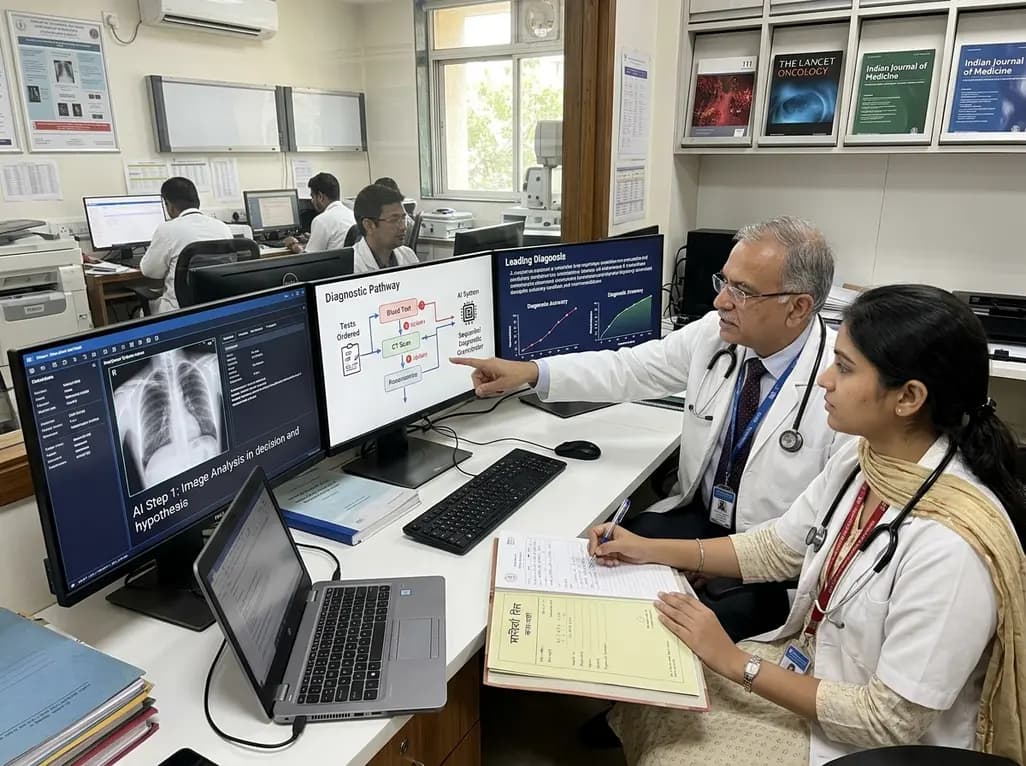
Clinical medicine rarely presents as an organized, neatly summarized textbook scenario. Modern healthcare systems constantly face diagnostic uncertainty, diagnostic delays, and unnecessary investigative spending. To address these complex diagnostic challenges, researchers have developed an innovative framework for sequential AI diagnosis. Unlike conventional artificial intelligence algorithms that ingest all patient information at once, this new approach mimics the iterative cognitive workflow of experienced human physicians. Furthermore, recent findings published in leading scientific journals show that an iterative model can dramatically enhance diagnostic precision while simultaneously curbing healthcare costs. As clinical artificial intelligence enters daily workflows, medical professionals must understand how these stepwise platforms function and evaluate their real-world clinical implications. Consequently, exploring this technological evolution offers vital insights into the future of evidence-based medical practice.
Traditional machine learning tools evaluate patient care by reviewing complete clinical summaries simultaneously. Consequently, they often overlook how physicians actually gather clinical clues over time. In contrast, sequential AI diagnosis employs a specialized orchestrator architecture that guides diagnostic reasoning step by step. First, the platform examines the patient's initial chief complaint and history of present illness. Next, the algorithm determines which specific physical examination maneuvers are necessary. Based on these initial findings, the system requests targeted routine investigations rather than shotgun panels. Therefore, the architecture avoids unnecessary lab tests and imaging studies during preliminary workups. Moreover, the platform operates like a simulated multidisciplinary clinical committee. One software agent proposes plausible differential diagnoses while another agent recommends specific investigations. Meanwhile, a third agent critically questions working assumptions to prevent premature diagnostic closure. As new laboratory data and imaging reports arrive, the orchestrator updates its clinical probability scores dynamically. Ultimately, this dynamic feedback loop mirrors human bedside reasoning far more accurately than static algorithms do. By replicating realistic clinical decision-making, the tool bridges the gap between laboratory artificial intelligence and authentic clinical practice. Thus, clinicians gain a reliable digital partner capable of navigating complex diagnostic uncertainty methodically and safely.
Researchers evaluated the diagnostic orchestrator against seasoned human physicians across hundreds of complex clinical scenarios. Specifically, investigators tested the system against challenging clinicopathological conference cases from reputable medical publications. Historically, these rare clinical puzzles require extensive subspecialty consultation and multidisciplinary insight. In direct benchmarking comparisons, generalist clinicians utilizing medical textbooks and online databases solved approximately thirty-six percent of cases correctly. However, the diagnostic orchestrator achieved an impressive accuracy rate exceeding eighty percent on identical patient histories. Additionally, investigators evaluated both cohorts on real-world emergency department admission databases to test acute decision-making. The artificial intelligence system consistently outperformed human generalists in identifying critical diagnoses under urgent conditions. Furthermore, the orchestrator demonstrated superior diagnostic yield while ordering significantly fewer diagnostic procedures. Off-the-shelf foundation models often request extensive batteries of investigations, inflating medical expenditure substantially. In contrast, the orchestrated platform curtailed diagnostic spending by twenty to seventy percent compared to both physicians and standard language models. Consequently, these findings highlight a dual advantage of heightened diagnostic accuracy paired with rigorous fiscal discipline in clinical medicine. Physicians can therefore trust the system to recommend judicious investigations without compromising patient safety or diagnostic rigor. Furthermore, adopting such evidence-based methodologies can help healthcare institutions optimize resource utilization without sacrificing patient care.
For years, medical computer science relied on standardized multiple-choice examinations to validate clinical artificial intelligence models. For example, language models regularly attained perfect scores on national licensing exam questions. However, clinical leaders emphasize that multiple-choice examinations do not reflect the ambiguity of day-to-day medical encounters. In real-world clinics, patients never arrive with concise, pre-packaged problem lists. Instead, practicing doctors must extract subtle history cues, navigate conflicting symptoms, and prioritize high-yield investigations. Static benchmarks fail to capture this essential diagnostic trade-off between information gathering and clinical risk. Moreover, older testing protocols ignore the significant financial costs associated with redundant laboratory and radiological testing. Because traditional algorithms receive all clinical data instantly, they never learn to order tests prudently. In contrast, sequential evaluation frameworks force algorithms to justify every diagnostic inquiry financially and clinically. Consequently, this methodology reveals whether an artificial intelligence model exercises sound clinical judgment or merely relies on brute computational power. Modern medical educators recognize that authentic clinical evaluation requires dynamic testing environments that simulate real patient encounters. Therefore, evaluating algorithms through sequential benchmarking represents a pivotal paradigm shift for medical education and clinical validation. Such realistic benchmarks ensure that deployed healthcare technologies deliver genuine utility at the bedside.
Emergency departments globally face severe overcrowding, prolonged patient wait times, and constrained healthcare resources. Consequently, clinicians urgently need reliable decision-support systems to accelerate triage and streamline patient intake. Currently, academic medical centers in Boston are preparing clinical trials to test sequential artificial intelligence in emergency waiting rooms. When an acute patient arrives, the diagnostic orchestrator quickly gathers presenting complaints, baseline vital signs, and immediate risk factors. Subsequently, the tool suggests initial high-priority bedside interventions and baseline laboratory workups before a physician even enters the examination room. This early preliminary assessment enables triage nurses and attending emergency physicians to prioritize deteriorating patients much faster. Furthermore, the platform helps avoid unnecessary radiological scans by systematically ruling out benign conditions through inexpensive primary tests. In busy tertiary care hospitals, such structured efficiency can relieve administrative burdens and shorten emergency department stays. Moreover, junior resident doctors can utilize the orchestrator as an interactive diagnostic mentor during overnight shifts. By reviewing the orchestrator's differential diagnoses, young trainees can refine their clinical reasoning skills and avoid cognitive diagnostic errors. Ultimately, implementing stepwise algorithmic triage strengthens both emergency operational capacity and physician diagnostic confidence. In addition, early clinical prioritization reduces emergency room bottlenecks and improves outcomes for critically ill patients.
Although stepwise algorithmic diagnostic systems demonstrate exceptional accuracy, widespread clinical adoption requires rigorous validation and ethical oversight. For instance, healthcare regulators in India and globally require robust accountability frameworks before approving autonomous diagnostic platforms. If an algorithmic recommendation leads to a misdiagnosis, legal liability remains an unresolved and complex issue. Does fault rest with the software developer, the hospital administration, or the treating clinician? Furthermore, researchers have observed that clinicians who depend heavily on diagnostic artificial intelligence may experience de-skilling over time. When technological decision support is abruptly removed, physician diagnostic performance can temporarily decline. Therefore, medical societies firmly advocate using these systems strictly as collaborative clinical assistants rather than independent decision-makers. Clinicians must always retain final interpretive authority and correlate digital recommendations with bedside examination findings. In addition, hospitals must safeguard patient confidentiality and protect sensitive health records from unauthorized data exposure. Software developers must also ensure algorithmic transparency so that clinicians comprehend why specific diagnostic paths are chosen. Ultimately, establishing balanced clinical governance will allow healthcare systems to maximize patient benefits while safeguarding traditional medical ethics. Through prudent regulatory oversight, healthcare organizations can foster trust and achieve sustainable technological integration across all clinical specialties.
Q1: How does a sequential AI diagnosis system differ from conventional medical AI models?
Conventional medical artificial intelligence models typically process all patient data at once, including complete clinical notes, imaging, and full laboratory panels. In contrast, a sequential artificial intelligence system mimics human clinical reasoning. The tool reviews the chief complaint, requests specific physical findings, and orders targeted investigations sequentially. Consequently, this iterative approach prevents unnecessary medical testing, lowers overall diagnostic expenses, and mirrors real bedside decision-making.
Q2: Can sequential AI diagnostic tools completely replace human physicians in hospitals?
No, artificial intelligence tools cannot replace qualified human doctors in hospital or outpatient settings. Although the diagnostic orchestrator demonstrates exceptional diagnostic accuracy in complex benchmark trials, medicine requires empathetic communication, physical examination skills, and contextual ethical judgment. Therefore, medical experts position these algorithmic orchestrators strictly as clinical decision-support systems. Physicians retain full legal accountability and make all final therapeutic choices for their patients.
Q3: How does the AI diagnostic orchestrator achieve significant healthcare cost savings?
Off-the-shelf artificial intelligence models often recommend exhaustive batteries of diagnostic investigations simultaneously, which inflates medical costs. Conversely, the diagnostic orchestrator operates as a simulated panel of medical specialists who strategically select high-value, cost-effective tests step by step. By eliminating redundant laboratory panels and avoiding unwarranted advanced imaging, the orchestrator achieves superior diagnostic accuracy while reducing investigative expenses by twenty to seventy percent.
Disclaimer: This content is for informational and educational purposes only. It does not constitute medical advice or replace professional judgment. Refer to the latest local and national guidelines for clinical practice.
References

Read summarized clinical updates, watch expert medical content, and earn CME certifications right from your smartphone.
Open your smartphone camera to scan and install.





A breakthrough peer-reviewed study demonstrates that a sequential AI diagnosis system can mirror real-world clinical reasoning. By ordering stepwise tests and updating hypotheses dynamically, this multi-agent orchestrator achieved superior diagnostic accuracy while reducing investigative costs.
Today

A prenatal case highlights severe glutaric acidemia type II presenting as bilateral hyperechoic cystic kidneys at 18 weeks. Whole-exome sequencing revealed a novel homozygous ETFDH frameshift variant, demonstrating the power of rapid genetic testing in fetal renal anomalies.
Today

Review how tailored exercise programs benefit frail older patients with heart failure. Explore pathophysiological mechanisms, individualized training prescriptions, and strategies to overcome adherence barriers in clinical practice.
Yesterday

This comparative study evaluates posterior labral tears with and without glenohumeral instability, highlighting distinct demographic patterns, MRI underestimation in stable shoulders, and successful arthroscopic repair outcomes.
Yesterday

A clinical study demonstrates that early intervention with tocilizumab, either as monotherapy or bridged with corticosteroids, achieves significant proptosis reduction and resolves active inflammation in treatment-naive thyroid eye disease.
Yesterday
