.webp&w=384&q=75)

Loading, please wait...
Loading, please wait...
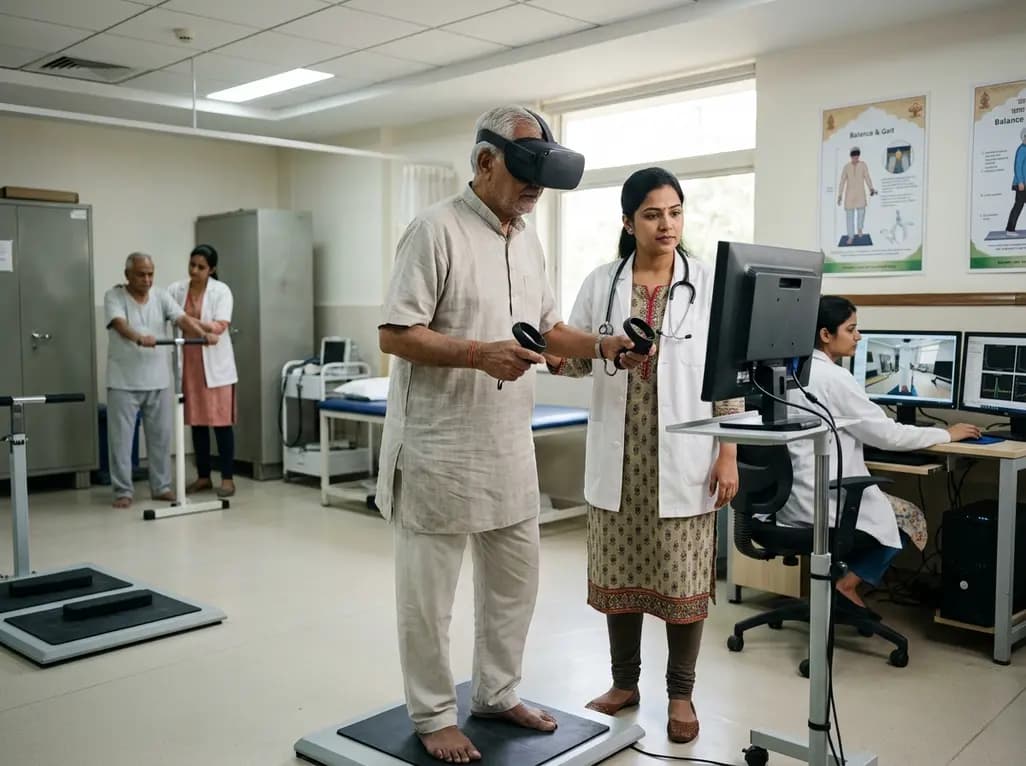
Falls in the geriatric population represent a significant public health challenge globally and specifically within India, where the aging demographic is expanding rapidly. Consequently, clinicians are increasingly seeking innovative, non-pharmacological interventions to mitigate these risks. Virtual reality fall prevention has emerged as a front-runner in this domain, offering a safe yet challenging environment for neuromuscular retraining. Traditionally, physical therapy has relied on balance boards and manual resistance, which, while effective, often fail to address the psychological barriers to movement. Modern simulation technology bridges this gap by immersing patients in controlled digital scenarios that mimic real-world hazards without the physical danger of an actual fall.
By integrating immersive experiences, healthcare providers can better engage older adults who might otherwise be hesitant to participate in rigorous exercise. Furthermore, the ability to track precise movements using inertial sensors allows for a more granular assessment of progress. As clinical evidence grows, the shift toward technology-driven rehabilitation seems inevitable. This article explores recent clinical findings regarding the efficacy of simulation-based protocols in improving functional mobility and reducing the pervasive fear of falling that often leads to sedentary lifestyles and further physical decline.
Simulation technology operates on the principle of neuroplasticity, where repeated exposure to sensory-rich environments encourages the brain to forge new neural pathways for balance and coordination. Unlike conventional exercises, virtual reality fall prevention provides real-time multimodal feedback, including visual, auditory, and sometimes haptic cues. This multisensory integration is crucial for older adults whose proprioceptive and vestibular systems may be compromised. Therefore, when a patient navigates a virtual obstacle course, they are not just moving their limbs; they are training their central nervous system to process complex environmental data more efficiently.
Notably, the use of exergames—exercises disguised as games—increases patient motivation and adherence. When therapy feels like play, the physiological stress response associated with "scary" balance exercises is significantly dampened. Additionally, these systems can be tailored to the specific needs of the individual, allowing for a progressive increase in difficulty as the patient’s confidence and strength improve. This personalized approach ensures that the intervention remains challenging enough to promote adaptation without being so difficult that it causes frustration or exhaustion. Ultimately, the goal is to translate these digital gains into real-world stability and independence.
A pivotal study conducted by Pacheco-Salinas R et al. investigated the impact of simulation technology on fall prevention among fifty older adults in Querétaro. This open-label randomized trial compared a virtual reality protocol against a conventional physical therapy control group. The researchers utilized standardized metrics, including the Falls Efficacy Scale-International (FES-I), the Tampa Scale of Kinesiophobia (TSK-11), and the Timed Up and Go (TUG) test equipped with high-precision inertial sensors. Specifically, the experimental group underwent ten sessions of VR-based training, while the control group received standard care.
The results were statistically significant, showing that the virtual reality fall prevention group demonstrated improvements across all scales. In contrast, while the control group showed some progress, it was markedly less significant than that of the VR group. The TUG test data, refined by sensor technology, revealed better gait stability and faster transition times in the simulation group. Consequently, the researchers concluded that VR interventions offer a superior alternative for diversifying fall prevention strategies. These findings emphasize that technological integration does not just supplement traditional therapy but may actually enhance the biological response to rehabilitation, leading to more sustainable outcomes in geriatric safety and mobility.
One of the most profound benefits of virtual reality fall prevention is its impact on kinesiophobia, or the pathological fear of movement. For many older adults, a previous fall creates a cycle of anxiety where the individual avoids activity to prevent future injuries, which paradoxically leads to muscle wasting and a higher fall risk. The Pacheco-Salinas trial specifically highlighted improvements in TSK-11 scores, suggesting that the immersive nature of VR helps desensitize patients to the fear of falling. By performing movements in a virtual space where the risk of injury is zero, patients can push their physical boundaries in ways they would never attempt in a hallway or gym.
Furthermore, the cognitive distraction provided by the VR environment helps shift the patient's focus away from their fear and toward the task at hand. This psychological shift is essential for long-term recovery. When an older adult realizes they can successfully navigate a virtual landscape, that confidence often transfers to their daily activities. Improving the FES-I scores indicates that patients feel more capable of performing activities of daily living without falling. Therefore, addressing the psychological component of balance is just as critical as the physical component, and simulation technology serves as a powerful tool for this dual-purpose rehabilitation.
As we look toward the future of geriatric care, the integration of virtual reality fall prevention into clinical settings offers a roadmap for modernized rehabilitation. For practitioners in India, where access to specialized geriatric physical therapists may be limited in certain regions, VR systems can provide a standardized, high-quality intervention that is less labor-intensive for the staff. While the initial investment in hardware may seem high, the long-term benefits of reduced hospitalization from fall-related hip fractures and head injuries provide a compelling economic argument. Moreover, the data-driven nature of these systems allows for better documentation of patient progress, which is increasingly important in evidence-based medicine.
Clinicians should consider simulation not as a replacement for human touch but as a specialized tool that extends the therapist's reach. For instance, sensors can detect subtle gait asymmetries that the naked eye might miss, allowing for earlier intervention. Additionally, the portability of modern VR headsets means that these protocols could eventually be adapted for home-based use under remote supervision. By embracing these technological advancements, the medical community can offer more dynamic, effective, and engaging care for the elderly, ultimately enhancing their quality of life and longevity. Continuous research and local pilot programs will be essential to refine these protocols for the diverse Indian population.
Virtual reality fall prevention often yields superior results because it combines physical exercise with high-intensity cognitive engagement. While traditional therapy focuses on muscle strength and basic balance, VR forces the brain to process complex visual and auditory feedback simultaneously. This dual-tasking mimics real-world conditions more accurately than a quiet clinic setting, leading to better functional outcomes and increased patient confidence during daily activities.
Kinesiophobia is an intense fear of physical movement resulting from a vulnerability to painful injury or reinjury. In the context of the elderly, it usually follows a fall. Simulation technology treats this by providing a safe, controlled environment where patients can practice balance-challenging tasks. Because the virtual world is perceived as a game, patients often bypass their usual anxiety, allowing them to rebuild physical strength and mental confidence.
Yes, virtual reality protocols are generally very safe because they are conducted under professional supervision, often while the patient is wearing a safety harness or sitting in a secure chair for initial sessions. The intensity and difficulty levels are adjustable to match the patient's specific frailty level. Furthermore, the use of inertial sensors ensures that any instability is immediately detected, preventing actual falls during the training sessions themselves.
Disclaimer: This content is for informational and educational purposes only and does not constitute professional medical advice, diagnosis, or treatment. Always seek the advice of your physician or other qualified health provider with any questions you may have regarding a medical condition. Refer to the latest local and national guidelines for clinical practice.
References
Pacheco-Salinas R et al. [The Impact of Simulation Technology on Fall Prevention: A Clinical Trial in Older Adults]. Rev Esp Geriatr Gerontol. 2026 Jul 06. doi: undefined. PMID: 42407167.
Wang Y et al. (2024). The effectiveness of immersive virtual reality on balance and prevention of falls in older adults: A systematic review and meta-analysis. Journal of Clinical Nursing, 33(1), 1588-1589.
Zhu S et al. (2025). Research trends and effectiveness of VR-based fall prevention: A PRISMA-compliant systematic review. PMC11289102.

Read summarized clinical updates, watch expert medical content, and earn CME certifications right from your smartphone.
Open your smartphone camera to scan and install.





A recent clinical trial by Pacheco-Salinas R et al. demonstrates that virtual reality-based simulation technology effectively reduces fall risk and fear of movement (kinesiophobia) in older adults, outperforming conventional physical therapy in key mobility metrics.
3 months ago
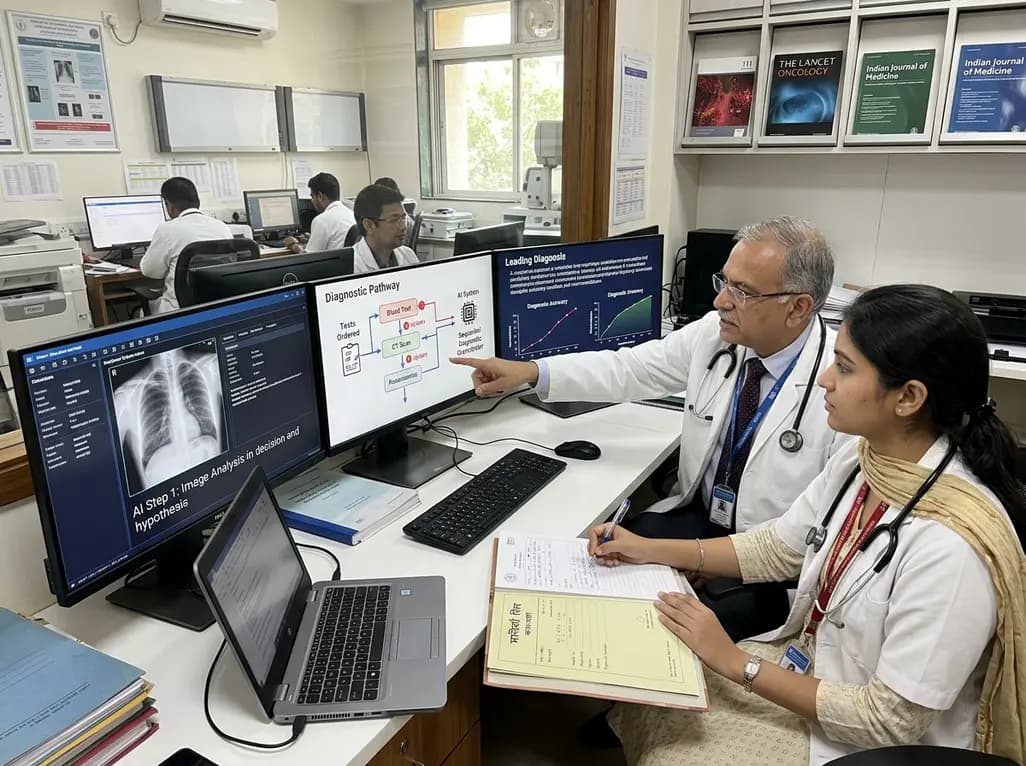
A breakthrough peer-reviewed study demonstrates that a sequential AI diagnosis system can mirror real-world clinical reasoning. By ordering stepwise tests and updating hypotheses dynamically, this multi-agent orchestrator achieved superior diagnostic accuracy while reducing investigative costs.
Today

A prenatal case highlights severe glutaric acidemia type II presenting as bilateral hyperechoic cystic kidneys at 18 weeks. Whole-exome sequencing revealed a novel homozygous ETFDH frameshift variant, demonstrating the power of rapid genetic testing in fetal renal anomalies.
Today

Review how tailored exercise programs benefit frail older patients with heart failure. Explore pathophysiological mechanisms, individualized training prescriptions, and strategies to overcome adherence barriers in clinical practice.
Yesterday

This comparative study evaluates posterior labral tears with and without glenohumeral instability, highlighting distinct demographic patterns, MRI underestimation in stable shoulders, and successful arthroscopic repair outcomes.
Yesterday

A clinical study demonstrates that early intervention with tocilizumab, either as monotherapy or bridged with corticosteroids, achieves significant proptosis reduction and resolves active inflammation in treatment-naive thyroid eye disease.
Yesterday
