.webp&w=384&q=75)

Loading, please wait...
Loading, please wait...

Postpartum depression (PPD) remains a significant challenge for maternal and infant health across the globe. While traditional pharmacological treatments exist, non-pharmacological interventions like Vimala infant massage are gaining recognition for their therapeutic benefits. This ancient practice, rooted in Indian traditions, fosters a unique bond through intentional skin-to-skin contact.
A recent quasi-experimental study evaluated 90 mothers to assess the impact of this technique on maternal mental health. Initially, 23.33% of the participants exhibited symptoms of PPD, which is higher than the global reported average of 17.22%. However, after the intervention, the proportion of mothers with depressive symptoms dropped significantly to 11.11%. This reduction demonstrates that infant massage serves as a powerful tool for emotional regulation and psychological recovery.
Furthermore, the intervention specifically addressed the heavy burden of self-blame often associated with maternal mood disorders. The study recorded a delta of -34 in affirmative responses related to self-blame after the massage sessions. Consequently, mothers felt more confident and emotionally connected to their newborns. The tactile stimulation involved in the massage likely triggers the release of oxytocin, which helps counteract stress and anxiety.
The research also highlighted the critical role of social support systems in maternal well-being. Mothers without a partner faced a four-fold increase in the risk of developing PPD. Therefore, healthcare providers should prioritize these high-risk groups when recommending infant massage training. Strengthening the mother-child bond through massage can provide essential emotional resilience during the early postpartum weeks.
Vimala infant massage promotes skin-to-skin contact, which triggers the release of oxytocin and dopamine. These hormones improve mood, reduce stress levels, and strengthen the emotional bond between the mother and her baby.
The study found a significant reduction in feelings of self-blame among mothers. By focusing on their infant's cues and providing nurturing touch, mothers gained confidence and reduced their negative self-perceptions.
While all mothers can benefit, training is especially vital for those at high risk, such as mothers without a partner. Healthcare professionals like pediatricians and nurses should integrate these classes into early postnatal care routines.
Disclaimer: This content is for informational and educational purposes only. It does not constitute medical advice or a substitute for professional healthcare. Refer to the latest local and national guidelines for clinical practice.
References

Read summarized clinical updates, watch expert medical content, and earn CME certifications right from your smartphone.
Open your smartphone camera to scan and install.





Research reveals that Vimala infant massage reduces postpartum depression symptoms, lowering rates from 23.33% to 11.11% in new mothers....
5 months ago
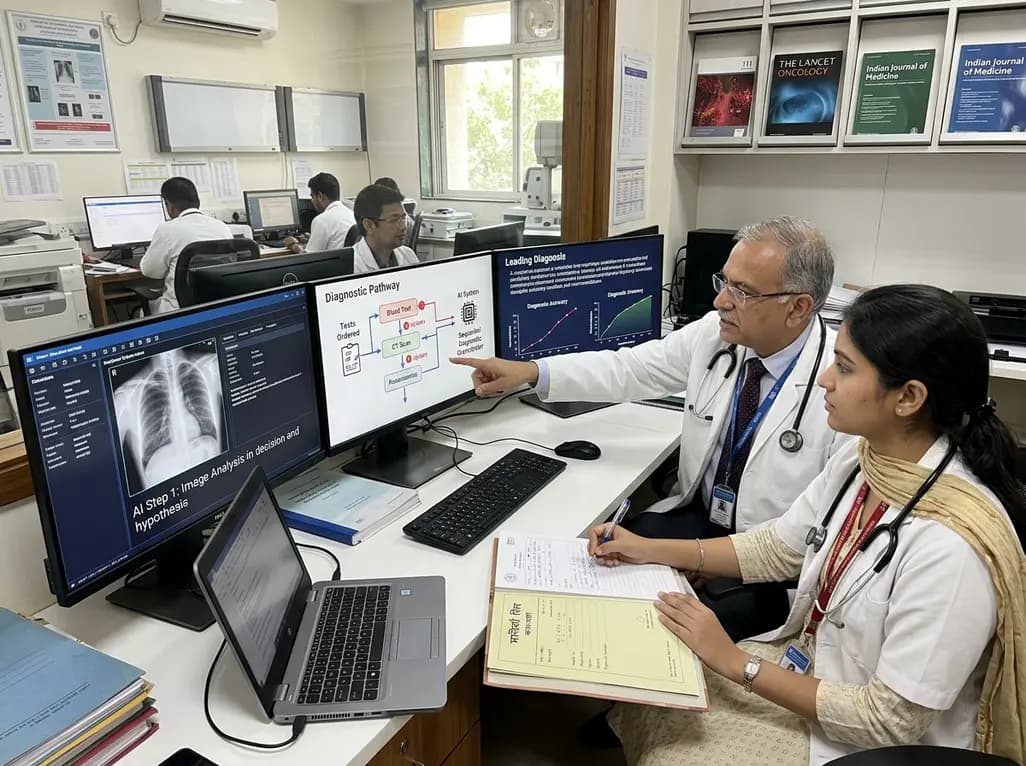
A breakthrough peer-reviewed study demonstrates that a sequential AI diagnosis system can mirror real-world clinical reasoning. By ordering stepwise tests and updating hypotheses dynamically, this multi-agent orchestrator achieved superior diagnostic accuracy while reducing investigative costs.
Today

A prenatal case highlights severe glutaric acidemia type II presenting as bilateral hyperechoic cystic kidneys at 18 weeks. Whole-exome sequencing revealed a novel homozygous ETFDH frameshift variant, demonstrating the power of rapid genetic testing in fetal renal anomalies.
Today

Review how tailored exercise programs benefit frail older patients with heart failure. Explore pathophysiological mechanisms, individualized training prescriptions, and strategies to overcome adherence barriers in clinical practice.
Yesterday

This comparative study evaluates posterior labral tears with and without glenohumeral instability, highlighting distinct demographic patterns, MRI underestimation in stable shoulders, and successful arthroscopic repair outcomes.
Yesterday

A clinical study demonstrates that early intervention with tocilizumab, either as monotherapy or bridged with corticosteroids, achieves significant proptosis reduction and resolves active inflammation in treatment-naive thyroid eye disease.
Yesterday
