.webp&w=384&q=75)

Loading, please wait...
Loading, please wait...

Optimizing vestibular schwannoma treatment outcomes remains a primary goal for clinicians managing elderly patients with small- to medium-sized tumors. Specifically, many practitioners must decide between active surveillance and stereotactic radiosurgery (SRS) for Koos grade I and II lesions. A recent international multicenter study provided high-quality data to guide this decision-making process. By evaluating patients aged 60 and older, the researchers assessed which approach offers better long-term stability and functional preservation.
The study utilized propensity score matching to compare 51 patients in both the observation and SRS groups. Notably, tumor progression rates were significantly lower in the SRS cohort compared to those under observation. For instance, the SRS group showed only 2% progression, while the observation group reached 52.9%. Furthermore, the five-year freedom from tumor progression rate was 98% for SRS compared to just 33% for observation. Consequently, these findings suggest that upfront SRS provides superior local control for older adults.
Clinical functional outcomes remained relatively similar between the two management strategies. For example, researchers observed no significant difference in serviceable hearing preservation between groups. Additionally, most neurological functions, including facial nerve performance and vestibular symptoms, did not differ statistically. However, the study did note one case of new trigeminal nerve dysfunction following SRS. Therefore, while SRS effectively halts tumor growth, clinicians should still discuss potential minor risks with their patients. Overall, SRS appears to be a safe and highly effective alternative to passive observation in this demographic.
No, according to the study findings. Serviceable hearing preservation rates were comparable between the SRS and observation groups. Both strategies allow for similar levels of auditory function over time.
While observation is a common initial strategy, this study shows that 52.9% of observed tumors progressed. SRS offers much higher tumor control rates, making it a viable alternative for patients seeking definitive stability.
SRS is generally safe and maintains neurological function well. However, there is a very low risk of trigeminal nerve dysfunction, as observed in a small percentage of cases in this study.
Disclaimer: This content is for informational and educational purposes only. It does not constitute professional medical advice, diagnosis, or treatment. Always seek the advice of your physician or other qualified healthcare provider with any questions you may have regarding a medical condition. Refer to the latest local and national guidelines for clinical practice.
References
Ishaque M et al. Active surveillance versus stereotactic radiosurgery for Koos grade I and II vestibular schwannoma in patients aged 60 years or older. J Neurosurg. 2026 May 15. doi: 10.3171/2026.1.JNS242756. PMID: 42139729.
American Society for Radiation Oncology (ASTRO). Vestibular Schwannoma Management Guidelines. Available at: https://www.astro.org
AAO-HNS Foundation. Contemporary Management of Vestibular Schwannoma. Available at: https://aao-hns.org

Read summarized clinical updates, watch expert medical content, and earn CME certifications right from your smartphone.
Open your smartphone camera to scan and install.





A multicenter study comparing SRS and observation for small- to medium-sized vestibular schwannoma in seniors found SRS significantly reduces tumor progress...
5 months ago

Recent epidemiological data reveals a dramatic surge in summer heat mortality driven by human-induced climate warming. This analysis explores the pathophysiological impacts on cardiac and renal systems, diagnostic dilemmas in death certification, and essential emergency cooling protocols for acute clinical care.
Today

Odisha has established India's first state-level clinical protocol specifically tailored for pregnant women with sickle cell disease. Developed with NHM and UNICEF, the framework provides structured antenatal screening, crisis mitigation, standardized referral pathways, and specialized interdisciplinary care.
Today

India is advancing preventive healthcare by integrating genomics, artificial intelligence, and quantum technologies. With the SANGAM programme sequencing one million Indian genomes, clinicians can unlock personalized therapies, detect cardiometabolic risks early, and curb the burden of diabetes and heart disease.
Today
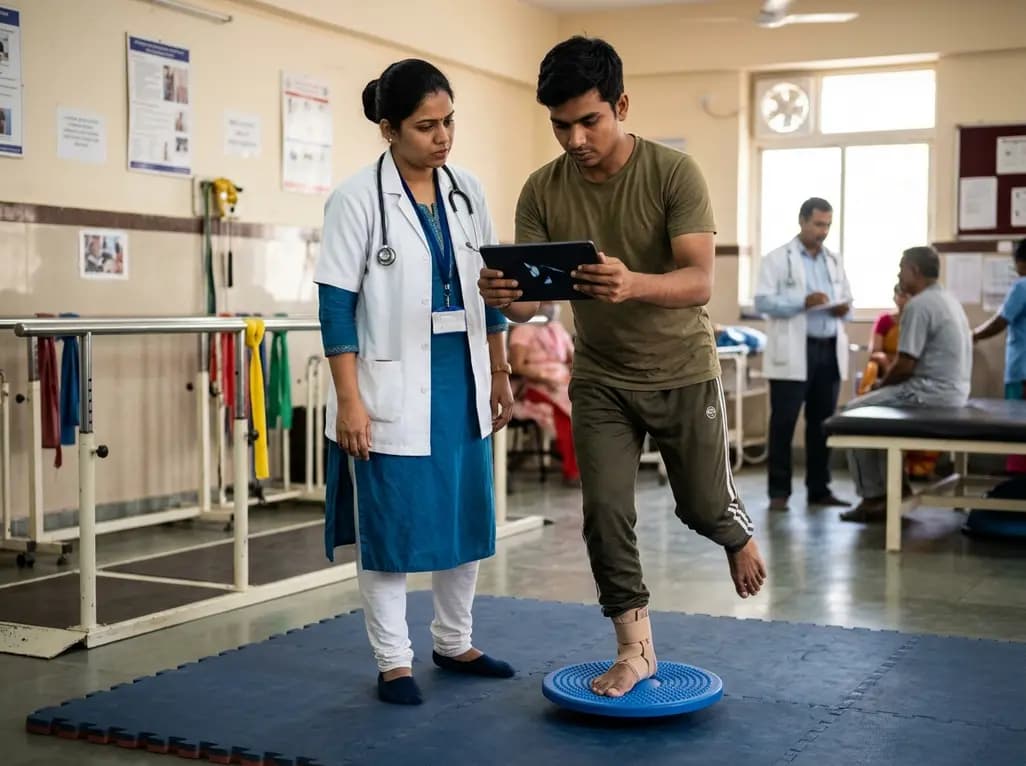
A randomized controlled trial demonstrates that an eight-week dual-task training intervention significantly improves static and dynamic postural control over standard balance exercises in individuals with chronic ankle instability, addressing critical neurocognitive deficits during athletic and daily activities.
Today

A retrospective cohort study of 7,716 ICU patients from the MIMIC-IV database demonstrates that Gradient Boosting Decision Trees significantly outperform traditional SOFA scores in predicting in-hospital mortality among patients with sepsis and diabetes, with SHAP analysis providing clinical interpretability.
Today
