.webp&w=384&q=75)

Loading, please wait...
Loading, please wait...

Stroke frequently impairs expressive communication and disrupts grammatical morphology. In particular, deficits in verb inflection in aphasia compromise everyday conversational fluency and sentence construction. When individuals attempt to conjugate verbs into the past tense, they stumble over grammatical rules and irregular word forms. Historically, aphasiologists debated whether morphological processing relies on an isolated grammatical module or distributed cognitive sub-skills. Expressive speech requires the dynamic integration of phonological assembly, motor sequencing, and conceptual knowledge. Patients with left perisylvian injuries often omit inflectional affixes or generate incorrect substitutions. Consequently, expressing temporal relationships becomes an exhausting struggle for stroke survivors. While clinicians easily identify verb deficits during bedside evaluations, the exact contribution of underlying linguistic components has remained uncertain. Does inflection failure arise from degraded word meaning, or does it reflect impaired phonological encoding? Investigating how core phonological and semantic networks predict past tense generation offers valuable insights into language recovery. Therefore, clarifying these mechanisms is vital for neurorehabilitation. Furthermore, discerning these relationships enables clinicians to design precise, patient-tailored interventions that target the root cognitive impairment rather than superficial verbal symptoms.
To unravel these relationships, investigators evaluated fourteen individuals with chronic post-stroke aphasia resulting from left perisylvian lesions. Each participant completed an extensive battery of neuropsychological assessments targeting expressive and receptive abilities. Researchers assessed phonological processing through sublexical tasks, such as non-word repetition, phoneme discrimination, and phonological segmentation. Concurrently, they measured semantic integrity using comprehensive picture-word matching, category sorting, and synonym judgment assessments. Furthermore, participants completed a structured past tense verb inflection task comprising four distinct stimulus categories. Specifically, investigators tested regular verbs requiring predictable dental suffixation, such as slapped. They also evaluated weak-irregular verbs requiring both stem-vowel shifts and terminal suffixation, like slept. Additionally, researchers examined strong-irregular verbs undergoing internal vowel changes without alveolar markers, such as sang. Finally, investigators presented pseudo-verbs to analyze novel rule-based morphophonological transformations without semantic memory support. Using principal component analysis, the authors reduced testing variables into distinct cognitive factors. Subsequently, these factor scores entered multiple regression models to determine how phonology and semantics predict performance across verb classes. This methodological framework enabled researchers to isolate specific computational influences within complex expressive language networks.
The statistical analyses demonstrated clear functional distinctions between phonological and semantic contributions. Crucially, phonological ability emerged as an essential predictor across all verb categories. Stronger phonological performance predicted higher accuracy for regular verbs, weak-irregular verbs, strong-irregular verbs, and pseudo-verbs. Because creating past tense forms requires complex sound assembly and phoneme sequencing, intact phonology remains fundamental for every inflectional output. Conversely, semantic skills demonstrated a highly selective predictive role. Semantic composite scores significantly predicted inflection accuracy exclusively for strong-irregular verbs. Unlike regular verbs, strong-irregular forms like sang do not rely on standard lingua-dental affixes. Instead, speakers must retrieve these unique lexical entries directly from semantic memory stores. Consequently, individuals with phonological deficits experience widespread grammatical difficulty across all verb types. In contrast, patients with prominent semantic impairment stumble primarily when generating idiosyncratic irregular words. These findings reveal that past tense inflection relies on a graded division of cognitive labor rather than a single rule engine. Therefore, effective verb production requires balanced, continuous cooperation between acoustic-phonetic planning and conceptual representations. Furthermore, this selective reliance highlights the interactive architecture governing lexical access in the damaged human brain.
To uncover the anatomical circuitry supporting these processes, the study conducted exploratory voxel-based lesion symptom mapping. This advanced neuroimaging method links specific structural damage with quantitative language outcomes across stroke survivors. The analysis confirmed that left perisylvian network disruption directly impairs past-tense generation. Specifically, lesions within the left inferior frontal gyrus and adjacent precentral areas correlated with impaired phonological processing and regular inflection. Because the anterior language zone governs motor speech planning and articulatory assembly, damage here compromises suffix concatenation. In contrast, lesions involving the left middle and inferior temporal gyri impaired semantic knowledge and irregular verb production. These temporal regions house distributed lexical storage networks necessary for retrieving arbitrary word associations. Additionally, structural damage within the arcuate fasciculus and superior temporal gyrus disrupted fluid communication between sound and meaning systems. These neuroanatomical mappings provide compelling biological validation for connectionist cognitive theories. Rather than locating inflection within an isolated morphological center, the data show that grammar emerges from coordinated frontal and temporal interactions. Consequently, the anatomical extent of vascular injury directly shapes individual communicative impairments. Furthermore, these structural insights guide clinicians toward targeted prognostic expectations.
These findings provide actionable clinical guidance for neurologists, physiatrists, and speech-language pathologists managing post-stroke aphasia. When evaluating expressive communication, clinicians must not treat agrammatism as a uniform grammatical failure. Instead, therapists should evaluate underlying phonological and semantic components separately using formal psycholinguistic batteries. For patients exhibiting pronounced phonological breakdown alongside phonemic errors, rehabilitation must target sound sequencing. Clinicians can utilize phonological components analysis, non-word repetition training, and syllable assembly tasks to rebuild phonological structure. Conversely, when patients struggle specifically with irregular verbs while retaining regular affixation, therapy should focus on semantic access. Therapists can employ semantic feature analysis, category grouping, and contextual sentence priming to strengthen irregular lexical retrieval. Furthermore, integrating multi-modal cues involving auditory, visual, and written stimuli facilitates neuroplastic reorganization across damaged perisylvian boundaries. Personalized treatment plans addressing specific cognitive mechanisms yield superior communication outcomes compared to generic language exercises. Ultimately, translating cognitive neuroscience into clinical practice empowers clinicians to deliver precise, evidence-based neurorehabilitation that restores meaningful verbal expression for stroke survivors. Consequently, systematic cognitive profiling serves as an indispensable cornerstone of contemporary post-stroke speech therapy.
Lesions in left perisylvian cortex cause distinct grammatical deficits. Damage to anterior frontal structures impairs phonological sequencing, disrupting regular and irregular verb conjugation alike. In contrast, lesions in left middle and inferior temporal regions degrade semantic representations, which selectively impedes the retrieval of strong irregular verbs lacking standard alveolar endings.
Strong irregular verbs like sang or broke do not follow predictable grammatical rules or alveolar suffixation. Instead, speakers must retrieve these unique past tense words directly from the mental lexicon. Consequently, individuals with aphasia rely on semantic memory to activate these idiosyncratic lexical entries and suppress default regularizations.
Rehabilitation strategies must match the patient's specific neurocognitive deficit. Clinicians address phonological impairment using phonological components analysis and structured sound production drills. Conversely, when semantic deficits hinder irregular verb inflection, therapists employ semantic feature analysis and associative cueing to reinforce connections between conceptual meaning and unique morphological forms.
Disclaimer: This content is for informational and educational purposes only and is not intended to substitute for professional medical advice, diagnosis, or treatment. Refer to the latest local and national guidelines for clinical practice.
References
Kielar A et al. Phonological and semantic skills predict past tense verb inflection ability in perisylvian aphasia. Neuropsychologia. 2026 Sep 09. doi: 10.1016/j.neuropsychologia.2026.109528. PMID: 42252053.
Butler R, Patterson K, Woollams AM. In search of meaning: semantic effects on past-tense inflection. Q J Exp Psychol (Hove). 2012;65(8):1633-1656. doi: 10.1080/17470218.2012.661441.
Jebahi F, Kielar A. The relationship between semantics, phonology, and naming performance in aphasia: a structural equation modeling approach. Cogn Neuropsychol. 2024;41(3-4):113-128. doi: 10.1080/02643294.2024.2373842.

Read summarized clinical updates, watch expert medical content, and earn CME certifications right from your smartphone.
Open your smartphone camera to scan and install.





A recent neurocognitive study demonstrates that phonological and semantic skills differentially predict past tense verb inflection in aphasia. Lesion symptom mapping links frontal and temporal perisylvian regions to these processes, providing crucial insights for targeted post-stroke speech rehabilitation.
Today
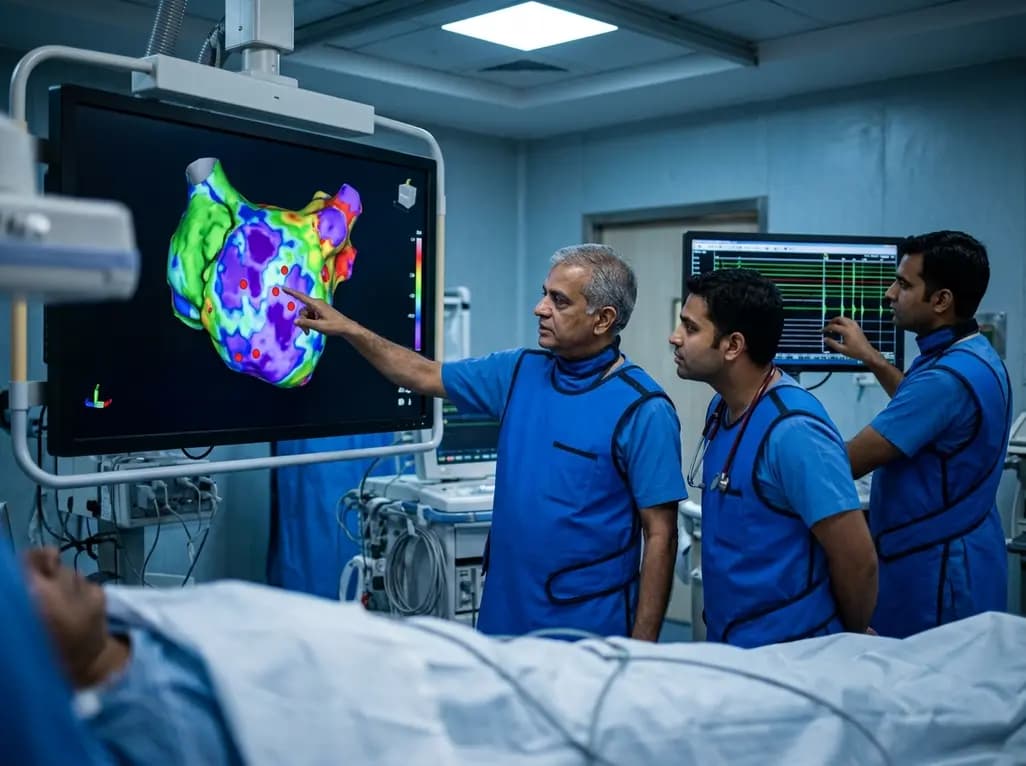
A study of 1,428 AF ablation patients reveals that over 60% of left atrial non-PV triggers arise within low-voltage areas, with anterior and roof triggers colocalizing entirely within fibrotic substrate. Identifying and ablating these sites is critical for long-term arrhythmia freedom.
Today

A comprehensive meta-analysis of over 278,000 women demonstrates that maternal atopic dermatitis significantly increases risks of premature rupture of membranes and low birth weight. Discover essential clinical insights on disease mechanisms, serial antenatal growth monitoring, and safe therapeutic interventions.
Today
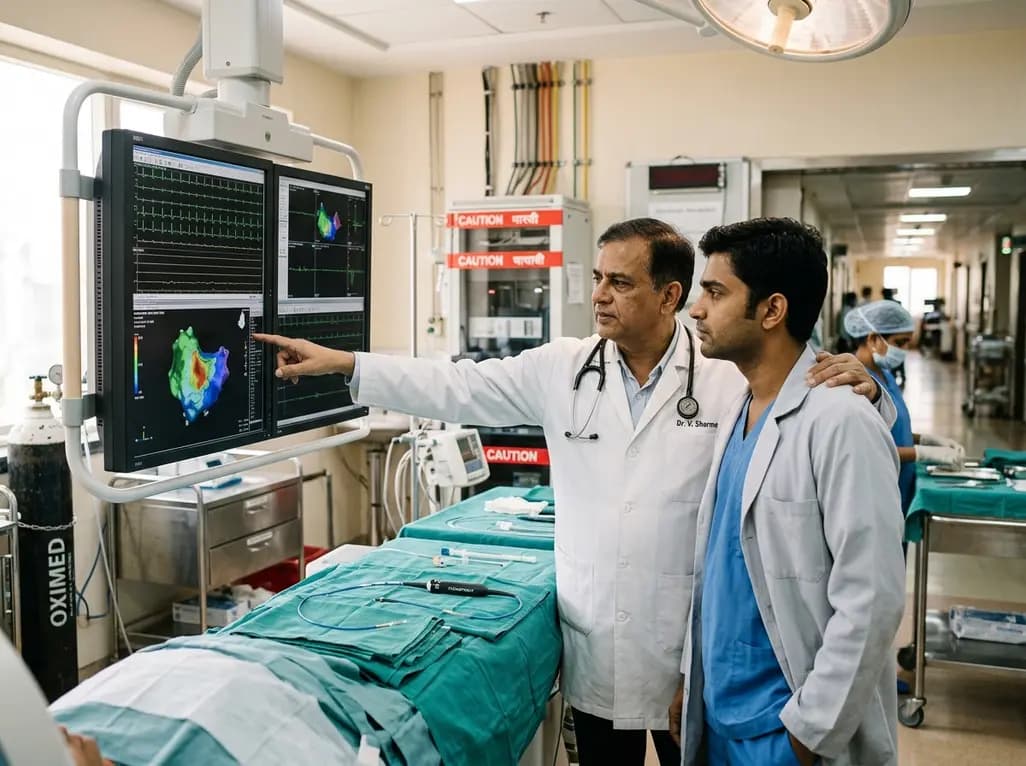
A pioneering study highlights the first United States experience using the FARAPOINT focal pulsed-field ablation catheter for refractory ventricular tachycardia. The catheter achieved complete acute non-inducibility across tested patients without procedural complications, marking a milestone in ventricular ablation.
Today

A biomechanical study shows that augmenting thin fascia lata grafts with a reinforced polyester patch doubles ultimate tensile strength and stiffness, matching the performance of thick grafts for superior capsule reconstruction while reducing donor-site morbidity.
Today

A cross-sectional study reveals that elevated METS-IR is independently associated with higher myopia odds in adolescents, showing biological synergy with obesity and highlighting the need for metabolic screening in pediatric eye care.
Today
