.webp&w=384&q=75)

Loading, please wait...
Loading, please wait...
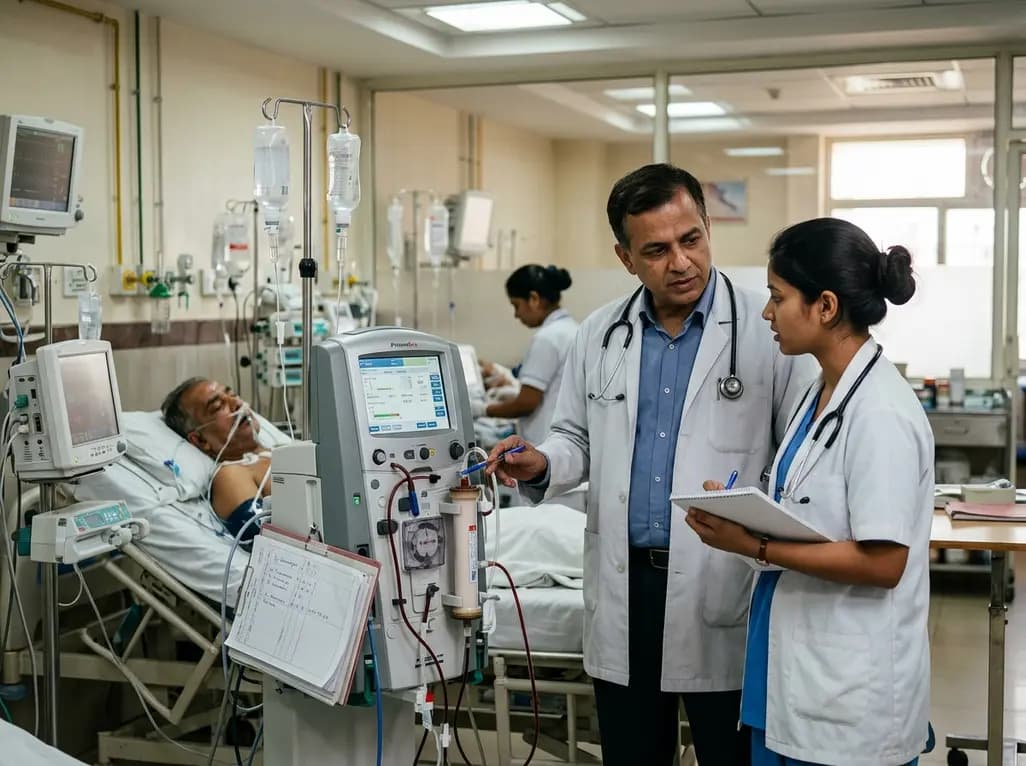
Acute kidney injury represents a severe and frequent complication among critically ill patients admitted to intensive care units. When severe renal dysfunction occurs, clinicians frequently initiate continuous renal replacement therapy to manage fluid overload, metabolic acidosis, and electrolyte derangements. However, managing antimicrobial therapy in these patients remains a persistent clinical challenge. Specifically, optimizing vancomycin dosing in CRRT requires an acute understanding of altered drug disposition. Critical illness induces substantial physiological shifts, including third spacing, altered protein binding, and capillary leak syndrome. Concurrently, extracorporeal circuits continuously clear small to medium-sized water-soluble molecules from the bloodstream. Because vancomycin possesses a narrow therapeutic window and hydrophilic properties, standard empiric regimens frequently fail to achieve therapeutic concentrations. Inadequate exposure risks therapeutic failure and promotes antimicrobial resistance, whereas excessive accumulation markedly increases nephrotoxicity and ototoxicity risks. A comprehensive scoping review has systematically evaluated population pharmacokinetic data to clarify drug clearance, distribution, and dosing regimens in this fragile cohort. Consequently, clinicians must move away from fixed empiric dosing protocols toward individualized pharmacometric approaches.
Critically ill patients undergoing continuous renal replacement therapy experience profound pharmacokinetic variations that distinguish them from stable patients with renal failure. First, systemic inflammation and aggressive fluid resuscitation expand the extracellular fluid volume significantly. As a result, the apparent volume of distribution for hydrophilic antimicrobials like vancomycin increases markedly. The review revealed that vancomycin distribution volume ranges widely from 0.4 to 1.4 L/kg in critically ill adults. Consequently, standard weight-based doses often yield subtherapeutic initial concentrations unless clinicians administer an adequate loading dose. Furthermore, critical illness frequently lowers serum albumin concentrations, which directly reduces plasma protein binding. Because only unbound vancomycin undergoes filtration across the dialyzer membrane, hypoalbuminemia effectively accelerates extracorporeal clearance. In addition, hemodynamic instability and vasopressor administration alter regional blood flow, thereby creating unpredictable tissue distribution. Therefore, clinicians cannot rely on conventional pharmacokinetic equations developed for non-critically ill populations. Instead, intensive care practitioners must recognize that drug disposition in this setting fluctuates constantly throughout the clinical course.
Extracorporeal removal accounts for a massive proportion of drug elimination in critically ill patients receiving continuous renal replacement therapy. The scoping review demonstrated that total vancomycin clearance ranges from 1.5 to 4.8 L/h. Remarkably, the extracorporeal circuit accounts for at least 50% of this total clearance in most patients. Multiple operational and patient-specific factors dictate this high clearance rate. First, the chosen CRRT modality, such as continuous veno-venous hemofiltration, hemodialysis, or hemodiafiltration, directly dictates the primary mechanism of solute removal. Convective modalities clear medium-sized molecules efficiently, whereas diffusive modalities depend heavily on concentration gradients. Second, effluent flow rate and prescribed dialysis intensity serve as primary drivers of systemic drug clearance. Higher effluent flow rates predictably increase vancomycin extraction. Furthermore, residual native diuresis contributes significantly to total drug elimination. Patients who maintain residual urinary output eliminate vancomycin much faster than truly anuric individuals. Additionally, membrane material, filter surface area, and membrane clogging over time alter sieving coefficients. Therefore, clinicians must carefully evaluate both machine settings and native organ function when calculating daily drug clearance.
Achieving rapid and sustained therapeutic exposure requires structured dosing protocols that combine aggressive loading with tailored maintenance therapy. Because vancomycin displays concentration-independent killing with time-dependent characteristics, clinicians must target an area under the curve to minimum inhibitory concentration ratio of 400 to 600 mg·h/L. To establish rapid target attainment, evidence strongly supports administering an initial loading dose of 15 to 30 mg/kg based on actual body weight. This loading strategy overcomes the expanded volume of distribution common in critical illness. Following the initial loading dose, simulation studies suggest maintenance doses ranging from 5 to 20 mg/kg daily. Clinicians can divide this daily maintenance requirement into intermittent regimens, such as 500 to 1000 mg every 12 to 24 hours, or deliver it as a continuous intravenous infusion. Continuous infusion often provides more stable serum concentrations and simplifies target monitoring in continuous dialysis circuits. However, clinicians must adjust maintenance doses dynamically whenever effluent rates or ultrafiltration intensities change. Thus, structured protocolization combined with flexible adjustment ensures consistent antimicrobial coverage.
Given the substantial interindividual variability observed across intensive care populations, conventional trough-guided adjustments often prove inadequate. Consequently, model-informed precision dosing has emerged as an indispensable framework for managing vancomycin dosing in CRRT. Model-informed precision dosing utilizes mathematical population pharmacokinetic models and Bayesian forecasting algorithms to estimate individual pharmacokinetic parameters from sparse blood samples. By integrating patient weight, serum creatinine, residual urine output, and specific CRRT effluent flow rates, these software tools predict precise concentration-time profiles. As a result, clinicians can calculate the true 24-hour area under the curve without waiting for steady-state equilibrium. Furthermore, rigorous therapeutic drug monitoring remains vital. Clinicians should draw the initial serum concentration within 24 hours of treatment initiation to verify target attainment. Subsequent levels should be obtained at regular 24-to-48-hour intervals or immediately after any major change in dialysis prescription. Therefore, incorporating Bayesian-guided software into clinical practice bridges the gap between complex pharmacometrics and bedside decision-making.
The findings of this systematic scoping review carry vital clinical implications for intensivists, nephrologists, and clinical pharmacists. Fixed empiric dosing strategies often lead to underdosing, which directly compromises clinical cure rates and fosters resistant pathogens in the ICU. Conversely, overshooting target exposures promotes nephrotoxic synergy, especially when patients concurrently receive other nephrotoxic agents. Therefore, multidisciplinary collaboration is essential for synchronizing antimicrobial management with renal replacement prescriptions. Critical care teams should establish standardized protocols that link CRRT machine settings directly to pharmacy dosing calculators. Moreover, institutions should invest in clinician education regarding the pharmacokinetic impact of dialytic modalities. When filters clot or dialysis stops unexpectedly for procedures, clinicians must account for interrupted clearance to avoid drug accumulation. Future clinical trials should focus on prospective validation of personalized dosing nomograms and determine their direct impact on mortality, time to infection resolution, and renal recovery. Ultimately, applying individualized pharmacokinetics transforms sepsis care into a precise and safe therapeutic discipline.
Continuous renal replacement therapy contributes at least 50% of total vancomycin clearance in critically ill adults. Because vancomycin is a moderately sized hydrophilic molecule with low-to-moderate protein binding, dialyzer membranes readily filter it. Consequently, total clearance varies from 1.5 to 4.8 L/h, depending on the CRRT modality, dialysate flow, ultrafiltration rates, filter permeability, and any preserved residual renal function.
Clinicians should administer a weight-based loading dose of 15 to 30 mg/kg, typically calculated using actual body weight. This robust loading dose is necessary because critically ill patients experience significant fluid shifts and capillary leakage, expanding the volume of distribution up to 1.4 L/kg. Rapidly filling this enlarged distribution compartment ensures early attainment of therapeutic plasma concentrations within the first critical hours.
Therapeutic drug monitoring is essential because vancomycin exhibits extreme interindividual pharmacokinetic variability during continuous renal replacement therapy. Standard empiric dosing frequently results in either treatment failure or drug toxicity. By regularly monitoring serum concentrations and utilizing Bayesian area-under-the-curve forecasting, clinicians can accurately target an AUC24/MIC ratio of 400 to 600 mg·h/L while adjusting for fluctuations in dialysis delivery and residual clearance.
Disclaimer: This content is for informational and educational purposes only and does not constitute medical advice or substitute for professional clinical judgment. Dosages and treatment regimens should be verified against official prescribing information and adjusted based on individual patient parameters, clinical response, and laboratory monitoring. Healthcare professionals must exercise independent clinical evaluation when managing complex critical care therapies such as continuous renal replacement therapy and therapeutic drug monitoring. Refer to the latest local and national guidelines for clinical practice.
References

Read summarized clinical updates, watch expert medical content, and earn CME certifications right from your smartphone.
Open your smartphone camera to scan and install.





A scoping review of 24 studies highlights high pharmacokinetic variability of vancomycin in CRRT patients. Clearances range from 1.5-4.8 L/h, underscoring the need for tailored loading (15-30 mg/kg), maintenance regimens (5-20 mg/kg/day), and model-informed precision dosing to reach therapeutic targets safely.
last month
The US FDA has granted approval to the SELUTION SLR drug-eluting balloon for treating coronary in-stent restenosis. This milestone introduces a sustained-release sirolimus platform that eliminates the need for additional permanent metallic stents while maintaining robust vascular healing and luminal patency.
Today

Fetal foramen ovale restriction typically emerges in the third trimester with right heart enlargement. Evidence demonstrates it does not independently mandate cesarean delivery, and over 93% of postnatal cardiac findings resolve spontaneously within one year, supporting conservative obstetric management.
Today

The latest WHO Global Health Estimates highlight India's life expectancy reaching 71 years alongside a healthy lifespan of 60.6 years. While longevity rebounds post-pandemic, non-communicable conditions now account for three-quarters of top mortalities, underscoring urgent clinical shifts in routine primary care.
Today

The Thumbs-Out Classification (TOC) is a reliable screening tool for detecting thumb-in-palm deformity in children with cerebral palsy. Utilizing traffic-light tiers for radial abduction, TOC enables clinicians to monitor upper limb function and initiate timely therapeutic or surgical interventions.
Today

A comprehensive review analyzes periconceptional GLP-1 receptor agonist exposure, revealing reassuring data on congenital anomalies and adverse perinatal outcomes while emphasizing the need for cautious patient counseling.
Today
