.webp&w=384&q=75)

Loading, please wait...
Loading, please wait...
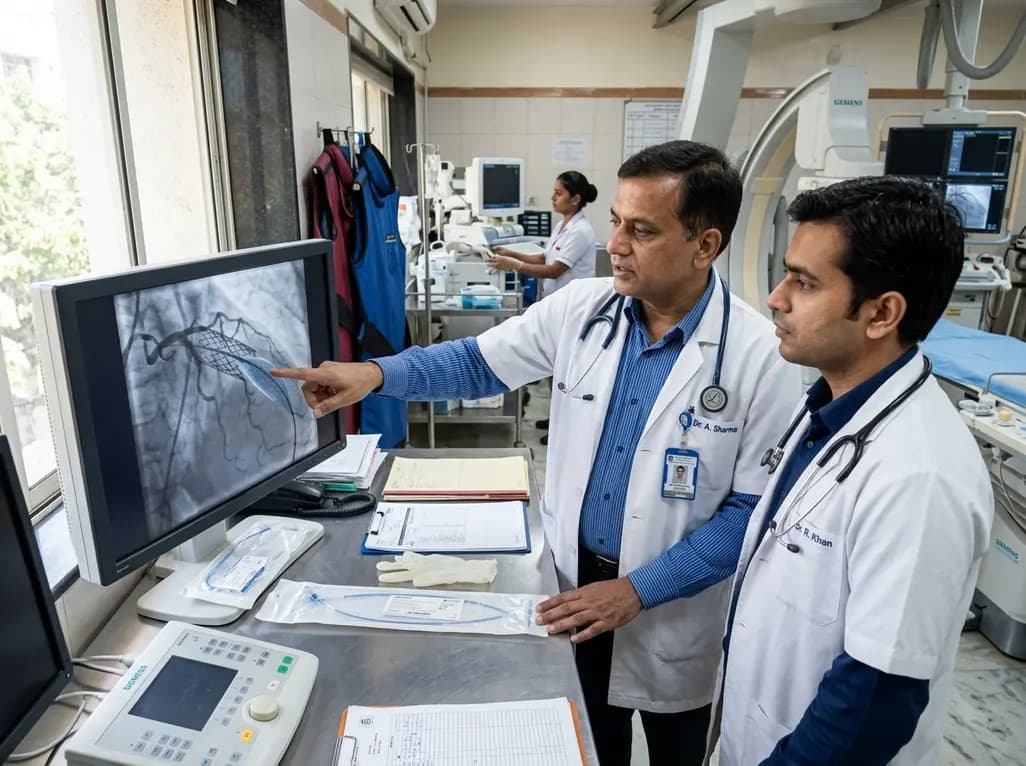
Interventional cardiology has achieved a historic milestone with the official clearance of a transformative vascular device. The United States Food and Drug Administration has approved the SELUTION SLR sirolimus drug-eluting balloon for managing coronary in-stent restenosis. Consequently, clinicians now have access to a sustained-release limus platform that avoids deploying additional permanent metal layers inside previously stented arteries. Originally developed by MedAlliance and commercialized by Cordis, this novel device represents a paradigm shift toward stentless coronary intervention.
Coronary artery disease accounts for substantial cardiovascular morbidity worldwide, requiring nearly one million percutaneous coronary interventions annually in the United States alone. However, approximately ten percent of these complex procedures involve coronary in-stent restenosis. Restenosis develops when mechanical arterial injury prompts excessive neointimal hyperplasia, chronic vascular inflammation, or progressive neoatherosclerosis within a previously placed stent. Consequently, the coronary lumen progressively narrows again, leading to recurrent angina or acute coronary syndromes.
Traditionally, clinicians re-intervened by deploying an additional drug-eluting metallic stent inside the diseased segment. Although this mechanical approach restores acute luminal diameter, it produces multiple metal layers within the vascular architecture. Therefore, repeat stenting significantly increases the long-term risk of stent thrombosis and recurrent restenosis. Furthermore, the presence of metal layers hampers physiological vessel compliance and restricts future surgical revascularization options. Because of these anatomical constraints, interventional cardiologists have long demanded a genuine stentless therapeutic alternative. The arrival of a dedicated drug-coated device provides a biologically sound strategy that treats the underlying cellular proliferation without leaving behind permanent metallic hardware.
Until recently, transcatheter drug delivery balloons approved in North America relied solely on paclitaxel as their active therapeutic agent. Although paclitaxel offers rapid cellular uptake, sirolimus provides a substantially broader therapeutic index and superior cytostatic safety. However, engineers faced immense pharmacokinetic challenges when attempting to coat balloons with sirolimus. Unlike paclitaxel, lipophilic sirolimus requires a prolonged tissue presence to prevent vascular smooth muscle migration effectively.
To overcome this pharmacokinetic barrier, scientists engineered proprietary sustained limus release technology. The novel sirolimus drug-eluting balloon integrates biodegradable polymer microreservoirs containing active drug molecules. When operators inflate the catheter balloon across the target lesion, these microreservoirs transfer directly into the vessel wall. Subsequently, the microparticles release therapeutic levels of sirolimus steadily over approximately ninety days. Therefore, the arterial wall receives continuous antiproliferative coverage during the critical window of neointimal hyperplasia formation. Meanwhile, the balloon catheter withdraws completely after inflation, leaving behind no permanent metallic framework. This sustained release profile mimics modern drug-eluting stents while preserving native vascular geometry and endothelial healing capacity.
The regulatory approval rests upon robust prospective clinical data generated by the landmark SELUTION4ISR trial. This multicenter, randomized investigation enrolled more than 400 patients across 48 investigative sites in the United States, Canada, Brazil, and Europe. Notably, the study protocol evaluated the sirolimus platform against contemporary standard-of-care treatments, which comprised repeat drug-eluting stents in approximately eighty percent of control cases. Researchers designated target lesion failure at 12 months as the primary clinical endpoint.
Ultimately, the trial met its non-inferiority primary endpoint against the active comparator arm. Target lesion failure occurred in 15.2% of patients treated with the balloon versus 13.5% in the control cohort. Moreover, the comprehensive clinical database now encompasses more than 5,000 patients enrolled across various global clinical registries and trials. In addition to in-stent restenosis, investigators recently completed enrollment in a 960-patient trial evaluating the platform for de novo lesions in small coronary vessels. Consequently, these clinical outcomes confirm that sustained antiproliferative elution successfully suppresses tissue proliferation while eliminating the long-term biological penalties associated with permanent metallic struts.
The journey of this technology highlights a remarkable model of cross-border translational science and leadership. Amit Bohora co-founded MedAlliance and steered the platform through early research, extensive pre-clinical testing, and worldwide clinical trials. Under his executive guidance, the company built advanced research and development facilities in Switzerland and Singapore, alongside advanced manufacturing in the United States. Subsequently, Cordis acquired MedAlliance in an acquisition valued at 1.135 billion dollars to scale global distribution.
Furthermore, Indian clinical leadership played a foundational role in validating the underlying science. Dr. Praveen Chandra, a prominent Indian interventional cardiologist, led the First-in-Human trial that initially confirmed the safety and biological viability of sustained balloon-based sirolimus delivery. Therefore, this regulatory milestone represents a powerful validation of Indian entrepreneurship and clinical excellence on the global stage. Commercially available in over 65 countries and utilized in more than 250,000 patients, the device proves that international collaborative research can redefine standard medical practice across the world's most rigorous regulatory environments.
Appropriate patient selection and meticulous lesion preparation remain critical for achieving optimal outcomes with this newly approved platform. The device is indicated for percutaneous coronary intervention in patients with coronary in-stent restenosis. Specifically, regulatory clearance covers target vessels with reference diameters between 2.25 mm and 4.50 mm and lesion lengths extending up to 26 mm. Interventionalists must perform adequate lesion pre-dilation using non-compliant, scoring, or cutting balloons prior to balloon delivery.
Indeed, adequate pre-treatment ensures complete mechanical expansion and fractures fibrous tissue, facilitating uniform microreservoir embedding. Operators maintain balloon inflation for at least sixty seconds to allow optimal drug transfer across the endothelial surface. Consequently, clinicians avoid geographical miss while minimizing severe dissections. Furthermore, post-procedure antithrombotic management generally requires shorter dual antiplatelet therapy durations compared to repeat metallic stenting. This reduction in antiplatelet duration substantially lowers systemic bleeding hazards, particularly in elderly individuals or patients with complex comorbidities. Thus, interventional teams gain a versatile therapeutic tool that simplifies post-procedure patient management.
Q1: What is the primary clinical advantage of this device over repeat stenting?
The principal advantage centers on avoiding additional permanent metallic layers inside previously narrowed arteries. Repeat stenting creates multiple metal scaffolds that restrict vessel motion, impede vascular healing, and increase future thrombosis risks. In contrast, this technology delivers therapeutic antiproliferative medication directly into the tissue wall and leaves no permanent foreign body behind. Consequently, it preserves native vessel architecture and maintains all options for future interventions.
Q2: How does sirolimus remain active in the arterial wall without a stent?
The platform utilizes proprietary microreservoirs engineered from biodegradable polymers that encapsulate sirolimus. During balloon inflation, these microscopic carriers adhere directly to the vessel intima and embed within cellular layers. Once deposited, the microreservoirs slowly degrade, releasing therapeutic drug concentrations over approximately ninety days. Therefore, the vessel receives sustained cytostatic therapy throughout the peak biological phase of neointimal hyperplasia, ensuring durable arterial patency without metal scaffolds.
Q3: Which patient populations benefit most from a stentless restenosis strategy?
Patients presenting with recurrent in-stent restenosis inside multiple prior stent layers benefit substantially from this approach. Furthermore, patients with small vessel disease, bifurcations, or high bleeding risks derive significant advantages because avoiding new stents may permit shorter durations of dual antiplatelet therapy. Interventional cardiologists can successfully re-establish coronary lumen patency while minimizing long-term thrombotic complications and systemic bleeding risks in these medically complex, high-risk individuals.
Disclaimer: This content is for informational and educational purposes only. It does not constitute medical advice or replace professional judgment. Refer to the latest local and national guidelines for clinical practice.
References

Read summarized clinical updates, watch expert medical content, and earn CME certifications right from your smartphone.
Open your smartphone camera to scan and install.





The US FDA has granted approval to the SELUTION SLR drug-eluting balloon for treating coronary in-stent restenosis. This milestone introduces a sustained-release sirolimus platform that eliminates the need for additional permanent metallic stents while maintaining robust vascular healing and luminal patency.
Today

Fetal foramen ovale restriction typically emerges in the third trimester with right heart enlargement. Evidence demonstrates it does not independently mandate cesarean delivery, and over 93% of postnatal cardiac findings resolve spontaneously within one year, supporting conservative obstetric management.
Today

The latest WHO Global Health Estimates highlight India's life expectancy reaching 71 years alongside a healthy lifespan of 60.6 years. While longevity rebounds post-pandemic, non-communicable conditions now account for three-quarters of top mortalities, underscoring urgent clinical shifts in routine primary care.
Today

The Thumbs-Out Classification (TOC) is a reliable screening tool for detecting thumb-in-palm deformity in children with cerebral palsy. Utilizing traffic-light tiers for radial abduction, TOC enables clinicians to monitor upper limb function and initiate timely therapeutic or surgical interventions.
Today

A comprehensive review analyzes periconceptional GLP-1 receptor agonist exposure, revealing reassuring data on congenital anomalies and adverse perinatal outcomes while emphasizing the need for cautious patient counseling.
Today
