

Loading, please wait...
Loading, please wait...

Analyzing long-term epidemiological patterns helps clinicians understand how evolving screening guidelines and risk factors alter disease outcomes. Recent data from the Global Burden of Disease Study 2023 offer a comprehensive evaluation of the prostate cancer burden across the United States between 1990 and 2023. Specifically, this population-based descriptive study evaluates incidence, prevalence, mortality, and disability metrics among older men. Furthermore, the findings highlight critical shifts that occurred after key screening guideline modifications in 2012. By examining these epidemiological trajectories, physicians can gain valuable perspectives on disease surveillance, risk stratification, and patient counseling.
Between 1990 and 2023, the national incidence of prostate cancer among men aged 60 and older declined substantially. In 1990, the national incidence rate reached 973.33 per 100,000 population. However, by 2023, this rate dropped to 686.13 per 100,000. Similarly, researchers documented meaningful reductions in national prevalence, disease mortality, years lived with disability, and disability-adjusted life years. These extensive improvements reflected widespread advancements in diagnostic standards and therapeutic approaches. In addition, broader access to care during the 1990s and early 2000s supported timely interventions for localized disease. Consequently, survival rates improved consistently over the first two decades of surveillance. Nevertheless, absolute case counts have continued to rise because older population demographics expanded significantly. Therefore, the overall clinical workload for managing prostatic malignancies remains substantial. Urologists and oncologists must recognize that while rate-based metrics demonstrate progress, total patient volume continues to challenge healthcare capacity.
In 2012, the US Preventive Services Task Force issued a recommendation against routine prostate-specific antigen screening for all men. The GBD 2023 analysis used this landmark decision as a pre-specified inflection point to compare outcomes between 1990-2011 and 2012-2023. Notably, investigators observed that the consistent national declines in incidence, mortality, and disability-adjusted life years attenuated significantly after 2012. Although the study design remains descriptive and ecological, this temporal slowdown raises meaningful clinical questions. Reduced routine testing likely decreased the detection of indolent tumors, which initially lowered recorded incidence rates. However, reduced screening simultaneously led to a gradual increase in higher-stage presentations and delayed interventions. Thus, clinicians must weigh the prevention of overdiagnosis against the real hazard of missing aggressive disease. While researchers cannot attribute these trends entirely to guideline changes, the temporal correlation provides a cautionary lesson. As a result, major professional bodies have increasingly transitioned toward individualized, shared decision-making strategies rather than blanket non-screening recommendations.
Beyond national trends, the GBD 2023 investigation revealed pronounced geographic heterogeneity across individual states. In 2023, the highest burden of disability-adjusted life years occurred in the District of Columbia, Mississippi, Louisiana, and Arkansas. Specifically, the District of Columbia recorded a rate of 3,273.53 per 100,000 population. Conversely, northeastern states including New York and New Jersey exhibited the lowest rates at 1,873.50 and 2,042.79 per 100,000, respectively. These wide regional discrepancies underscore the profound influence of local healthcare infrastructure, socioeconomic factors, and clinical access. For instance, southeastern states often report higher proportions of vulnerable populations and more limited access to specialized urological services. Furthermore, differences in state-level Medicaid expansion and insurance coverage contribute directly to disparate diagnostic stages. Consequently, clinicians practicing in underserved areas frequently encounter patients with advanced, symptomatic disease. Therefore, addressing geographic disparities requires targeted public health investments and tailored regional early detection initiatives.
The investigation also quantified population attributable fractions for modifiable behavioral exposures, focusing particularly on tobacco and alcohol consumption. Nationally, the fraction of disability-adjusted life years attributable to smoking declined modestly from 5.11% in 1990 to 4.11% in 2023. This favorable shift reflects decades of effective tobacco control initiatives and smoking cessation campaigns. In contrast, alcohol-attributable burden increased slightly from 1.18% to 1.64% over the same observation period. Although neither trend achieved formal statistical significance, these estimates highlight the ongoing relevance of lifestyle factors in oncological care. In addition, chronic tobacco use correlates strongly with more aggressive tumor biology and higher biochemical recurrence rates following definitive therapy. Similarly, heavy alcohol intake exacerbates systemic comorbidities that complicate surgical and pharmacological management. Because behavioral risk factors remain modifiable, lifestyle counseling represents an essential pillar of comprehensive patient management. Hence, clinicians should systematically integrate smoking cessation and alcohol reduction into routine oncology consultations.
The slowing decline in prostate cancer mortality after 2012 offers essential lessons for practicing physicians globally. Early detection remains critical, yet clinicians must avoid unnecessary invasive interventions for indolent tumors. Therefore, modern guidelines advocate for personalized risk stratification rather than unselective screening or total abandonment of testing. For example, risk-adapted protocols incorporate baseline prostate-specific antigen testing, family history, and individual life expectancy. Furthermore, advanced diagnostic adjuncts such as multiparametric magnetic resonance imaging and biomarker panels greatly enhance diagnostic accuracy. These tools allow clinicians to identify high-grade malignancies while safely sparing low-risk patients from unnecessary biopsies. In addition, active surveillance protocols provide a proven, safe management strategy for localized, low-grade tumors. Consequently, physicians can successfully balance oncological safety with long-term quality of life. By embracing individualized risk assessment, healthcare providers ensure timely therapeutic intervention for men who truly need it.
Epidemiological data from large-scale studies provide critical benchmarks for health systems worldwide. Although developed nations experience different resource landscapes, the consequences of shifting screening guidelines remain universally informative. In many developing healthcare systems, prostate cancer incidence continues to increase as life expectancy rises and diagnostic access expands. Furthermore, men in these regions frequently present with advanced, symptomatic disease due to the lack of organized screening. Therefore, health systems must balance resource allocation between early detection and specialized cancer therapeutics. In addition, strengthening primary care infrastructure facilitates opportunistic screening for high-risk individuals while avoiding the costs of population-wide testing. By promoting healthy lifestyles and curbing smoking and alcohol consumption, clinicians can address modifiable risk factors concurrently. Ultimately, combining targeted detection with evidence-based local clinical guidelines provides the most sustainable model for reducing prostate cancer mortality globally.
The US Preventive Services Task Force recommended against routine PSA screening in 2012, prompting a substantial drop in screening volume. Consequently, early-stage cancer diagnoses fell rapidly across the country. Over time, however, the reduction in early detection led to an increased proportion of higher-grade and metastatic malignancies at presentation. This diagnostic shift attenuated previous decades of sustained mortality declines, highlighting the unintended consequences of broad non-screening guidelines.
Although smoking and alcohol account for modest population attributable fractions in prostate cancer incidence, both behaviors significantly worsen clinical outcomes. Smoking accelerates tumor progression, promotes aggressive histopathological phenotypes, and increases the likelihood of biochemical recurrence following treatment. Similarly, heavy alcohol intake contributes to systemic metabolic complications and impairs surgical recovery. Clinicians should therefore advocate for smoking cessation and alcohol moderation as core components of comprehensive oncological care.
Current clinical guidance emphasizes individualized, risk-stratified screening rather than routine population-wide testing. Clinicians evaluate baseline prostate-specific antigen levels alongside family history, racial risk, and overall life expectancy. Furthermore, incorporating multiparametric MRI and selective secondary biomarker tests helps differentiate aggressive malignancies from indolent disease before performing invasive biopsies. This targeted strategy minimizes overdiagnosis and overtreatment while ensuring timely therapeutic intervention for men with clinically significant prostate cancer.
Disclaimer: This content is for informational and educational purposes only... Refer to the latest local and national guidelines for clinical practice.
References

Read summarized clinical updates, watch expert medical content, and earn CME certifications right from your smartphone.
Open your smartphone camera to scan and install.





A 1990-2023 GBD analysis reveals an overall decline in US prostate cancer burden, but reductions slowed noticeably after 2012. Significant state-level variations and behavioral risk factors emphasize the clinical value of personalized, risk-adapted screening over blanket recommendations.
Today

A landmark global umbrella review spanning 200 million participant observations reveals that long-term exposure to fine particulate matter significantly increases the risk of developing type 2 diabetes. Clinicians must now address environmental pollution within routine cardiometabolic prevention frameworks.
Today

Public health experts urge policymakers to review rigorous clinical evidence before scaling up double fortified salt. With only half of India's anaemia cases stemming from iron deficiency, specialists highlight structural trial limitations, dietary diversity needs, and pending data from the SAMPADA national survey.
Today

A multicenter registry of 854 patients shows that re-isolating multiple reconnected pulmonary veins during second catheter ablation significantly lowers atrial arrhythmia recurrence, particularly in patients without heart failure, whereas extra-PV ablation provided no clear additive benefit.
Today

A clinical overview of resveratrol supplementation in mitigating exercise-induced muscle damage. This narrative review explores physiological mechanisms, reductions in soreness markers like creatine kinase, dosage strategies, and bioavailability enhancements for sports medicine and nutrition practitioners.
Today
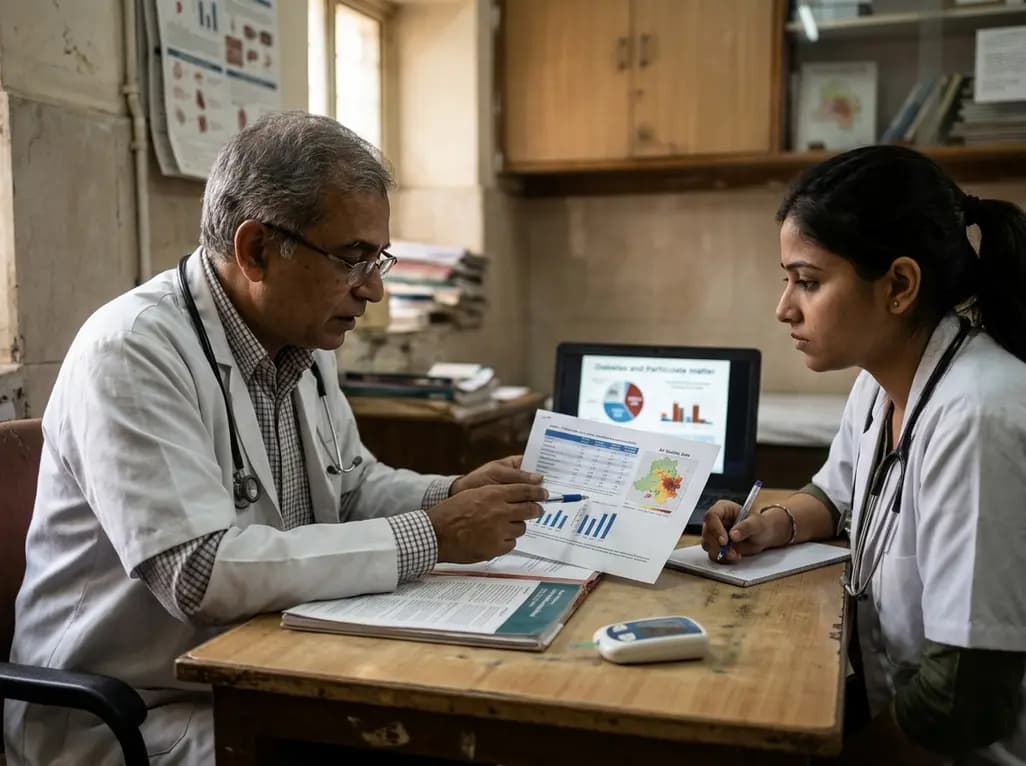
The global APEX-T2D umbrella review synthesises data from over 200 million individuals, establishing that long-term PM2.5 exposure raises type 2 diabetes risk by 10% to 16% per 10 ug/m3. Clinicians must recognize ambient air pollution as an independent systemic metabolic disruptor alongside traditional risk factors.
Today
