

Loading, please wait...
Loading, please wait...
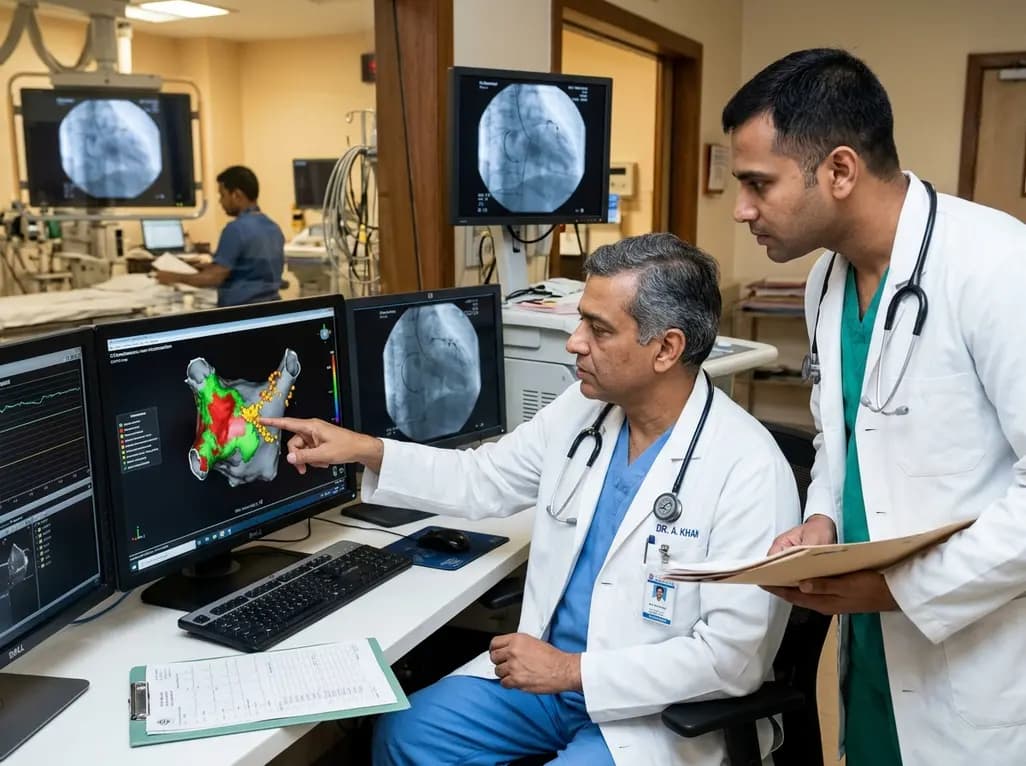
Catheter ablation represents a cornerstone therapy for rhythm control in symptomatic atrial fibrillation. However, clinical recurrences occur frequently after the index intervention. When rhythm disturbances return, electrophysiologists routinely perform a second catheter ablation to re-establish sinus rhythm. During repeat interventions, operators frequently observe pulmonary vein reconnection, though intact electrical isolation can also persist. Historically, operators assumed that re-emergent pulmonary vein conduction indicated procedural failure. Conversely, finding completely isolated veins often encouraged aggressive extra-pulmonary ablation. A multicenter registry of 854 patients has now clarified the prognostic significance of reconnection patterns. This landmark real-world evidence provides crucial guidance regarding patient selection, lesion durability, and long-term arrhythmia freedom.
Pulmonary vein isolation serves as the essential cornerstone during initial catheter ablation. Nevertheless, late electrical reconnection between pulmonary veins and left atrial tissue remains a major mechanism of recurrence. In this multicenter registry assessing 854 patients undergoing redo ablation, investigators identified pulmonary vein reconnections in 21% of individual veins. Interestingly, 55.5% of the total cohort demonstrated no pulmonary vein reconnection during their repeat intervention. These patients presented to the electrophysiology suite with all four pulmonary veins persistently isolated.
Furthermore, single vein reconnections occurred in 17% of patients, while multiple reconnected veins appeared in 27% of individuals. When operators identified reconnected veins, they systematically re-isolated all affected vessels. These anatomical findings reveal that permanent transmural lesion durability remains challenging to achieve using traditional radiofrequency or cryoballoon energy. Consequently, incomplete tissue necrosis allows dormant conduction paths to recover over time. However, finding durable electrical isolation in over half of symptomatic patients highlights another reality. Specifically, non-pulmonary vein triggers and progressive atrial myopathy often cause late arrhythmia recurrences independently of pulmonary vein conduction.
The prognostic value of reconnection burden reveals a remarkable clinical paradox. Over a median follow-up of 706 days, patients with multiple reconnected pulmonary veins achieved superior freedom from arrhythmia recurrence compared to patients without reconnection. After multivariable adjustment, re-isolating multiple reconnected veins conferred a significant 31% reduction in arrhythmia recurrence risk. Thus, patients presenting with multiple reconnections experienced markedly improved clinical outcomes following repeat intervention.
This finding illuminates the underlying electrophysiological mechanisms of recurrent atrial fibrillation. When multiple reconnected veins are discovered, clinicians can identify and eliminate a definitive reversible trigger. Re-isolating these veins directly removes the electrical source sustaining the arrhythmia. In contrast, patients who experience recurrence despite permanently isolated veins possess disease driven by progressive atrial remodeling. In these individuals, diffuse atrial fibrosis, autonomic dysfunction, and non-pulmonary vein triggers perpetuate fibrillatory activity. Because these substrates are poorly targeted and structurally complex, repeat interventions achieve lower success rates. Therefore, identifying reconnected veins during repeat ablation serves as a favorable prognostic indicator for durable sinus rhythm restoration.
When electrophysiologists observe completely isolated veins during repeat ablation, they often deliver extensive extra-pulmonary vein ablation. Indeed, registry data demonstrated that clinicians performed non-pulmonary vein ablation significantly more often in patients lacking pulmonary vein reconnection. These supplemental approaches included linear lines, cavotricuspid isthmus ablation, posterior wall isolation, and low-voltage area substrate modification. Operators hypothesized that extensive lesion sets would terminate hidden drivers and stabilize atrial conduction.
However, multivariable analyses confirmed that additional extra-pulmonary vein ablation did not independently reduce atrial arrhythmia recurrence. Despite extensive ablation sets, patients receiving extra-pulmonary vein lesions did not experience superior rhythm control. Furthermore, extensive empirical ablation carries notable risks, including increased procedure duration, left atrial stiffness, esophageal injury, and iatrogenic macroreentrant flutters. These findings strongly challenge routine empiric substrate ablation when pulmonary veins remain durable. Clinicians should recognize that unguided linear ablation rarely compensates for an advanced, diffuse arrhythmogenic substrate. Consequently, electrophysiologists must exercise caution before delivering empirical lesions without clear electrophysiological mapping confirming active triggers.
Clinical patient characteristics strongly modify procedural success and long-term recurrence rates. In this registry, the therapeutic benefit of re-isolating multiple reconnected veins was particularly pronounced in patients without symptomatic heart failure. In fact, interaction analysis confirmed a significant statistical relationship between heart failure status and procedural efficacy. Patients with preserved ventricular function and absent congestion responded robustly to repeat vein isolation. In contrast, patients with symptomatic heart failure derived considerably less benefit from redo procedures.
Additionally, multivariable regression identified three major independent predictors of recurrent atrial arrhythmias: enlarged left atrial diameter, non-paroxysmal atrial fibrillation, and symptomatic heart failure. Each factor reflects advanced structural remodeling, chamber dilation, and elevated filling pressures. When severe structural heart disease alters atrial architecture, trigger elimination alone cannot overcome progressive substrate vulnerability. Consequently, electrophysiologists evaluating patients for redo ablation must conduct thorough pre-procedural risk stratification. For individuals presenting with significant atrial enlargement or decompensated heart failure, clinicians should prioritize guideline-directed medical therapy, neurohormonal blockade, and aggressive cardiovascular risk-factor modification alongside interventional management.
These multicenter findings offer vital practical guidance for electrophysiologists planning repeat catheter interventions. First, clinicians must maintain high diligence during mapping to verify true reconnection versus far-field signals. Once confirmed, operators must systematically achieve durable re-isolation of every reconnected pulmonary vein. Second, when all pulmonary veins remain solidly isolated, operators should resist the reflex to perform extensive unguided empirical ablation. Instead, teams should conduct high-density mapping to detect inducible focal triggers or defined macroreentrant circuits before delivering radiofrequency energy.
Furthermore, this registry establishes a vital benchmark from the pre-pulsed-field ablation era. As pulsed-field ablation gains widespread adoption across global electrophysiology laboratories, initial durability rates will likely increase. Higher initial lesion durability may substantially decrease late pulmonary vein reconnection. Consequently, future redo procedures may more frequently encounter permanently isolated veins. Understanding that recurrence without reconnection portends lower procedural success will help electrophysiologists counsel patients effectively regarding realistic expectations. Moreover, these insights emphasize the indispensable role of comprehensive upstream risk-factor management, including weight control, blood pressure regulation, and sleep apnea therapy, to retard substrate progression.
Pulmonary vein reconnection provides an identifiable, treatable trigger for recurrent atrial arrhythmia. When electrophysiologists discover reconnected veins during a repeat procedure, achieving complete re-isolation eliminates the primary electrical source driving the arrhythmia. Conversely, recurrence despite intact pulmonary vein isolation suggests progressive atrial substrate disease, diffuse fibrosis, and complex non-pulmonary vein triggers. Because these systemic structural abnormalities respond less predictably to catheter ablation, patients with preserved isolation experience higher recurrence rates over long-term clinical follow-up.
Clinical registry evidence demonstrates that empirical extra-pulmonary vein ablation does not independently reduce arrhythmia recurrence during repeat procedures. Although clinicians frequently perform linear lines or substrate modification when pulmonary veins remain durable, these additions fail to show clear additive benefits. Furthermore, extensive empirical ablation increases procedure time and elevates complication risks, including iatrogenic atrial tachycardia. Therefore, current consensus recommends reserving extra-pulmonary ablation exclusively for reproducible, clearly documented non-pulmonary vein triggers identified during high-density electrophysiological mapping.
Symptomatic heart failure independently increases the risk of atrial arrhythmia recurrence following repeat catheter ablation. Persistent neurohormonal activation, elevated left atrial filling pressures, and structural chamber enlargement produce widespread myocardial fibrosis. These chronic pathophysiological alterations sustain arrhythmogenic circuits outside the pulmonary veins. Consequently, patients with heart failure achieve substantially less benefit from pulmonary vein re-isolation alone. Managing these patients requires comprehensive heart failure therapy, rigorous volume control, and targeted lifestyle modifications alongside procedural intervention.
Disclaimer: This content is for informational and educational purposes only, and does not substitute professional medical advice, diagnosis, or treatment. Refer to the latest local and national guidelines for clinical practice.
References

Read summarized clinical updates, watch expert medical content, and earn CME certifications right from your smartphone.
Open your smartphone camera to scan and install.





A multicenter registry of 854 patients shows that re-isolating multiple reconnected pulmonary veins during second catheter ablation significantly lowers atrial arrhythmia recurrence, particularly in patients without heart failure, whereas extra-PV ablation provided no clear additive benefit.
Today

AIIMS New Delhi is establishing a real-time digital surveillance network to track acute toxicities nationwide. Upgrading the National Poisons Information Centre into a nodal research hub, this initiative introduces central antidote banking, analytical testing, and AI-assisted clinical decision support for clinicians.
Today

Public health experts urge policymakers to review rigorous clinical evidence before scaling up double fortified salt. With only half of India's anaemia cases stemming from iron deficiency, specialists highlight structural trial limitations, dietary diversity needs, and pending data from the SAMPADA national survey.
Today

A clinical overview of resveratrol supplementation in mitigating exercise-induced muscle damage. This narrative review explores physiological mechanisms, reductions in soreness markers like creatine kinase, dosage strategies, and bioavailability enhancements for sports medicine and nutrition practitioners.
Today

The global APEX-T2D umbrella review synthesises data from over 200 million individuals, establishing that long-term PM2.5 exposure raises type 2 diabetes risk by 10% to 16% per 10 ug/m3. Clinicians must recognize ambient air pollution as an independent systemic metabolic disruptor alongside traditional risk factors.
Today
