.webp&w=384&q=75)

Loading, please wait...
Loading, please wait...

Modern neuro-urology relies heavily on precise diagnostic investigations to manage lower urinary tract dysfunction. However, urodynamic trace interpretation remains technically demanding and vulnerable to significant inter-observer variation among clinicians. Recent advances in artificial intelligence offer promising opportunities to assist physicians during diagnostic workflows. Consequently, evaluating how generative models analyze multi-channel pressure graphs has become a high clinical priority for urology teams seeking reproducible diagnostic pathways.
Urodynamic studies provide vital objective insights into bladder storage and voiding physiology. Clinicians routinely evaluate detrusor pressures, abdominal pressures, and urinary flow rates to identify conditions like detrusor overactivity or bladder outlet obstruction. Nevertheless, interpreting these complex waveforms presents major daily hurdles. Tracings frequently contain mechanical movement artifacts, rectal contraction interference, and baseline drift that obscure physiological signals.
Because interpretation demands subtle pattern recognition, substantial disagreement occurs even among seasoned urologists. Junior clinicians often struggle to distinguish true pathological detrusor contractions from sudden patient movement or cough transients. In addition, heavy clinical workloads limit the time available for thorough multi-page trace reviews. Therefore, researchers have sought automated analytical solutions to reduce subjective reporting bias.
Modern multimodal large language models have recently expanded clinical possibilities by combining visual graph interpretation with structured clinical reasoning. Consequently, urologists require rigorous comparative evidence to determine whether these advanced generative architectures can interpret primary traces reliably without human intervention.
To establish standardized benchmarks, researchers designed a retrospective comparative investigation analyzing 119 anonymized urodynamic machine printouts. The team evaluated five prominent artificial intelligence platforms: ChatGPT-5.2, Gemini 3, Perplexity AI Pro, DeepSeek-V3.2, and Grok 4.1. Each platform independently reviewed the multi-channel recordings, generating comprehensive clinical reports.
Simultaneously, three experienced urologists produced consensus reference standards for every case. To assess model outputs objectively, investigators implemented an adapted version of the Expert-Led Evaluation of Generative AI Competence and Excellence (ELEGANCE) framework. This specialized tool measures performance across multiple clinical domains, including relevance, completeness, applicability, structural clarity, terminology, satisfaction, and hallucination frequency.
Furthermore, the investigators applied Friedman and post-hoc Wilcoxon signed-rank tests to measure statistical differences between platforms. In contrast to subjective grading scales, the adapted ELEGANCE questionnaire provides a granular appraisal of clinical safety and functional utility. Thus, this structured methodology allows urologists to evaluate whether artificial intelligence can safely translate raw physiological curves into trustworthy clinical narratives.
The comparative analysis revealed statistically significant performance variations across the tested architectures. Overall ELEGANCE scores differed markedly among the five platforms. Specifically, Gemini achieved the highest mean score of 25.77 ± 3.74, outperforming all other tested platforms. Perplexity AI Pro followed closely, while DeepSeek and ChatGPT-5.2 demonstrated intermediate clinical performance. Conversely, Grok registered significantly lower scores across most evaluation metrics.
Gemini demonstrated superior capability in core clinical domains, notably relevance, completeness, and practical applicability. The model effectively identified key cystometric phases, recognized detrusor overactivity episodes, and summarized voiding parameters with consistent precision. Moreover, Perplexity AI Pro exhibited robust structural coherence, whereas DeepSeek showed acceptable diagnostic reasoning despite occasional descriptive lapses.
Differences in visual parsing engines substantially influenced outcomes. Urodynamic studies display simultaneous time-series graphs, requiring models to align pressure inflections across different channels. Because Gemini leverages advanced native multimodal reasoning, it processed complex axis alignments more effectively than rival platforms. Consequently, these findings highlight that model architecture and training strategies significantly affect automated trace analysis.
Although advanced artificial intelligence tools demonstrated impressive diagnostic capabilities, significant technical challenges persist. Generative architectures occasionally fabricate physiological findings or misclassify cough artifacts as involuntary detrusor contractions. Such hallucinations carry substantial clinical hazards, because misinterpreting baseline stability can lead to inappropriate medical therapy or unnecessary surgical interventions.
Furthermore, several platforms struggled when evaluating low-compliance bladders and non-neurogenic voiding dysfunctions. While models like Gemini minimized severe hallucination rates, lower-performing platforms frequently generated plausible yet incorrect diagnostic summaries. Therefore, uncritical reliance on generative outputs without expert verification remains unsafe in routine care.
In addition, baseline inter-observer variability among human evaluators underscores the need for clear diagnostic standards. Even experienced urologists sometimes debate subtle urodynamic nuances, making an unambiguous ground truth difficult to establish. Consequently, future developments must focus on grounding multimodal models in consensus guideline criteria established by international continence bodies to minimize interpretive discrepancies.
In India, urological facilities experience heavy patient volumes with variable access to subspecialized neuro-urologists. While major academic centers house dedicated urodynamics units, district hospitals and peripheral private practices often lack fellowship-trained urodynamicists. Consequently, clinicians in resource-constrained environments frequently manage complex voiding disorders without access to immediate expert second opinions.
Implementing validated generative platforms could potentially streamline urodynamic reporting across Indian clinics. By functioning as preliminary diagnostic co-pilots, these tools can assist general urologists and postgraduate surgical residents during initial curve review. Moreover, automated summaries can accelerate documentation, allowing clinicians to spend more direct time counseling patients regarding treatment strategies.
Nevertheless, Indian healthcare providers must approach these generative tools with prudent clinical skepticism. Tracing formats and physiological calibration require thorough local validation before real-world deployment. Furthermore, maintaining strict patient data privacy remains essential under national digital health standards. Ultimately, artificial intelligence should serve as an assistive decision-support mechanism that augments, rather than replaces, human clinical judgment.
Current multimodal artificial intelligence models demonstrate variable diagnostic accuracy when analyzing complex urodynamic traces. In comparative evaluations, leading platforms like Gemini achieved high competence scores across clinical relevance and completeness, outperforming earlier models. However, diagnostic accuracy still falls short of expert subspecialist consensus. Because models occasionally misidentify artifacts as genuine detrusor contractions, autonomous clinical interpretation is not recommended, and direct physician oversight remains essential for patient safety.
Performance variations among large language models stem primarily from differences in multimodal architecture and training data. Analyzing multi-channel urodynamic printouts requires simultaneous interpretation of pressure waveforms and numerical values over time. Advanced models possess native visual processing capabilities that correlate channel interactions effectively. In contrast, other models struggle to align visual cues accurately across separate axes, leading to lower completeness scores and occasional factual hallucinations during report generation.
Urologists in India should not rely entirely on artificial intelligence for final urodynamic reports at this stage. Although contemporary models provide valuable preliminary drafts and structured summaries, they lack regulatory approval for independent diagnostic interpretation. Clinicians can cautiously utilize these platforms as secondary educational or organizational aids. However, treating urologists must thoroughly verify every pressure curve, artifact subtraction, and clinical diagnosis before making invasive surgical or therapeutic decisions.
Disclaimer: This content is for informational and educational purposes only and should not be considered medical advice. It is not intended to replace professional medical assessment, diagnosis, or treatment. Always seek the advice of a qualified healthcare provider with any questions you may have regarding a medical condition. Healthcare professionals should exercise their independent clinical judgment when evaluating and applying this information to patient care. Refer to the latest local and national guidelines for clinical practice.
References

Read summarized clinical updates, watch expert medical content, and earn CME certifications right from your smartphone.
Open your smartphone camera to scan and install.





A comparative study evaluated five major large language models in urodynamic trace interpretation using an adapted ELEGANCE framework. Gemini demonstrated superior clinical performance in relevance and applicability, highlighting AI's diagnostic potential and current limits in neuro-urology.
Today
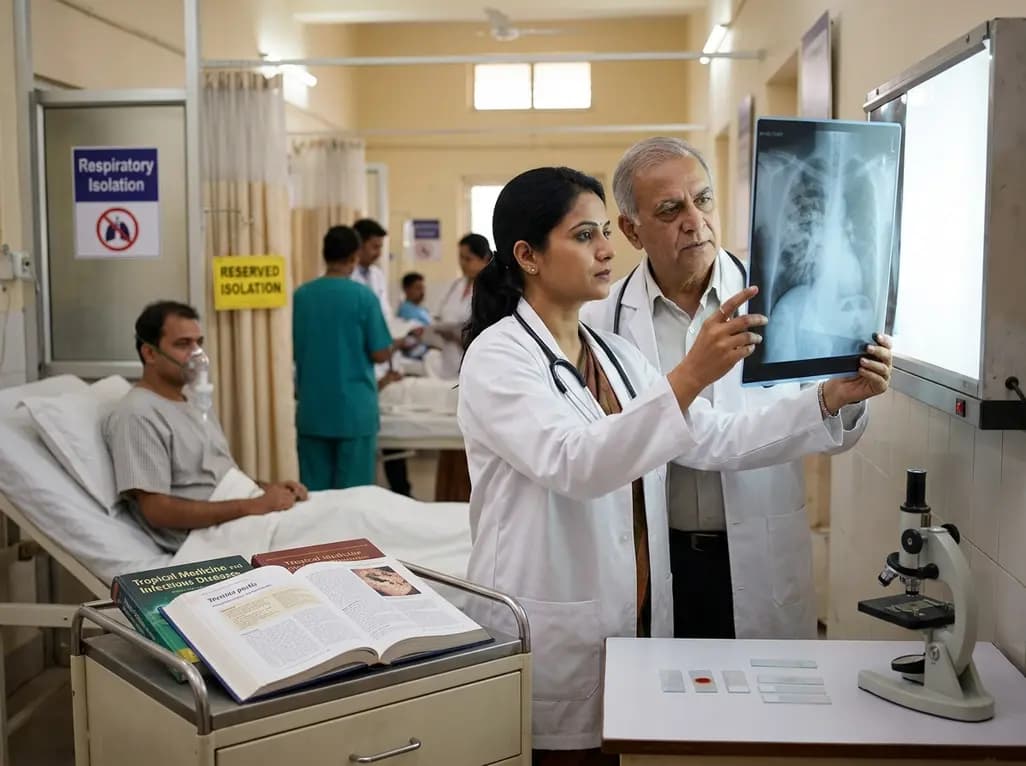
A laboratory technician's death in Siberia from an unverified respiratory pathogen has renewed global vigilance for pneumonic plague. Clinicians must recognize early presentations of Yersinia pestis, enforce immediate respiratory isolation, and start early bactericidal therapy to prevent severe secondary spread.
Today
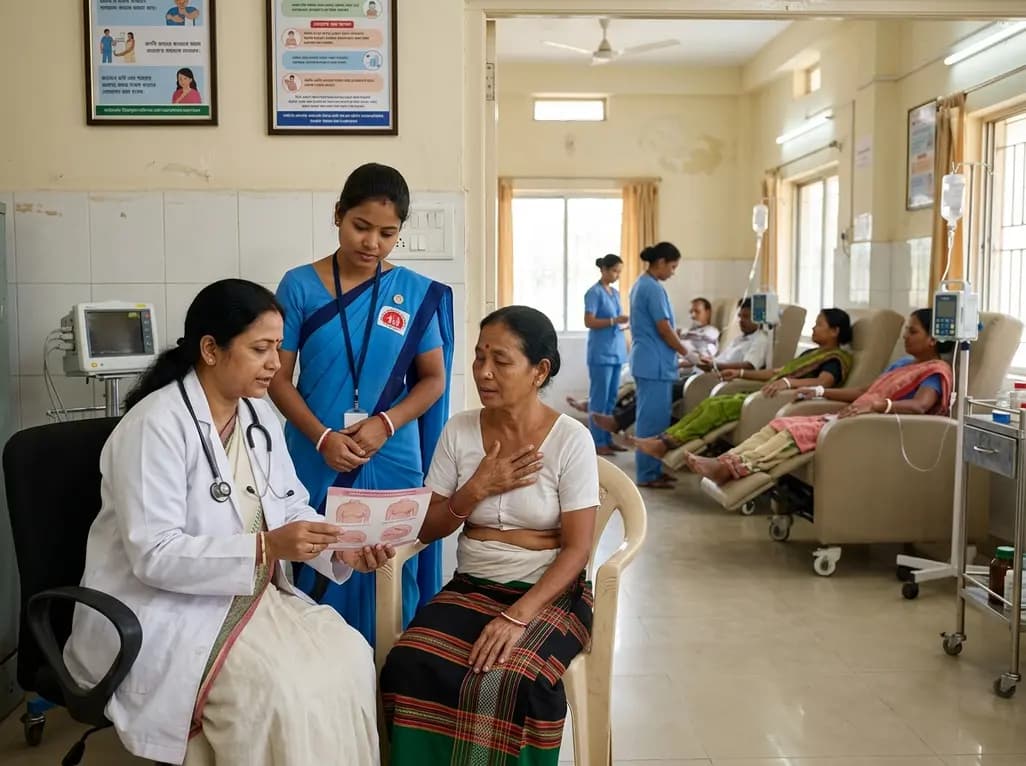
Tripura has launched a comprehensive statewide oncology campaign to address late-stage breast cancer presentations. By strengthening community screening for women aged 30 and older and expanding District Day Care Cancer Centres, the initiative improves early clinical detection and decentralized chemotherapy access.
Today
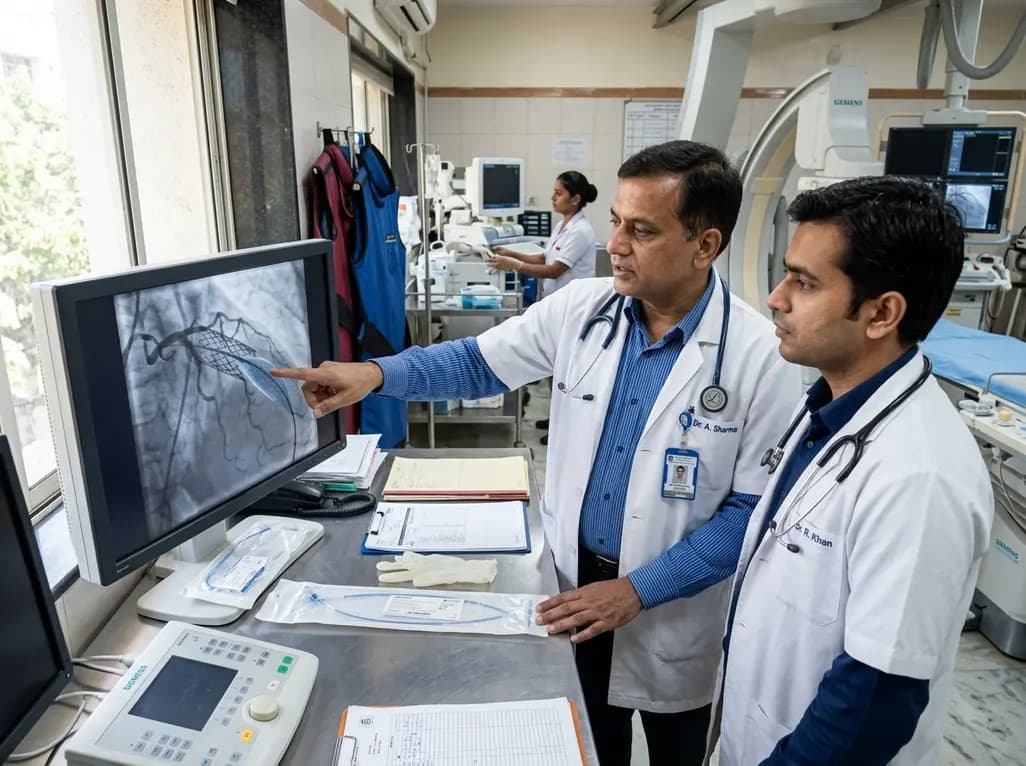
The US FDA has granted approval to the SELUTION SLR drug-eluting balloon for treating coronary in-stent restenosis. This milestone introduces a sustained-release sirolimus platform that eliminates the need for additional permanent metallic stents while maintaining robust vascular healing and luminal patency.
Today
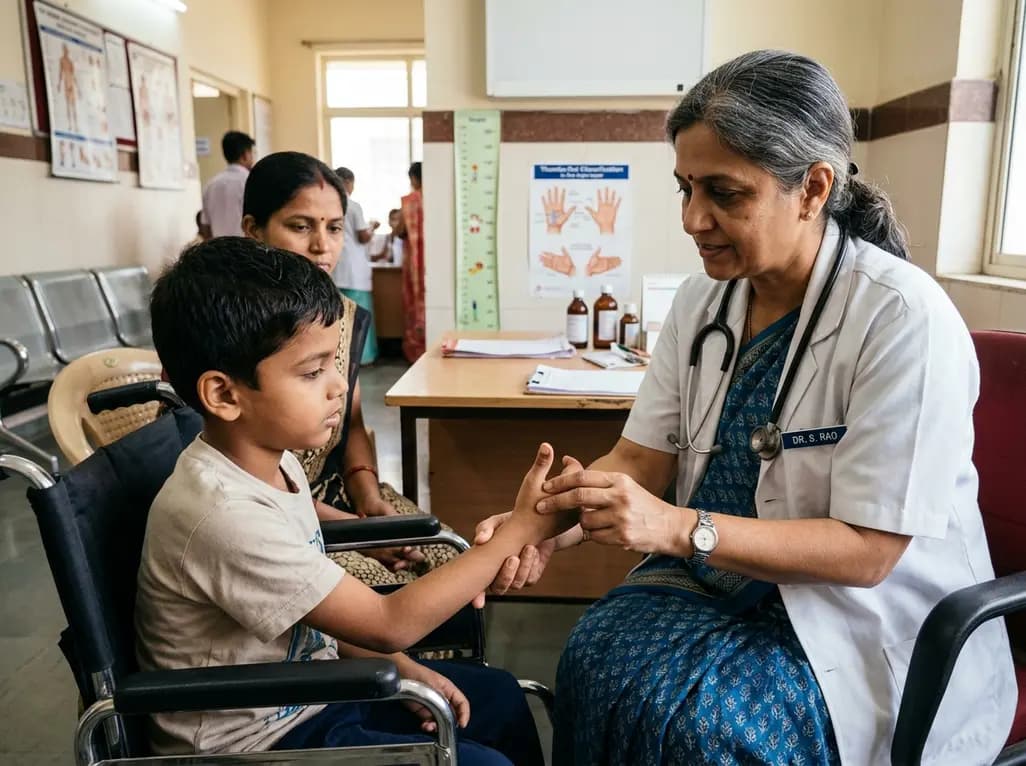
The Thumbs-Out Classification (TOC) is a reliable screening tool for detecting thumb-in-palm deformity in children with cerebral palsy. Utilizing traffic-light tiers for radial abduction, TOC enables clinicians to monitor upper limb function and initiate timely therapeutic or surgical interventions.
Today
A comprehensive review analyzes periconceptional GLP-1 receptor agonist exposure, revealing reassuring data on congenital anomalies and adverse perinatal outcomes while emphasizing the need for cautious patient counseling.
Today
