.webp&w=384&q=75)

Loading, please wait...
Loading, please wait...

Preoperative assessment of primary intradural extramedullary lesions often focuses heavily on gait disturbance, motor paresis, and sensory loss. However, emerging clinical evidence underscores that urinary dysfunction in spinal meningiomas serves as a pivotal disease severity marker that clinicians must evaluate systematically. Spinal meningiomas represent approximately 25% to 30% of all primary spinal neoplasms and are predominantly benign, slow-growing tumors. Because these lesions compress neural pathways gradually over months or years, autonomic sphincter involvement often signals advanced neuroaxis compromise. Recognizing autonomic changes promptly enables surgical teams to optimize operative timing, predict functional prognosis, and guide targeted rehabilitation protocols effectively.
Micturition relies on complex neural circuitry spanning the frontal cortex, pontine micturition center, descending reticulospinal tracts, and sacral parasympathetic nuclei at the S2 to S4 levels. Spinal meningiomas occur most frequently in the thoracic spine, followed by cervical and lumbar regions. As an extramedullary meningioma expands within the rigid spinal canal, it exerts mechanical deformation and microvascular ischemia on the adjacent parenchymal tracts. Descending autonomic pathways located within the lateral funiculi are particularly vulnerable to chronic compressive forces. Consequently, neural conduction fails, disrupting normal detrusor muscle tone and sphincter coordination. Patients often transition from early urge incontinence and urinary hesitancy to complete urinary retention or overflow incontinence as cord compression progresses.
Recent multicentric cohort analyses demonstrate a clear link between preoperative sphincter impairment and worse baseline functional status. Investigators evaluated 165 surgical cases from a larger multi-decade cohort to assess the clinical weight of patient-reported urinary complaints. The findings revealed that patients presenting with bladder dysfunction experienced significantly longer symptom durations before neurosurgical intervention. Furthermore, baseline neurological impairment was substantially more pronounced in this group, as evidenced by lower Frankel grades and higher McCormick functional disability scores. Multivariable logistic regression identified sphincter involvement as an independent indicator of profound mechanical spinal cord compression, reinforcing its clinical utility during initial risk stratification.
Accurate identification of autonomic disturbances requires a comprehensive neuro-urological diagnostic framework. Because patients frequently underreport minor urinary hesitancy or urge changes, clinicians should actively elicit lower urinary tract symptoms during history taking. Contrast-enhanced magnetic resonance imaging remains the gold standard for delineating tumor dimensions, dural attachment, and spinal cord displacement. In addition, post-void residual urine volume measurement and formal urodynamic studies objectively characterize detrusor overactivity or detrusor-sphincter dyssynergia. Integrating these variables into exploratory nomograms and predictive risk models provides neurosurgeons with quantifiable tools to estimate the likelihood of postoperative functional recovery and customize patient counseling prior to intervention.
Microsurgical total resection remains the definitive treatment for symptomatic spinal meningiomas, classified intraoperatively by Simpson resection grades. Complete surgical decompression alleviates mechanical tract distortion and restores microvascular perfusion to the compromised spinal cord segments. Clinical data indicate that while motor and sensory deficits often show rapid postoperative improvement, recovery of sphincter function depends heavily on preoperative chronicity and the degree of axonal injury. Patients undergoing decompression before the onset of irreversible ischemic myelomalacia demonstrate significantly higher rates of bladder control recovery. Therefore, identifying autonomic deficits early prevents irreversible neurological decline and reduces long-term dependency on chronic catheterization.
Optimizing long-term quality of life requires continuous multidisciplinary collaboration involving neurosurgeons, urologists, physiatrists, and specialized nursing teams. Following surgical resection, structured bladder management protocols should prevent urinary tract infections, high intravesical pressures, and upper urinary tract deterioration. Intermittent catheterization, pelvic floor physical therapy, and targeted pharmacotherapy assist patients during the neuro-recovery phase. Routine outpatient follow-up utilizing standardized neurological scales ensures early detection of potential tumor recurrence or delayed voiding difficulties. By recognizing urinary impairment as a major indicator of disease severity, clinicians can intervene decisively to protect vital neurological function.
How common is bladder dysfunction in patients with spinal meningiomas?
Bladder dysfunction occurs in a notable subset of spinal meningioma cases, particularly in patients with significant thoracic spinal cord compression. While gait difficulty and localized pain are more frequent initial complaints, urinary symptoms emerge as the tumor expands, signaling advanced mechanical compression of descending autonomic pathways within the spinal cord.
Can urinary symptoms resolve completely after spinal tumor surgery?
Yes, complete recovery of urinary control is achievable following successful microsurgical decompression. However, functional prognosis depends heavily on the duration and severity of preoperative nerve compression. Patients who receive prompt surgical treatment before chronic axonal damage or cord infarction develops experience significantly better sphincter recovery than those with prolonged deficits.
What diagnostic tests assess neurogenic bladder in spinal meningioma?
Contrast-enhanced spinal MRI provides definitive visualization of tumor location and cord compression. To assess bladder function directly, clinicians utilize post-void residual ultrasound, standardized lower urinary tract symptom questionnaires, and formal urodynamic studies. These diagnostic tools identify detrusor overactivity, bladder outlet obstruction, or dyssynergia, guiding both surgical urgency and postoperative bladder management.
Disclaimer: This content is for informational and educational purposes only. It is not intended to provide medical advice or to be a substitute for professional medical advice, diagnosis, or treatment. Patients should always consult their physician or other qualified healthcare professional regarding any medical condition or treatment plan. Refer to the latest local and national guidelines for clinical practice.
References
Aureli L et al. Urinary dysfunction in spinal meningiomas: a significant disease severity marker in a cohort of 165 patients. Eur Spine J. 2026 Aug 23. doi: 10.1007/s00586-026-10276-w. PMID: 42633604.
Ginsberg D, et al. Management of Neurogenic Lower Urinary Tract Dysfunction: AUA/SUFU Guideline. J Urol. 2021;206(5):1097-1105.
Groff MW, et al. Clinical Characteristics and Surgical Outcomes of Intradural Extramedullary Spinal Tumors. Neurosurgery. 2022;90(4):450-458.

Read summarized clinical updates, watch expert medical content, and earn CME certifications right from your smartphone.
Open your smartphone camera to scan and install.





Urinary dysfunction in spinal meningiomas is a critical marker of advanced spinal cord compression and disease severity. A study of 165 patients shows how preoperative bladder impairment correlates with longer symptom duration and functional outcomes, highlighting the need for prompt neurosurgical evaluation.
last month

According to WHO data, average lifespan reached 73.3 years in 2023, recovering from pandemic lows. However, healthy life expectancy lags at 62.8 years due to surging noncommunicable conditions like cardiovascular disease and dementia, demanding proactive primary screening and sustained chronic care.
Today

A scoping review reveals how pregnancy affects phonation through laryngeal edema and reduced phonation time rather than major acoustic pitch alterations. Learn how to identify, evaluate, and manage vocal symptoms in expectant mothers.
Today
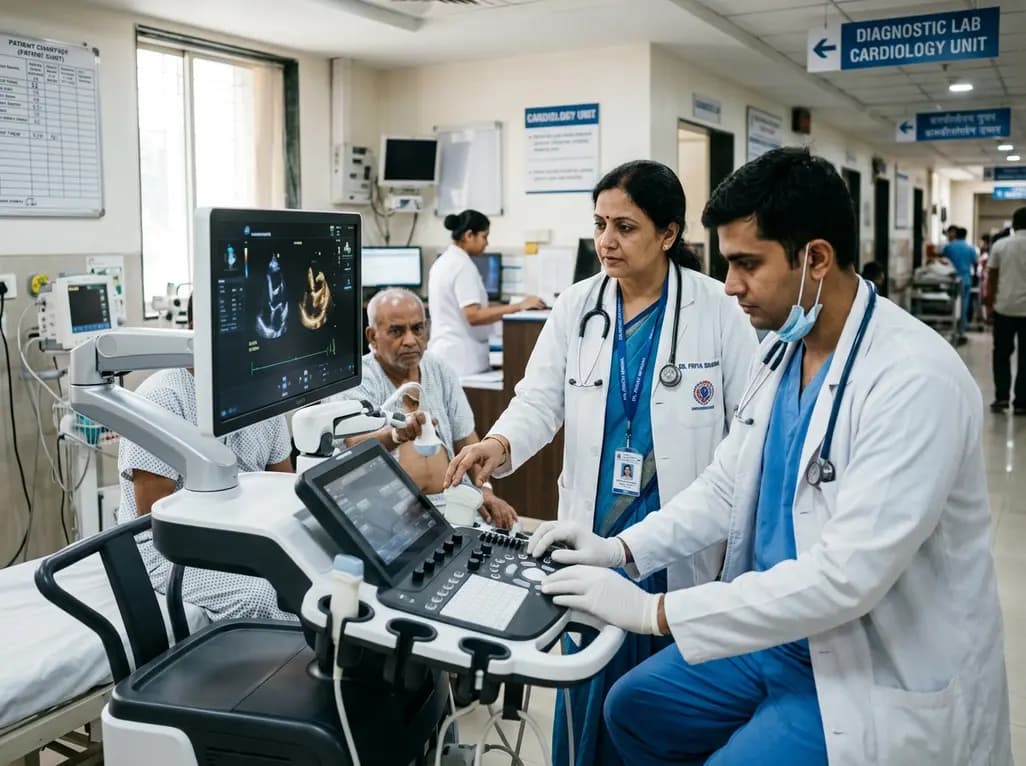
Medical robotics is transitioning beyond operative suites into diagnostics, cardiology, and endocrinology. Explore how innovations in tele-robotics, AI integration, and nanomedicine are overcoming geographical barriers and transforming precision healthcare delivery across India's evolving disease landscape.
Today
Researchers have engineered an artificial sensory-pain integrated receptor using a multi-threshold organic synaptic transistor. The system distinguishes benign touch from noxious stimuli, enabling safer, more responsive prosthetic limbs with built-in memory and simplified hardware architecture.
Today

A qualitative meta-synthesis highlights the complex interplay between gender dysphoria, minority stress, and eating disorders in transgender and gender-diverse individuals. Clinicians must recognize these distinct drivers to offer supportive, gender-affirming, and interdisciplinary eating disorder care.
Today
