

Loading, please wait...
Loading, please wait...

Endoscopic interventions for benign prostatic hyperplasia (BPH) remain common surgical procedures worldwide. However, iatrogenic urethral injury represents a troublesome late complication that challenges reconstructive surgeons. When an acquired bulbomembranous urethral stricture develops adjacent to the external urinary sphincter, surgical restoration demands technical precision. Reconstructive urologists must carefully balance durable anatomical patency against the risk of compromising urinary continence. Recent evidence provides clarity regarding reconstructive outcomes in this complex patient group.
Endoscopic enucleation, vaporization, and transurethral resection can inadvertently injure the delicate mucosal lining. Consequently, thermal dispersion and mechanical shear forces induce circumferential fibrosis within the proximal bulbar and membranous segments. Because previous outlet surgery disrupts the proximal bladder neck sphincter, post-procedural continence relies entirely on the external voluntary rhabdosphincter. Therefore, surgical dissection near the apex poses substantial risks to urinary control. Surgeons must preserve the sphincteric vascularity and muscular architecture during repair. Meticulous preoperative diagnostic workup remains imperative to localize the stenosis accurately. Retrograde urethrography and voiding cystourethrography delineate stricture length and urethral caliber. Additionally, careful flexible cystourethroscopy helps surgeons evaluate mucosal quality and active sphincter contraction. Understanding this fragile anatomy ensures that clinicians avoid unnecessary urethral mobilization while formulating an individualized operative strategy for every patient.
Contemporary reconstructive techniques for posterior and proximal strictures include anastomotic repair and buccal mucosal graft (BMG) urethroplasty. In a comprehensive systematic review, researchers evaluated 11 observational cohorts comprising 669 patients. Nine studies encompassing 417 patients provided primary quantitative data for random-effects meta-analysis. The overall pooled patency rate reached 90%, demonstrating high therapeutic efficacy across specialised centers. Specifically, anastomotic urethroplasty achieved an impressive 94% patency rate in selected short strictures. Meanwhile, ventral onlay buccal mucosal grafting yielded an 87% patency rate across four pooled cohorts. In addition, dorsal onlay BMG urethroplasty demonstrated a 91% patency rate in reported cohorts. Most included studies defined surgical patency as freedom from repeat surgical interventions rather than routine objective calibrations. Nevertheless, these outcomes show that reconstructive urethroplasty provides robust, durable relief for post-surgical urethral narrowing.
Maintaining urinary continence remains the primary technical dilemma during bulbomembranous reconstruction. Many historical algorithms favored repetitive dilation or direct visual internal urethrotomy due to fears of causing catastrophic urinary leakage. However, endoscopic incision produces low long-term success and repetitive tissue trauma. The meta-analysis revealed an encouraging pooled de novo urinary incontinence rate of only 5%. This low complication rate reflects meticulous surgical technique and heightened respect for sphincter boundaries. Non-transecting approaches and vessel-sparing dissection substantially reduce vascular devascularization around the membranous segment. Furthermore, careful intraoperative maneuvers prevent direct mechanical disruption of the periurethral sphincter fibers. Surgeons must counsel patients that prior simple prostatectomy or extensive apical resection might elevate baseline vulnerability. Overall, these findings reassure clinicians that urethroplasty does not automatically sacrifice continence when executed in experienced hands.
Sexual function represents another vital metric following anterior and posterior urethral reconstructive procedures. Extensive perineal dissection can theoretically damage the cavernous autonomic nerves or bulbar arterial branches. Fortunately, available data indicate that urethroplasty rarely compromises sexual health in this demographic. Although existing studies were insufficient for quantitative meta-analysis, cohorts tracking the Sexual Health Inventory for Men revealed stable scores postoperatively. Patients experienced no significant decline in baseline erectile capacity after definitive reconstruction. Moreover, resolving chronic urinary obstruction markedly enhances overall quality of life. Eliminating debilitating straining, secondary bladder calculi, and recurrent urinary infections restores lower urinary tract comfort. By removing the burden of repeated endoscopic dilations, definitive reconstruction offers lasting psychological and physical benefits to older men recovering from previous prostatic surgery.
The current body of literature highlights favorable outcomes, yet notable limitations remain apparent. Most published series rely on non-comparative, retrospective observational designs featuring moderate risk of bias. Additionally, definitions of surgical success and urinary incontinence vary considerably between centers. Clinicians cannot declare one single urethroplasty approach uniformly superior based solely on current data. Consequently, surgeons must tailor technique selection to stricture length, tissue mobility, and individual functional reserve. Short, non-obliterative lesions often favor precise excision and primary anastomosis or dorsal augmentation. Conversely, longer segments typically demand single-stage buccal mucosal substitution. Urologists should establish multidisciplinary referral pathways to direct complex strictures toward experienced reconstructive units. Moving forward, standardized prospective registries using validated patient-reported outcome measures will refine patient selection and optimize reconstructive algorithms worldwide.
Iatrogenic strictures arise secondary to mechanical instrumentation trauma, large-bore resectoscope manipulation, or thermal energy leakage during endoscopic prostate surgery. These factors provoke mucosal ischemia and chronic inflammation near the proximal bulbar and membranous transition. Fibrotic scarring subsequently narrows the urethral lumen, impairing urinary outflow and requiring surgical intervention.
Because prostate surgery removes internal bladder neck sphincter function, continence depends entirely on the distal external sphincter. Systematic evidence reveals a pooled de novo incontinence rate of only 5% following urethroplasty. Skilled reconstructive surgeons employ sphincter-sparing dissection planes and non-transecting methods, successfully preserving continence in the vast majority of operative cases.
Anastomotic urethroplasty yields the highest reported pooled patency rate at 94% for short, focal strictures. Meanwhile, ventral onlay and dorsal onlay buccal mucosal graft urethroplasties achieve 87% and 91% patency, respectively. Surgeons select the optimal technique based on stricture length, location, and spongiosal tissue health rather than relying on a single approach.
Disclaimer: This content is for informational and educational purposes only. It is not intended to provide medical advice or to be a substitute for professional medical advice, diagnosis, or treatment. Patients should always seek the advice of a qualified healthcare provider with any questions they may have regarding a medical condition. Healthcare professionals should exercise their own independent clinical judgment when interpreting or applying the information presented. Refer to the latest local and national guidelines for clinical practice.
References
Scilipoti P et al. Urethroplasty for bulbomembranous strictures after benign prostatic hyperplasia surgery: systematic review and meta-analysis. BJU Int. 2026 Oct 31. doi: 10.1111/bju.70524. PMID: 42964010.
Alfieri A et al. Bulbomembranous Urethral Strictures Repair After Surgical Treatment of Benign Prostatic Hyperplasia. Experience From a Latin American Referral Centre. Urology. 2021;148:292-296.
Pirola GM et al. Urethral stricture following endoscopic prostate surgery: a systematic review and meta-analysis of prospective, randomized trials. World J Urol. 2022;40(6):1391-1402.

Read summarized clinical updates, watch expert medical content, and earn CME certifications right from your smartphone.
Open your smartphone camera to scan and install.





A systematic review and meta-analysis evaluates urethroplasty for bulbomembranous urethral strictures post-BPH surgery, reporting a 90% patency rate, a 5% de novo urinary incontinence rate, and preserved erectile function, providing vital reconstructive guidance for urologists.
Today

A Canadian multicenter study reveals that older adults who survive past age 65 with HIV have similar burdens of cardiovascular, renal, and pulmonary comorbidities regardless of duration since diagnosis, highlighting the decisive impact of lifestyle factors, routine screening, and metabolic health.
Today

Large genomic databases like gnomAD and All of Us offer crucial insights into the population prevalence of partial RHD genotypes. Identifying these variants helps clinicians mitigate anti-D alloimmunization risks in transfusion medicine and obstetric care across diverse ancestral populations.
Today

A novel magnetoactive hydrogel platform demonstrates that vascular curvature independently guides endothelial mechanosensing. Elevated curvature triggers nuclear YAP translocation, VE-cadherin junction thinning, and eNOS membrane shifts, offering critical insights into arterial tortuosity and aneurysm pathology.
Today
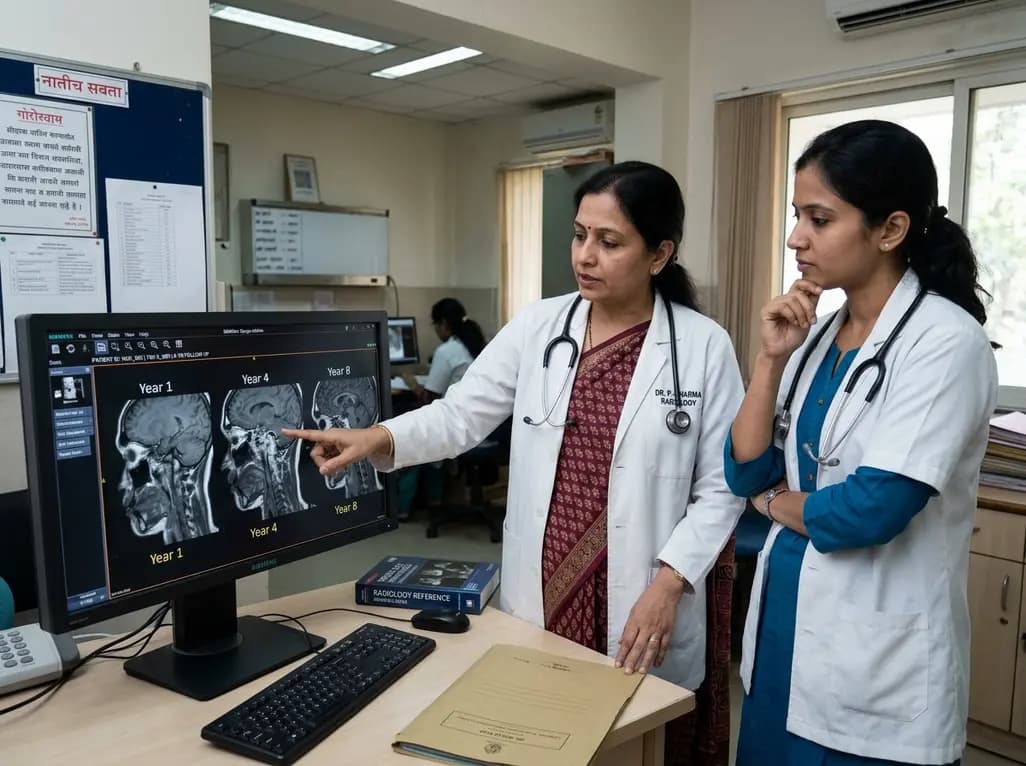
An eight-year longitudinal imaging follow-up reveals severe temporomandibular joint remodeling in nodulosis-arthropathy-osteolysis (NAO) syndrome. Despite extensive osseous destruction, the patient maintained functional jaw opening without TMJ interventions, highlighting the role of conservative management.
Today

Discover essential clinical insights into AGLP1-type amyloidosis, a rare localized complication of glucagon-like peptide-1 analog injections. Learn how histopathology and mass spectrometry differentiate benign iatrogenic amyloidomas from systemic disease, preventing misdiagnosis and unwarranted therapies.
Today
