.webp&w=384&q=75)

Loading, please wait...
Loading, please wait...

Modern implantable bioelectronic devices demand uninterrupted, biocompatible, and wire-free power sources to sustain long-term physiological monitoring and therapy. Traditional battery-powered units often suffer from finite lifespans, necessitating recurrent surgical interventions that elevate clinical morbidity and healthcare expenditures. Consequently, wireless power delivery methods have attracted immense translational interest. Among diverse modalities, ultrasonic energy harvesting offers unprecedented deep-tissue penetration, superior spatial resolution, and minimal tissue attenuation compared to electromagnetic counterparts. However, integrating high-performance piezoceramic materials into dynamic biological tissues presents critical mechanical bottlenecks. Recent scientific breakthroughs in material engineering have introduced freestanding hierarchical-porous barium calcium zirconate titanate (BCZT) thin films, bridging the gap between mechanical durability and electromechanical efficiency.
Conventional piezoceramic films typically provide high electromechanical coupling factors, yet their inherent crystalline brittleness severely restricts flexible bio-integration. When deployed on undulating biological substrates, cyclic physiological deformations induce intense stress concentration on the tensile surfaces. Consequently, microcracks readily initiate and propagate through dense ceramic layers, triggering rapid device degradation or catastrophic electrical failure. To circumvent this vulnerability, biomedical researchers have engineered freestanding lead-free BCZT thin films endowed with a hierarchical-porous microstructure. Fabricators utilized polyvinylpyrrolidone (PVP) as a sacrificial porogen during chemical synthesis, generating interconnected multi-scale pores throughout the inorganic matrix. This specialized structural arrangement fundamentally alters mechanical load distribution under physical deformation. Instead of localizing catastrophic strain, the porous network effectively disperses tensile-side stress concentration and suppresses crack initiation. As a result, the freestanding film demonstrates exceptional crack resistance, mechanical compliance, and structural integrity under repetitive bending. Furthermore, the complete elimination of rigid growth substrates allows the film to intimately conform to soft anatomical structures without delamination. These transformative structural modifications successfully resolve the long-standing dichotomy between mechanical flexibility and piezoceramic operational resilience.
In addition to mechanical durability, ultrasonic acoustic transmission into deep biological tissue hinges on acoustic impedance matching. Dense piezoceramic materials inherently possess extremely high acoustic impedance values, which differ substantially from the low impedance of human soft tissues. Consequently, when therapeutic or transcutaneous ultrasound waves reach the biological interface, severe acoustic impedance mismatch causes massive acoustic reflection and energy dissipation. The hierarchical-porous design of the BCZT thin film directly tackles this biophysical limitation. By deliberately tailoring the pore architecture via precise porogen removal, researchers dramatically decreased the overall density and adjusted the elastic properties of the ceramic film. This architectural change significantly lowers the acoustic impedance, bringing it into close alignment with native parenchymal and muscular tissues. Therefore, interfacial ultrasound reflection is substantially suppressed, allowing ultrasonic acoustic waves to efficiently penetrate the piezoceramic functional layer. Moreover, the enhanced acoustic coupling minimizes acoustic boundary loss and optimizes wave propagation throughout the responsive transducer matrix. Clinicians and bioengineers can thus harness deeper, highly focused ultrasonic beams without delivering excessive, harmful acoustic intensities to intervening cutaneous barriers.
The porous architecture delivers profound advantages for electromechanical transduction and electrical power generation. Fundamentally, the output voltage of a piezoelectric energy transducer depends directly on its piezoelectric voltage coefficient, designated as g33. The voltage coefficient correlates inversely with relative dielectric permittivity; thus, reducing permittivity amplifies the generated electrical potential under mechanical excitation. Because the hierarchical-porous BCZT film incorporates microscopic air voids, its effective dielectric permittivity decreases substantially while maintaining superior piezoelectric charge coefficients. Consequently, the freestanding film achieves an extraordinary piezoelectric voltage coefficient of g33 = 97 × 10⁻³ V·m/N. When subjected to continuous ultrasound excitation, this optimized electromechanical response translates into a remarkable maximum output power. Under identical ultrasonic excitation, the hierarchical-porous thin film delivers an output power approximately 1.5 times higher than that of dense BCZT counterparts at optimal resistive loads. Additionally, the lead-free barium calcium zirconate titanate composition eliminates toxic heavy metal hazards associated with traditional lead zirconate titanate (PZT). Therefore, this material architecture establishes a highly safe, highly efficient platform for continuous, self-sustaining wireless powering within biological environments.
Beyond powering implantable systems, the ultrahigh piezoelectric sensitivity of porous BCZT films enables advanced physiological sensing applications. Wearable and implantable clinical monitors require exceptional fidelity to capture minute biomechanical vibrations and low-amplitude biological signals. Thanks to its remarkable piezoelectric voltage output, the freestanding film functions as a self-powered biomechanical sensor capable of detecting subtle kinetic fluctuations with high signal-to-noise ratios. For example, when placed non-invasively over the human radial artery, the device reliably captures continuous, high-definition radial artery pulse-wave waveforms. These acoustic-mechanical pulse profiles exhibit distinct clinical hallmarks, including the percussion wave, tidal wave, and dicrotic notch. Consequently, clinicians can accurately evaluate arterial stiffness, peripheral vascular resistance, and real-time hemodynamic alterations without bulky instrumentation. Furthermore, the film maintains stable electrical signal output during continuous cyclical flexing, confirming its resilience against movement artifacts and baseline drift. These findings highlight how hierarchical piezoceramics can serve dual roles as both wireless energy receivers and diagnostic sensors in point-of-care cardiovascular assessment and long-term remote patient telemonitoring.
The successful convergence of acoustic impedance tuning, mechanical compliance, and high power conversion unlocks exciting horizons for next-generation medical technology. Contemporary cardiac pacemakers, neurostimulators, and continuous biosensors require recurrent replacement surgeries once onboard chemical batteries deplete. In contrast, wireless ultrasonic energy harvesting provides a sustainable, minimally invasive charging paradigm that penetrates several centimeters into tissue without thermal damage. The freestanding hierarchical-porous BCZT thin film provides an ideal material foundation for constructing implantable micro-generators, active endovascular stents, and localized electroceutical stimulators. Because BCZT is completely lead-free, it exhibits superior biocompatibility with human osteoblasts, endothelial cells, and soft tissues, mitigating foreign-body inflammatory reactions. Moreover, integrating these flexible films into bioresorbable polymers or elastic hydrogels could facilitate transient, biointegrable sensing nodes that dissolve safely post-therapy. In addition, future clinical devices may incorporate multi-array configurations to simultaneously harvest energy and transmit continuous physiological telemetry to external receivers. Ultimately, this pioneering material paradigm bridges structural biophysics and electrical engineering, paving the way for maintenance-free, self-powered bioelectronic implants.
Hierarchical porosity introduces multi-scale interconnected voids throughout the BCZT ceramic matrix. When subjected to bending or stretching, these microscopic pores effectively redistribute mechanical stress across the entire film rather than concentrating force at localized surface defects. Consequently, tensile stress concentration is suppressed, preventing microcrack initiation and subsequent catastrophic propagation. This architectural mechanism allows the brittle piezoceramic to maintain mechanical flexibility and structural durability during dynamic tissue deformations.
Acoustic impedance matching is essential because substantial acoustic impedance disparities between dense ceramics and soft tissues cause severe ultrasound reflection at the interface. Introducing a hierarchical-porous structure reduces the physical density and elastic modulus of the BCZT film, lowering its acoustic impedance closer to biological tissue values. Consequently, interfacial ultrasound reflection decreases dramatically, enabling maximum acoustic energy transmission and significantly higher electrical conversion efficiency in deep anatomical locations.
Lead zirconate titanate (PZT) contains toxic lead, which presents significant biocompatibility and cytotoxic hazards for permanent biomedical implants. In contrast, barium calcium zirconate titanate (BCZT) is an environmentally friendly, lead-free ceramic with high biocompatibility. Furthermore, the hierarchical-porous BCZT film delivers an elevated piezoelectric voltage coefficient and reduced dielectric permittivity. This allows robust electrical power output and superior physiological sensing without inducing chronic inflammation or heavy-metal toxicity.
Disclaimer: This content is for informational and educational purposes only and does not constitute medical advice, diagnosis, or treatment. Always consult a qualified healthcare professional regarding any medical condition or treatment options. Never disregard professional medical advice or delay seeking it because of something you have read here. Refer to the latest local and national guidelines for clinical practice.
References
Li Z et al. Freestanding Hierarchical-Porous BCZT Thin Films Enable Efficient Ultrasonic Energy Harvesting in Soft Tissue. Adv Sci (Weinh). 2026 Aug 29. doi: 10.1002/advs.77409. PMID: 42666111.
Liu S, Zhang Z, Shan Y, et al. A flexible and lead-free BCZT thin film nanogenerator for biocompatible energy harvesting. Mater Chem Front. 2021;5(12):4682-4689. doi:10.1039/d1qm00145k.
Basaeri H, Roundy S. A micromachined ultrasonic power receiver for biomedical implants. Proc SPIE. 2017;10164:101640Y. doi:10.1117/12.2260269.

Read summarized clinical updates, watch expert medical content, and earn CME certifications right from your smartphone.
Open your smartphone camera to scan and install.





Researchers have engineered freestanding hierarchical-porous BCZT thin films that resist cracking and enhance ultrasonic energy harvesting in soft tissue. Achieving high piezoelectric output and acoustic matching, this lead-free material offers transformative potential for implantable bioelectronics.
Today

New study reveals how indirect big data methods using the Kosmic algorithm establish personalized complete blood count reference intervals, highlighting necessary stratifications by sex for red cells and hemoglobin, and ethnicity for platelets.
Today

A multicenter Italian registry study evaluated 153 pregnancies in women with multiple sclerosis exposed to anti-CD20 monoclonal antibodies, demonstrating excellent maternal disease control and reassuring fetal safety without heightened risk of major congenital anomalies.
Today
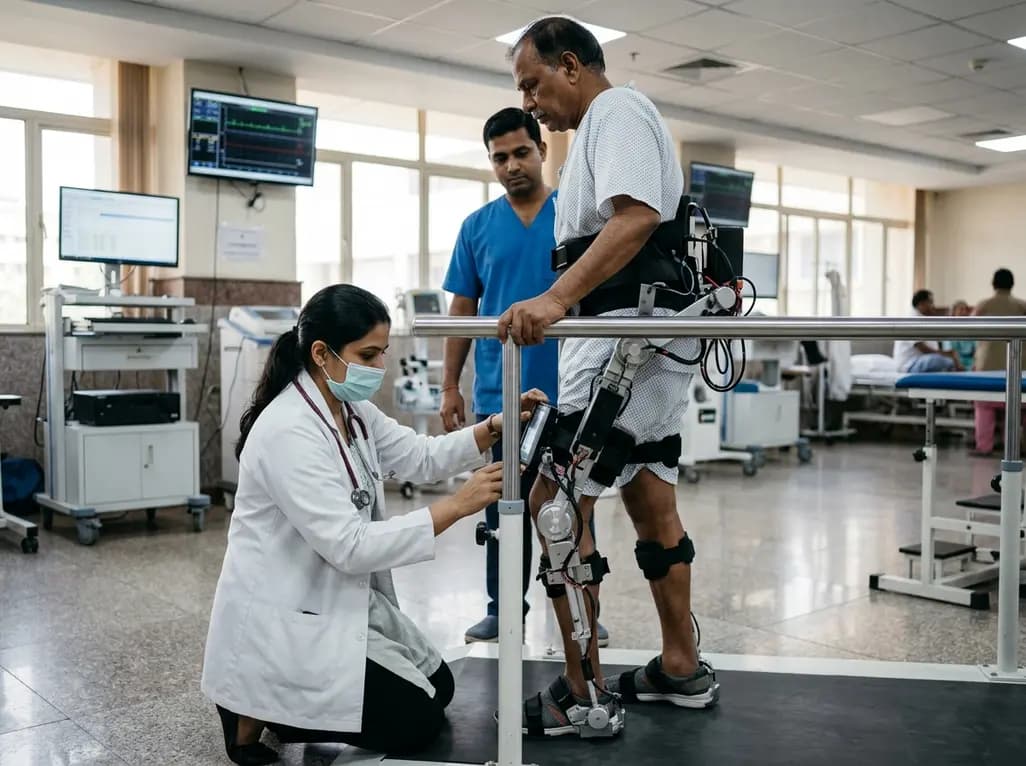
A breakthrough study introduces an AI-optimized Second-Order Sliding Mode Controller for lower extremity exoskeletons, improving tracking accuracy and disturbance rejection for safer, more effective neuro-rehabilitation.
Today
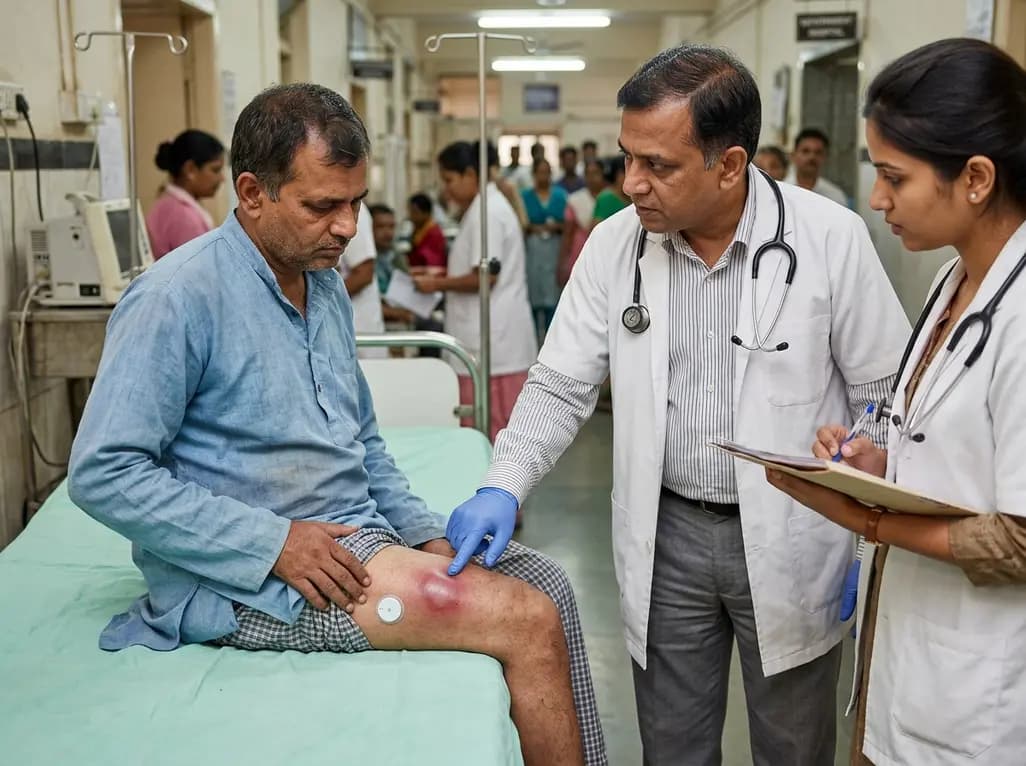
A 49-year-old man with uncontrolled type 2 diabetes developed a severe MSSA thigh abscess after inserting a continuous glucose monitor on his upper thigh. This case highlights the risks of off-label device placement and the critical role of interdisciplinary care in preventing cutaneous complications.
Today
