.webp&w=384&q=75)

Loading, please wait...
Loading, please wait...

Tumor-to-tumor metastasis (TTM) is a rare yet significant clinical phenomenon where one primary malignancy serves as the host for a secondary metastasis from a different primary cancer. While literature reports various combinations, the most frequent association involves intracranial meningiomas as recipient tumors and breast carcinoma as the donor malignancy. This specific case explores a rare synchronous presentation. Both tumors were identified during a single diagnostic workup in a 70-year-old patient, presenting a complex management scenario.
Physicians encounter TTM sparingly, often discovering it incidentally during histopathological examination. In this instance, the patient presented with progressive weakness and anosmia. Initial neuroimaging suggested a metastatic lesion; however, a concurrent physical exam revealed an ulcerated breast mass. Consequently, the surgical team performed a craniotomy for tumor resection alongside a same-day breast biopsy. This integrated approach confirmed that the meningioma actually harbored metastatic invasive ductal carcinoma, verifying the presence of tumor-to-tumor metastasis.
Several factors facilitate this development. Meningiomas are ideal recipients because they grow slowly and possess rich vascular networks. Furthermore, shared hormonal receptors—specifically estrogen and progesterone—along with cell-adhesion molecules like E-cadherin, may promote the seeding of breast cancer cells into meningothelial tissue. Recognizing these patterns is essential. Synchronous presentations typically indicate aggressive systemic disease. Therefore, they require rapid multidisciplinary intervention to optimize patient outcomes.
Integrated surgical and pathological planning proved vital for this patient. After confirming the diagnosis, systemic staging revealed widespread metastatic disease. Consequently, the medical team initiated oncological therapy immediately. This case emphasizes that TTM is not merely a pathological curiosity. Instead, it serves as a critical indicator of the patient’s overall oncological status. Such findings necessitate a coordinated strategy among neurosurgeons, oncologists, and pathologists to ensure accurate staging and treatment planning.
It is a rare condition where a metastatic cancer cell from a primary "donor" tumor seeds and grows within a different "recipient" tumor. Common donor sites include the breast and lungs, while meningiomas are frequent recipients.
Meningiomas provide a stable, hypervascular environment. Additionally, both breast cancer and meningiomas often express progesterone and estrogen receptors, which may facilitate the engraftment of metastatic cells.
A synchronous diagnosis indicates that both tumors are present at the time of initial evaluation. This typically suggests advanced systemic disease, shifting the focus from localized surgery to a combination of surgical resection and systemic oncological therapies.
Disclaimer: This content is for informational and educational purposes only. It does not constitute professional medical advice, diagnosis, or treatment. Always seek the advice of your physician or other qualified healthcare provider with any questions you may have regarding a medical condition. Refer to the latest local and national guidelines for clinical practice.
References
1. Nazarli S et al. Synchronous tumor-to-tumor metastasis of breast carcinoma to intracranial meningioma: illustrative case. J Neurosurg Case Lessons. 2026 May 18. doi: undefined. PMID: 42150208.
2. Abrahão-Machado LF et al. Tumor-To-Tumor Metastasis: Intracranial Meningioma Harboring Metastatic Breast Carcinoma. Ann Clin Pathol. 2015;3(2):1049.
3. Lavrador JP et al. Meningioma and breast cancer: survival of patients with synchronous and metachronous meningioma and breast cancer. J Neurooncol. 2018;136(2):327-335.
"
Read summarized clinical updates, watch expert medical content, and earn CME certifications right from your smartphone.
Open your smartphone camera to scan and install.





A rare case of synchronous tumor-to-tumor metastasis involving breast carcinoma and intracranial meningioma highlights the need for integrated clinical care...
5 months ago
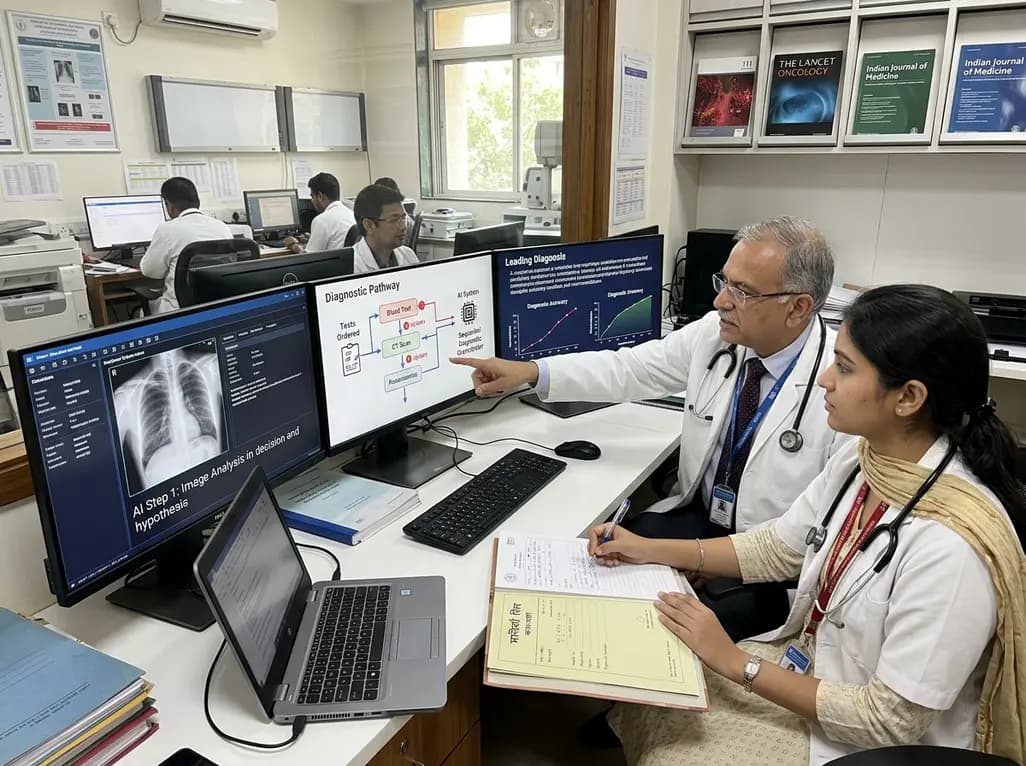
A breakthrough peer-reviewed study demonstrates that a sequential AI diagnosis system can mirror real-world clinical reasoning. By ordering stepwise tests and updating hypotheses dynamically, this multi-agent orchestrator achieved superior diagnostic accuracy while reducing investigative costs.
Today

A prenatal case highlights severe glutaric acidemia type II presenting as bilateral hyperechoic cystic kidneys at 18 weeks. Whole-exome sequencing revealed a novel homozygous ETFDH frameshift variant, demonstrating the power of rapid genetic testing in fetal renal anomalies.
Today

Review how tailored exercise programs benefit frail older patients with heart failure. Explore pathophysiological mechanisms, individualized training prescriptions, and strategies to overcome adherence barriers in clinical practice.
Yesterday

This comparative study evaluates posterior labral tears with and without glenohumeral instability, highlighting distinct demographic patterns, MRI underestimation in stable shoulders, and successful arthroscopic repair outcomes.
Yesterday

A clinical study demonstrates that early intervention with tocilizumab, either as monotherapy or bridged with corticosteroids, achieves significant proptosis reduction and resolves active inflammation in treatment-naive thyroid eye disease.
Yesterday
