.webp&w=384&q=75)

Loading, please wait...
Loading, please wait...

Neoadjuvant therapy serves as a vital cornerstone in managing locally advanced breast carcinoma. While clinicians routinely assess residual disease through standard staging, the spatial tumor regression pattern provides profound biological insights. Historically, pathologists prioritized primary tumor diameter and nodal status to establish prognosis. However, modern digital pathology demonstrates that tumor clearance architecture reflects intrinsic cancer biology and systemic treatment sensitivity. When malignant cells regress under chemotherapy, structural shrinkage occurs in distinct spatial formats. Therefore, understanding tumor bed geometry helps oncologists refine residual risk stratification.
A retrospective investigation evaluated 1,102 patients with invasive breast carcinoma who underwent surgery following neoadjuvant therapy. Researchers analyzed digital whole-slide images to examine residual beds systematically. The investigators observed that response patterns divide into concentric regression and centrifugal regression. Concentric regression describes centripetal shrinkage where malignant cells collapse inward toward a central focus or disappear completely. Conversely, centrifugal regression exhibits scattered persistence across the pre-treatment tumor footprint. Therefore, tumors responding centrifugally leave fragmented remnants dispersed throughout fibrotic stroma. The cohort demonstrated a median age of 49 years and a median follow-up of 81 months. Furthermore, this extended observation period enabled precise evaluation of survival differences across distinct morphologies. Microscopic clearance reflects clonal sensitivity and microenvironmental resistance. Consequently, spatial assessment uncovers critical prognostic divergence that unidimensional measurements fail to capture.
To refine classification, researchers delineated nine histological subtypes across the two main branches. Within the concentric regression category, four subtypes emerged: pathological complete response, isolated residual cells, concentric mass shrinkage, and ring-like regression. Patients achieving complete response exhibited total eradication of invasive disease in breast tissue and lymph nodes. Similarly, isolated residuals and concentric margins demonstrated localized cellular containment. In contrast, the centrifugal category comprised five diverse patterns. These subtypes included no or minimal response, cord-like persistence, clumpy nests, cribriform architecture, and mixed regression. Cord-like and cribriform patterns featured invasive cells navigating along tissue planes. Moreover, mixed patterns displayed multifocal clusters scattered across extensive fibrotic tissue. Because centrifugal subtypes maintain broad geographical margins, pathologists encounter greater difficulty outlining surgical boundaries. Concentric lesions, however, offer discrete edges that facilitate complete resection. Thus, classifying tumors into these precise architectural categories provides a standardized diagnostic framework for clinical teams.
The clinical value of this classification rests upon long-term survival outcomes. Statistical analysis demonstrated highly significant differences in disease-free survival and overall survival across all nine subtypes. Patients presenting with concentric regression achieved distinctly superior survival outcomes compared to those with centrifugal patterns. Specifically, individuals with complete response or isolated residuals experienced the lowest recurrence rates over the 81-month follow-up. Conversely, patients demonstrating centrifugal patterns suffered notably worse survival. Among centrifugal subtypes, minimal response and cord-like regression indicated particularly aggressive clinical progression. Multivariate survival analyses confirmed that regression geometry acts as an independent prognostic factor alongside nodal status and tumor grade. When cancer cells persist centrifugally despite systemic therapy, they frequently represent chemoresistant clones with high invasive capacity. In contrast, concentric shrinkage marks therapy-sensitive biology where peripheral cells clear effectively. Therefore, recognizing spatial patterns provides clinicians with crucial prognostic discrimination beyond residual tumor size alone.
Integrating regression patterns into oncology workflows carries direct implications for surgical planning. When magnetic resonance imaging indicates concentric shrinkage, surgeons can reliably attempt breast-conserving surgery. Because the tumor contracts centripetally, negative microscopic margins remain achievable without excessive excision of healthy tissue. On the contrary, centrifugal regression creates substantial operative challenges. Dispersed tumor nests frequently extend beyond visible radiologic borders into adjacent parenchyma. Consequently, patients exhibiting centrifugal shrinkage face elevated risks of positive margins and subsequent re-excision. In many locally advanced presentations, centrifugal patterns necessitate mastectomy to ensure clear boundaries. Radiologists and surgeons must collaborate closely to interpret these findings. Preoperative imaging does not always detect isolated cords embedded within dense fibrotic stroma. Furthermore, accurate postoperative assessment requires meticulous gross pathology sampling across the entire original tumor bed. Clinicians should recognize this nuance when evaluating response. If imaging shows non-concentric shrinkage, surgical teams can modify margin strategies proactively.
Beyond surgical considerations, spatial regression architecture provides valuable direction for adjuvant systemic therapy. Standard oncology guidelines assign post-neoadjuvant regimens based primarily on residual cancer burden classes or binary response. For example, clinicians administer capecitabine for residual triple-negative disease and adjuvant antibody-drug conjugates for HER2-positive cases. However, patients with identical residual tumor volumes can have markedly different relapse risks depending on spatial morphology. A compact, concentric residual lesion often carries far lower metastatic potential than fragmented, centrifugal remnants of equivalent volume. Incorporating regression morphology into standardized reports could therefore improve post-surgical risk stratification. Patients harboring high-risk centrifugal patterns might benefit from intensified systemic surveillance, extended endocrine therapy, or clinical trial participation. Similarly, radiation oncologists can utilize tumor bed regression patterns to guide radiotherapy boost planning. If malignant cells disperse widely across the initial footprint, radiation fields must cover the original bed generously. Conversely, concentric responders can receive targeted boosts. Ultimately, combining spatial morphology with receptor status creates a refined framework for precision oncology.
Concentric regression involves centripetal tumor shrinkage, where malignant cells regress inward toward a localized central focus or clear completely. In contrast, centrifugal regression displays scattered, multifocal residual disease across the original tumor bed. Clinically, concentric shrinkage provides distinct surgical margins that facilitate successful breast-conserving therapy. Conversely, centrifugal regression frequently leads to positive surgical margins, elevated recurrence rates, and worse disease-free survival, requiring more aggressive surgical resection and intensified systemic surveillance.
Yes, architectural regression patterns provide crucial prognostic insight that complements standard staging systems like residual cancer burden. When patients present with high-risk centrifugal patterns, such as cord-like or mixed regression, they face a substantially higher likelihood of distant recurrence. Consequently, oncologists can utilize this spatial risk data alongside molecular subtyping to consider adjuvant chemotherapy intensification, extended endocrine therapy, or clinical trial enrollment to minimize systemic relapse risks effectively.
Digital whole-slide imaging allows pathologists to examine the entire macroscopic tumor bed simultaneously rather than viewing isolated, disconnected tissue sections. This comprehensive digital view facilitates accurate mapping of peripheral satellite foci, multifocal cords, and reactive stromal changes. Furthermore, digital tools enable precise measurements between residual cells, reducing interobserver variability and ensuring consistent classification of complex concentric and centrifugal regression patterns across modern clinical trials and routine pathology practice.
Disclaimer: This content is for informational and educational purposes only... Refer to the latest local and national guidelines for clinical practice.
References
Ding Y et al. [Relationship between tumor regression pattern and prognosis after neoadjuvant therapy for breast cancer]. Zhonghua Bing Li Xue Za Zhi. 2026 Oct 08. doi: 10.3760/cma.j.cn112151-20260512-00369. PMID: 42851197.
King TA et al. Impact of the Histologic Pattern of Residual Tumor After Neoadjuvant Chemotherapy on Recurrence and Survival in Stage I-III Breast Cancer. Ann Surg Oncol. 2022;29(12):7484-7494.
Symmans WF et al. Measurement of Residual Breast Cancer to Predict Recurrence-Free Survival After Neoadjuvant Chemotherapy: An Update on the Residual Cancer Burden Index. J Clin Oncol. 2017;35(10):1049-1060.

Read summarized clinical updates, watch expert medical content, and earn CME certifications right from your smartphone.
Open your smartphone camera to scan and install.





A large cohort study reveals that the histological tumor regression pattern after neoadjuvant therapy significantly predicts disease-free and overall survival in breast cancer. Concentric shrinkage yields superior outcomes compared to centrifugal patterns, offering vital risk-stratification insights.
Today

India's antidepressant market crossed Rs 2,842 crore in 2026 even as unit sales declined. Clinicians analyze the shift toward newer drugs, widespread clonazepam combination use, social media-driven self-diagnosis, and persistent treatment gaps to assess genuine therapeutic recovery across diverse patient groups.
Today

Integrating adult genetic services into reproductive and pregnancy care substantially alters clinical management. A study reveals that diagnostic genetic evaluations directly inform maternal, fetal, and neonatal care in nearly 57% of tested patients, highlighting the value of preconception and antenatal genomics.
Today
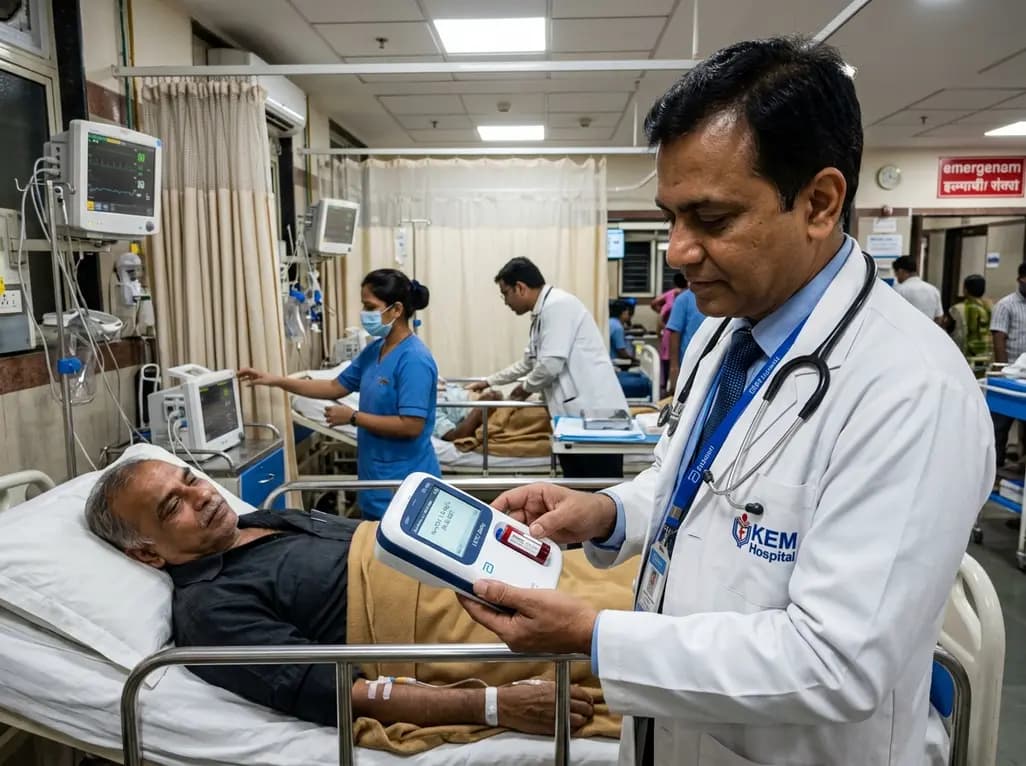
A real-world emergency department evaluation demonstrates that the Abbott i-STAT Alinity point-of-care high-sensitivity troponin I assay achieves excellent analytical precision and safely rules out myocardial infarction without false negatives, offering rapid bedside results to decongest acute care pathways.
Today

A recent scoping review highlights the efficacy, usability, and patient satisfaction of virtual reality pain management for chronic musculoskeletal pain, emphasizing psychotherapy-based VR protocols.
Today

A cross-sectional study in Nepal evaluates cardiovascular risk factors among adults working above 4,000 meters. The findings reveal unexpected rates of diabetes, hypertension, and mountain sickness, underscoring the urgent need for targeted cardiometabolic screening in high-altitude occupational cohorts.
Today
