.webp&w=384&q=75)

Loading, please wait...
Loading, please wait...
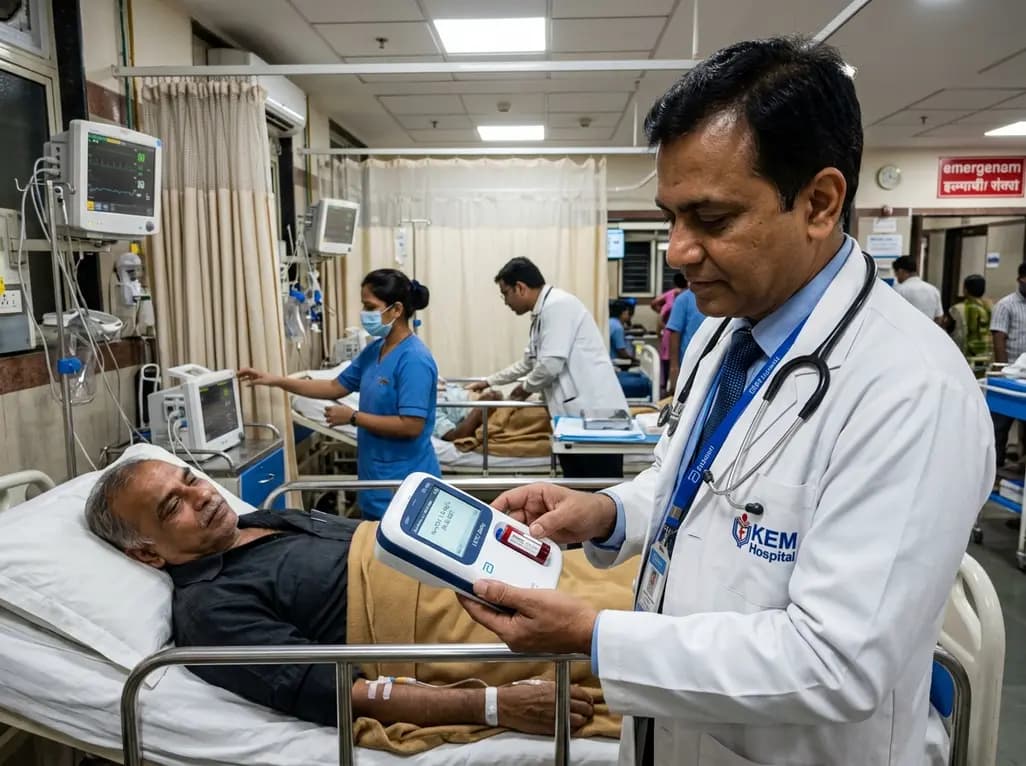
Chest pain remains one of the most frequent and resource-intensive presentations encountered in acute care settings globally. Rapid risk stratification is essential to identify life-threatening myocardial infarction while facilitating prompt discharge for low-risk individuals. Consequently, the adoption of point-of-care troponin testing offers an attractive solution to expedite clinical decisions. Recent real-world data from a United Kingdom emergency department shed new light on the diagnostic accuracy, analytical robustness, and operational feasibility of bedside high-sensitivity troponin assays.
High-sensitivity cardiac troponin testing represents the standard of care for investigating suspected acute coronary syndromes. However, central laboratory testing frequently entails substantial turnaround delays that compound emergency department overcrowding. To overcome this hurdle, researchers conducted a pragmatic, single-centre evaluation of the Abbott i-STAT Alinity platform in an active emergency department. The team compared paired whole-blood and plasma specimens from patients presenting with suspected acute coronary syndrome against the standard laboratory Alinity analyzer.
Importantly, international guidelines mandate that high-sensitivity cardiac troponin assays maintain a coefficient of variation below 10% at the 99th percentile upper reference limit. In this real-world assessment, the point-of-care assay satisfied these stringent criteria comfortably. Specifically, low-level imprecision remained well below the 10% threshold across repeated measurements. Therefore, clinicians can trust the numerical stability of this portable system at critical low concentrations. Furthermore, whole-blood testing demonstrated reliable analytical concordance with plasma controls, validating its direct bedside utility.
Patient safety in acute cardiology relies heavily on avoiding false-negative classifications at low diagnostic decision points. In this clinical evaluation, investigators evaluated diagnostic concordance at the established rapid rule-out cutoff of less than 5 ng/L. Remarkably, overall concordance between the bedside cartridge and central laboratory platforms reached 84.1%. More importantly, every discordant result occurred because the point-of-care device produced a slightly higher concentration than the core laboratory assay.
As a result, the point-of-care assay generated zero false-negative rule-out classifications within the study cohort. Both methods achieved an observed diagnostic sensitivity of 100% and a negative predictive value of 100% for adjudicated Type 1 myocardial infarction at this 5 ng/L threshold. Consequently, clinicians could safely identify patients eligible for rapid rule-out pathways without compromising clinical vigilance. Although the study sample yielded wide confidence intervals, these findings provide compelling reassurance that early bedside triaging does not inadvertently miss evolving ischemic events.
While safety thresholds remained completely intact, investigators noted important differences in overall analytical distribution between the two platforms. Method comparison analyses revealed a modest positive bias on the point-of-care system relative to the laboratory platform. Because bedside values ran slightly higher, the clinical specificity of the portable device was somewhat lower than that observed with central laboratory measurements. Consequently, a small proportion of low-risk patients were classified into intermediate observation zones rather than receiving immediate early discharge.
Nevertheless, receiver operating characteristic curve analysis revealed comparable diagnostic discrimination between both platforms for detecting adjudicated Type 1 myocardial infarction. Clinicians must recognize that positive bias in point-of-care troponin values inherently errs on the side of patient caution. Furthermore, serial sampling remains mandatory whenever clinical suspicion remains elevated or symptoms began less than two hours prior to presentation. Thus, integrating bedside measurements requires thoughtful alignment with clinical risk scores to avoid unnecessary hospital admissions while preserving patient safety.
Emergency department blood sampling frequently suffers from pre-analytical challenges, including sample hemolysis from intravenous cannulas and altered hematocrit levels. Therefore, validating assay resilience against biological interferents is paramount before deploying bedside technology. In this study, investigators performed multivariable regression analyses to evaluate whether endogenous interferents altered point-of-care troponin concentrations. The investigators systematically measured indices of hemolysis, icterus, and lipemia alongside variable hematocrit percentages in paired patient blood samples.
Reassuringly, the analytical evaluation did not identify any clinically meaningful effects driven by hemolysis, icterus, lipemia, or variations in hematocrit. This finding proves especially vital for busy acute care environments where immediate whole-blood analysis occurs without laboratory centrifugation. Because the i-STAT Alinity platform utilizes electrochemical detection within a closed microfluidic cartridge, it resists standard optical interferences that typically challenge routine laboratory photometers. Consequently, frontline nursing and medical personnel can execute bedside tests with confidence, knowing common pre-analytical anomalies will not distort emergency results.
Emergency department overcrowding poses severe risks to patient outcomes across both developing and developed healthcare environments. In regions like India, where tertiary public and private trauma centers experience immense patient volumes, central laboratory turnaround times often exceed 60 to 90 minutes. In contrast, point-of-care troponin testing delivers definitive quantitative results in approximately 15 minutes at the bedside. Therefore, accelerating initial troponin availability substantially shortens emergency length of stay and relieves bed congestion.
Moreover, releasing emergency department bed capacity allows urgent cardiac interventions to proceed without administrative bottlenecks. Frontline teams can expedite the transfer of confirmed non-ST-elevation myocardial infarction patients to the cardiac catheterization suite while swiftly discharging low-risk individuals. Nevertheless, successful implementation demands robust hospital governance, continuous operator training, and electronic medical record synchronization. Larger multicentre prospective trials will further clarify how bedside pathways influence long-term mortality, readmission rates, and direct institutional healthcare expenditure.
Point-of-care troponin serves as an excellent adjunct for early rule-out and rule-in triage rather than an absolute laboratory replacement. While it accelerates emergency flow, confirmation with central laboratory platforms remains valuable during atypical clinical presentations or complex serial monitoring. Therefore, hospitals should implement bedside platforms alongside established central laboratory services.
Real-world emergency department analyses demonstrated that mild to moderate hemolysis does not exert clinically meaningful interference on the i-STAT Alinity cartridge. Because the system employs electrochemical detection in a sealed cartridge, it avoids standard optical measurement biases, ensuring dependable bedside results.
In clinical trials, a rule-out concentration threshold below 5 ng/L demonstrated 100% sensitivity and 100% negative predictive value for Type 1 myocardial infarction. However, physicians must always combine this threshold with symptom duration and structured clinical risk scores before discharging patients safely.
Disclaimer: This content is for informational and educational purposes only. Diagnostic thresholds and clinical pathways must be validated within each institution. Refer to the latest local and national guidelines for clinical practice.
References

Read summarized clinical updates, watch expert medical content, and earn CME certifications right from your smartphone.
Open your smartphone camera to scan and install.





A real-world emergency department evaluation demonstrates that the Abbott i-STAT Alinity point-of-care high-sensitivity troponin I assay achieves excellent analytical precision and safely rules out myocardial infarction without false negatives, offering rapid bedside results to decongest acute care pathways.
Today

Integrating adult genetic services into reproductive and pregnancy care substantially alters clinical management. A study reveals that diagnostic genetic evaluations directly inform maternal, fetal, and neonatal care in nearly 57% of tested patients, highlighting the value of preconception and antenatal genomics.
Today

A cross-sectional study in Nepal evaluates cardiovascular risk factors among adults working above 4,000 meters. The findings reveal unexpected rates of diabetes, hypertension, and mountain sickness, underscoring the urgent need for targeted cardiometabolic screening in high-altitude occupational cohorts.
Today
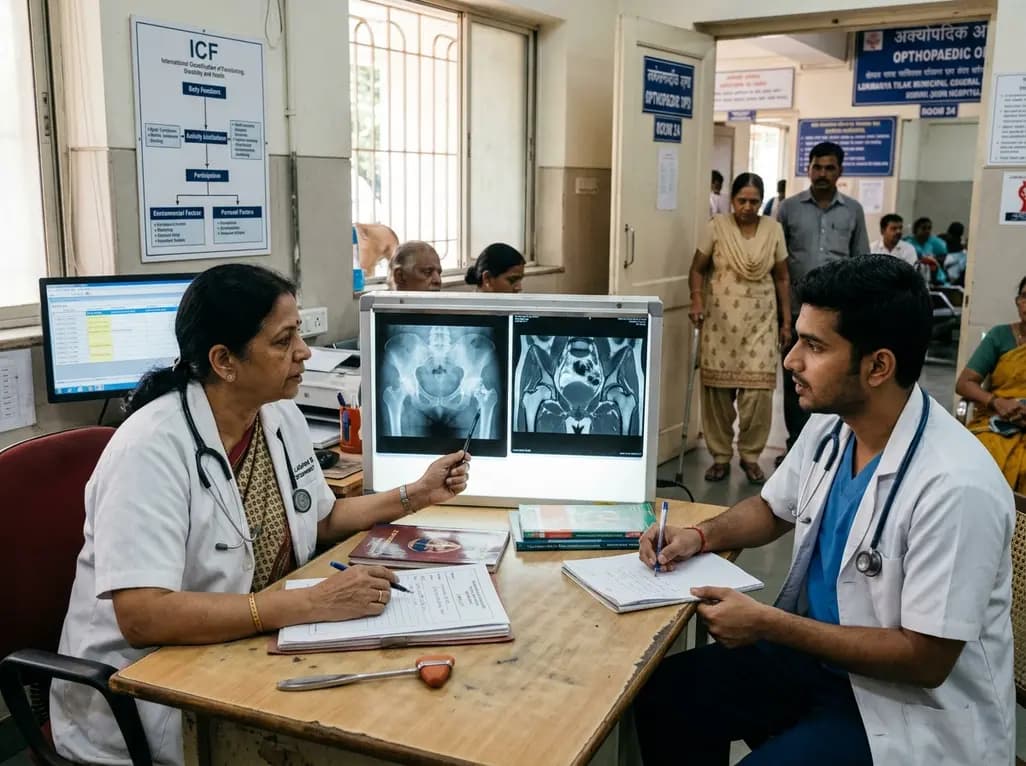
A recent scoping review highlights the value of using the ICF framework to assess chronic hip pain. While most clinical research focuses on anatomical damage, integrating activity limitations, participation restrictions, and environmental barriers enables more comprehensive, patient-centered musculoskeletal care.
Today

Preclinical findings demonstrate that dietary flavonoid hyperoside ameliorates high-fat diet-induced type 2 diabetes by stimulating brown adipose tissue thermogenesis, promoting white fat browning, dampening adipose macrophage inflammation, and restoring gut microbiota homeostasis.
Today
