.webp&w=384&q=75)

Loading, please wait...
Loading, please wait...
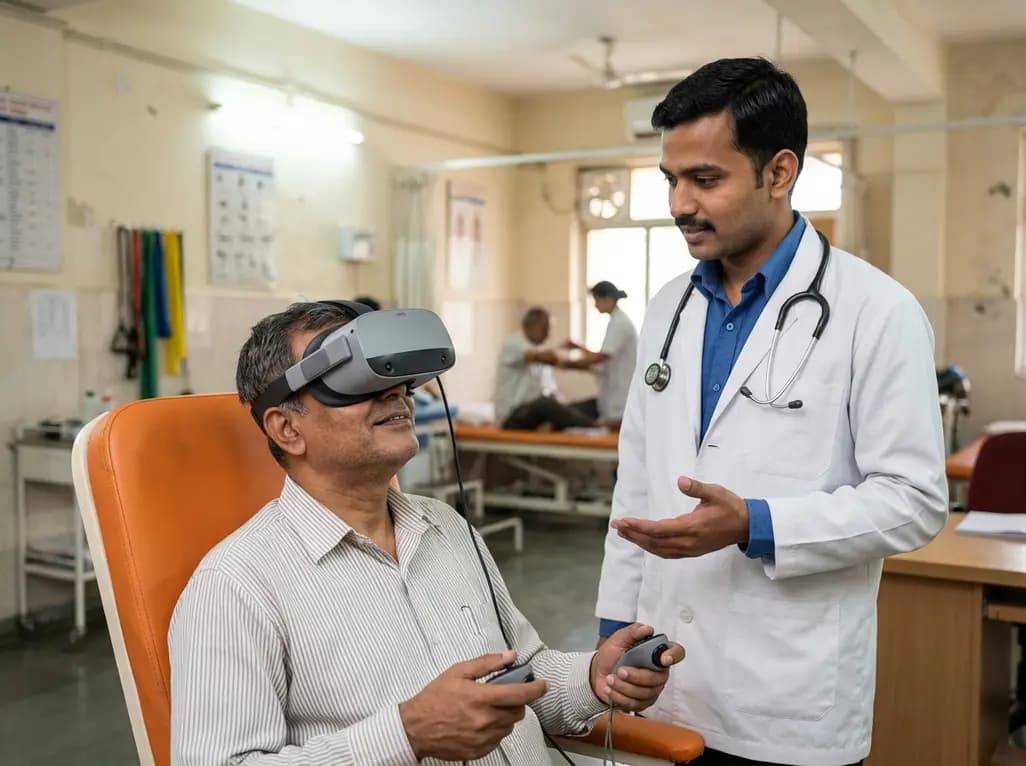
Chronic musculoskeletal pain represents a leading cause of physical disability and healthcare utilization worldwide. Traditional management strategies often rely heavily on analgesic medications, physical therapy, and interventional procedures. However, many individuals experience incomplete symptom resolution and persistent functional limitations. In response, modern medicine is rapidly integrating digital health solutions. Specifically, virtual reality pain management has emerged as a groundbreaking non-pharmacological modality that alters sensory processing and enhances central pain modulation.
Virtual reality immerses users in dynamic three-dimensional environments that capture visual, auditory, and cognitive attention. Consequently, this immersion interrupts pain signaling through established gate-control mechanisms and cortical distraction. Furthermore, advanced therapeutic systems incorporate structured behavioral interventions rather than simple passive diversion. A recent scoping review synthesized emerging evidence regarding the efficacy, usability, and user satisfaction of these digital systems among patients with chronic musculoskeletal disorders. This rigorous synthesis reveals how digital therapeutics foster substantial pain relief while offering accessible, home-based rehabilitation. As clinicians seek sustainable alternatives to long-term pharmacotherapy, virtual platforms provide an innovative avenue to restore physical function and rebuild patient confidence.
The scoping review systematically identified eleven qualifying publications across four major biomedical databases. These studies examined varied clinical populations, ranging from randomized trials to pragmatic case series. Notably, seven of the eleven analyzed studies focused exclusively on chronic low back pain. Because lower back pain represents the predominant driver of global spinal disability, investigators naturally prioritized this cohort. Participants across these studies consistently exhibited noticeable improvements in symptom control following immersive therapeutic sessions.
Moreover, patients reported meaningful decreases in pain interference, allowing them to resume essential daily activities. However, the pronounced concentration on spinal pathology highlights a critical gap in current orthopedic research. Although osteoarthritis, neck pain, and fibromyalgia affect millions, few trials explore immersive tools for these diagnoses. Therefore, the generalizability of existing conclusions to other peripheral joint disorders remains constrained. Clinicians must recognize that while virtual interventions clearly benefit chronic low back discomfort, additional high-quality investigations are vital. Future research must evaluate diverse anatomical areas to determine whether similar therapeutic gains occur in broad musculoskeletal cohorts.
A critical insight from the review involves the divergence between different virtual reality program designs. Five included trials utilized psychotherapy-based virtual reality interventions, which grounded their protocols in cognitive behavioral therapy and mindfulness. In these programs, users engaged in guided diaphragmatic breathing, somatic down-regulation, and cognitive restructuring within calming virtual environments. Remarkably, these psychotherapy-based modules generated the most consistent reductions in pain intensity. Patients learned effective coping mechanisms that dismantled pain catastrophizing and mitigated kinesiophobia.
In contrast, other virtual reality paradigms demonstrated far greater variability in overall effectiveness. Embodiment-based protocols, which utilize virtual avatars to alter body representation, produced mixed analgesic results. Similarly, exercise-based exergaming interventions showed inconsistent outcomes regarding pain scores, despite improving physical mobility. Consequently, the authors observed that psychotherapeutic elements appear necessary for achieving reliable neurocognitive recalibration. While active virtual exercises enhance muscular conditioning, psychotherapeutic immersion fundamentally alters central pain appraisal. Therefore, physicians and therapists should prioritize evidence-based behavioral software when selecting digital therapeutics for chronic pain management.
Beyond clinical efficacy, patient acceptance and software usability dictate whether digital health tools succeed in everyday clinical practice. Fortunately, the scoping review noted that user satisfaction remained exceptionally high for psychotherapy-based interventions. Patients frequently praised the calming nature of the virtual environments and appreciated the intuitive interface of specialized medical headsets. In addition, participants described the self-administered sessions as empowering, which motivated them to complete their assigned multi-week therapy schedules.
Conversely, satisfaction metrics varied considerably among mechanical and movement-based platforms. Some users experienced physical discomfort, visual fatigue, or frustration when navigation controls proved overly complex. Furthermore, several reviewed trials failed to utilize validated questionnaires to assess usability endpoints. This methodological inconsistency creates challenges when comparing different hardware and software systems. To ensure seamless adoption in outpatient settings, future clinical trials must rigorously assess human-factor engineering. By designing intuitive, lightweight devices, manufacturers can minimize attrition and encourage long-term adherence among diverse patient demographics.
The emergence of virtual reality pain management introduces valuable opportunities for nursing professionals and multidisciplinary rehabilitation teams. Nurses often serve as primary coordinators for chronic pain management, providing critical patient education and monitoring symptom progression. Because chronic musculoskeletal pain requires continuous self-management, nurses can actively guide patients in adopting home-based virtual systems. These digital platforms empower individuals to manage breakthrough pain independently, thereby reducing emergency visits and unnecessary clinic appointments.
Additionally, nurses must evaluate each patient's digital literacy and physical mobility before initiating digital therapy. By providing comprehensive pre-treatment orientation, nursing teams can address technical anxieties and demonstrate proper headset placement. Furthermore, nurses can track compliance and monitor potential adverse effects, such as transient cyber-sickness. Selecting personalized, evidence-based virtual content ensures that patients achieve optimal therapeutic benefits while avoiding frustration. Ultimately, incorporating virtual reality into holistic nursing care models bridges the gap between clinical facilities and home rehabilitation, creating a supportive framework for sustainable recovery.
Integrating virtual reality into mainstream pain clinics demands thoughtful infrastructure planning and strategic clinical workflows. Healthcare administrators must evaluate capital investment, hardware sanitization protocols, and staff training requirements. Although initial setup costs may appear substantial, digital therapeutics frequently decrease overall healthcare expenditures by reducing downstream invasive interventions and repeat specialist consultations. In addition, healthcare organizations can implement hybrid delivery models that blend in-clinic supervised sessions with home self-administration.
Moreover, clinicians must tailor digital interventions to individual patient phenotypes. For example, individuals with pronounced movement-related fear benefit substantially from psychotherapeutic modules before transitioning to active physical rehabilitation. Similarly, periodic clinical check-ins help maintain patient accountability and allow timely protocol adjustments. Consequently, multidisciplinary teams combining pain specialists, physical therapists, and nurses can deliver cohesive, patient-centered care. As regulatory bodies continue granting authorizations for prescription digital devices, clinicians should proactively integrate evidence-based virtual reality into comprehensive multimodal pain algorithms.
Virtual reality alleviates pain by engaging neurological pathways through immersive multisensory distraction and cognitive reframing. Specifically, specialized headsets limit central nociceptive processing by directing cognitive bandwidth toward interactive environments. Furthermore, psychotherapeutic virtual reality protocols integrate deep breathing techniques and mindfulness exercises. Consequently, patients alter maladaptive responses to persistent discomfort, enhance functional neuroplasticity, and report meaningful reductions in chronic symptom severity during everyday home use.
Current clinical literature documents the strongest therapeutic outcomes among individuals suffering from chronic low back pain. In fact, most randomized controlled trials focus primarily on axial spine conditions. However, preliminary investigations also demonstrate promising pain relief in osteoarthritis, fibromyalgia, and postoperative recovery. Therefore, clinicians anticipate broader applications across diverse joints, although larger trials must formally confirm lasting efficacy across these other musculoskeletal disorders.
Yes, patients can safely administer immersive digital therapy within their homes under appropriate clinical supervision. Modern medical devices provide structured, self-paced modules requiring minimal technical knowledge. In addition, adverse effects remain mild and transient, primarily involving occasional motion sickness or visual fatigue. Because home-based protocols empower self-management, they notably reduce healthcare utilization and help patients sustain independent rehabilitation routines over extended clinical recovery periods.
Disclaimer: This content is for informational and educational purposes only... Refer to the latest local and national guidelines for clinical practice.
References

Read summarized clinical updates, watch expert medical content, and earn CME certifications right from your smartphone.
Open your smartphone camera to scan and install.





A recent scoping review highlights the efficacy, usability, and patient satisfaction of virtual reality pain management for chronic musculoskeletal pain, emphasizing psychotherapy-based VR protocols.
Today

A real-world emergency department evaluation demonstrates that the Abbott i-STAT Alinity point-of-care high-sensitivity troponin I assay achieves excellent analytical precision and safely rules out myocardial infarction without false negatives, offering rapid bedside results to decongest acute care pathways.
Today

Integrating adult genetic services into reproductive and pregnancy care substantially alters clinical management. A study reveals that diagnostic genetic evaluations directly inform maternal, fetal, and neonatal care in nearly 57% of tested patients, highlighting the value of preconception and antenatal genomics.
Today

A cross-sectional study in Nepal evaluates cardiovascular risk factors among adults working above 4,000 meters. The findings reveal unexpected rates of diabetes, hypertension, and mountain sickness, underscoring the urgent need for targeted cardiometabolic screening in high-altitude occupational cohorts.
Today

Preclinical findings demonstrate that dietary flavonoid hyperoside ameliorates high-fat diet-induced type 2 diabetes by stimulating brown adipose tissue thermogenesis, promoting white fat browning, dampening adipose macrophage inflammation, and restoring gut microbiota homeostasis.
Today
