.webp&w=384&q=75)

Loading, please wait...
Loading, please wait...

Managing critically ill patients often involves a complex interplay between multisystem failure and diagnostic precision. One of the most significant challenges in the Intensive Care Unit (ICU) involves the accurate interpretation of cardiac biomarkers in patients undergoing renal support. Specifically, the question of Troponin T clearance CRRT remains a point of clinical debate among intensivists and cardiologists. When a patient presents with potential acute coronary syndrome (ACS) while receiving continuous renal replacement therapy (CRRT), physicians must determine if the extracorporeal circuit is removing the biomarker at a rate that could mask myocardial injury. This uncertainty often leads to diagnostic delays or unnecessary invasive procedures. Consequently, understanding the kinetics of cardiac troponin T (cTnT) during different modalities of CRRT is essential for ensuring patient safety and diagnostic accuracy.
Recent research conducted at Tallaght University Hospital in Dublin, Ireland, aimed to clarify these concerns. The study focused on adult patients requiring CRRT who also exhibited elevated troponin T levels. By analyzing the clearance across various modalities, the research provides much-needed clarity on whether treatment affects the tracking of myocardial injury. Indeed, the ability to rely on serial troponin measurements is a cornerstone of ACS management. If the CRRT machine removes a significant portion of this protein, the standard 'delta' or change in troponin levels might become unreliable. Therefore, this study serves as a vital resource for clinicians who must interpret these sensitive markers in the setting of acute kidney injury and hemodynamic instability.
Cardiac Troponin T is a protein with a molecular weight of approximately 37 kDa. In healthy individuals, the kidneys play a minor role in its clearance, but in patients with renal failure, baseline levels often rise due to decreased excretion and chronic myocardial strain. When we introduce CRRT into the clinical picture, we add an extracorporeal mechanism for solute removal. Different modalities, such as continuous venovenous haemofiltration (CVVH) and continuous venovenous haemodialysis (CVVHD), utilize different physical principles to clear molecules. Convection, the primary driver in CVVH, is generally more effective at removing middle-sized molecules compared to the diffusion process used in CVVHD. Consequently, many clinicians have traditionally worried that high-volume filtration might strip the blood of diagnostic markers like troponin.
Despite these theoretical concerns, the actual impact of the CRRT filter on troponin levels depends on the pore size of the membrane and the sieving coefficient of the protein. Most modern high-flux membranes have a cut-off point that theoretically allows for some troponin removal. However, proteins often bind to the membrane surface, a process known as adsorption, which can further complicate clearance calculations. Furthermore, the volume of distribution for troponin T is relatively small, and it remains largely within the intravascular space. This means that while some removal occurs, it may not be sufficient to alter the overall serum concentration significantly. By understanding these underlying physiological and mechanical factors, physicians can better appreciate why the study results showed only minimal impact on total clearance.
The Irish prospective observational study specifically compared three main modalities: CVVH, CVVHD, and continuous venovenous haemodiafiltration (CVVHDF). Researchers included adult patients who had already commenced CRRT at least four hours prior to the first blood sample. This delay ensured that the system had reached a steady state before measurements began. The team collected simultaneous samples from the patient's serum and the waste effluent over a 72-hour period. By calculating the concentration of troponin in the effluent relative to the serum, they could estimate the total clearance. Interestingly, the primary outcome showed no significant difference in the estimated Troponin T clearance CRRT between the three modalities. The overall median clearance was calculated at a modest 2.6 ml/kg/h, which is relatively low compared to the clearance of smaller toxins like urea.
However, a secondary analysis revealed some subtle statistical differences. The percentage of troponin T clearance was statistically higher for patients on CVVH compared to those on CVVHD or CVVHDF. Specifically, the clearance percentages were 16%, 15%, and 10% respectively. While this reached statistical significance with a p-value of 0.002, the clinical relevance of such a small absolute difference is likely negligible. Most importantly, the total amount of troponin removed was not high enough to suggest that the modality choice should be altered based on the need for cardiac monitoring. Consequently, clinicians can choose the RRT modality based on the patient's fluid and metabolic needs rather than worrying about biomarker distortion. This finding provides reassurance that the diagnostic utility of troponin T remains robust across all standard ICU renal support techniques.
The primary clinical takeaway from this research is that CRRT is unlikely to substantially impact the interpretation and tracking of troponin T results. This is particularly crucial for patients suspected of having acute coronary syndrome or Type 2 myocardial infarction. In the ICU, troponin elevations are common due to sepsis, pulmonary embolism, or critical illness-related myocardial stress. Therefore, physicians rely heavily on the 'rising or falling' pattern of serial troponins to distinguish acute ischemia from chronic elevation. Because the clearance via CRRT is small and consistent across modalities, a significant rise in troponin T still indicates ongoing myocardial injury rather than a change in the dialysis prescription. Consequently, the standard diagnostic algorithms for ACS can be applied with a high degree of confidence.
Furthermore, the study suggests that we do not need to 'correct' troponin values for the dose of CRRT being delivered. Some earlier theories suggested that high-intensity CRRT might necessitate a lower threshold for diagnosing MI, but the data does not support this complication. Instead, the steady-state clearance allows the troponin trend to reflect the underlying cardiac pathology accurately. It is important, however, to remain vigilant about the timing of samples. While the modality might not matter, sudden changes in the filter's performance or frequent circuit clotting could theoretically cause minor fluctuations. Nevertheless, for the vast majority of patients, the presence of an active CRRT circuit should not deter the medical team from using troponin T as a primary diagnostic tool. This simplifies the management of the 'cardio-renal' patient in the critical care setting.
When managing a patient on CRRT with suspected cardiac issues, the focus should remain on the delta change rather than a single absolute value. Since patients with renal failure often have high baseline troponin levels, a single measurement of 50 ng/L or 100 ng/L may not be diagnostic of an acute event. Most guidelines suggest that a change of more than 20% over a 3-to-6-hour period is more indicative of acute myocardial injury in this population. The research confirms that the CRRT circuit will not 'wash away' this 20% change. Consequently, the medical team should maintain a consistent sampling schedule and interpret the results within the broader clinical context, including ECG changes and hemodynamic status. Moreover, the consistency of clearance across CVVH and CVVHD means that switching modalities for clinical reasons will not necessitate a reset of the troponin baseline.
In addition to troponin, clinicians should consider other markers of cardiac strain, such as BNP or echocardiographic findings. While this study focused on Troponin T, the principles of minimal clearance likely apply to other large protein biomarkers as well. By integrating the knowledge that CRRT has a negligible effect on troponin kinetics, ICU doctors can avoid the pitfalls of over-diagnosing or under-diagnosing MI. This lead to more appropriate use of antiplatelet therapy, anticoagulation, and cardiology consultations. In conclusion, the research reinforces the reliability of troponin T as a stable and useful biomarker in the most complex ICU scenarios. The stability of these markers ensures that we can provide high-quality cardiac care even when the kidneys require total mechanical support.
While the current study provides strong evidence regarding Troponin T, future research could expand into the kinetics of High-Sensitivity Troponin I (hs-cTnI) and other emerging biomarkers like Copeptin. There is also a need to investigate whether very high-volume CRRT—doses significantly higher than the standard 25-30 ml/kg/h—might begin to show more substantial clearance. Additionally, as new membrane technologies with even larger pore sizes enter the market, the sieving coefficients for cardiac proteins may change. Consequently, ongoing surveillance of biomarker behavior in the presence of new technology is necessary. For now, however, the medical community can rest assured that the current standard of care for CRRT does not compromise our ability to detect and treat life-threatening cardiac events in the ICU.
According to the study, the median clearance of Troponin T via CRRT is approximately 2.6 ml/kg/h. This is considered a very small amount compared to the overall concentration in the blood. While some troponin is found in the waste effluent, the total removal is not significant enough to interfere with the diagnostic trends required to identify acute myocardial injury in critically ill patients.
No, the choice of modality does not require a different interpretation strategy. Although CVVH showed a statistically higher percentage of clearance (16%) compared to CVVHDF (10%), the absolute difference is minimal. The study concluded that there is no significant difference in the overall estimated clearance between modalities. Therefore, clinicians should interpret troponin trends consistently regardless of which CRRT modality the patient is currently receiving.
Yes, you can generally trust rising troponin levels in these patients. Because the clearance of troponin by the CRRT circuit is low and remains stable, a significant rise in serum levels (typically a delta of >20%) strongly suggests new or ongoing myocardial damage rather than an artifact of the renal replacement therapy. Always correlate these laboratory findings with clinical symptoms, ECG changes, and the patient's overall hemodynamic status.
Disclaimer: This content is for informational and educational purposes only. It is not intended to be a substitute for professional medical advice, diagnosis, or treatment. Always seek the advice of your physician or other qualified health provider with any questions you may have regarding a medical condition. Refer to the latest local and national guidelines for clinical practice.
References
Boyd S et al. Troponin T clearance via continuous renal replacement therapies in the ICU. J Intensive Care. 2026 Jul 07. doi: 10.1186/s40560-026-00900-8. PMID: 42410486.
Lim W et al. Variation of High-Sensitivity Troponin T Results in Patients Undergoing Continuous Renal Replacement Therapy. PMC. 2022. doi: 10.1177/20543581221102558.
Januzzi JL et al. Interpretation and Significance of Elevated Cardiac Troponin Levels in Patients With Renal Disease. American College of Cardiology. 2011.

Read summarized clinical updates, watch expert medical content, and earn CME certifications right from your smartphone.
Open your smartphone camera to scan and install.





A prospective study at Tallaght University Hospital investigated how CRRT modalities affect Troponin T removal. Results indicate minimal clearance, suggesting that ongoing CRRT treatment is unlikely to distort cardiac marker trends in patients with suspected acute coronary syndrome in the ICU.
3 months ago
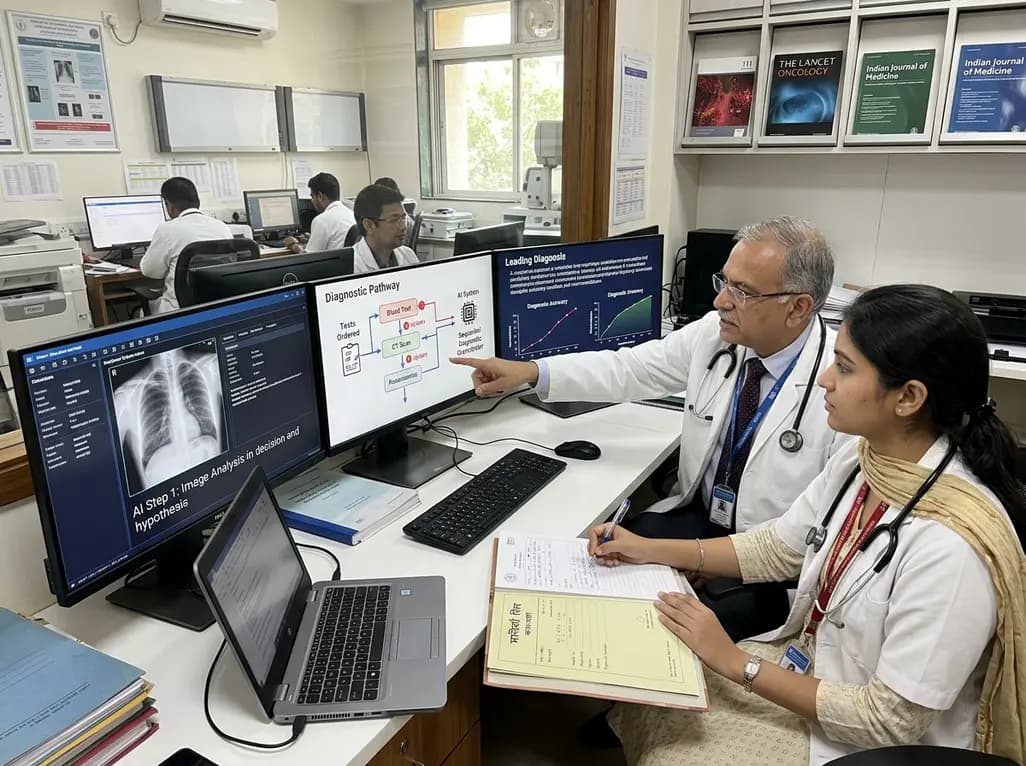
A breakthrough peer-reviewed study demonstrates that a sequential AI diagnosis system can mirror real-world clinical reasoning. By ordering stepwise tests and updating hypotheses dynamically, this multi-agent orchestrator achieved superior diagnostic accuracy while reducing investigative costs.
Today

A prenatal case highlights severe glutaric acidemia type II presenting as bilateral hyperechoic cystic kidneys at 18 weeks. Whole-exome sequencing revealed a novel homozygous ETFDH frameshift variant, demonstrating the power of rapid genetic testing in fetal renal anomalies.
Today

Review how tailored exercise programs benefit frail older patients with heart failure. Explore pathophysiological mechanisms, individualized training prescriptions, and strategies to overcome adherence barriers in clinical practice.
Yesterday

This comparative study evaluates posterior labral tears with and without glenohumeral instability, highlighting distinct demographic patterns, MRI underestimation in stable shoulders, and successful arthroscopic repair outcomes.
Yesterday

A clinical study demonstrates that early intervention with tocilizumab, either as monotherapy or bridged with corticosteroids, achieves significant proptosis reduction and resolves active inflammation in treatment-naive thyroid eye disease.
Yesterday
