

Loading, please wait...
Loading, please wait...
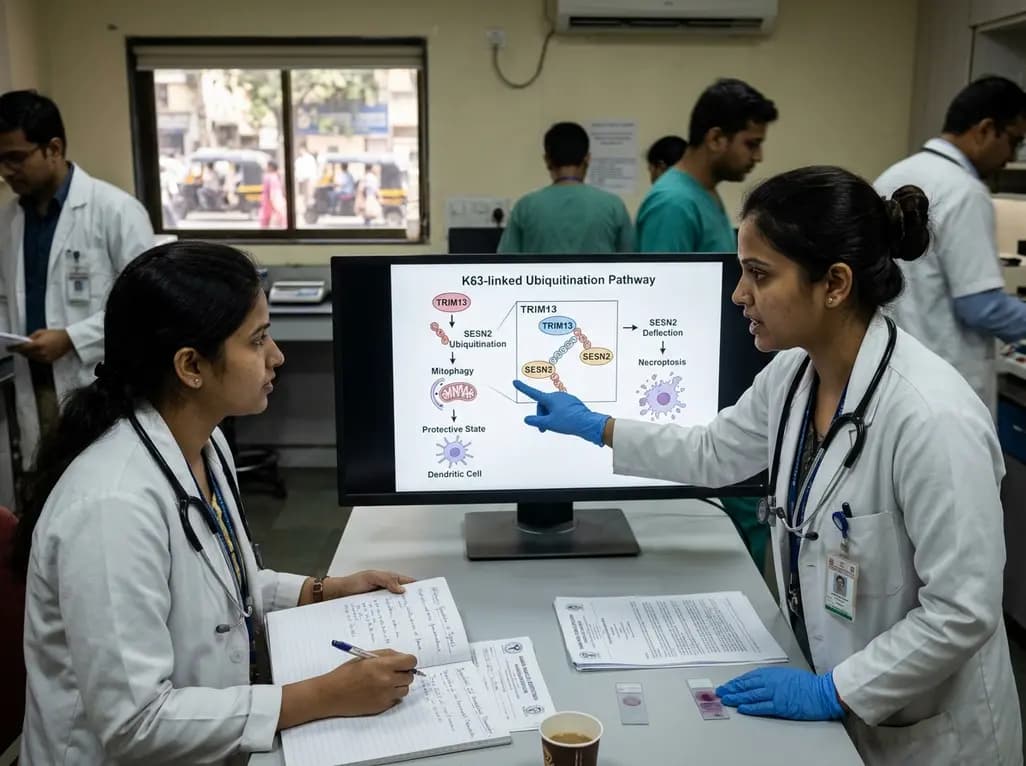
Sepsis remains a formidable clinical challenge across intensive care units worldwide, driving high rates of multiorgan failure and refractory mortality. Pathophysiologically, the condition represents a dysregulated host response to invasive infection that precipitates severe immune paralysis alongside overwhelming systemic inflammation. In particular, impaired cellular clearance mechanisms lead to catastrophic organelle injury and immune cell demise. Understanding how targeted organelle quality control, such as mitophagy in sepsis, preserves professional antigen-presenting cells provides essential insights for designing innovative immunomodulatory therapies.
Dendritic cells occupy an indispensable position at the interface between innate pathogen detection and adaptive immune orchestration. However, the hostile metabolic milieu generated during polymicrobial sepsis severely undermines dendritic cell competence. Systemic hyperinflammation and pathogen-associated molecular patterns prompt intense intracellular oxidative stress within these leukocytes. Consequently, unmitigated oxidative cascades induce pervasive structural damage to the mitochondrial network. When injured mitochondria fail to undergo swift degradation, they continuously leak reactive oxygen species and pro-apoptotic factors into the cytosol. Furthermore, this organellar collapse strips dendritic cells of their vital antigen-presentation capacity and costimulatory signaling molecules. Clinically, this catastrophic defect manifests as profound secondary immunosuppression, which leaves critical care patients defenseless against secondary nosocomial infections. Therefore, developing molecular strategies to safeguard dendritic cell viability and bioenergetic function represents a pivotal frontier in modern critical care and infectious disease research.
Recent molecular discoveries highlight tripartite motif-containing 13, known as TRIM13, as an essential regulator of host immune survival. TRIM13 functions primarily as an endoplasmic reticulum-associated E3 ubiquitin ligase that orchestrates targeted proteostatic balance. Under septic challenge, dendritic cells require stress-responsive mediators to survive systemic shock. Among these proteins, sestrin 2, abbreviated as SESN2, serves as an evolutionarily conserved sentinel that counteracts cellular stress and metabolic starvation. Investigators have demonstrated that TRIM13 directly interacts with SESN2 to control its intracellular stability and signaling competence. Specifically, TRIM13 catalyzes non-proteolytic K63-linked polyubiquitination of the SESN2 protein rather than driving its proteasomal degradation. As a direct consequence, this specific ubiquitin linkage conformationally activates SESN2, remarkably augmenting its downstream functional reach. Thus, the TRIM13-SESN2 biochemical axis operates as a molecular master switch that mobilizes cellular survival programs during overwhelming systemic stress.
Once modified by K63-linked ubiquitin chains, SESN2 swiftly initiates a specialized macroautophagic program centered on clearing defective organelles. Mitophagy in sepsis serves as the primary defensive barrier against metabolic decompensation and lethal cell injury. Ubiquitinated SESN2 accelerates the recruitment of sequestosome 1, also designated as SQSTM1/p62, directly onto outer mitochondrial membranes. Concurrently, activated SESN2 migrates toward mitochondria-associated membranes, where it engages the established mitophagy receptor FUN14 domain-containing 1, or FUNDC1. This enhanced protein-protein docking at mitochondrial contact points dramatically accelerates the engulfment of depolarized mitochondria by autophagosomes. As a result, the rapid mitophagic clearance prevents damaged mitochondria from discharging pro-inflammatory damage-associated molecular patterns into the cell interior. Ultimately, by maintaining pristine mitochondrial pools, this selective autophagic pathway shields dendritic cells from cellular exhaustion and sustains their baseline energy production.
Beyond accelerating damaged organelle digestion, the TRIM13-SESN2 cascade delivers a powerful anti-necrotic intervention. Necroptosis is a highly inflammatory, lytic mode of programmed cell death governed by receptor-interacting serine-threonine kinase 3, or RIPK3. During unimpeded septic stress, uncomplexed FUNDC1 binds directly to RIPK3, establishing a signaling scaffold that detonates mixed lineage kinase domain-like protein activation and membrane rupture. However, the robust physical association between ubiquitinated SESN2 and FUNDC1 sterically blocks this deleterious interaction. By successfully shielding FUNDC1 from RIPK3 engagement, the TRIM13-directed complex shuts down downstream necroptotic death cascades in dendritic cells. Consequently, dendritic cells escape inflammatory lysis and maintain cellular integrity throughout prolonged systemic bacteremia. Therefore, this dual-action pathway simultaneously eradicates toxic organelles and blocks violent lytic cell death, effectively preventing sepsis-induced immune collapse.
Translating these fundamental molecular discoveries into bedside critical care approaches represents an urgent goal. Sepsis protocols in intensive care settings currently focus on source control, early broad-spectrum antibiotics, and organ-supportive interventions. Unfortunately, current regimens cannot directly reverse profound sepsis-induced immunoparalysis or restore dendritic cell numbers. Therapeutic agents that selectively mimic TRIM13 catalytic activity or pharmacologically promote SESN2 K63-ubiquitination could fundamentally alter this treatment landscape. By reinforcing dendritic cell longevity, clinicians could conceivably prevent the secondary fungal and bacterial superinfections that frequently claim late-stage sepsis patients. Moreover, monitoring circulating biomarkers related to mitochondrial quality control, such as plasma cell-free mitochondrial DNA, might assist in stratifying septic patients who exhibit severe mitophagy failure. Consequently, ongoing pharmacological exploration of the TRIM13-SESN2-FUNDC1 signaling cascade opens promising horizons for precision immunomodulation in critical illness.
TRIM13 functions as an E3 ubiquitin ligase that attaches non-proteolytic K63-linked polyubiquitin chains onto SESN2. Rather than targeting SESN2 for destruction, this enzymatic modification activates SESN2. Consequently, activated SESN2 drives selective autophagic removal of dysfunctional mitochondria, which prevents oxidative damage, sustains metabolic output, and prevents immune cell exhaustion during lethal septic conditions.
Following K63-linked ubiquitination, SESN2 translocates to mitochondria-associated membranes and binds tightly to the mitophagy receptor FUNDC1. Importantly, this physical docking sterically prevents FUNDC1 from forming a toxic signaling complex with RIPK3. By blocking the RIPK3-FUNDC1 association, ubiquitinated SESN2 effectively halts the initiation of necroptotic cell death cascades in dendritic cells.
Dendritic cells orchestrate primary immune defense by priming T-lymphocytes against invading pathogens. When sepsis triggers widespread necroptosis in these cells, patients suffer massive antigen-presenting cell depletion and enter a state of severe immune paralysis. Therefore, preventing dendritic cell necroptosis preserves host adaptive immunity and significantly reduces vulnerability to lethal secondary nosocomial infections.
Disclaimer: This content is for informational and educational purposes only. It is not intended to be a substitute for professional medical advice, diagnosis, or treatment. Always seek the advice of your physician or other qualified healthcare provider with any questions you may have regarding a medical condition. Refer to the latest local and national guidelines for clinical practice.
References

Read summarized clinical updates, watch expert medical content, and earn CME certifications right from your smartphone.
Open your smartphone camera to scan and install.





A landmark study reveals that the E3 ubiquitin ligase TRIM13 promotes K63-linked ubiquitination of SESN2, enhancing protective mitophagy and averting dendritic cell necroptosis during severe sepsis.
Today

A new comparative study demonstrates that intraoperative imprint cytology achieves 96.6% diagnostic accuracy in ovarian tumours, outperforming frozen section in sensitivity for borderline lesions and offering an accessible, rapid alternative for resource-constrained surgical centres.
Today

Thoracic aortic aneurysm lacks etiologic medical therapy. A new study reveals that targeting specific αV integrins with Cilengitide attenuates TGF-β and mechanotransduction pathways, effectively limiting pro-fibrotic remodeling and aortic bulb dilation in both syndromic and sporadic disease models.
Today

A validated 10-item survey measures preoperative expectations for posterior spinal fusion in adolescent idiopathic scoliosis. While parents and teens agree on avoiding future surgery, their priorities diverge on appearance and sports, underscoring the critical need for separate preoperative evaluations.
Today

A real-world retrospective study demonstrates that combining intravitreal ranibizumab with focal/grid macular laser significantly improves visual acuity and central macular thickness compared to laser monotherapy in patients with center-involved diabetic macular edema.
Today
