.webp&w=384&q=75)

Loading, please wait...
Loading, please wait...
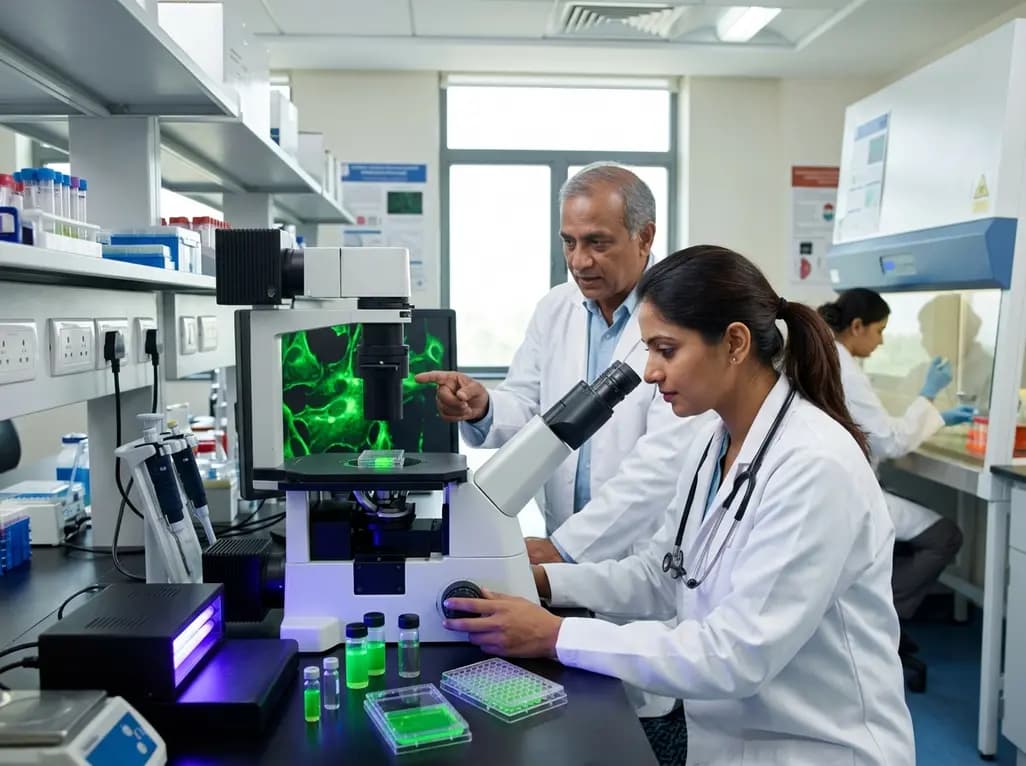
Green fluorescent protein (GFP) has revolutionized how we perceive molecular biology and cellular dynamics. Since its discovery, GFP has transitioned from a biological curiosity to a Nobel-prize-winning diagnostic tool. Clinicians and researchers now routinely use fluorescent markers to observe intracellular processes in real-time. However, native fluorescent proteins often present limitations, such as large molecular sizes and environmental sensitivities. Consequently, the development of synthetic GFP chromophore analogs has become a critical focal point for advanced medical research. These synthetic versions offer a versatile platform for fluorescent molecular switching, a process vital for high-resolution imaging. By mimicking the core structure of the GFP chromophore, scientists can engineer small-molecule probes that respond precisely to specific chemical or physical stimuli. A recent study introduces a trifluoromethyl analog that demonstrates a unique and reversible OFF/ON switching capability. Such advancements are far from purely academic; they pave the way for more sensitive and specific diagnostic assays. In modern medicine, these probes represent the next generation of biological tools, enabling the tracking of molecular interactions with unprecedented accuracy. These sophisticated optical sensors continue to gain importance across various clinical specialties in India and globally.
Control over light emission at the molecular level is fundamental to modern imaging. Fluorescent molecular switching refers to the transition between a non-emissive \"OFF\" state and an emissive \"ON\" state. In this specific trifluoromethyl analog, this process depends on photoisomerization. When scientists expose the chromophore to ultraviolet (UV) irradiation, it undergoes a geometric transformation from its stable Z-isomer to its E-isomer. Notably, this change in molecular configuration disrupts the electronic conjugation necessary for fluorescence. In a cyclohexane environment, this UV-induced isomerization quenches the blue fluorescence of the molecule. This quenching mechanism serves as a perfect example of how light acts as a remote control for molecular probes. For clinical applications, this capability provides a valuable mechanism for signal control. For instance, in super-resolution microscopy techniques like STORM or PALM, the ability to selectively darken fluorophores is essential. By mastering the kinetics of this Z-to-E transition, researchers can design probes that minimize background noise. This light-driven switch ensures that diagnostic images maintain high contrast, revealing the intricate details of cellular pathology. Furthermore, understanding these pathways allows for the creation of more stable imaging agents for long-term observation.
While the ability to turn fluorescence off provides control, the capacity to restore emission is critical for a functional sensor. The trifluoromethyl analog achieves its \"ON\" state through a nucleophile-mediated process. Specifically, the treatment with nucleophiles, such as piperidine, facilitates the transition back from the non-fluorescent E-isomer to the fluorescent Z-isomer. This chemical restoration occurs via a sophisticated addition and elimination mechanism. The nucleophile interacts with the chromophore, inducing a structural shift that promotes the return to an emissive configuration. This reversible nature transforms the molecule into a dynamic sensor rather than a simple one-way marker. In a clinical diagnostic setting, this feature allows for the detection of specific nucleophilic biomarkers within biological samples. Moreover, chemical triggers for fluorescence restoration offer an alternative to high-intensity light switching, which can occasionally damage delicate living tissues. This chemical approach provides exceptional specificity, as only certain molecules can trigger the recovery of emission. Consequently, this analog could serve as a \"smart\" probe that lights up only in the presence of targeted chemical signatures, thereby reducing false-positive results in sensitive medical diagnostic tests.
Substituting a standard methyl group with a trifluoromethyl (CF3) group fundamentally alters the chemical properties of the GFP chromophore analog. The CF3 group possesses high electronegativity, which profoundly influences the electronic density of the entire molecule. This modification typically enhances chemical stability and shifts the spectral properties of the probe. In this study, the trifluoromethyl group plays a pivotal role in the switching kinetics and the total quantum yield. Unlike traditional analogs, the fluorinated version responds more robustly to external chemical and physical stimuli. Furthermore, the lipophilicity of the CF3 group can improve how the probe permeates through complex cellular membranes. This remains a critical factor for in vivo imaging, where a probe must reach its intended target efficiently. Additionally, trifluoromethyl groups often resist metabolic degradation, potentially extending the functional lifespan of the probe during clinical procedures. The electronic effects of these fluorine atoms also influence the pKa of the molecule, making it highly sensitive to subtle shifts in the local pH or chemical environment. By leveraging these unique characteristics, medical researchers can develop diagnostic tools that are more durable and responsive than previous generations.
The development of reversible fluorescent switches holds significant implications for the future of clinical medicine. One promising application involves the field of molecular diagnostics and high-throughput screening. These probes can integrate into assays designed to identify specific metabolic markers or drug targets. Because the switching process is reversible, researchers can perform multiple measurements on a single sample, which significantly increases the reliability of the resulting data. Furthermore, in radiology and pathology, these analogs enhance the resolution of fluorescently labeled tissue samples. By utilizing super-resolution techniques made possible by these switching mechanisms, clinicians can observe sub-cellular structures that previously remained invisible. This could lead to the earlier detection of complex diseases such as cancer, where subtle changes in protein distribution often precede macroscopic symptoms. Additionally, the ability to activate fluorescence in response to specific nucleophiles can be adapted for sensing enzyme activities or detecting toxic metabolites. In the Indian medical landscape, where the demand for affordable and sensitive diagnostic tools is rising, these synthetic analogs offer a cost-effective alternative to bulky protein labels. Their stability and ease of modification make them ideal for localized diagnostic manufacturing.
As India continues to modernize its healthcare and research infrastructure, the integration of advanced bioimaging technologies becomes paramount. Synthetic chromophore analogs, such as the trifluoromethyl version, represent the frontier of this evolution. These molecules bridge the gap between fundamental chemistry and practical clinical application. By providing high-contrast, reversible switching, they enable more detailed explorations of disease mechanisms at the molecular level. Notably, the focus on synthetic analogs aligns with the global trend toward precision medicine and personalized diagnostics. The ability to tailor the properties of a probe allows for the creation of bespoke diagnostic solutions for specific patient populations. Furthermore, reducing the reliance on living cell systems for producing fluorescent proteins can streamline the development and manufacturing of diagnostic reagents. In conclusion, the reversible fluorescence switching of trifluoromethyl GFP analogs is a significant scientific milestone. It enhances our understanding of photophysics while providing a powerful tool for the future of medical imaging. As these technologies mature, they will likely become standard components of the clinical toolkit, helping doctors provide more accurate and timely diagnoses for patients.
Reversible fluorescent molecular switching allows for super-resolution imaging and high-contrast sensing. In diagnostics, this means clinicians can \"turn on\" or \"turn off\" a signal to distinguish specific targets from background noise. This capability is essential for identifying low-concentration biomarkers or observing tiny sub-cellular structures that are invisible under traditional microscopy. It fundamentally improves the sensitivity and spatial resolution of molecular tests, leading to more accurate disease detection and monitoring.
The trifluoromethyl group is highly electronegative and lipophilic, which enhances the probe's chemical stability and cell permeability. These fluorine atoms shift the electronic properties of the chromophore, often making it more resistant to metabolic breakdown and more sensitive to environmental changes like pH. This results in a more durable and responsive probe that can reach intracellular targets more effectively, providing clearer and more reliable data during clinical imaging procedures.
While naturally occurring proteins like GFP are invaluable for genetic labeling, synthetic analogs offer advantages in size, stability, and customization. Synthetic probes are smaller, making them less likely to interfere with the natural function of the proteins they label. They also allow for chemical switching mechanisms, such as nucleophile restoration, which are not available with standard biological proteins. Therefore, they often serve as complementary tools that extend the capabilities of traditional fluorescent protein technology.
Disclaimer: This content is for informational and educational purposes only and does not constitute professional medical advice, diagnosis, or treatment. Refer to the latest local and national guidelines for clinical practice.
References
Nakatsuka A et al. Reversible fluorescence OFF/ON switching of a trifluoromethyl analog of the green fluorescent protein chromophore. Org Biomol Chem. 2026 Jul 13. doi: 10.1039/d6ob00891g. PMID: 42439106.

Read summarized clinical updates, watch expert medical content, and earn CME certifications right from your smartphone.
Open your smartphone camera to scan and install.





Researchers have developed a trifluoromethyl analog of the GFP chromophore that features reversible OFF/ON switching. Using UV light for quenching and nucleophiles for restoration, this advancement offers high-contrast imaging potential for clinical diagnostics and molecular biology research.
3 months ago

A retrospective cohort study of 7,716 ICU patients from the MIMIC-IV database demonstrates that Gradient Boosting Decision Trees significantly outperform traditional SOFA scores in predicting in-hospital mortality among patients with sepsis and diabetes, with SHAP analysis providing clinical interpretability.
Today

Occult maternal malignancy accounts for 3.82% of persistent unreportable NIPT results with genomic noise. Multiple chromosomal aberrations, notably on chromosome 18, warrant thorough oncological evaluation and whole-body MRI to ensure timely maternal diagnosis while preserving fetal care.
Today

This article reviews the forensic and clinical complexities of acute myocarditis arising on left ventricular hypertrophy in children, highlighting early diagnostic red flags and multidisciplinary postmortem autopsy protocols.
Today

This comparative study evaluates posterior labral tears with and without glenohumeral instability, highlighting distinct demographic patterns, MRI underestimation in stable shoulders, and successful arthroscopic repair outcomes.
Yesterday

A clinical study demonstrates that early intervention with tocilizumab, either as monotherapy or bridged with corticosteroids, achieves significant proptosis reduction and resolves active inflammation in treatment-naive thyroid eye disease.
Yesterday
