.webp&w=384&q=75)

Loading, please wait...
Loading, please wait...

Maternal health specialists face an escalating global challenge as vascular complications continue to surge across diverse patient cohorts. Recent population-based surveillance demonstrates an unprecedented rise in hypertensive disorders of pregnancy across the United States. Between 2016 and 2024, age-standardized disease rates escalated by seventy-four percent, highlighting an urgent clinical priority. Consequently, healthcare providers must re-evaluate surveillance models, diagnostic vigilance, and early preventive interventions to safeguard maternal and perinatal well-being across diverse healthcare environments.
Recent epidemiological surveillance evaluating more than thirty-three million live births reveals an alarming upward trajectory in gestational vascular morbidity. Specifically, age-standardized rates increased from 62.7 per 1,000 live births in 2016 to 109.1 per 1,000 live births in 2024. This change reflects an average annual percent increase of over seven percent. Furthermore, this expansion spans gestational hypertension, chronic hypertension, and preeclampsia with severe features. Historically, clinicians encountered severe hypertensive manifestations primarily among individuals with preexisting renal or vascular pathology. However, modern registry records document rapid progression across unselected obstetric populations. In addition, this escalating trend persisted across every geographic region and reproductive cohort analyzed. Because elevated blood pressure directly correlates with adverse maternal-fetal endpoints, this surge represents a profound public health concern. Obstetricians frequently witness secondary complications such as placental abruption, fetal growth restriction, and urgent operative delivery. Therefore, contemporary obstetrical units must prepare for significantly higher case volumes of vascular pathology during routine antenatal visits. Clinicians must identify subtle blood pressure elevations early rather than waiting for classic symptomatic presentations to emerge.
Multiple overlapping demographic and cardiometabolic variables drive the observed rise in gestational hypertensive disease. Most notably, advancing maternal age plays a substantial role in baseline vascular vulnerability. Many individuals now conceive in their late thirties and early forties, when underlying endothelial dysfunction occurs more frequently. Moreover, prepregnancy cardiometabolic health has deteriorated significantly over the past decade. Population registries show a sharp reduction in normal prepregnancy body mass index and a concurrent increase in pregestational obesity. Consequently, maternal physiology encounters systemic low-grade inflammation, altered lipid metabolism, and heightened insulin resistance before conception even occurs. Furthermore, assisted reproductive technologies contribute to this trend because multiple gestations and artificial cycle preparations heighten maternal cardiovascular stress. As a result, the maternal cardiovascular system struggles to accommodate normal gestational volume expansion. In addition, lifestyle stressors, sedentary work environments, and subclinical dyslipidemia accelerate microvascular stiffening. Obstetricians must therefore integrate early cardiometabolic stratification into first-trimester evaluations. Addressing these metabolic vulnerabilities prior to conception represents the most effective long-term pathway toward mitigating gestational vascular catastrophe.
The national surveillance data illuminate persistent and severe disparities among racial and ethnic groups. For instance, American Indian, Alaska Native, and non-Hispanic Black mothers exhibit the highest absolute incidence of vascular complications during gestation. Meanwhile, Asian mothers demonstrated the most rapid relative increase over the eight-year study duration, with disease rates more than doubling. These shifting dynamics illustrate how emerging cardiometabolic vulnerability affects previously considered low-risk cohorts. Importantly, these disparities do not stem from intrinsic biological determinants alone. Instead, structural social determinants of health, differential access to comprehensive prenatal healthcare, and insurance barriers drive disparities across diverse patient populations. Furthermore, chronic psychosocial stress and adverse community environments promote premature vascular senescence, a process recognized clinically as physiological weathering. In addition, delayed clinical presentation and unconscious provider bias often hamper timely clinical escalation during routine checkups. Therefore, maternal healthcare teams must dismantle structural inequities through equitable diagnostic protocols. Incorporating culturally tailored maternal education and standardized treatment bundles can substantially improve clinical outcomes across vulnerable demographic groups.
Addressing this escalating burden demands rigorous early screening combined with timely pharmacological prophylaxis. Major international guidelines strongly recommend evaluating patient-specific risk profiles during the first trimester. For example, clinicians should assess chronic hypertension, pregestational diabetes, multifetal gestation, elevated body mass index, and prior preeclampsia. When patients meet high-risk criteria or exhibit multiple moderate-risk factors, clinicians should promptly initiate low-dose aspirin prophylaxis. Furthermore, administering 100 to 150 milligrams of aspirin nightly, starting before sixteen weeks of gestation, reduces the incidence of preterm preeclampsia significantly. In addition, healthcare providers should incorporate standardized office blood pressure measurement techniques to prevent underdiagnosing stage 1 hypertension. Home blood pressure monitoring programs also provide substantial value by identifying white-coat effects and masked gestational hypertension. Moreover, early uterine artery Doppler velocimetry and serum biomarkers, including placental growth factor, provide objective predictive stratification in advanced clinical settings. Consequently, aggressive prevention protocols prevent irreversible microvascular end-organ damage while extending gestational duration safely. Ultimately, vigilant surveillance protects both maternal organ function and fetal maturity.
While this extensive analysis highlights trends within the United States, its clinical lessons resonate deeply across global maternal health systems, including India. Indian clinicians manage a unique intersection of early-onset cardiometabolic dysfunction, high prevalence of gestational diabetes, and unique dietary patterns. Furthermore, thin-fat maternal phenotypes and low baseline endothelial reserve predispose many South Asian women to abrupt hypertensive decompensation during pregnancy. Therefore, primary care practitioners and obstetricians across regional clinics must maintain heightened diagnostic vigilance. Early registration of pregnancy, routine antenatal urine analysis for proteinuria, and standardized blood pressure tracking remain cornerstone interventions. In addition, rural and semi-urban health facilities must ensure immediate availability of magnesium sulfate for eclampsia prophylaxis and rapid-acting oral antihypertensives for severe acute elevations. Moreover, post-delivery surveillance warrants substantial reinforcement because maternal vascular risk persists well into the puerperium. Postpartum follow-up must emphasize long-term cardiovascular risk reduction through dietary optimization, lifestyle adaptation, and chronic disease surveillance. Ultimately, international epidemiological data offer a timely reminder that proactive maternal cardiovascular preservation must begin early and continue throughout a patient's lifespan.
Hypertensive disorders of pregnancy leave permanent subclinical endothelial damage that significantly elevates future cardiovascular risks. Women who experience gestational hypertension or preeclampsia face a two- to fourfold higher risk of developing chronic hypertension, ischemic heart disease, stroke, and heart failure later in life. Consequently, clinicians should counsel these patients regarding postpartum lifestyle modifications, initiate annual metabolic screening, and maintain vigilant cardiovascular monitoring throughout their reproductive and post-menopausal lifespan.
International obstetric guidelines recommend administering 75 to 150 milligrams of aspirin daily for individuals with moderate-to-high risk factors. Therapy should ideally initiate between twelve and sixteen weeks of gestation, but certainly before twenty weeks, continuing until thirty-six weeks or delivery. Early aspirin initiation inhibits platelet thromboxane production, promotes physiological trophoblastic invasion, and prevents spiral artery vasoconstriction, thereby dramatically reducing the overall incidence of early-onset preeclampsia and fetal growth restriction.
Clinicians must promptly initiate antihypertensive pharmacotherapy when systolic blood pressure reaches 140 mmHg or diastolic blood pressure reaches 90 mmHg, as recommended by updated international trials. For severe hypertension exceeding 160/110 mmHg, clinicians must administer immediate intravenous labetalol, hydralazine, or oral nifedipine to prevent acute cerebrovascular events. First-line maintenance agents include oral labetalol, nifedipine extended-release, and methyldopa, whereas clinicians must strictly avoid angiotensin-converting enzyme inhibitors and angiotensin receptor blockers.
Disclaimer: This content is for informational and educational purposes only... Refer to the latest local and national guidelines for clinical practice.
References
1. Anguzu R et al. Trends in Hypertensive Disorders of Pregnancy Rates by Race and Ethnicity in the United States, 2016-2024. Obstet Gynecol. 2026 Oct 06. doi: 10.1097/AOG.0000000000006445. PMID: 42837632.
2. American College of Obstetricians and Gynecologists. Gestational Hypertension and Preeclampsia: ACOG Practice Bulletin, Number 222. Obstet Gynecol. 2020;135(6):e237-e260.
3. Poon LC, Shennan A, Hyett JA, et al. The International Federation of Gynecology and Obstetrics (FIGO) initiative on pre-eclampsia: A pragmatic guide for first-trimester screening and prevention. Int J Gynaecol Obstet. 2019;145(Suppl 1):1-33.

Read summarized clinical updates, watch expert medical content, and earn CME certifications right from your smartphone.
Open your smartphone camera to scan and install.





A cross-sectional study of over 33 million US live births from 2016 through 2024 reveals a 74% increase in hypertensive disorders of pregnancy. This clinical overview explores demographic drivers, maternal-fetal outcomes, and essential preventive strategies for obstetric practice.
Today

A meta-analysis demonstrates that Lille score-guided corticosteroid therapy significantly improves 28- and 90-day survival in severe alcohol-associated hepatitis compared to non-guided regimens, preventing fatal infections in non-responders.
Today
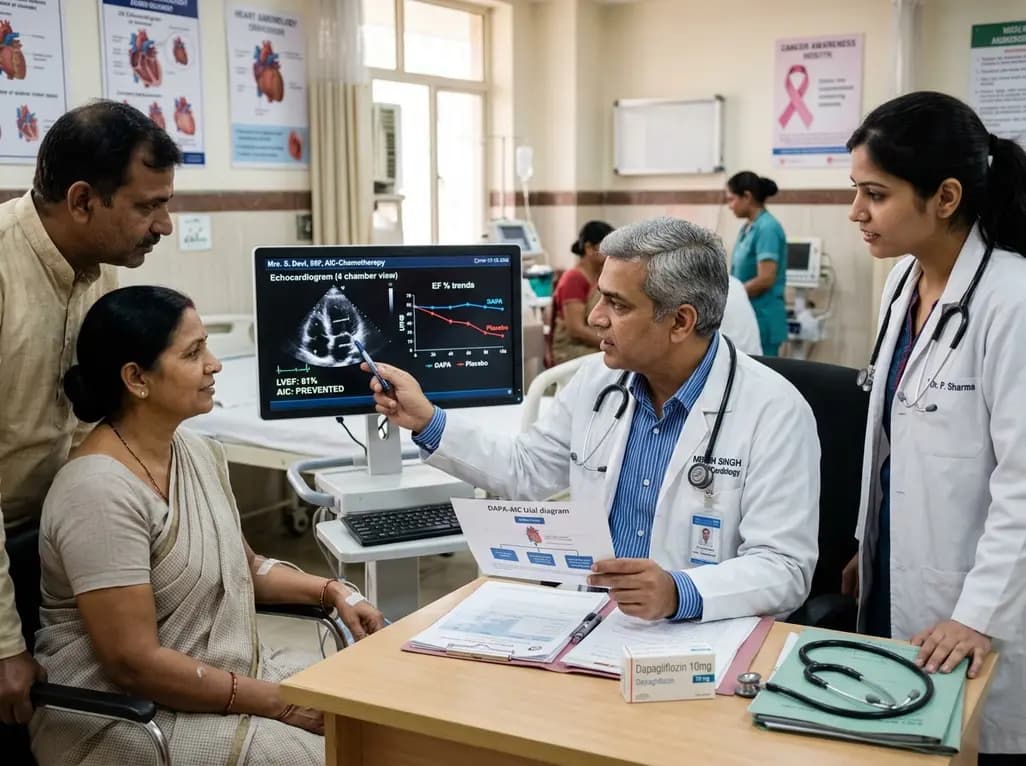
The phase II DAPA-AIC trial demonstrates that dapagliflozin 10 mg daily significantly preserves left ventricular ejection fraction compared to placebo over four months in adults undergoing anthracycline chemotherapy, highlighting a potential preventive strategy in cardio-oncology.
Today

A scoping review reveals severe gaps in long-term assistive technology provision following humanitarian emergencies. Addressing post-disaster rehabilitation requires systematic follow-up, workforce training, and integration into national health systems to sustain mobility and recovery.
Today

An interim propensity score-matched study comparing SASI vs OAGB demonstrates equivalent short- and mid-term outcomes. Both bariatric procedures achieved substantial excess weight loss and 100% medication-free blood glucose control at 18 months, underscoring the metabolic efficacy of both techniques.
Today
