

Loading, please wait...
Loading, please wait...

Modern international travel allows novel pathogens and respiratory lineages to traverse the globe within hours. Consequently, public health agencies continually seek proactive methods to detect incoming biological threats before domestic community transmission occurs. Recent prospective cohort data from San Francisco International Airport highlight traveler genomic surveillance to track imported viral mutations. By pairing rapid antigen detection with whole-genome sequencing, public health teams can identify emerging SARS-CoV-2 variants at critical transit points. Furthermore, these border biosurveillance strategies provide invaluable early warning indicators for hospital networks and infectious disease specialists.
Air travel networks serve as high-velocity conduits for novel respiratory pathogens. Therefore, establishing targeted genomic observation at ports of entry bridges critical gaps in global genomic surveillance. Many source regions lack the sequencing infrastructure required to identify novel viral variants before outbound departure. Consequently, arriving passenger cohorts represent a crucial sentinel population for public health authorities. Implementing voluntary testing programs at international terminals provides rapid access to diverse viral samples across numerous geographic corridors. In addition, timely genomic intelligence allows health systems to anticipate shifting epidemiological patterns. For example, knowing which lineages enter the community enables diagnostic laboratories to evaluate whether commercial assays remain reliable. Similarly, genomic surveillance at travel hubs helps vaccine manufacturers and regulatory agencies assess antigen match against circulating variants. Clinicians also benefit because early variant detection clarifies whether therapeutic monoclonal antibodies or antiviral regimens remain effective against incoming strains. Ultimately, border-based genomic monitoring transforms airports from passive transit venues into active diagnostic checkpoints.
Between June 2021 and November 2021, the California Department of Public Health launched a prospective pilot study at San Francisco International Airport. During this six-month evaluation, over 892,000 international passengers arrived at the airport from 133 distinct departure countries. Program coordinators actively offered voluntary self-collected antigen testing kits to these arriving international travelers. Overall, 19,008 individuals enrolled in the airport surveillance initiative, representing roughly 2.1 percent of all arriving travelers. Participants with positive antigen results or active symptoms received recommendations to collect and mail an additional specimen for molecular analysis. Centralized laboratories then extracted viral RNA from positive molecular tests to perform comprehensive whole-genome sequencing. However, relying on travelers to mail secondary specimens introduced logistical friction into the diagnostic cascade. Many infected individuals did not complete the subsequent diagnostic step after leaving the airport terminal. Nevertheless, the prospective protocol established clear operational proof-of-concept for coordinated airport screening workflows.
Across the surveillance period, overall COVID-19 test positivity among enrolled travelers remained low at 0.7 percent. Furthermore, weekly positivity rates fluctuated between zero and 1.5 percent during the identical timeframe. Positivity rates consistently tracked lower than baseline community positivity across California. Despite this low baseline frequency, positivity rates varied substantially depending on the country of embarkation. Specifically, travelers departing from Turkey demonstrated the highest positivity rate at 2.1 percent. Travelers from Mexico showed 1.2 percent positivity, while arrivals from the United Kingdom recorded 1.0 percent. Among confirmed positive molecular specimens, laboratory technicians successfully sequenced 71.4 percent of available samples. Notably, all ten sequenced viral isolates belonged to the SARS-CoV-2 Delta lineage (B.1.617.2). This finding matched the predominant circulating lineage in California and worldwide during mid-2021. Although the pilot did not uncover novel variants, it proved that traveler testing reliably captures primary global lineages.
Deploying biosurveillance within busy transit environments presents substantial practical challenges. First, voluntary traveler participation was modest, as only 2.1 percent of arriving passengers chose to enroll. Weary international passengers often prioritize swift customs clearance and transit over optional medical evaluations. Second, the multi-step protocol created significant participant drop-off. Requiring symptomatic or antigen-positive individuals to self-collect and mail secondary molecular samples reduced the final sequencing yield. Therefore, future traveler surveillance programs must prioritize immediate, on-site sample collection to prevent specimen attrition. For instance, subsequent initiatives successfully integrated pooled nasal swab collection directly inside airport terminals. Aircraft wastewater surveillance also eliminates individual participation barriers while screening entire planeloads simultaneously. In addition, digital consent platforms and streamlined bilingual kiosks enhance passenger uptake. By automating data capture and providing immediate incentives, public health departments can substantially expand surveillance coverage and diagnostic turnaround times.
The insights gained from airport genomic evaluations carry profound implications for everyday medical practice and institutional preparedness. For physicians treating acute respiratory illness, variant tracking offers foresight into emerging disease severity and therapeutic vulnerabilities. When surveillance programs identify immune-evasive lineages at points of entry, hospital administrators can promptly review emergency department surge capacity. Moreover, these molecular insights guide national genomic consortia, such as INSACOG in India, in tailoring sentinel domestic sequencing priorities. Clinicians must recognize that international travel hubs mirror broader planetary pathogen dynamics. Consequently, detecting imported lineages early buys valuable weeks for healthcare systems to refine diagnostic algorithms. Furthermore, hospital teams can counsel high-risk outpatients and reinforce targeted vaccination campaigns. As respiratory viruses continue to mutate unpredictably, integrating traveler-based genomic data into clinical decision support systems strengthens institutional resilience. Coordinated biosurveillance ultimately bridges the gap between international border control and bedside clinical excellence.
Traveler genomic surveillance collects biological specimens from arriving international passengers at major border entry hubs. By subjecting positive respiratory samples to immediate whole-genome sequencing, laboratory scientists identify novel genetic mutations before widespread local transmission takes hold. Consequently, this molecular intelligence alerts clinicians and public health authorities weeks in advance, allowing regional hospitals to update therapeutic protocols and reinforce local outbreak defenses effectively.
The pilot program recorded a modest 0.7 percent positivity rate largely because international travel during 2021 required strict pre-departure testing mandates and rigorous airline boarding rules. Consequently, actively infectious individuals rarely boarded outbound flights. Additionally, voluntary participation meant healthier, cautious travelers were more inclined to enroll. The low yield highlights why modern programs increasingly combine voluntary passenger swabs with comprehensive aircraft wastewater sampling.
Public health agencies improve participation by removing friction from the enrollment and specimen collection workflows. Transitioning from complex multi-step mail-in protocols to rapid on-site sampling kiosks dramatically raises sample completion rates. Furthermore, implementing anonymous pooled nasal testing, providing clear multi-language educational signage, and incorporating non-invasive airplane wastewater monitoring allow surveillance teams to capture representative genomic data without delaying incoming travelers during arrival.
Disclaimer: This content is for informational and educational purposes only and does not constitute formal medical advice. Healthcare professionals should rely on clinical judgment and institutional protocols. Refer to the latest local and national guidelines for clinical practice.
References

Read summarized clinical updates, watch expert medical content, and earn CME certifications right from your smartphone.
Open your smartphone camera to scan and install.





A prospective cohort study evaluated a voluntary airport testing and whole-genome sequencing pilot at San Francisco International Airport. The findings demonstrate how genomic biosurveillance among international arrivals provides crucial early warning data to detect emerging SARS-CoV-2 variants and protect public health.
Today
A cross-sectional molecular epidemiological study evaluates HIV-1 transmission clusters and pretreatment drug resistance among treatment-naïve men who have sex with men. Findings highlight prominent CRF07_BC transmission and significant assortative mixing, informing targeted public health and antiretroviral strategies.
Today
A new study evaluates a multilingual digital health platform combining rule-based cervical cancer risk assessment, retrieval-augmented generation AI, and geospatial navigation. The tool dramatically reduces clinical hallucinations while providing actionable health guidance for underserved populations.
Today
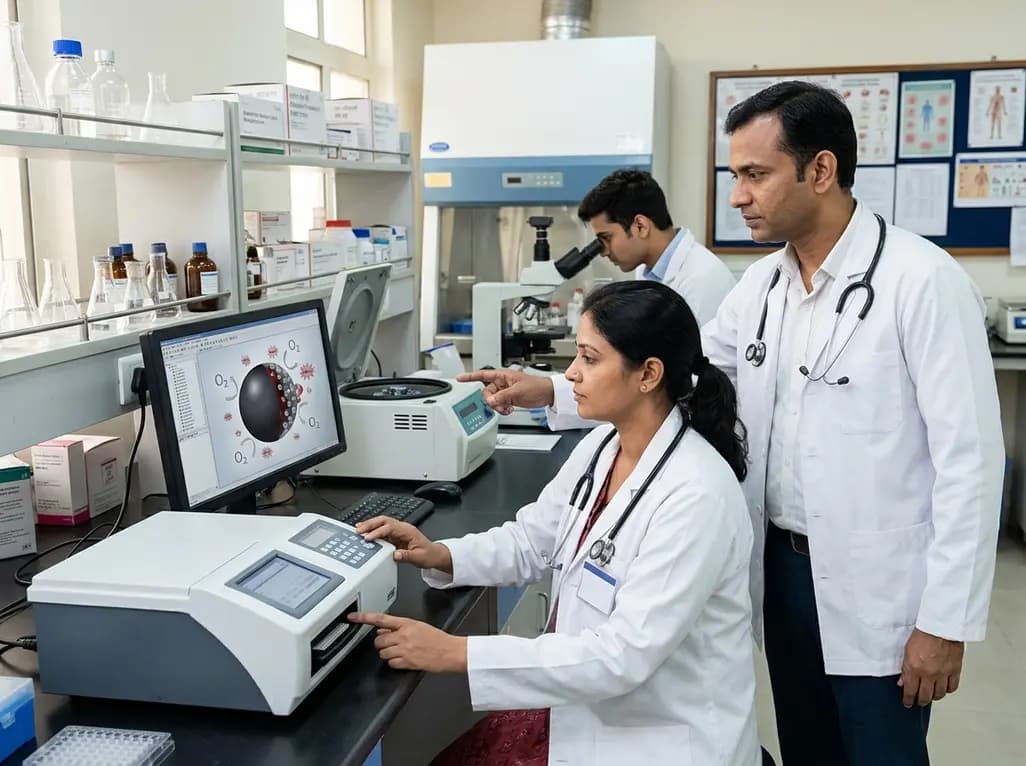
A novel MOF-based platform encapsulates hemoglobin with catalytic platinum and ceria nanozymes to deliver oxygen while scavenging toxic reactive oxygen species. This study highlights key design principles for managing hypoxia and reperfusion injury while resolving crucial stability challenges.
Today
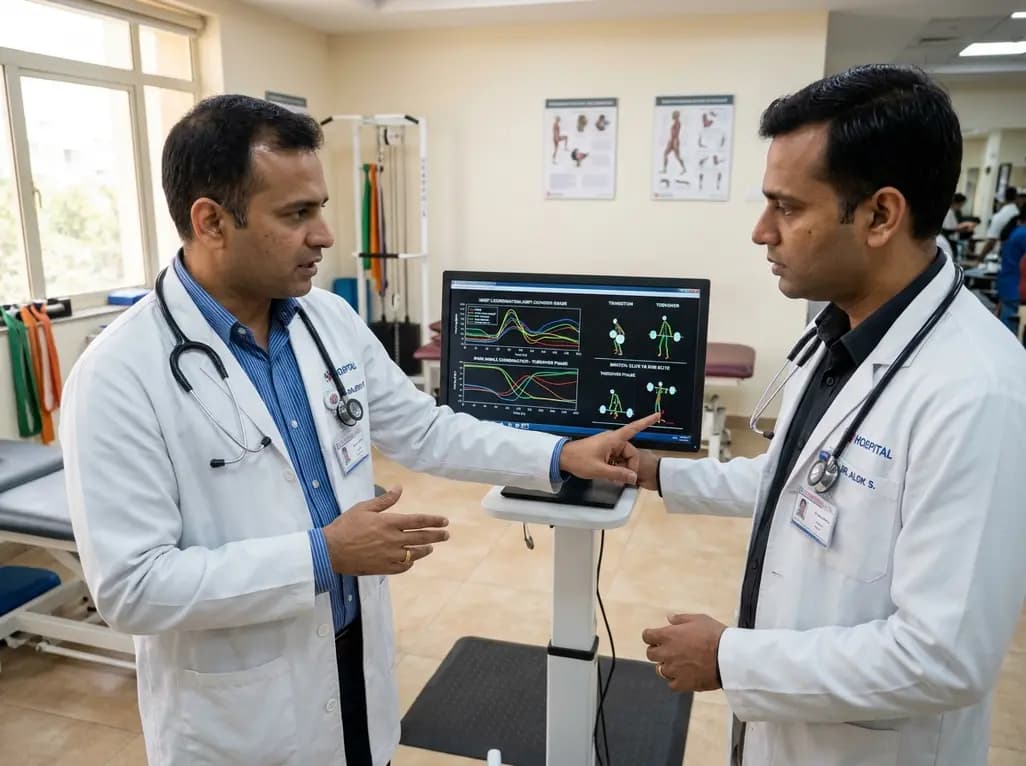
A vector coding study compares elite and sub-elite weightlifters during maximal snatch attempts, revealing that performance differences stem from phase-dependent knee-ankle coordination during transition and turnover phases rather than overall trajectory patterns.
Today
A pilot feasibility study demonstrates that a newly developed mobile app for bolus insulin dose adjustment significantly improves dosing confidence, treatment adherence, and hypoglycemia prevention for patients with type 1 diabetes while reducing provider workload in resource-limited clinical settings.
Today
