

Loading, please wait...
Loading, please wait...

Cervical cancer remains a devastating global health priority, causing roughly 660,000 new cases and 350,000 deaths annually. Low- and middle-income countries carry the overwhelming brunt of this disease. In these regions, entrenched socio-cultural stigma, linguistic diversity, and restricted medical infrastructure persistently hinder timely detection. Consequently, countless women present at advanced stages when therapeutic outcomes are poorest. Modern public health initiatives increasingly recognize that expanding preventative literacy is vital for reducing mortality. Implementing a standardized digital cervical cancer risk assessment empowers individuals to understand personal vulnerabilities early. Unfortunately, generic generative conversational tools often fail in clinical environments because they can deliver fabricated or unverified advice. Researchers therefore require specialized systems that combine structured algorithmic logic with empathetic, accessible patient communication. Furthermore, overcoming language barriers is essential to engage marginalized communities effectively. By integrating culturally sensitive guidance with proactive screening education, public health platforms can drive preventative care. Ultimately, these targeted digital interventions support international efforts to eliminate cervical cancer as a major public health concern.
To establish safe clinical interactions, engineers developed a robust three-tier, cross-platform architecture. The foundation relies on a transparent, rule-based computational engine specifically tailored for cervical cancer risk assessment. This engine employs a 30-item questionnaire aligned with the standardized schema of the University of California, Irvine repository. In addition, the algorithm encodes clinical risk factors directly from the World Health Organization and CDC guidelines. Because the calculation engine functions deterministically, it generates fully traceable risk classifications across low, moderate, and high risk categories. Moreover, the platform provides granular, factor-by-factor explanations for each calculated profile. This interpretable design eliminates the unpredictable decision-making vulnerabilities common to black-box deep learning architectures. Clinical experts completed comprehensive face-validity reviews to verify that the factor weights accurately reflect clinical reality. As a result, the tool calculates risk accurately using established variables such as vaccination status, screening history, and immune function. Consequently, patients receive transparent health evaluations without encountering opaque algorithmic predictions. Furthermore, clinicians can easily inspect the mathematical reasoning behind every generated risk output.
Although rule-based algorithms reliably evaluate statistical risks, users frequently ask nuanced questions regarding their specific findings. To answer these inquiries safely, the platform utilizes a retrieval-augmented generation (RAG) conversational agent powered by GPT-4o mini. Standard foundational models often hallucinate inaccurate clinical details when responding to open-ended medical prompts. In contrast, the RAG framework restricts conversational output by retrieving vetted evidence from curated clinical documents before generating a response. Study results demonstrate the remarkable clinical value of this methodology. Specifically, the RAG chatbot achieved a top-three retrieval precision of 0.88 and cut hallucinations by 71.4%. Furthermore, automated evaluators awarded the grounded conversational responses an average factual correctness score of 4.3 out of 5. Independent medical doctors reviewed fifty randomized conversational interactions and discovered factual inaccuracies in only 8% of RAG responses, whereas ungrounded models exhibited a 28% error rate. Strong inter-rater agreement (Cohen kappa of 0.84) validated these clinician evaluations. Therefore, grounding conversational AI in peer-reviewed clinical knowledge provides an effective defense against misleading medical misinformation. Additionally, this verification mechanism preserves patient safety during unsupervised home use.
Public health interventions succeed only when educational resources match the native language and cultural context of users. Consequently, the development team built this digital platform using TypeScript and NestJS for backend microservices alongside Flutter for mobile and web deployment. The software architecture currently supports English, Spanish, Yoruba, and Swahili. Native speakers conducted rigorous qualitative evaluations, confirming that the translated dialogues preserve clinical accuracy and cultural sensitivity. However, educating individuals about health risks is insufficient if patients encounter logistical barriers when seeking care. To bridge this divide, the platform incorporates an intelligent geospatial recommendation module. This module connects users with verified nearby healthcare facilities equipped to deliver cervical cytology, colposcopy, or HPV screening. During system evaluation, the geospatial module achieved a specialty relevance precision score of 0.87. Additionally, backend server latency averaged just 312 milliseconds under a simulated load of 50 concurrent users. Thus, the system maintains fast performance while offering practical, localized guidance. By linking multilingual dialogue directly with physical healthcare facilities, the technology actively guides patients from risk awareness toward definitive clinical screening. Furthermore, automated appointment routing reduces the widespread problem of diagnostic delay.
The technical architecture demonstrated in this investigation provides practical strategies for addressing cervical cancer across India. Cervical cancer represents the second leading cause of female cancer mortality in India, yet national screening rates remain below 5%. Indian primary care physicians and gynecologists frequently encounter patients affected by low awareness, social hesitancy, and geographical distance from diagnostic centers. Therefore, deploying culturally adapted conversational platforms in Indian regional languages could dramatically accelerate preventative uptake. Community health workers, such as Accredited Social Health Activists (ASHAs), could utilize these transparent risk algorithms during community outreach. Furthermore, integrating digital triage algorithms with the Ayushman Bharat Digital Mission and existing non-communicable disease portals would streamline patient referrals. When patients receive deterministic risk categories alongside geolocated appointments at district hospitals, rates of loss to follow-up drop significantly. Moreover, general practitioners can utilize algorithmic stratification to prioritize patients for visual inspection with acetic acid or high-risk HPV testing. Hence, adapting this digital paradigm offers a powerful mechanism to democratize preventative oncology. Through coordinated technological deployment, Indian healthcare providers can substantially expand early detection in underserved rural communities. Ultimately, localized digital health solutions will bring the nation closer to eliminating preventable cervical malignancies.
Retrieval-augmented generation grounds artificial intelligence responses in vetted, peer-reviewed medical literature and clinical guidelines. Standard language models generate answers based solely on probabilistic word patterns, which can lead to clinical fabrications. In contrast, this grounded framework retrieves verified clinical documents before formulating a reply. Consequently, this architecture reduces factual errors, minimizes algorithmic hallucinations by over 70%, and provides transparent, evidence-based health guidance that clinicians can independently audit and trust.
A deterministic rule-based engine strictly adheres to validated clinical guidelines from organizations like the World Health Organization and CDC. Unlike black-box neural networks, rule-based systems produce completely reproducible, auditable outputs. Every calculated risk score includes factor-by-factor explanations detailing exactly why an individual falls into a low, moderate, or high risk category. This transparency ensures unwavering clinical safety, prevents unpredictable computational errors, and builds necessary trust among both healthcare providers and participating patients.
Identifying personal health risk remains ineffective if individuals cannot find screening facilities. Geospatial navigation modules overcome this bottleneck by mapping screened users directly to accredited local clinics offering cytology, visual inspection, or HPV testing. Furthermore, these modules reduce logistical confusion, eliminate transit barriers, and streamline clinical referral pathways. By bridging the critical gap between digital disease awareness and in-person medical consultations, automated navigation significantly reduces patient attrition and fosters timely cervical lesion treatment.
Disclaimer: This content is for informational and educational purposes only and should not be considered medical advice. Always consult a qualified healthcare provider for diagnosis and treatment decisions. Refer to the latest local and national guidelines for clinical practice.
References

Read summarized clinical updates, watch expert medical content, and earn CME certifications right from your smartphone.
Open your smartphone camera to scan and install.





A new study evaluates a multilingual digital health platform combining rule-based cervical cancer risk assessment, retrieval-augmented generation AI, and geospatial navigation. The tool dramatically reduces clinical hallucinations while providing actionable health guidance for underserved populations.
Today
A cross-sectional molecular epidemiological study evaluates HIV-1 transmission clusters and pretreatment drug resistance among treatment-naïve men who have sex with men. Findings highlight prominent CRF07_BC transmission and significant assortative mixing, informing targeted public health and antiretroviral strategies.
Today
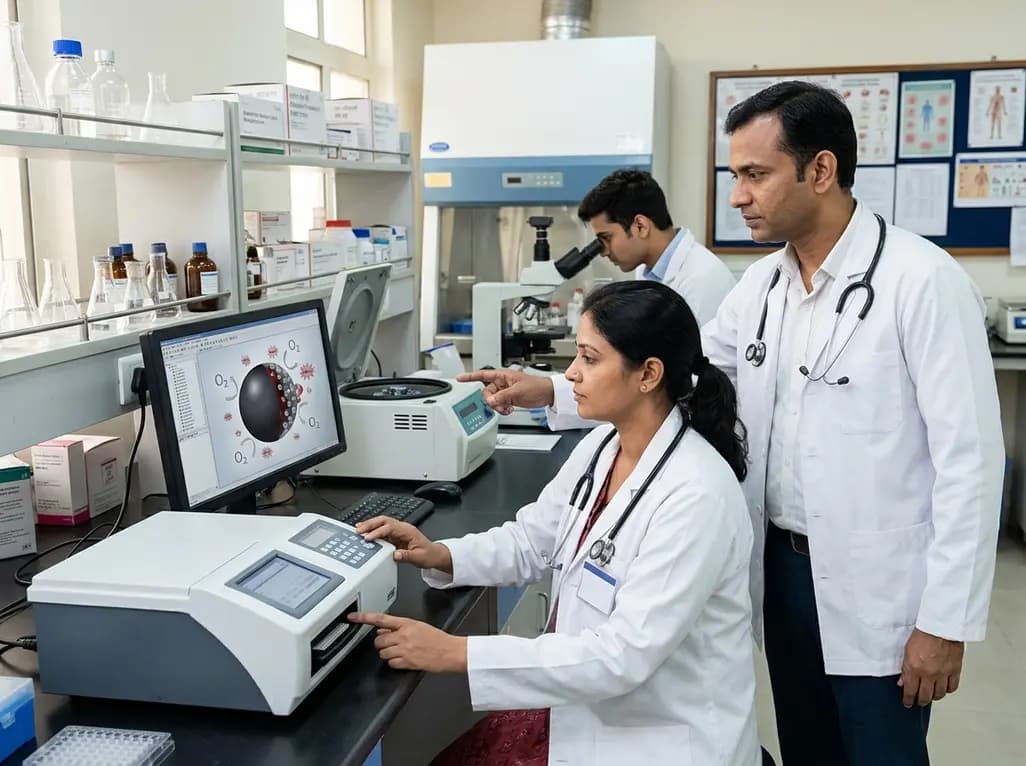
A novel MOF-based platform encapsulates hemoglobin with catalytic platinum and ceria nanozymes to deliver oxygen while scavenging toxic reactive oxygen species. This study highlights key design principles for managing hypoxia and reperfusion injury while resolving crucial stability challenges.
Today
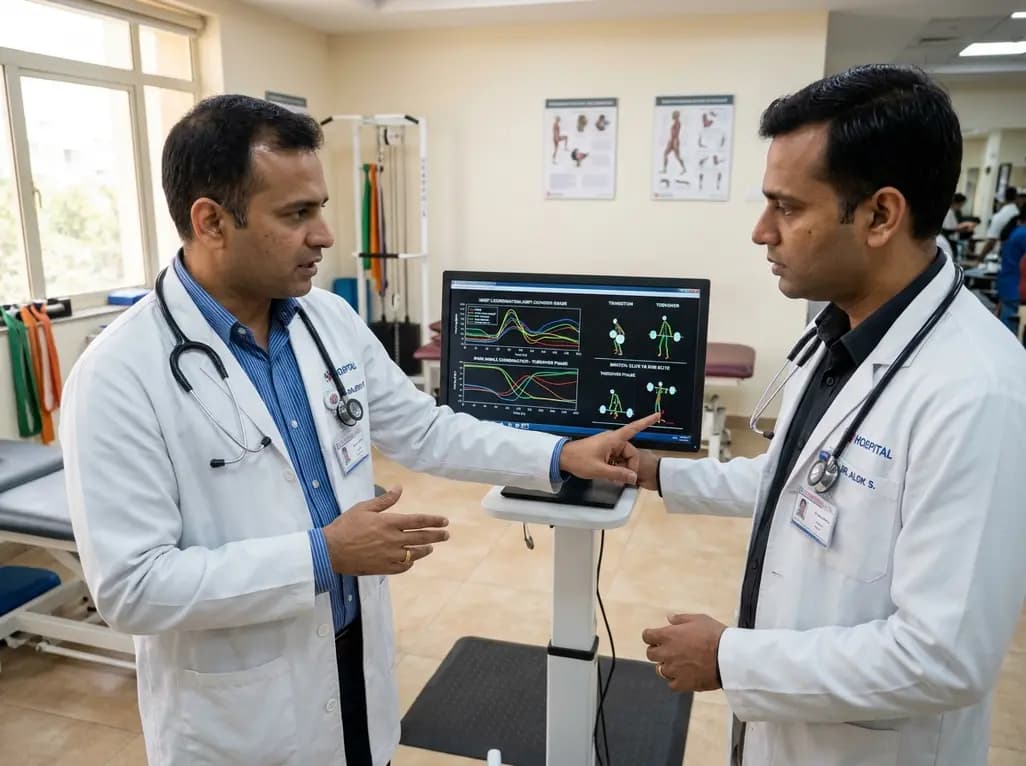
A vector coding study compares elite and sub-elite weightlifters during maximal snatch attempts, revealing that performance differences stem from phase-dependent knee-ankle coordination during transition and turnover phases rather than overall trajectory patterns.
Today
A pilot feasibility study demonstrates that a newly developed mobile app for bolus insulin dose adjustment significantly improves dosing confidence, treatment adherence, and hypoglycemia prevention for patients with type 1 diabetes while reducing provider workload in resource-limited clinical settings.
Today
