.webp&w=384&q=75)

Loading, please wait...
Loading, please wait...
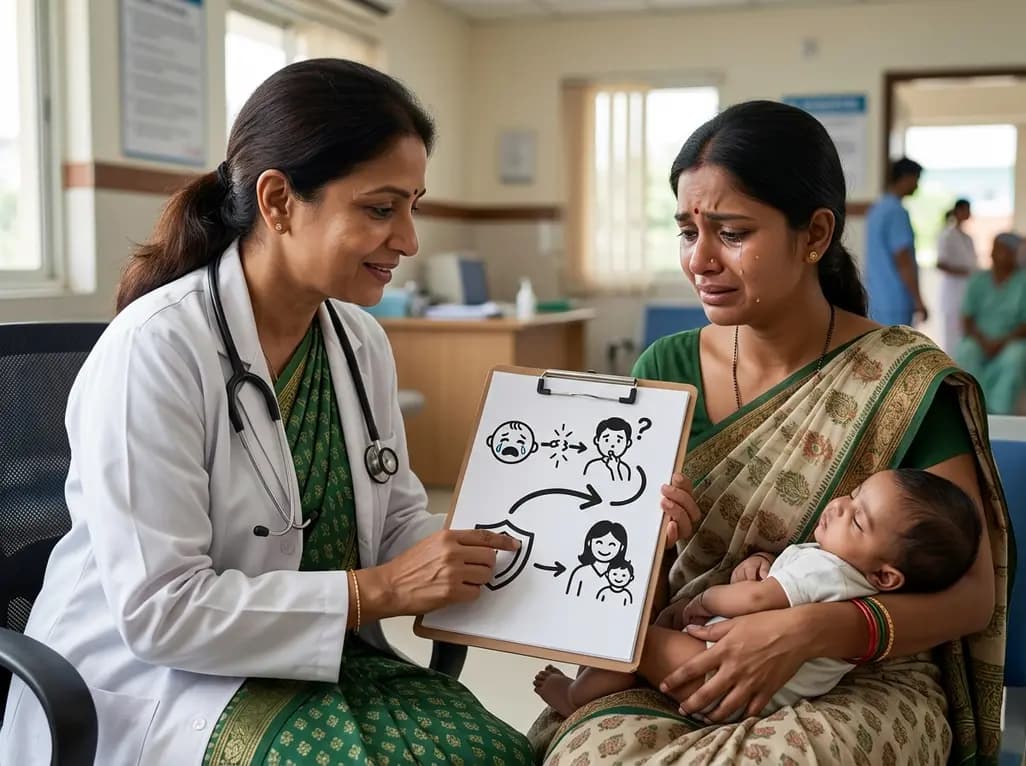
Childhood maltreatment represents a significant public health challenge with enduring consequences that often span multiple generations. Researchers have long sought to understand why some mothers with histories of abuse or neglect struggle with parenting, while others demonstrate remarkable resilience and sensitivity toward their children. A pivotal study by Berthelot et al. (2025) suggests that the answer may lie in the capacity for trauma-specific mentalization. This psychological process allows an individual to reflect upon and make sense of their own traumatic experiences as mental states rather than fixed, overwhelming events. Consequently, mothers who develop this capacity are better equipped to navigate the complex emotional demands of parenthood. Furthermore, this specific form of reflective functioning appears to be distinct from general mentalizing abilities. By focusing on how a mother processes her own history of maltreatment, clinicians can better predict her ability to understand her child’s internal world. Therefore, trauma-specific mentalization emerges as a critical target for intervention in psychiatric and obstetric settings. Notably, this research emphasizes that resolving trauma is not just about symptom reduction but about cognitive and emotional reorganization.
To quantify the complexity of thought processes regarding past abuse, the academic community developed the concept of trauma-specific reflective functioning, or T-RF. While general reflective functioning involves the broad ability to interpret behavior through underlying mental states, T-RF specifically targets the narrative processing of traumatic events. The Trauma Meaning-Making Interview serves as the primary tool for assessing this capacity. During this interview, clinicians evaluate how a mother describes her childhood trauma, looking for signs of integration, coherence, and emotional awareness. In contrast to fragmented or avoidant narratives, high T-RF is characterized by an ability to acknowledge the impact of trauma while maintaining a separate, empathetic view of oneself and others. Moreover, this psychological achievement requires the individual to move beyond simple descriptions of events toward an understanding of the intentions and feelings involved. For example, a mother with high T-RF might recognize how her childhood neglect influenced her current fears without projecting those fears onto her infant. Consequently, T-RF provides a more nuanced view of maternal mental health than traditional diagnostic categories. It represents a functional capacity rather than a list of symptoms, offering a deeper look into the mother’s internal landscape.
The recent validation study involved a sample of 112 mothers, all of whom had confirmed histories of childhood maltreatment. Researchers aimed to confirm the construct validity of the T-RF scale by comparing it with independent coding systems for trauma processing. Specifically, the team examined psychometric properties and associations with various measures of maternal health, including depression and post-traumatic stress disorder (PTSD). The results confirmed that the T-RF scale is a robust and reliable instrument for assessing how mothers make meaning of their past. Interestingly, the findings revealed that T-RF was not significantly associated with the severity or type of trauma experienced. This suggests that the capacity to mentalize trauma is independent of the trauma's objective characteristics. Additionally, the study found no direct correlation between T-RF and current symptoms of depression or PTSD. Therefore, a mother might still suffer from clinical symptoms while maintaining a high capacity to reflect on her trauma. Conversely, a mother without active psychiatric symptoms might still lack the reflective depth needed for insightful parenting. This distinction is vital for clinicians because it highlights that psychological resolution and symptom remission are two different therapeutic goals.
One of the most significant findings of the research is the prospective association between T-RF and maternal insightfulness. Maternal insightfulness refers to the mother’s ability to perceive the mental states underlying her child’s behavior accurately and empathetically. The study demonstrated that mothers with high trauma-specific mentalization were significantly more likely to be insightful regarding their children's needs compared to those with limited or non-reflective capacities. Specifically, this association remained strong even after the researchers controlled for maternal education, sociodemographic risk, and general reflective functioning. This indicates that T-RF offers a unique contribution to the quality of the mother-child relationship that general mentalizing cannot provide. Furthermore, insightful mothers are better able to regulate their children’s emotions, which is a key factor in secure attachment development. In contrast, mothers with low T-RF may find themselves overwhelmed by their child’s distress, as it potentially triggers their own unresolved traumatic memories. Consequently, enhancing T-RF may be the most effective way to improve parenting outcomes in vulnerable populations. Therefore, mentalizing trauma acts as a cognitive buffer, protecting the next generation from the fallout of the mother’s past experiences.
For psychiatrists, pediatricians, and gynecologists working in India, these findings provide a clear roadmap for trauma-informed care. Since T-RF is a prospectively associated with better parenting, clinicians should prioritize assessing a mother's narrative style when discussing her history. Furthermore, because T-RF is independent of depression and PTSD, screening for these disorders alone is insufficient to identify at-risk parent-child dyads. Instead, providers should look for markers of mentalization, such as the ability to discuss past hardships without becoming excessively distressed or dismissive. Moreover, prenatal and postnatal interventions could focus on developing T-RF as a specific skill. For instance, mentalization-based therapies (MBT) can be adapted to help mothers integrate their traumatic histories into a coherent self-narrative. Additionally, understanding that sociodemographic risk does not preclude high T-RF is encouraging for clinicians working in low-resource settings. Even in the face of poverty or limited education, the psychological work of resolving trauma can occur and yield positive results. Consequently, healthcare systems should integrate psychological support that goes beyond pharmacological symptom management. By fostering trauma-specific mentalization, providers can help mothers create a safer emotional environment for their infants.
Ultimately, the goal of improving T-RF is to alter the intergenerational trajectories of trauma. When a mother successfully mentalizes her past, she effectively prevents the transmission of her trauma to her offspring. This protection occurs because she no longer views the child through the lens of her own maltreatment. Notably, the study findings suggest that mentalizing trauma is a primary protective factor. Therefore, it should be a cornerstone of preventive mental health strategies. Furthermore, the resilience shown by mothers with high T-RF despite severe childhood histories offers a hopeful perspective on human development. It proves that past adversity does not define future parenting capacity if the individual can find a way to make sense of their story. In addition, future research should explore how T-RF develops over time and whether specific interventions can reliably increase these scores. For now, the evidence clearly supports the idea that how a mother thinks about her trauma is just as important as the trauma itself. Consequently, addressing these internal thought processes is essential for long-term family well-being. By focusing on the unique contribution of trauma-specific mentalization, we can better support mothers in their journey toward healing and insightful parenting.
General mentalization refers to the overall ability to understand the mental states of oneself and others in daily life. In contrast, trauma-specific mentalization (T-RF) specifically measures the capacity to reflect on and integrate traumatic memories. The study found that T-RF uniquely predicts maternal insightfulness beyond what general mentalizing can explain.
T-RF acts as a protective buffer in the intergenerational cycle. Mothers who can mentalize their trauma are more likely to be insightful regarding their child's emotional needs. This insightfulness prevents the mother from projecting her unresolved trauma onto the child, thereby fostering more secure attachment and healthier emotional development in the next generation.
Yes, the research indicates that T-RF is independent of PTSD and depression symptoms. A mother may still experience the physiological symptoms of trauma but possess the cognitive capacity to reflect on those experiences coherently. Therefore, symptom management and the development of trauma-specific reflective functioning are distinct therapeutic goals in maternal mental healthcare.
Disclaimer: This content is for informational and educational purposes only. It does not constitute medical advice or establish a doctor-patient relationship. Always seek the advice of a qualified healthcare provider regarding any medical condition or treatment. Refer to the latest local and national guidelines for clinical practice.
References
Berthelot N et al. Resolving trauma: The unique contribution of trauma-specific mentalization to maternal insightfulness. Dev Psychopathol. 2025 Aug. doi: 10.1017/S095457942400110X. PMID: 39328183.
Fonagy P, Luyten P. A developmental, mentalization-based approach to the understanding and treatment of borderline personality disorder. Dev Psychopathol. 2009;21(4):1355-1381.
Ensink K et al. Mentalizing in children and mothers in the context of trauma: An initial study of the validity of the Child Reflective Functioning Scale. Br J Dev Psychol. 2015;33(2):203-217.
"
Read summarized clinical updates, watch expert medical content, and earn CME certifications right from your smartphone.
Open your smartphone camera to scan and install.





New research highlights how trauma-specific mentalization (T-RF) serves as a critical protective factor for mothers with childhood maltreatment histories. By enhancing maternal insightfulness, T-RF helps break the intergenerational cycle of trauma, offering new pathways for psychiatric and obstetric care.
3 months ago

A recent study demonstrates that spinal oxygen sensors do not require mitochondrial electron transport to trigger sympathetic excitation during acute hypoxia, revealing new insights into how mitochondrial oxidative stress modulates autonomic tone in cardiovascular and neurological diseases.
Today

Demanding exhaustive hormonal profiling can inadvertently discourage clinical studies involving females. Methodological standards must align with the specific scientific question to expand, not restrict, equitable evidence for women.
Today

The Directorate General of Health Services directs Indian states to halt the hazardous reuse and reprocessing of single-use medical devices. Discover regulatory implications under the Drugs and Cosmetics Act, critical infection risks, legal liabilities, and operational changes required across clinical specialties.
Today

A novel calcium polyphosphate coacervate enables injectable bone implants with in situ hierarchical porosity via phase separation and gas foaming, significantly enhancing cell proliferation, energy metabolism, and osteogenic differentiation for minimally invasive bone defect repair.
Today

Following regulatory scrutiny from FSSAI regarding promotional representations and lean muscle preservation claims, Dr. Reddy's Laboratories and Nestlé Health Science are currently reviewing the branding and marketing strategy for their joint nutritional supplement Celevida GLP+.
Today
