.webp&w=384&q=75)

Loading, please wait...
Loading, please wait...
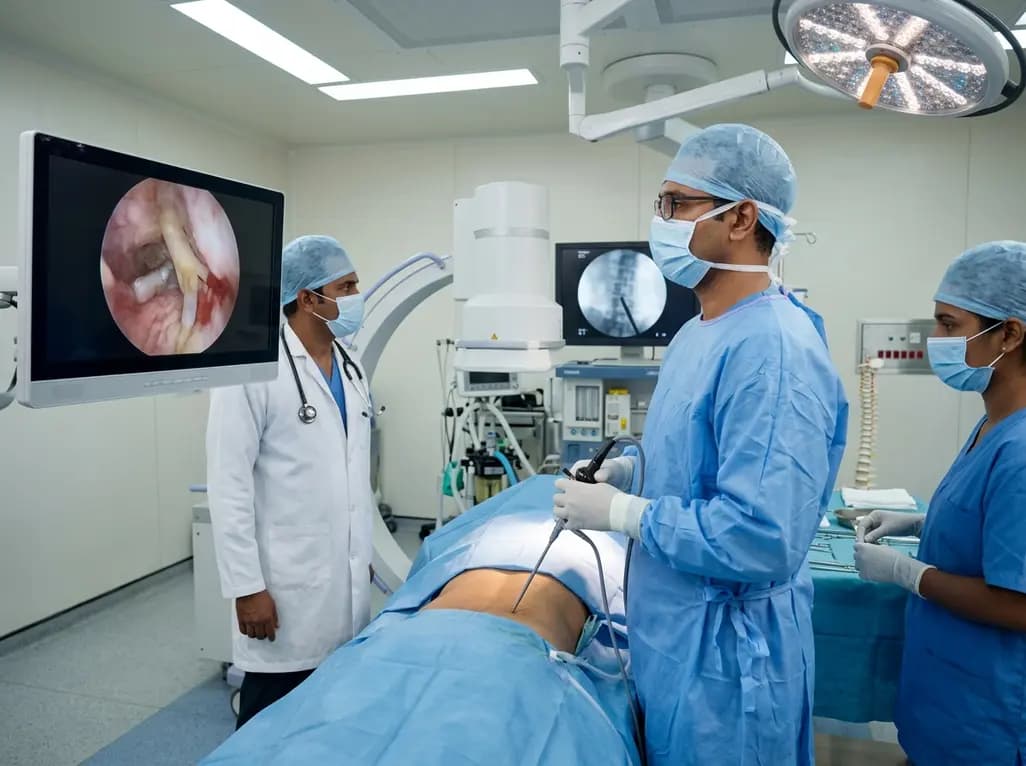
Management of lumbar disc herniation has evolved significantly over the past few decades. Surgeons increasingly prefer minimally invasive techniques to reduce tissue trauma and accelerate recovery. Among these advancements, Transforaminal Lumbar Endoscopic Discectomy has emerged as a prominent surgical modality. This procedure offers a direct route to the herniated disc through the intervertebral foramen. Specifically, it allows for the removal of disc fragments while preserving the stabilizing structures of the spine. While traditional open discectomies require significant muscle retraction, endoscopic approaches minimize surgical morbidity. However, the L5-S1 level presents unique anatomical hurdles. The presence of the iliac crest and the large facet joints often complicates the transforaminal pathway. Consequently, some practitioners have questioned whether this approach remains viable for L5-S1 foraminal and extraforaminal herniations. Despite these concerns, recent evidence suggests that with proper technique, the outcomes are remarkably positive. Clinicians must understand the specific nuances of this approach to maximize patient benefits. As more Indian hospitals adopt endoscopic spine surgery, understanding the long-term efficacy of these procedures becomes essential. This article examines the latest research regarding the application of the transforaminal approach at the lumbosacral junction.
Recent prospective research has shed light on the long-term effectiveness of the transforaminal approach for L5-S1 herniations. Researchers conducted a study involving seventy-five consecutive patients diagnosed with foraminal or extraforaminal L5-S1 lumbar disc herniations. Every participant underwent Transforaminal Lumbar Endoscopic Discectomy and was monitored over a comprehensive two-year follow-up period. To ensure rigorous data collection, the surgical team performed assessments preoperatively and at multiple postoperative intervals. These intervals included 6 weeks, 3 months, 6 months, 12 months, and 24 months. The primary evaluation tools included the Visual Analogue Scale for both lower limb and low back pain. Additionally, the Short-Form 36 Medical Health Survey Questionnaire provided insights into the health-related quality of life. This longitudinal design allowed the investigators to track the trajectory of recovery beyond the immediate postoperative phase. Furthermore, the focus on extraforaminal herniations is particularly relevant, as these cases are often difficult to reach via conventional interlaminar routes. By utilizing such standardized metrics, the study established a clear baseline for surgical success. The results provide a detailed roadmap of how patients typically progress after undergoing this specific endoscopic intervention.
The results of the study indicate that Transforaminal Lumbar Endoscopic Discectomy delivers substantial clinical improvements. Notably, none of the patients experienced major perioperative complications, which underscores the safety of the technique. All studied indices, including pain and functional scores, demonstrated clinically and statistically significant amelioration as early as six weeks post-surgery. Lower limb and low back pain values reached a stable plateau approximately six months after the procedure. This rapid initial improvement is a hallmark of minimally invasive spine surgery, as it reflects the immediate decompression of the affected nerve roots. Interestingly, while pain relief stabilized mid-way through the first year, quality of life parameters continued to improve. Every dimension of the SF-36 questionnaire showed statistical progress throughout the entire two-year follow-up. This suggests that while the biological healing of the nerve and disc occurs quickly, the patient's holistic return to health is a more gradual process. Surgeons should therefore manage patient expectations by highlighting that functional gains may continue long after the initial pain has subsided. These findings reinforce the idea that endoscopic discectomy is not just a temporary fix but a durable solution for chronic radiculopathy at the L5-S1 level.
Despite the positive outcomes, the transforaminal route at L5-S1 is technically demanding. The iliac crest height often acts as a physical barrier to the standard puncture path. In many cases, a high iliac crest requires the surgeon to adopt a more cranial or steep trajectory. Consequently, a steep learning curve exists for practitioners who are transitioning from open surgery to endoscopic techniques. The study authors noted that specific patient-related circumstances, such as high-riding iliac bones, could limit the effectiveness of the procedure if the surgeon lacks sufficient experience. Therefore, comprehensive training and the use of advanced imaging are vital for success. Additionally, foraminoplasty, which involves the removal of a small portion of the bone, may be necessary to facilitate tool entry. This additional step requires precision to avoid injury to the exiting nerve root. However, when surgeons overcome these technical hurdles, the benefits of the transforaminal approach are clear. It provides excellent access to the extraforaminal zone, which is often difficult to visualize with an interlaminar approach. Improving surgical experience is thus the key to expanding the use of TLED for complex L5-S1 cases in the clinical setting.
In the broader context of spine surgery, clinicians often choose between transforaminal and interlaminar endoscopic techniques. The interlaminar approach is frequently the default for L5-S1 because the wide interlaminar window provides an easy entry point. Nevertheless, the transforaminal approach offers distinct advantages for specific herniation types. For instance, extraforaminal and far-lateral herniations are more logically addressed through the foramen. Furthermore, research comparing these two methods often shows comparable long-term clinical efficacy in terms of pain reduction and functional scores. Some studies suggest that the transforaminal route involves less muscle stripping and a lower risk of dural sac manipulation. On the other hand, the interlaminar approach may be faster for surgeons who are already comfortable with traditional posterior anatomy. Choosing the right technique depends on the location of the disc fragment and the individual patient's bony anatomy. Specifically, the transforaminal approach remains a potent tool in the surgeon's armamentarium, especially when avoiding the spinal canal is a priority. Ultimately, both techniques are safe and effective, but the transforaminal route fills a critical gap for patients with lateralized pathology. This versatility makes it an indispensable option for modern spine centers.
The clinical success of Transforaminal Lumbar Endoscopic Discectomy has significant implications for the healthcare landscape in India. As the burden of degenerative disc disease grows, there is an increasing demand for procedures that allow patients to return to work quickly. Minimally invasive techniques like TLED align perfectly with these socio-economic needs. Moreover, the ability to perform these surgeries under local anesthesia or conscious sedation reduces the risks associated with general anesthesia, especially in elderly populations. Hospitals across major Indian cities are already integrating advanced endoscopic systems into their neurosurgery and orthopedic departments. However, for these technologies to become standard of care, standardized training programs must be established. This will help mitigate the issues related to the learning curve mentioned in the literature. Furthermore, long-term studies like the one discussed provide the evidence base needed for insurance providers to cover these advanced procedures. By focusing on patient-centered outcomes like quality of life, the medical community can ensure that spine care remains both effective and accessible. The continued refinement of endoscopic techniques will undoubtedly lead to better surgical precision and higher patient satisfaction across the country.
Transforaminal Lumbar Endoscopic Discectomy (TLED) differs from the interlaminar approach by accessing the disc through the intervertebral foramen. This trajectory is particularly advantageous for extraforaminal or far-lateral herniations. It avoids significant bone removal and minimizes dural retraction, although the iliac crest can sometimes pose a technical challenge at the L5-S1 level.
Recovery is both significant and durable. While pain relief typically reaches a plateau within six months, health-related quality of life, as measured by the SF-36 survey, continues to show statistical improvement for up to two years. This long-term benefit indicates that patients continue to regain functional independence and psychological well-being over time.
The primary obstacles include the high iliac crest and the steep learning curve for surgeons. Anatomical barriers require precise needle placement and sometimes specialized bone-shaving techniques. Success in these complex cases is highly dependent on surgical experience and the careful selection of patients based on their specific spinal and pelvic anatomy.
Disclaimer: This content is for informational and educational purposes only and does not constitute medical advice. Always seek the advice of a physician or other qualified health provider with any questions you may have regarding a medical condition. Refer to the latest local and national guidelines for clinical practice.
References
Kapetanakis S et al. Transforaminal lumbar endoscopic discectomy: should we abandon it for L5-S1 foraminal and extraforaminal lumbar disc herniations? A prospective non-randomised study and literature review. Br J Neurosurg. 2026 Feb. doi: 10.1080/02688697.2024.2389839. PMID: 39139077.
Liu H, Hu B, Chen CM, Lin GX. Comparison of Full Endoscopic Lumbar Diskectomy Using the Transforaminal Approach versus Interlaminar Approach for L5–S1 Lumbar Disc Herniation Treatment: A Meta-Analysis. J Neurol Surg A Cent Eur Neurosurg. 2022;83(5):455-464.
Qian Y, Chen Z, et al. Transforaminal endoscopic lumbar discectomy using a 45° puncture angle and foraminotomy versus traditional THESYS for L5/S1 lumbar disc herniation: a prospective randomized controlled trial. Eur Spine J. 2024;33(1):112-121.
"
Read summarized clinical updates, watch expert medical content, and earn CME certifications right from your smartphone.
Open your smartphone camera to scan and install.





A prospective study demonstrates that Transforaminal Lumbar Endoscopic Discectomy (TLED) is a safe and effective treatment for L5-S1 disc herniations, significantly improving pain scores and long-term health-related quality of life despite anatomical challenges.
3 months ago

Novel diimide and hydrazone scaffolds, particularly compound #C4, synergistically reactivate latent HIV-1 when combined with JQ1 or PKC activators. Demonstrating donor-matched proviral transcription ex vivo and non-canonical signaling, these findings advance shock and kill strategies toward reservoir eradication.
Today

A cross-sectional study reveals that maternal RSV vaccination coverage reached only 43.7% in Argentina, with maternal vaccine knowledge being the sole independent predictor of uptake. Clinicians play a crucial role in eliminating informational and structural barriers to optimize infant health.
Today

Review how tailored exercise programs benefit frail older patients with heart failure. Explore pathophysiological mechanisms, individualized training prescriptions, and strategies to overcome adherence barriers in clinical practice.
Yesterday

This comparative study evaluates posterior labral tears with and without glenohumeral instability, highlighting distinct demographic patterns, MRI underestimation in stable shoulders, and successful arthroscopic repair outcomes.
Yesterday

A clinical study demonstrates that early intervention with tocilizumab, either as monotherapy or bridged with corticosteroids, achieves significant proptosis reduction and resolves active inflammation in treatment-naive thyroid eye disease.
Yesterday
