.webp&w=384&q=75)

Loading, please wait...
Loading, please wait...

Lateral recess sphenoid sinus encephaloceles (LRSSEs) represent a rare clinical challenge for neurosurgeons and ENT specialists. Traditionally, surgeons treated these lesions through open transcranial approaches or endonasal endoscopy. However, these methods often carry approach-specific comorbidities, such as brain retraction or significant nasal trauma. Recently, transorbital neuroendoscopic surgery (TONES) has emerged as a promising alternative. Specifically, TONES for LRSSE repair provides a direct and minimally invasive corridor to the middle cranial fossa floor.
A 57-year-old female patient recently sought medical attention due to a one-month history of persistent left-sided rhinorrhea. Diagnostic imaging, including MRI and CT cisternography, confirmed the presence of a left LRSSE. The scans showed temporal brain matter herniating through the middle fossa floor into the sphenoid sinus. Consequently, the surgical team opted for a lateral transorbital approach. The procedure successfully repaired the defect with minimal impact on surrounding tissues. Furthermore, the patient experienced a smooth recovery without the typical complications associated with more invasive techniques.
Beyond this individual case, a systematic review following PRISMA guidelines analyzed nine patients across seven studies between 2016 and 2025. These findings suggest that TONES is becoming a viable primary surgical method. Notably, the approach offers excellent visualization of the lateral sphenoid recess. Because the corridor is direct, it reduces the need for extensive bone removal or neurovascular manipulation. Thus, TONES for LRSSE repair stands out as a highly effective choice for appropriately positioned defects.
The primary advantage of TONES lies in its ability to bypass the limitations of the endonasal route. While endonasal surgery is effective, reaching the extreme lateral recess of the sphenoid sinus can be difficult. In contrast, the transorbital route offers a more perpendicular trajectory to the lateral wall. Additionally, this method avoids the morbidity of a full craniotomy. Therefore, surgeons should consider TONES as a front-line option for managing complex LRSSE cases in the future.
Most patients present with spontaneous cerebrospinal fluid (CSF) rhinorrhea, often described as clear, watery discharge from one nostril. Some may also experience recurrent meningitis or headaches.
TONES uses a small incision near the eye to reach the skull base directly. It often provides better access to the far lateral areas of the sphenoid sinus compared to the nose-based approach.
While highly effective, TONES requires careful patient selection based on the specific location of the encephalocele. A multidisciplinary team of neurosurgeons and ophthalmologists usually performs the procedure to ensure safety.
Disclaimer: This content is for informational and educational purposes only and does not constitute medical advice, diagnosis, or treatment. Always seek the advice of a qualified healthcare provider with any questions regarding a medical condition. Refer to the latest local and national guidelines for clinical practice.
References

Read summarized clinical updates, watch expert medical content, and earn CME certifications right from your smartphone.
Open your smartphone camera to scan and install.





A case study and systematic review highlight TONES as a minimally invasive and effective method for treating lateral recess sphenoid sinus encephaloceles (L...
5 months ago
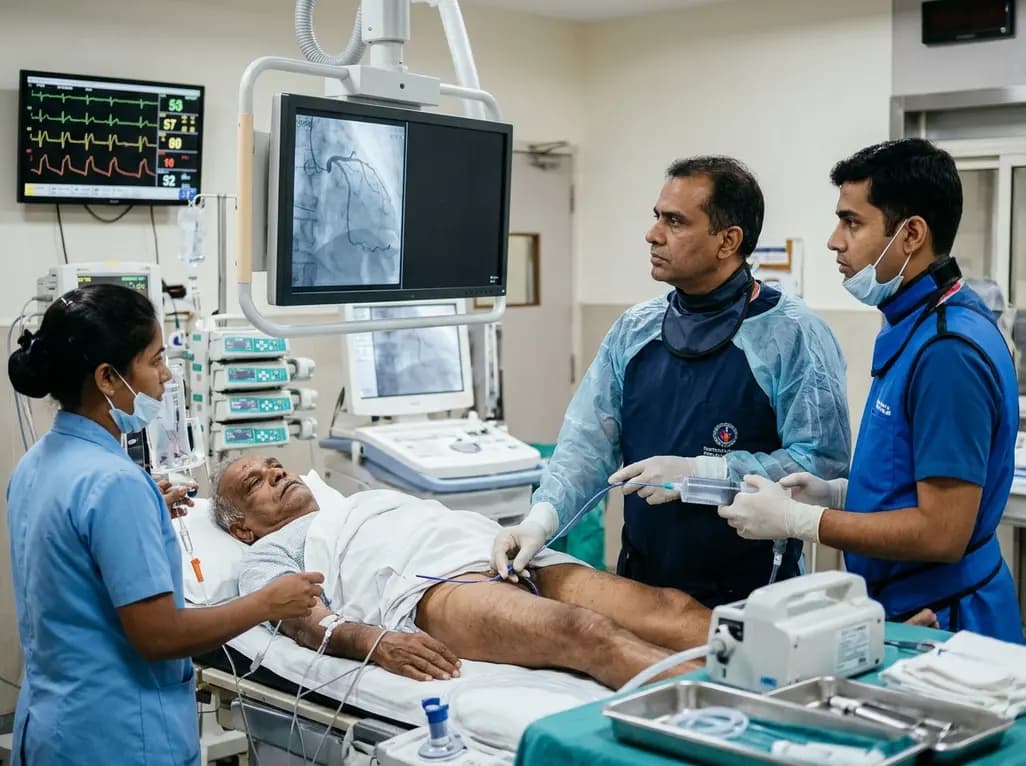
An elderly man with partially repaired Tetralogy of Fallot presented with STEMI caused by coronary embolism rather than atherosclerosis. Successful treatment with sustained mechanical aspiration thrombectomy underscores the vital need for high clinical vigilance in adult congenital heart disease.
Today

Demanding exhaustive hormonal profiling can inadvertently discourage clinical studies involving females. Methodological standards must align with the specific scientific question to expand, not restrict, equitable evidence for women.
Today

A recent study demonstrates that spinal oxygen sensors do not require mitochondrial electron transport to trigger sympathetic excitation during acute hypoxia, revealing new insights into how mitochondrial oxidative stress modulates autonomic tone in cardiovascular and neurological diseases.
Today

A novel calcium polyphosphate coacervate enables injectable bone implants with in situ hierarchical porosity via phase separation and gas foaming, significantly enhancing cell proliferation, energy metabolism, and osteogenic differentiation for minimally invasive bone defect repair.
Today

Following regulatory scrutiny from FSSAI regarding promotional representations and lean muscle preservation claims, Dr. Reddy's Laboratories and Nestlé Health Science are currently reviewing the branding and marketing strategy for their joint nutritional supplement Celevida GLP+.
Today
