The Tamil Nadu state government has officially initiated comprehensive discussions regarding the CMCHIS scheme expansion to include a wider range of complex medical procedures. Health Minister K.G. Arunraj announced this strategic move during a recent administrative press briefing in Coimbatore. The Chief Minister's Comprehensive Health Insurance Scheme currently provides substantial financial relief for low-income households across Tamil Nadu. Consequently, expanding this flagship healthcare program will significantly strengthen universal health coverage. Furthermore, this initiative aims to lessen out-of-pocket medical expenditure for vulnerable families requiring specialized therapeutic interventions.
Broadening Healthcare Access via CMCHIS Scheme Expansion
The ongoing policy discussions surrounding the CMCHIS scheme expansion mark a pivotal shift toward inclusive public healthcare delivery. Presently, the state insurance framework covers numerous inpatient treatments, major surgical procedures, and critical interventions. However, evolving epidemiological patterns require continuous updates to the covered procedure list. Health authorities are systematically analyzing clinical utilization patterns to identify critical gaps in existing coverage packages. Consequently, adding specialized surgical, oncological, and diagnostic procedures will ensure that patients receive comprehensive care without facing severe economic distress. Moreover, empanelled public and private facilities will gain clearer operational pathways to administer advanced therapeutic regimens. Medical administrators emphasize that expanding the coverage framework directly aligns with national health policy objectives. Therefore, this strategic initiative will drastically improve patient retention and treatment adherence across government hospitals. Furthermore, expanding insurance provisions will help bridge equity gaps between rural and urban patient demographics. Consequently, low-income households will obtain timely access to tertiary care facilities that were previously cost-prohibitive. As a result, public trust in state-sponsored healthcare infrastructure will continue to grow across all districts.
Addressing Access Barriers and Public Awareness in Healthcare
Despite the extensive coverage offered by state health insurance programs, many beneficiaries encounter administrative barriers when seeking care at tertiary government facilities. During the recent official address, the Health Minister acknowledged persistent patient complaints regarding difficulties in accessing insured procedures. Consequently, public health experts attribute these operational hurdles primarily to a widespread lack of public awareness regarding procedural entitlements. Many patients remain unaware of pre-authorization requirements, empanelled service listings, and grievance redressal mechanisms. Therefore, the health department is designing targeted public awareness campaigns to educate citizens on their healthcare rights. Furthermore, dedicated insurance helpdesks in state-run hospitals will receive administrative upgrades to assist visiting beneficiaries efficiently. Streamlining patient intake processes will significantly reduce waiting times and prevent unnecessary administrative delays. Additionally, hospital helpdesk staff will guide families through necessary documentation, ensuring seamless cashless admissions. By improving transparent communication, public medical institutions can effectively bridge the gap between policy intent and actual clinical delivery. Ultimately, enhanced community awareness will maximize the public health impact of the state insurance framework across all patient demographics.
Upgrading Government Hospital Infrastructure and Hygiene Standards
Ensuring high clinical care standards requires robust physical infrastructure and stringent hygiene management within state-run health centers. Recently, persistent public complaints highlighted significant issues regarding ward sanitation, drainage systems, and pest control in government facilities. Responding to these urgent administrative challenges, the state health ministry is implementing phased infrastructural upgrades across public medical centers. Specifically, immediate relief measures include the immediate distribution of fresh bed linens across inpatient wards to maintain hygiene. Furthermore, engineering teams are repairing drainage networks and conducting comprehensive pest eradication drives in critical clinical zones. Long-term facility management plans also involve upgrading waste disposal systems, improving ventilation, and modernizing patient accommodation. Maintaining clean clinical environments is crucial for preventing hospital-acquired infections and promoting rapid post-operative recovery. Moreover, improved environmental hygiene enhances overall patient satisfaction and restores public trust in state healthcare services. Hospital administrators must conduct routine sanitary audits to ensure continuous compliance with established infection control protocols. Therefore, structural improvements alongside routine maintenance schedules will create safer, more dignified care environments for patients and healthcare workers alike.
Enforcing Zero Tolerance Against Corruption in Public Hospitals
Maintaining administrative integrity and transparency is essential for sustaining equitable healthcare delivery across public institutions. The Tamil Nadu health department continues to enforce a strict zero-tolerance policy against financial extortion and corrupt practices. Recently, severe disciplinary actions were executed, including the immediate dismissal of four staff members at KMC Hospital following verified bribery allegations. Consequently, this decisive action serves as a strong warning against unethical practices within public health centers. Health administrators emphasize that public medical services must remain entirely dedicated and accessible to underprivileged communities. Therefore, medical facilities are establishing direct, transparent complaint channels to allow patients to report illicit demands safely. Additionally, hospital authorities are deploying random inspection teams to monitor daily operations and financial transactions. Furthermore, public notices displayed prominently across hospital premises will inform patients about completely free services under government welfare schemes. Ensuring complete institutional accountability protects vulnerable patients from financial exploitation during medical emergencies. Ultimately, eliminating corruption reinforces public trust in government healthcare, ensuring that state welfare funds directly benefit eligible patients.
Enhancing Emergency Response with Localized CPR Training
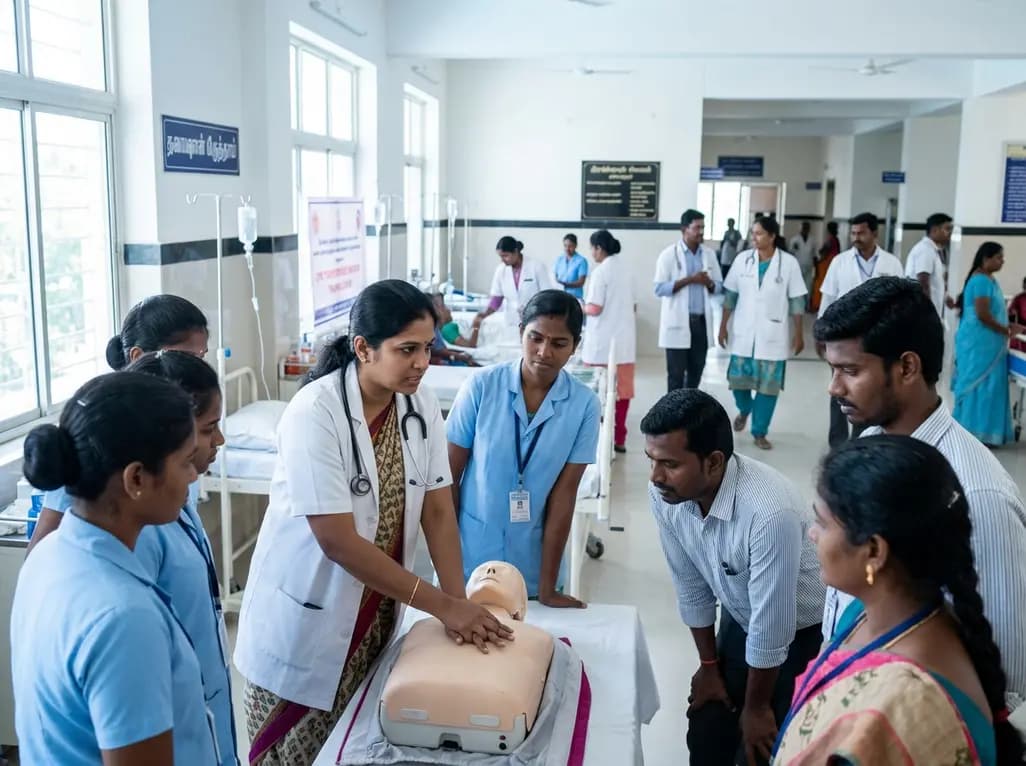
To effectively curb pre-hospital mortality from road traffic accidents, Tamil Nadu is expanding its emergency care framework through community-focused training programs. Specifically, the state government will soon launch localized first-aid and cardiopulmonary resuscitation (CPR) training initiatives for shopkeepers and residents stationed near high-accident zones. Consequently, these trained community bystanders will serve as critical first responders during the vital golden hour following trauma. This proactive community initiative supplements the established 'Nammai Kakkum 48' emergency care scheme, which provides free initial medical management for accident victims. Furthermore, immediate bystander CPR significantly improves survival chances for individuals experiencing acute cardiac arrest or severe traumatic shock. Training programs will cover essential basic life support skills, airway management, and bleeding control techniques. Moreover, empowering local community members creates a resilient, immediate network of emergency care providers along major transport corridors. Consequently, rapid pre-hospital stabilization reduces overall trauma mortality and mitigates long-term disability risks for accident victims. Through integrated emergency schemes, public awareness drives, and skill building, the state continues to strengthen its trauma response network.
Frequently Asked Questions
Q1: What is the main goal of the proposed CMCHIS scheme expansion?
The primary goal of the proposed CMCHIS scheme expansion is to include a broader array of medical and surgical procedures under state health insurance coverage. Consequently, this update aims to reduce out-of-pocket healthcare expenses for low-income families in Tamil Nadu. By expanding coverage packages, eligible beneficiaries gain access to advanced tertiary care interventions without facing significant economic strain or operational barriers in public and empanelled private hospitals.
Q2: How does the government plan to improve sanitation in state hospitals?
The government is executing phased infrastructural upgrades across public health facilities to resolve sanitation and hygiene challenges. Immediate interventions involve distributing fresh bed linens across inpatient wards and conducting rigorous pest control operations. Furthermore, public health authorities are repairing damaged drainage networks and establishing routine sanitary audits. Consequently, these structural improvements ensure safer, cleaner clinical environments that prevent hospital-acquired infections and enhance patient safety.
Q3: How does the new CPR training initiative complement existing emergency schemes?
The new localized CPR and first-aid training initiative equips shopkeepers and residents near accident-prone zones with life-saving skills. Consequently, these trained bystanders provide immediate pre-hospital assistance during the critical golden hour after trauma. This community initiative directly supplements the 'Nammai Kakkum 48' scheme, which offers free initial emergency treatment, thereby significantly reducing road traffic accident fatalities across Tamil Nadu highways.
Disclaimer: This content is for informational and educational purposes only. It does not constitute medical advice or replace professional judgment. Refer to the latest local and national guidelines for clinical practice.
References
- TN govt plans to expand scope of CM health insurance scheme: Minister - ETHealthworld
- Government of Tamil Nadu. Chief Minister's Comprehensive Health Insurance Scheme (CMCHIS). Official Guidelines.
- Tamil Nadu Health Systems Project. Innuyir Kaappom – Nammai Kakkum 48 Emergency Care Initiative Implementation Report.
.webp&w=384&q=75)