.webp&w=384&q=75)

Loading, please wait...
Loading, please wait...

Gastrointestinal surgery frequently faces the threat of anastomotic leakage. This complication often occurs because traditional titanium staples are bioinert. They cannot actively promote wound healing. However, recent research introduces titanium nanotube arrays as a solution. These nanostructures transform the staple surface into a bioactive environment that supports tissue repair.
Scientists used anodic oxidation to create these arrays on pure titanium surfaces. The process significantly alters the surface topography. Specifically, it increases surface roughness and hydrophilicity. Moreover, these modifications boost the surface free energy. These physical changes are essential for attracting biological molecules that facilitate healing.
The primary mechanism relies on fibronectin (FN) adsorption. The nanotubes capture more FN than smooth titanium surfaces. This capture causes the Arg-Gly-Asp (RGD) tripeptide sequence to become more exposed. Consequently, the exposed RGD domain activates the RGD-integrin pathway. This pathway specifically upregulates integrin α5β1 expression in critical healing cells.
The biological results are impressive. The modified surfaces promoted the adhesion and spreading of gastric mucosal epithelial cells. Furthermore, fibroblasts showed increased proliferation and collagen secretion. This activity is vital for the structural integrity of an anastomosis. Therefore, the nanotubes directly support the tissue-repair process at the molecular level.
These findings offer a promising path for surgical device development. Bioactive staples could significantly reduce leakage rates. Although further clinical trials are necessary, the potential is clear. Consequently, TNT-modified materials may soon become a standard in gastrointestinal reconstructions.
They change the surface from bioinert to bioactive. This encourages cells to adhere and produce collagen, which strengthens the staple line.
It acts as a signaling bridge between the implant and the cell. By activating this pathway, the nanotubes tell cells to multiply and repair the tissue.
Yes, by promoting faster and stronger tissue integration, they may significantly lower the risk of post-operative anastomotic leaks.
Disclaimer: This content is for informational and educational purposes only. It does not constitute medical advice or establish a doctor-patient relationship. Refer to the latest local and national guidelines for clinical practice.
References
Chen P et al. Titanium nanotube arrays promote the activity of anastomotic healing-related cells by increasing fibronectin adsorption and activating the RGD-integrin pathway. Biomed Mater. 2026 Mar 02. doi: 10.1088/1748-605X/ae4c0d. PMID: 41771168.
Wang M et al. Bioactive-coated porous anastomotic staples enhance anastomotic healing. Bioact Mater. 2026 Jan 20;60:40-54. doi: 10.1016/j.bioactmat.2026.01.005.
Hu N et al. Enhanced interfacial adhesion and osseointegration of anodic TiO2 nanotube arrays on titanium and underlying mechanisms. Acta Biomater. 2020;106(1):360–375. doi: 10.1016/j.actbio.2020.02.009.
"
Read summarized clinical updates, watch expert medical content, and earn CME certifications right from your smartphone.
Open your smartphone camera to scan and install.





New research highlights how titanium nanotube arrays improve gastrointestinal anastomotic healing by enhancing cell activity through the RGD-integrin pathwa...
7 months ago

Explore vital recurrent stroke predictors in lacunar stroke patients managed with intensive blood pressure lowering. This analysis examines trial findings from SPS3 to uncover residual vascular risks, metabolic factors, and targeted secondary prevention strategies for high-risk neurological patients.
Today
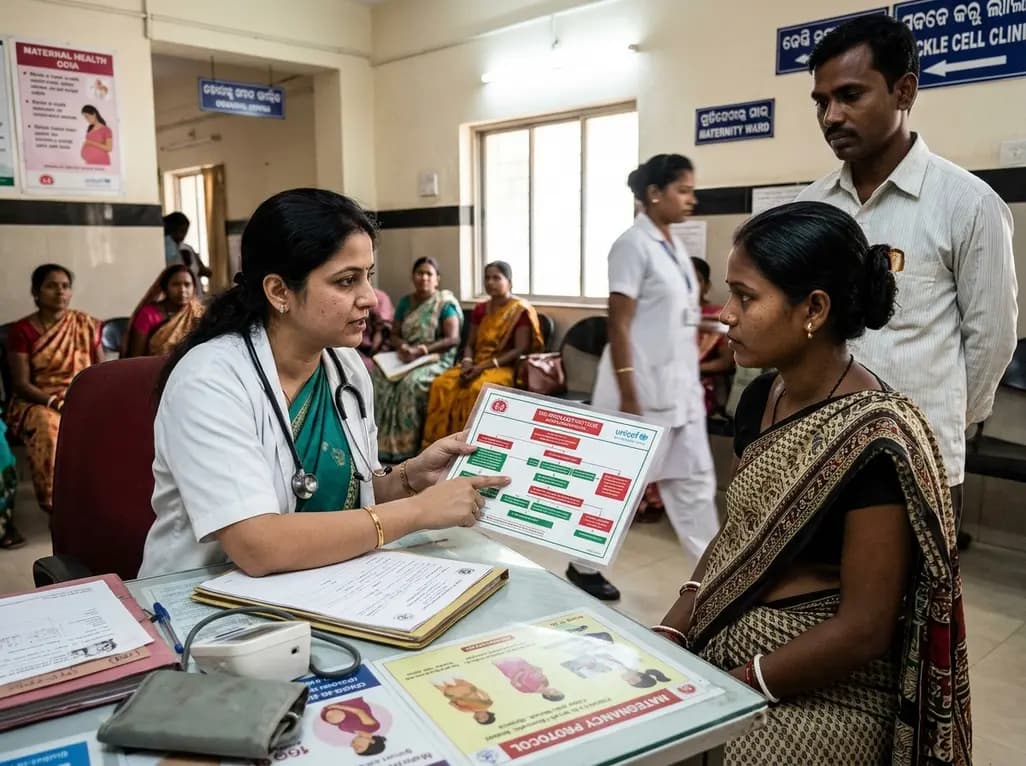
Odisha has established India's first state-level clinical protocol specifically tailored for pregnant women with sickle cell disease. Developed with NHM and UNICEF, the framework provides structured antenatal screening, crisis mitigation, standardized referral pathways, and specialized interdisciplinary care.
Today

The Directorate General of Health Services directs Indian states to halt the hazardous reuse and reprocessing of single-use medical devices. Discover regulatory implications under the Drugs and Cosmetics Act, critical infection risks, legal liabilities, and operational changes required across clinical specialties.
Today

A randomized controlled trial demonstrates that an eight-week dual-task training intervention significantly improves static and dynamic postural control over standard balance exercises in individuals with chronic ankle instability, addressing critical neurocognitive deficits during athletic and daily activities.
Today

India is advancing preventive healthcare by integrating genomics, artificial intelligence, and quantum technologies. With the SANGAM programme sequencing one million Indian genomes, clinicians can unlock personalized therapies, detect cardiometabolic risks early, and curb the burden of diabetes and heart disease.
Today
