.webp&w=384&q=75)

Loading, please wait...
Loading, please wait...

Time-restricted eating (TRE) is an emerging lifestyle intervention that shows promise in managing metabolic health. A recent study published in the Journal of the American Heart Association explored how time-restricted eating inflammation reduction occurs in patients with a history of myocardial infarction (MI). Researchers conducted a prospective crossover trial to observe the effects of a six-hour eating window on immune cell function and systemic inflammatory markers.
The study enrolled 19 patients who followed either a 2-week TRE protocol (8 am to 2 pm) or their regular diet. After a six-week washout period, the participants switched groups to complete the crossover. Consequently, the researchers could analyze the specific impact of the fasting window on various physiological parameters. The findings revealed that the TRE intervention significantly reduced absolute neutrophil counts and lowered the neutrophil-to-lymphocyte ratio (NLR). Furthermore, patients showed decreased expression of CD11b on neutrophils, which indicates reduced immune activation.
In addition to cellular changes, the researchers observed anti-inflammatory shifts in the monocyte transcriptome. This genetic modulation suggests that dietary timing influences how immune cells respond to systemic signals. Moreover, the study found a reduction in low-grade systemic inflammation throughout the treatment period. However, the intervention did not significantly affect monocyte subsets or cytokine production capacity. These results highlight that even short-term dietary changes can influence the immune system's inflammatory profile.
Clinicians should consider these findings when discussing secondary prevention strategies with heart attack survivors. Although the study was small and short-term, it provides a mechanistic basis for the cardiovascular benefits of fasting. Additionally, widespread metabolic changes accompanied the inflammatory improvements. Therefore, TRE might serve as a viable adjunct therapy for reducing residual inflammatory risk in cardiovascular patients.
Participants in the intervention group consumed food only between 8 am and 2 pm daily. This schedule created an 18-hour daily fasting period for two weeks.
TRE specifically reduced neutrophil counts and the neutrophil-to-lymphocyte ratio. These markers often associate with systemic inflammation and higher cardiovascular risk.
No, the study did not observe significant changes in cytokine production capacity or specific monocyte subsets despite the overall reduction in systemic inflammation.
Disclaimer: This content is for informational and educational purposes only. It does not constitute medical advice or establish a doctor-patient relationship. Always seek the advice of a qualified healthcare provider for any medical concerns. Refer to the latest local and national guidelines for clinical practice.
References
Los J et al. Effect of 2 Weeks of Time-Restricted Eating on Innate Immunity and Systemic Inflammation in Patients With a History of Myocardial Infarction: A Randomized-Controlled Crossover Study. J Am Heart Assoc. 2026 Mar 20. doi: 10.1161/JAHA.125.048092. PMID: 41859904.
Chang JC, et al. Established dietary interventions and time-restricted eating for cardiovascular disease prevention. PMC. 2024. doi:10.1016/j.ajpc.2024.100650.
Patterson RE, Laughlin GA, LaCroix AZ, et al. Intermittent Fasting and Human Metabolic Health. J Acad Nutr Diet. 2015;115(8):1203-1212. doi:10.1016/j.jand.2015.02.018

Read summarized clinical updates, watch expert medical content, and earn CME certifications right from your smartphone.
Open your smartphone camera to scan and install.





A 2-week study shows time-restricted eating reduces systemic inflammation and neutrophil counts in patients with a history of myocardial infarction....
7 months ago
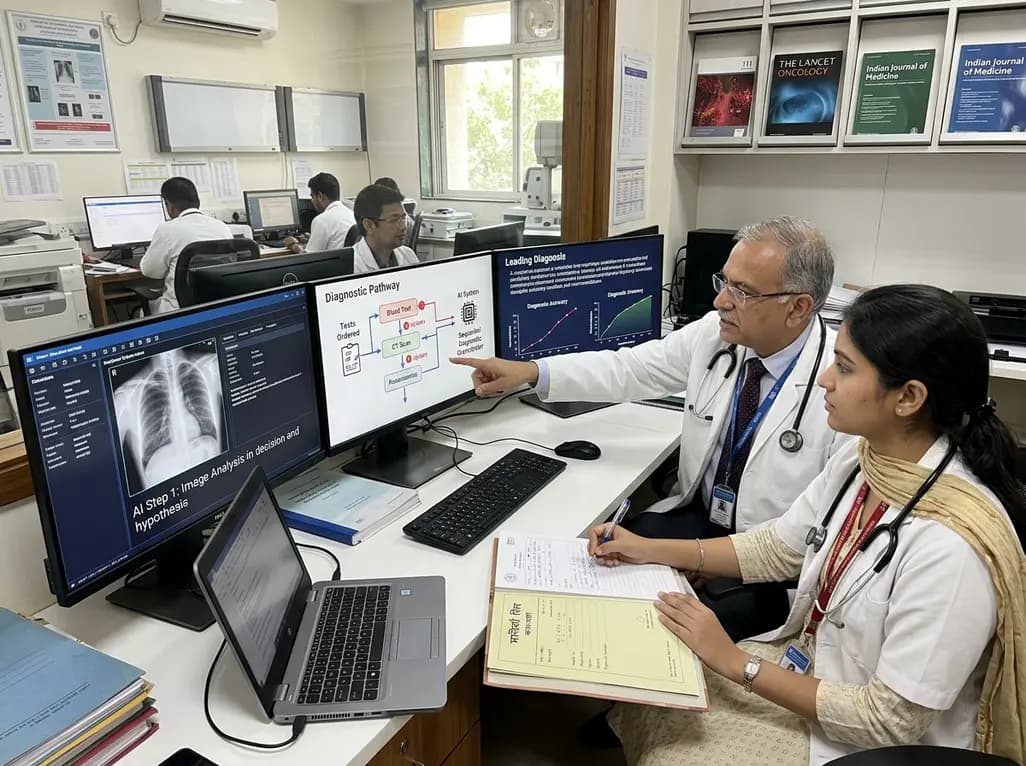
A breakthrough peer-reviewed study demonstrates that a sequential AI diagnosis system can mirror real-world clinical reasoning. By ordering stepwise tests and updating hypotheses dynamically, this multi-agent orchestrator achieved superior diagnostic accuracy while reducing investigative costs.
Today

A prenatal case highlights severe glutaric acidemia type II presenting as bilateral hyperechoic cystic kidneys at 18 weeks. Whole-exome sequencing revealed a novel homozygous ETFDH frameshift variant, demonstrating the power of rapid genetic testing in fetal renal anomalies.
Today

Review how tailored exercise programs benefit frail older patients with heart failure. Explore pathophysiological mechanisms, individualized training prescriptions, and strategies to overcome adherence barriers in clinical practice.
Yesterday

This comparative study evaluates posterior labral tears with and without glenohumeral instability, highlighting distinct demographic patterns, MRI underestimation in stable shoulders, and successful arthroscopic repair outcomes.
Yesterday

A clinical study demonstrates that early intervention with tocilizumab, either as monotherapy or bridged with corticosteroids, achieves significant proptosis reduction and resolves active inflammation in treatment-naive thyroid eye disease.
Yesterday
