

Loading, please wait...
Loading, please wait...

Total knee arthroplasty provides excellent functional restoration, yet aseptic tibial loosening remains a leading cause of long-term construct failure. Consequently, joint reconstruction teams continually evaluate implant design features that stabilize the bone-cement-implant interface. Recent clinical registry data highlight that subtle mechanical modifications on the tibial baseplate undersurface can substantially mitigate implant debonding over time.
Primary knee replacement relies on stable mechanical fixation between the prosthetic baseplate, bone cement, and host cancellous bone. However, repetitive physiological loading frequently challenges this construct, particularly on the tibial plateau. Aseptic tibial loosening often originates at the implant-cement interface rather than the cement-bone boundary. Fluid egress, shearing forces, and microscopic lipid contamination compromise initial adhesion during component seating. Consequently, debonding occurs when cyclic stress exceeds interfacial bond strength. Furthermore, microscopic motion produces fine particulate debris, which recruits macrophages and triggers chronic periprosthetic osteolysis. In Indian patients, activities such as squatting and cross-legged sitting markedly magnify eccentric stresses across the medial tibial plateau. Therefore, high mechanical strain accelerates interface fatigue in unreinforced baseplates. When micro-motion persists, progressive radiolucent lines develop beneath the metal tray. Ultimately, this biomechanical breakdown leads to painful component shifting and early revision surgery. Specifically, preserving initial cement mantle continuity prevents osteolytic debris migration into deeper trabecular spaces. Surgeons must therefore recognize the biological and mechanical vulnerabilities of smooth baseplate designs.
To counter interfacial shear, manufacturers introduced recessed undersurface geometry termed cement pockets. These localized recesses fundamentally transform the interface mechanics of the tibial baseplate. Specifically, cement pockets provide deep macro-interlocking wells that secure polymethyl methacrylate within dedicated compartments. This geometric constraint generates a robust mechanical keying effect, resisting multidirectional tensile and shear forces. Moreover, recessed cavities act as fluid escape reservoirs during cement pressurization. When surgeons seat the baseplate, excess lipids and blood migrate into designated overflow channels rather than pooling along primary load-bearing surfaces. As a result, the construct avoids extensive interfacial contamination, which often ruins implant adhesion. Experimental studies confirm that cement pockets significantly diminish lipid distribution across the baseplate undersurface. Furthermore, the increased cement mantle thickness within these recesses lowers localized peak stress concentrations across the host bone. In contrast, components lacking recessed geometry rely solely on superficial chemical bonding, which fails prematurely under high shear. Therefore, combining recessed geometry with standard micro-texturing produces superior fixation compared to flat or polished trays.
A major long-term investigation evaluated 11,594 consecutive primary cemented total knee arthroplasties with a minimum follow-up of two years. Researchers systematically examined the direct impact of cement pockets across diverse implant designs. Overall, the presence of cement pockets did not alter the all-cause revision rate across the broad cohort. However, the design feature produced a striking and statistically significant reduction in revision specifically performed for aseptic tibial loosening. In addition, the analysis accounted for comprehensive patient tracking through national joint registry data and dedicated institutional databases. This extensive clinical audit confirms that macro-retentive features specifically target interface debonding without introducing unintended failure modes. Furthermore, the findings clarify previous debates regarding whether undersurface recesses provide true clinical benefits or merely theoretical advantages. Specifically, long-term implant survival depends on neutralizing focal stress risers at the baseplate boundary. Consequently, surgeons can confidently select baseplates with recessed geometry to protect against premature mechanical loosening. These findings reinforce the value of robust engineering in preventing late reconstructive failure.
The cohort analysis also evaluated the interaction between bearing kinematics and baseplate retention geometry. Specifically, investigators evaluated 8,591 fixed-bearing knees and 3,003 mobile-bearing knees. Among fixed-bearing constructs, 4,753 components incorporated cement pockets, while 3,838 lacked this feature. Among mobile-bearing implants, 942 utilized cement pockets, whereas 2,061 presented flat undersurfaces. Notably, mobile-bearing baseplates intrinsically disperse rotational torque through the polyethylene-metal articulation. However, mobile-bearing trays still experience substantial tilting and liftoff forces during deep flexion. Consequently, the addition of cement pockets provides indispensable secondary stabilization regardless of bearing constraint. Fixed-bearing implants, which transfer greater torsional shear directly to the tibia, benefit profoundly from macro-interlocking pockets. Furthermore, registry comparisons demonstrate that robust undersurface cement containment consistently reduces micromotion in both designs. Consequently, adequate tray interlock shields underlying host bone from destructive micromotion during deep flexion. Therefore, arthroplasty surgeons should not assume that low-contact mobile bearings eliminate the mechanical necessity of retentive tibial undersurfaces. Both bearing modalities demand meticulous interface stabilization to withstand lifelong physiological cycles.
These clinical findings carry direct significance for knee arthroplasty surgeons practicing across India. Indian patients frequently present with advanced tricompartmental osteoarthritis and severe varus deformities at younger ages. In addition, local socio-cultural lifestyle demands require frequent floor-level sitting, squatting, and stair climbing. These demanding functional postures exert immense compressive and eccentric shear stresses across the medial proximal tibia. If an implant lacks macro-interlocking cement pockets, cyclic high-flexion forces can accelerate debonding at the implant-cement interface. Therefore, Indian surgeons should carefully scrutinize tibial tray undersurface geometry during implant selection. Moreover, operating teams must pair advanced implant geometry with immaculate cementation techniques. Pulsatile lavage, meticulous bone bed drying, and timely cement pressurization remain essential clinical steps. Furthermore, tailored preoperative planning helps surgeons identify patients with high biomechanical risk profiles. Consequently, combining optimized baseplate architecture with thorough surgical technique minimizes failure rates in active, demanding patient demographics. Hospital procurement committees must also prioritize implants with validated retentive geometries to deliver durable long-term healthcare outcomes.
While implant engineering plays a pivotal role, optimal cement technique remains indispensable for enduring fixation. First, surgeons must prepare the proximal tibial bone surface with aggressive pulsatile lavage to clear fat and marrow debris. Second, the surgical team should dry the cancellous bone thoroughly before introducing low-viscosity or dough-phase cement. Furthermore, surgeons must avoid handling the baseplate undersurface with contaminated surgical gloves to prevent lipid transfer. Applying a uniform layer of cement directly to both the tibial cut and the baseplate pockets ensures complete cavity filling. Consequently, pressurizing the component firmly creates an uninterrupted, robust mantle with deep bone trabecular interdigitation. In addition, maintaining steady axial pressure during polymerization prevents early liftoff and micro-fractures within the curing cement. Moreover, careful cement handling preserves maximum mechanical shear resistance during initial setting. Orthopedic teams must also confirm accurate coronal and sagittal alignment to prevent eccentric edge-loading. Ultimately, combining proven implant design with precise surgical execution offers patients the greatest protection against revision.
Cement pockets incorporate recessed geometrical cavities on the tibial baseplate undersurface that create mechanical macro-interlock with curing bone cement. This structure converts destructive shear forces into compressive stresses across the interface. Furthermore, these pockets serve as containment reservoirs that draw lipids and blood away from flat load-bearing surfaces during component seating. Consequently, the implant maintains pristine cement adhesion, limits interfacial micro-motion, and reduces premature mechanical debonding over years of cyclic loading.
All-cause revision encompasses diverse complications such as periprosthetic joint infection, ligamentous instability, periprosthetic fracture, and persistent unexplained pain. Although cement pockets significantly lower revisions specifically caused by aseptic tibial loosening, they cannot directly prevent biological infections or trauma-related implant failures. Therefore, while total construct survival reflects multiple competing surgical and host variables, the targeted mechanical benefit of cement pockets remains statistically significant and clinically decisive for long-term tibial stability.
Both fixed-bearing and mobile-bearing designs benefit substantially from cement pocket engineering. Although mobile-bearing prostheses theoretically reduce rotational shear stresses at the baseplate, both configurations remain exposed to substantial varus-valgus tilt and eccentric liftoff forces during deep knee flexion. Furthermore, clinical trials show that mobile-bearing trays without retentive geometry suffer debonding over extended follow-up. Consequently, orthopedic surgeons should utilize retentive baseplates with cement pockets across all primary cemented arthroplasty procedures.
Disclaimer: This content is for informational and educational purposes only and should not be construed as medical advice. Always consult a qualified healthcare professional regarding any medical condition or before making healthcare decisions. Refer to the latest local and national guidelines for clinical practice.
References

Read summarized clinical updates, watch expert medical content, and earn CME certifications right from your smartphone.
Open your smartphone camera to scan and install.





A landmark study of 11,594 primary knee replacements demonstrates that tibial baseplate cement pockets significantly reduce revision rates for aseptic tibial loosening. While all-cause revision remained unaffected, macro-interlocking undersurface geometry proves crucial for long-term construct stability.
Today
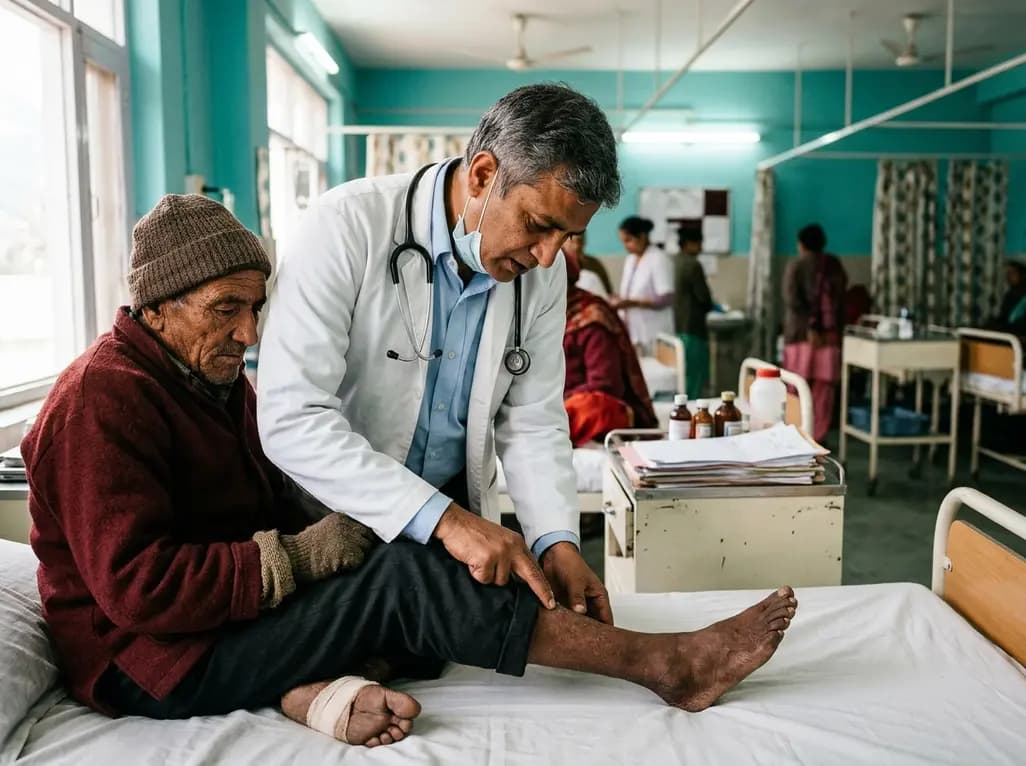
A recent cross-sectional study reveals that prolonged residence at high altitude significantly escalates foot frostbite risk among lowland migrants, with chronic mountain sickness acting as a significant physiological mediator through hyperviscosity and microcirculatory stasis.
Today

A litigation-derived series of 252 women highlights the risks of repeat revisions after midurethral sling surgery. Recurrent incontinence occurred in up to 60% of patients, and repeat revision rates reached 70%, emphasizing cautious patient selection and skilled multidisciplinary management.
Today
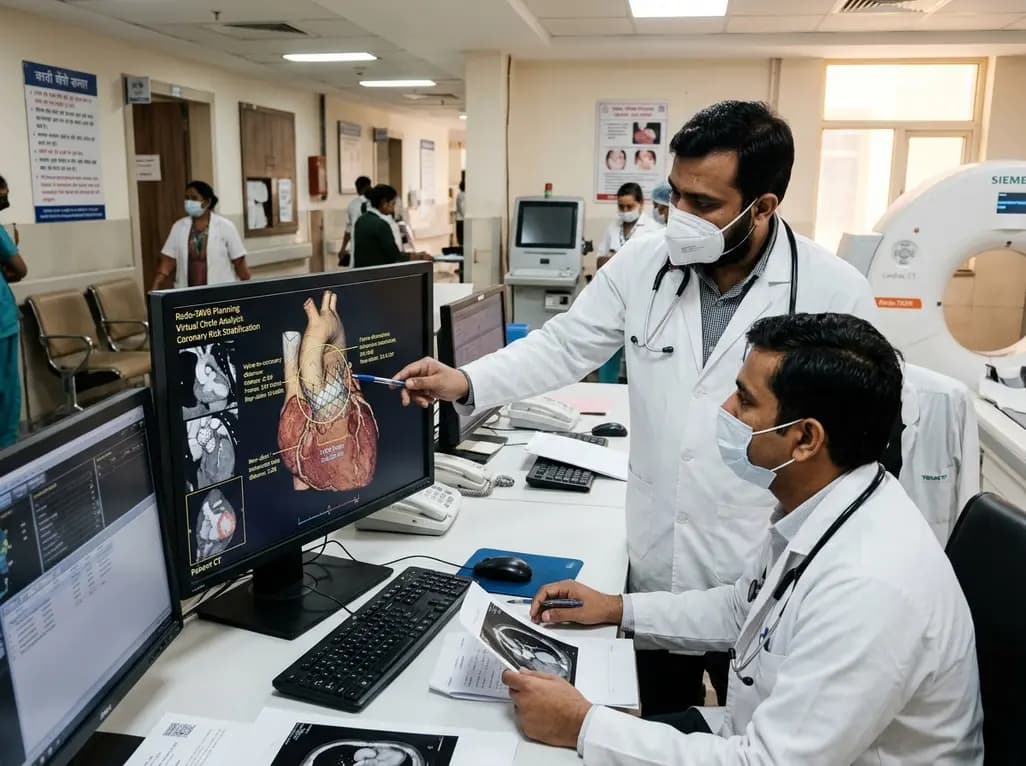
A multicenter study evaluating paired cardiac CT scans reveals that the virtual circle method reliably predicts index transcatheter valve frame expansion and changes in valve-to-aorta distance during redo-TAVR, offering accurate or conservative coronary risk stratification in 85% of cases.
Today
Non-union fractures occur in 2-5% of cases, causing significant disability and cost. Conservative modalities such as LIPUS, PEMF, and focused ESWT offer non-surgical healing options for defects up to 5-10 mm when adequate mechanical stability exists without infection.
Today

India is poised to transform chronic disease management through wearable health technology. Discover how continuous remote monitoring and predictive algorithms empower clinicians to detect early cardiovascular signals, personalize metabolic interventions, and deliver equitable preventive care across populations.
Today
