

Loading, please wait...
Loading, please wait...

Living at extreme elevations presents severe physiological stressors, combining hypobaric hypoxia with freezing thermal conditions. While acute mountain sickness garners substantial attention, clinicians often overlook the compounding danger of high altitude frostbite among lowland migrants. Prolonged residence in hypobaric environments alters systemic hemodynamics and impairs peripheral microvascular perfusion. Consequently, individuals living above 4,000 meters face a dual burden of hypoxemia and environmental cold injury. Recent clinical evidence indicates that prolonged exposure duration correlates directly with severe peripheral damage. Therefore, understanding the interplay between altitude acclimatization and tissue freezing is essential for clinicians who care for high-altitude populations.
Lowland migrants relocating to extreme altitudes experience intense environmental challenges. A cross-sectional investigation evaluated 891 healthy adult male lowlanders who relocated to Tibetan regions at elevations of 4,000 meters or higher. The investigators analyzed the occurrence of cold injury alongside hematological changes and clinical acclimatization scores. Overall, 50.73% of the participants developed local frostbite during their plateau residence. Furthermore, distinct anatomical patterns emerged across the cohort. Ear frostbite occurred in 31.65% of individuals, while hand frostbite affected 34.12% of the participants. Additionally, foot frostbite occurred in 12.46% of the cohort, and 2.13% developed other atypical cold injuries. Although ear and hand injuries represented the most frequent presentations, high-altitude duration did not demonstrate a direct linear correlation with upper-extremity injuries. However, foot frostbite showed a marked and distinct dependence on residence duration. Specifically, statistical modeling identified a significant nonlinear relationship between plateau stay duration and foot tissue freezing. Each one-standard deviation increase in exposure time elevated foot injury risk by 39%. Consequently, prolonged occupational or residential stay at extreme heights disproportionately endangers lower-extremity microcirculation.
To explain why lower extremities suffer disproportionately over time, investigators evaluated the Qinghai International Consensus Scoring System. This diagnostic tool scores symptoms of chronic mountain sickness, including cyanosis, dilation of veins, paresthesias, headache, and breathlessness. The statistical mediation analysis revealed that chronic mountain sickness directly mediated 17.54% of the total association between plateau residence duration and foot frostbite. Hypobaric hypoxia stimulates excessive erythropoietin secretion over prolonged periods. Consequently, sustained high-altitude exposure causes excessive erythrocytosis, raising hematocrit levels above normal physiological thresholds. This hematological shift increases whole-blood viscosity dramatically and slows capillary transit velocity. In addition, chronic pulmonary vasoconstriction and arterial hypoxemia diminish downstream oxygen delivery to peripheral tissues. When individuals develop chronic mountain sickness, their systemic microvascular reserve declines significantly. Because blood flow to distal extremities already slows under intense environmental cold, increased blood viscosity triggers microvascular stasis. Therefore, chronic mountain sickness transforms a standard cold exposure into an aggressive ischemic insult within dependent pedal vascular beds.
The human body relies on reflex cutaneous vasoconstriction to conserve core body temperature during severe cold exposure. In high-altitude environments, extreme hypobaric hypoxia amplifies this sympathetic response. Peripheral blood vessels undergo sustained constriction, which dramatically reduces nutritive blood flow to the fingers and toes. Meanwhile, cyclic cold-induced vasodilation usually acts as a protective mechanism to periodically reperfuse chilled skin. However, severe systemic hypoxia severely impairs this physiological hunting reaction. Furthermore, anatomical and gravitational factors make the lower limbs particularly vulnerable. The pedal vasculature experiences elevated hydrostatic pressure and prolonged capillary transit times. When hyperviscosity from high-altitude polycythemia coincides with cold-induced vasospasm, blood sludge accumulates within distal dermal capillaries. Platelets and red cells aggregate rapidly, causing local endothelial shear injury and microvascular thrombosis. Moreover, heavy mountaineering footwear often restricts active foot motion, which further reduces venous return and worsens localized edema. As a result, pedal tissues rapidly succumb to ice crystal formation and irreversible microcirculatory shutdown.
These clinical findings have substantial practical relevance for occupational health teams, border defense forces, and general practitioners. In regions such as the Himalayas, thousands of soldiers, road construction personnel, and technical workers ascend from sea level to barren high-altitude posts. Lowland migrants lack the genetic microcirculatory adaptations found in native highlanders. Therefore, extended operational deployments significantly heighten their susceptibility to debilitating cold injuries. Clinicians frequently attribute frostbite solely to sub-zero temperatures and inadequate thermal gear. Nevertheless, these new data clearly show that systemic maladaptation independently drives peripheral tissue loss. When a lowland migrant presents with excessive erythrocytosis or chronic mountain sickness, clinicians must recognize an elevated risk for ischemic cold trauma. Furthermore, frostbite in the feet frequently causes persistent sensory neuropathy, chronic pain syndromes, and limb loss. These debilitating complications can end military careers and cause long-term disability. Consequently, medical screening must integrate hematological assessments alongside environmental cold countermeasures during extended high-altitude deployments.
Preventing disabling frostbite among high-altitude residents requires a proactive clinical framework. Physicians stationed at high elevations must implement routine surveillance using the Qinghai scoring system. Specifically, clinicians should monitor hemoglobin levels, arterial oxygen saturation, and clinical markers of hyperviscosity every six months. If a patient exhibits hematocrit values exceeding 65% or hemoglobin levels surpassing 21 grams per deciliter, physicians should treat the underlying erythrocytosis promptly. Therapeutic venesection or temporary descent to lower elevations effectively restores normal microvascular hemodynamics and lowers systemic resistance. In addition, healthcare teams must educate workers on daily foot hygiene and rapid symptom identification. Individuals must avoid constrictive socks and tight boots, which exacerbate peripheral hypoperfusion. Moreover, personnel should replace damp socks immediately because moisture accelerates conductive thermal loss. Clinicians can also consider vasodilator therapies or rheological agents for select high-risk patients who show early signs of microvascular compromise. Ultimately, aggressive management of chronic mountain sickness serves as a powerful shield against severe tissue freezing.
When frostbite occurs in individuals with chronic mountain sickness, medical teams must administer rapid, protocolized clinical care. First, clinicians must rewarm frozen tissue rapidly in circulating water warmed to 37 to 39 degrees Celsius. Caregivers must never rub or massage the injured feet, as mechanical friction worsens cell lysis. Once rewarming finishes, providers must assess tissue perfusion using clinical staging or advanced angiography. In severe deep frostbite, intravenous iloprost or thrombolytic therapy with recombinant tissue plasminogen activator can restore patency in occluded microvessels. However, providers must also address the coexisting hematological abnormalities. Judicious isovolemic hemodilution can rapidly reduce elevated hematocrit, improving blood rheology and capillary flow. Furthermore, physicians should administer anti-inflammatory agents such as ibuprofen to block prostaglandin and thromboxane release. Following acute stabilization, patients require diligent wound care, physical therapy, and delayed surgical debridement. By combining acute vascular salvage with systemic hypoxia management, clinicians can protect functional mobility and prevent unnecessary amputations.
Chronic mountain sickness triggers excessive erythrocytosis, which sharply increases whole-blood viscosity and slows capillary circulation. Because lower extremities experience higher hydrostatic pressure, cold-induced vasospasm and sluggish microvascular flow combine to cause severe pedal ischemia. Consequently, distal pedal capillaries suffer from microthrombi and cellular hypoperfusion much faster than warmer anatomical sites. Therefore, underlying hyperviscosity directly accelerates freezing injury in the feet during prolonged exposure.
Clinicians diagnose chronic mountain sickness using the international Qinghai consensus criteria. Key laboratory findings include excessive erythrocytosis, defined as hemoglobin levels exceeding 21 grams per deciliter in men or 19 grams per deciliter in women, alongside severe hypoxemia. Furthermore, patients experience classic clinical symptoms such as breathlessness, palpitations, cyanosis, fatigue, dilated superficial veins, and sleep disturbances. These systemic manifestations indicate prolonged hypoxic maladaptation requiring prompt medical intervention.
Acute management begins with rapid rewarming in a warm water bath between 37 and 39 degrees Celsius without mechanical rubbing. Concurrently, physicians should administer ibuprofen to inhibit destructive arachidonic acid inflammatory cascades. In severe presentations, intravenous prostacyclin analogues or thrombolytics restore microcirculatory patency. Crucially, clinicians must also manage hyperviscosity using controlled isovolemic hemodilution or urgent descent. This combined physiological strategy relieves microvascular stasis and prevents irreversible tissue necrosis.
Disclaimer: This content is for informational and educational purposes only. Refer to the latest local and national guidelines for clinical practice.
References
Cui Q et al. High altitude residence duration and frostbite susceptibility: The mediating effect of chronic mountain sickness. Int J Biometeorol. 2026 Nov 03. doi: undefined. PMID: 42975571.
Villafuerte FC, Corante N. Chronic mountain sickness: clinical aspects, etiology, management, and treatment. High Alt Med Biol. 2016;17(2):61-69.
Cauchy E, Davis C, Pasquier M, et al. Wilderness Medical Society Clinical Practice Guidelines for the Prevention and Treatment of Frostbite: 2024 Update. Wilderness Environ Med. 2024;35(2):185-201.

Read summarized clinical updates, watch expert medical content, and earn CME certifications right from your smartphone.
Open your smartphone camera to scan and install.





A recent cross-sectional study reveals that prolonged residence at high altitude significantly escalates foot frostbite risk among lowland migrants, with chronic mountain sickness acting as a significant physiological mediator through hyperviscosity and microcirculatory stasis.
Today
A litigation-derived series of 252 women highlights the risks of repeat revisions after midurethral sling surgery. Recurrent incontinence occurred in up to 60% of patients, and repeat revision rates reached 70%, emphasizing cautious patient selection and skilled multidisciplinary management.
Today
A multicenter study evaluating paired cardiac CT scans reveals that the virtual circle method reliably predicts index transcatheter valve frame expansion and changes in valve-to-aorta distance during redo-TAVR, offering accurate or conservative coronary risk stratification in 85% of cases.
Today
Synovial plicae are embryologic remnants in major joints that can cause symptomatic synovial plica syndrome when inflamed or fibrotic. This comprehensive clinical guide reviews the embryology, anatomy, MRI features, conservative management, and arthroscopic outcomes across the knee, elbow, hip, and shoulder.
Today
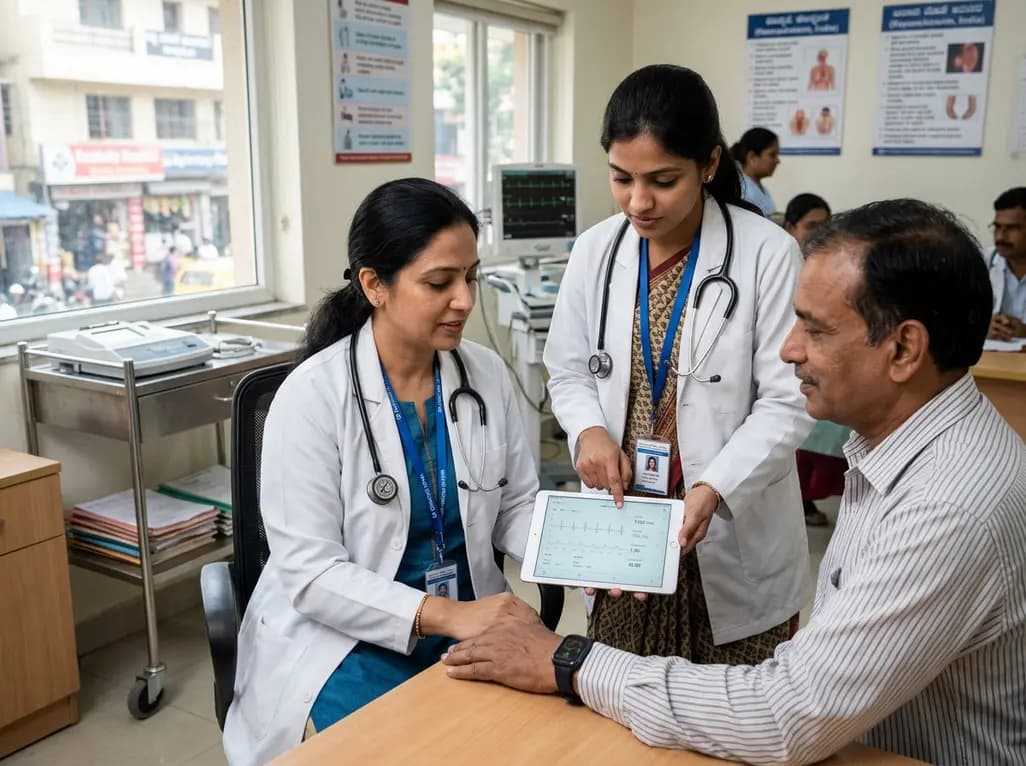
India is poised to transform chronic disease management through wearable health technology. Discover how continuous remote monitoring and predictive algorithms empower clinicians to detect early cardiovascular signals, personalize metabolic interventions, and deliver equitable preventive care across populations.
Today
