.webp&w=384&q=75)

Loading, please wait...
Loading, please wait...

Thymic epithelial tumors represent a rare but significant challenge in oncology. Consequently, understanding thymic epithelial tumor survival is essential for effective patient management. A Danish study recently examined 282 patients to identify predictors of mortality and relapse. Specifically, the researchers analyzed outcomes for thymoma, thymic carcinoma, and neuroendocrine tumors.
They found that histology plays a dominant role in determining long-term prognosis. For instance, patients with thymoma had an overall survival rate of 81%. However, this rate plummeted to 47% for those with thymic carcinoma. Furthermore, the study highlighted that advanced age and multiple comorbidities reduce survival chances. Moreover, the Masaoka-Koga stage remains a powerful predictor of tumor recurrence.
Advanced stage III and IV tumors showed much higher relapse rates than early-stage cases. In addition, most early-stage tumors were thymomas, which generally offer a better outlook. Therefore, clinical teams must prioritize risk-stratified follow-up protocols. Identifying high-risk patients early allows for more aggressive intervention strategies. Similarly, understanding these variables helps doctors counsel patients regarding their specific disease trajectory. This evidence supports a move toward more personalized medicine in thoracic oncology.
Survival is primarily influenced by the histological subtype, the patient's age at diagnosis, and the presence of comorbidities. Thymic carcinoma generally carries a worse prognosis compared to thymoma.
The Masaoka-Koga stage is a critical predictor of tumor recurrence. Patients with stage III or IV disease face a significantly higher risk of relapse compared to those diagnosed at stage I or II.
Disclaimer: This content is for informational and educational purposes only. It does not constitute professional medical advice, diagnosis, or treatment. Always seek the advice of your physician or other qualified healthcare provider with any questions you may have regarding a medical condition. Refer to the latest local and national guidelines for clinical practice.
References
Østergaard T et al. Survival and relapse of Danish patients with thymic epithelial tumors. Acta Oncol. 2026 May 21. doi: 10.2340/1651-226X.2026.45407. PMID: 42165211.
Riely GJ et al. Thymomas and Thymic Carcinomas, Version 2.2025, NCCN Clinical Practice Guidelines in Oncology. J Natl Compr Canc Netw. 2025;23(6).
Imbimbo M et al. Thymic epithelial tumours: ESMO Clinical Practice Guidelines for diagnosis, treatment and follow-up. Ann Oncol. 2018;29(Suppl 4):iv227-iv243.

Read summarized clinical updates, watch expert medical content, and earn CME certifications right from your smartphone.
Open your smartphone camera to scan and install.





A Danish study analyzes survival and relapse in thymic epithelial tumors, finding that histology and Masaoka-Koga stage are key prognostic factors for outco...
5 months ago
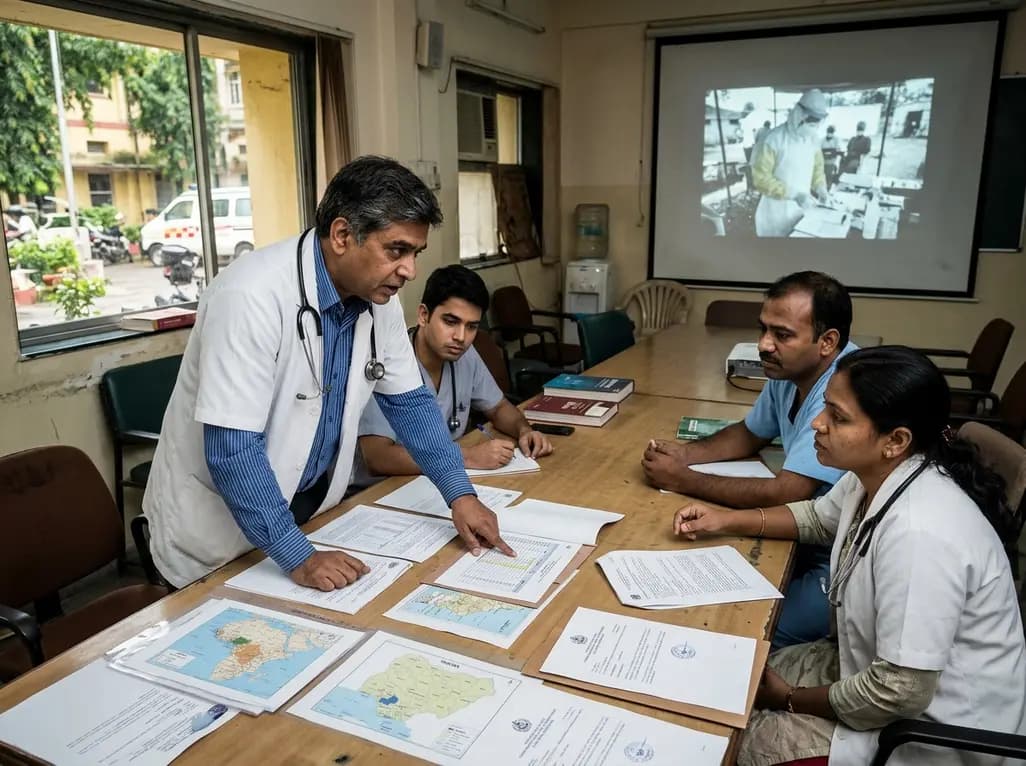
Following Nigeria's first recorded Ebola case linked to regional travel, the Africa CDC has convened an emergency ministerial summit. This alert underscores critical clinical priorities for healthcare professionals, including differentiating early viral infection from malaria, implementing barrier nursing, and triage.
Today

Leucine Rich Bio has introduced South Asia's first comprehensive vaginal microbiome test, BugSpeaks. By profiling microbial dysbiosis, pathogens, and antimicrobial resistance, this next-generation diagnostic platform provides clinicians with deeper insights into recurrent infections, fertility, and reproductive health.
Today

Review how tailored exercise programs benefit frail older patients with heart failure. Explore pathophysiological mechanisms, individualized training prescriptions, and strategies to overcome adherence barriers in clinical practice.
Today

This comparative study evaluates posterior labral tears with and without glenohumeral instability, highlighting distinct demographic patterns, MRI underestimation in stable shoulders, and successful arthroscopic repair outcomes.
Today

A clinical study demonstrates that early intervention with tocilizumab, either as monotherapy or bridged with corticosteroids, achieves significant proptosis reduction and resolves active inflammation in treatment-naive thyroid eye disease.
Today
