.webp&w=384&q=75)

Loading, please wait...
Loading, please wait...
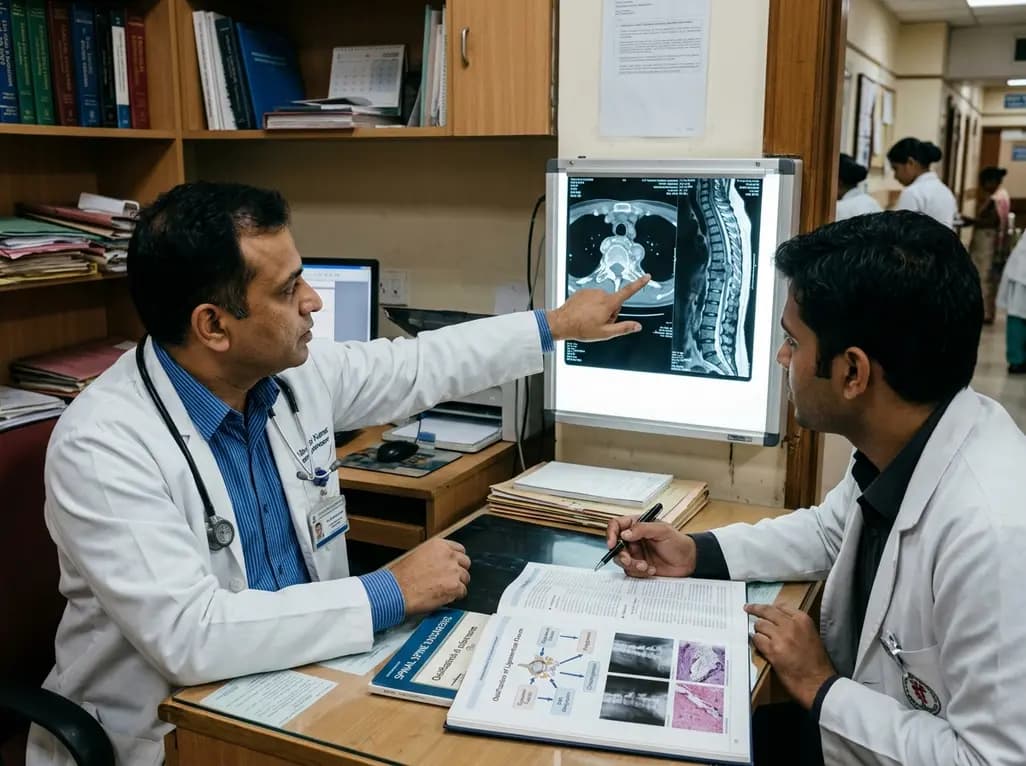
Thoracic ligamentum flavum ossification represents a progressive degenerative disorder characterized by ectopic bone formation within spinal ligaments. This condition frequently leads to thoracic spinal canal stenosis and compression myelopathy. Consequently, affected individuals experience severe neurological deficits, functional impairment, and intractable pain. Although surgical decompression remains the standard therapeutic intervention, the underlying molecular pathways driving heterotopic bone formation remain incompletely understood. Healthy ligamentum flavum tissues are predominantly avascular and resilient. However, pathological transformation involves extensive microvascular proliferation. Furthermore, blood vessel invasion into normally avascular soft tissues appears to trigger osteogenic differentiation cascade. Researchers have long suspected that complex epigenetic factors regulate these pathological changes. DNA methylation, a key epigenetic mechanism, alters gene expression without altering the primary genomic sequence. Investigating how DNA methylation influences vascular dynamics offers crucial insights into disease progression and novel non-surgical treatment targets.
Epigenetic modifications serve as essential cellular switches during tissue remodeling and cellular differentiation. In ligamentum flavum ossification, specific genomic regions undergo altered DNA methylation, which directly regulates transcription factor binding and downstream gene expression. Recent epigenetic analyses comparing diseased ligament tissues with non-ossified control samples identified widespread methylation variations. Specifically, altered CpG site methylation directly regulates key pathways involved in osteogenesis, matrix degradation, and cellular senescence. Furthermore, hypermethylation or hypomethylation of gene promoter regions dynamically dictates whether ligament fibroblasts transition into chondrocytes or bone-forming osteoblasts. Additionally, these epigenetic alterations respond dynamically to mechanical stress, local inflammation, and metabolic disturbances. Understanding these regulatory mechanisms helps clinicians comprehend why certain patient populations exhibit aggressive disease progression. Therefore, mapping DNA methylation profiles provides vital clues regarding potential therapeutic targets that could halt or reverse pathological ligament mineralization.
Neovascularization is a crucial prerequisite for ectopic bone formation in normally avascular soft tissues. During ligamentum flavum ossification, newly formed microvessels infiltrate degraded extracellular matrix regions, delivering vital nutrients, growth factors, and osteoprogenitor cells. Molecular pathway analyses demonstrate that DNA methylation heavily influences several key vascular signaling cascades. Specifically, vascular endothelial growth factor signaling, fibroblast growth factor pathways, and epithelial adherens junction signals exhibit marked epigenetic regulation. Furthermore, specific vascular-related probes, including cluster of differentiation 34, secreted frizzled-related protein 1, and SRY-box transcription factor 17, show distinct methylation shifts. Consequently, these genes display elevated expression levels in affected spinal tissue. Histological assessments confirm that endothelial markers and pro-angiogenic factors localize densely near mature chondrocytes and hypertrophic cells at the active ossification front. Thus, neovascularization provides the structural scaffold necessary for ongoing ligament degeneration and subsequent bone deposition.
The ossification front represents the dynamic interface where degenerated ligament fibers transition into mature mineralized bone. At this critical boundary, specialized mesenchymal cells, hypertrophic chondrocytes, and invading endothelial cells coordinate matrix remodeling. Studies show that secreted frizzled-related protein 1 and SRY-box transcription factor 17 are explicitly expressed in mesenchymal cells surrounding the ossification front. Meanwhile, vascular endothelial growth factor and cluster of differentiation 34 accumulate in chondrocytes. This distinct spatial distribution suggests that degenerative changes initially induce uncontrolled microvascular sprouting. Subsequently, DNA methylation changes dictate whether these newly formed blood vessels acquire specialized ossification-promoting characteristics. Furthermore, degenerated fibroblasts within adjacent tissue express inflammatory mediators that accelerate matrix breakdown. As a result, microvascular invasion and cellular transdifferentiation create a self-perpetuating cycle. Halting this cascade before mineral deposition occurs represents a crucial clinical strategy for controlling disease severity.
Understanding the interplay between DNA methylation and neovascularization opens new horizons for non-surgical management of ligamentum flavum ossification. Currently, spine surgeons rely heavily on laminectomy or decompression procedures to relieve spinal cord compression. However, surgical interventions carry inherent risks, including dural tears, neurological deficits, and recurrent ossification. By identifying specific methylation markers and angiogenic pathways, researchers can develop targeted pharmacological therapies. For instance, small-molecule epigenetic modifiers or anti-angiogenic agents could potentially suppress abnormal vessel growth and arrest ectopic bone formation. Additionally, early biomarker detection using genomic profiling might allow clinicians to identify high-risk patients before irreversible myelopathy develops. Integrating molecular diagnostics with conventional imaging modalities will ultimately enhance patient stratification and personalized treatment planning. As research advances, targeted molecular therapies may dramatically reduce the necessity for high-risk invasive spinal procedures.
Deciphering the molecular landscape of ligamentum flavum ossification has illuminated the critical role of epigenetic modulation in spinal disease progression. DNA methylation acts as a primary master regulator, controlling pro-angiogenic factors that convert quiescent ligament tissue into an active osteogenic environment. Recognizing that neovascularization precedes ossification provides clinicians with actionable targets for early therapeutic intervention. Moreover, ongoing clinical studies continue to validate these epigenetic signatures in diverse patient cohorts. As diagnostic tools evolve, routine screening for molecular markers may soon complement radiological evaluations. Ultimately, bridging molecular epigenetics with clinical orthopedic practice promises to transform the management paradigm for thoracic myelopathy, improving long-term patient outcomes and quality of life.
Thoracic ligamentum flavum ossification is a pathological condition where flexible spinal ligaments undergo ectopic bone formation. As the ligament thickens and mineralizes, it compresses the thoracic spinal cord within the spinal canal. Consequently, patients experience severe neurological symptoms, including lower limb weakness, sensory disturbances, gait instability, and chronic back pain. Surgical decompression is often required to prevent permanent neurological damage.
DNA methylation modulates gene expression by adding methyl groups to specific genomic regions without altering the primary DNA sequence. In ossified ligaments, altered methylation patterns activate pro-angiogenic genes such as vascular endothelial growth factor and cluster of differentiation 34. This epigenetic activation promotes abnormal blood vessel growth into normally avascular ligament tissues, facilitating matrix remodeling and osteogenic differentiation.
Yes, identifying specific epigenetic alterations and pro-angiogenic signals opens pathways for targeted drug therapies. Pharmacological agents designed to modulate DNA methylation or inhibit pathological angiogenesis could potentially arrest vessel proliferation and halt ectopic bone formation. Early intervention with these molecular therapies may slow disease progression, thereby reducing the need for invasive spinal surgery in high-risk patients.
Disclaimer: This content is for informational and educational purposes only. It should not be used as a substitute for professional medical advice, diagnosis, or treatment. Always consult a qualified healthcare provider regarding any medical condition or treatment plan. Refer to the latest local and national guidelines for clinical practice.
References
Chosei Y et al. Epigenetic modifications associated with ossification of the thoracic ligamentum flavum: The role of DNA methylation in angiogenesis. J Orthop Sci. 2026 Aug 12. doi: undefined. PMID: 42586918.

Read summarized clinical updates, watch expert medical content, and earn CME certifications right from your smartphone.
Open your smartphone camera to scan and install.





Thoracic ossification of the ligamentum flavum causes severe spinal myelopathy. Recent research reveals that DNA methylation modulates vascular angiogenesis, transforming normal ligament cells into ossification-promoting tissue.
last month

Epidemiologists and health leaders warn that active Ebola virus transmission in the Democratic Republic of Congo remains entrenched within communities. With fewer than ten percent of expected contacts monitored, public health officials urge rapid surveillance scale-up and reinforced healthcare precautions.
Today

A scoping review evaluates 116 studies on AI in women's reproductive health, finding that 83.6% carry high risk of bias. While ensemble models show promise, disparities and lack of validation hinder LMIC deployment.
Today

Differential oxygenation during peripheral TA-NRP can cause undetected coronary hypoxemia due to arch vessel clamping. A novel circuit with continuous aortic root monitoring detects desaturation early, facilitating left ventricular unloading and preventing allograft dysfunction and unnecessary heart discard.
Today

India faces significant opportunities to expand medical device exports to high-growth markets like Mexico, Brazil, and the UK. By addressing its trade deficit, advancing domestic component manufacturing, and aligning with global regulatory standards, the country aims to become an international healthcare hub.
Today

A post hoc analysis of the PARM-T2D study shows pemafibrate exerts baseline-dependent effects on LDL-C and particle size in type 2 diabetes and hypertriglyceridemia. It lowers triglycerides and remnants while favorably remodeling atherogenic LDL particles based on initial lipid control status.
Today
