.webp&w=384&q=75)

Loading, please wait...
Loading, please wait...
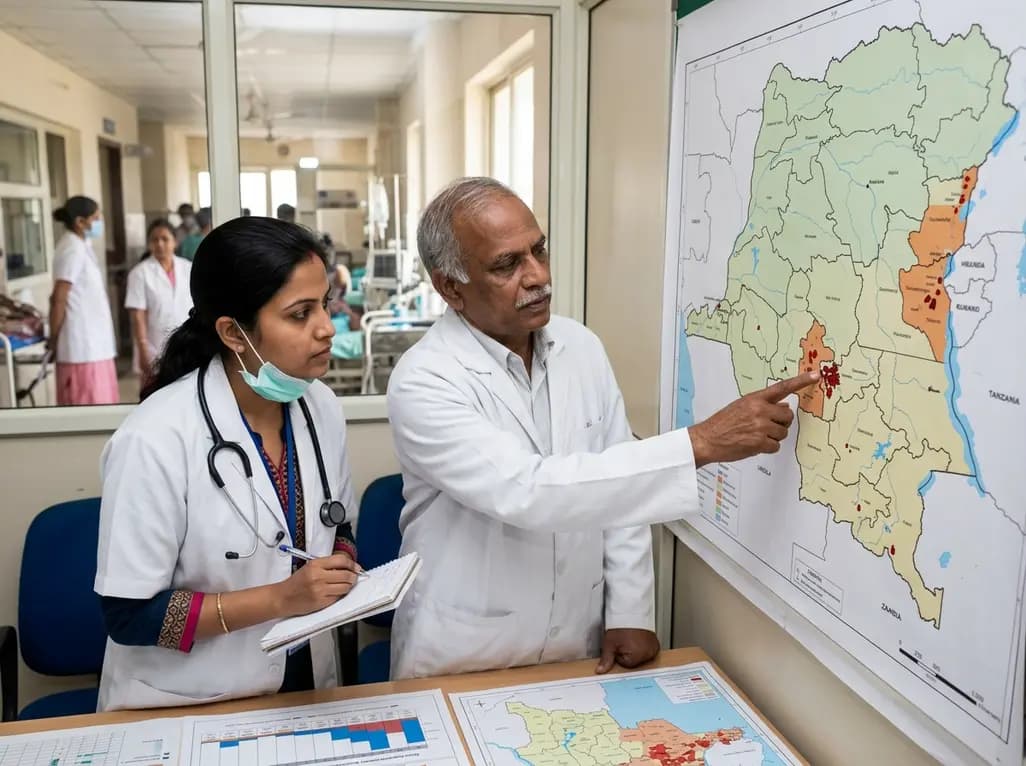
Controlling viral hemorrhagic fevers requires rigorous epidemiological surveillance, rapid case isolation, and exhaustive epidemiological mapping. In the Democratic Republic of Congo, public health authorities confronting a severe filovirus epidemic face immense surveillance hurdles. Senior officials from the Africa Centres for Disease Control and Prevention recently revealed that Ebola contact tracing efforts have identified only roughly 30,000 exposed individuals. Consequently, this tally represents a small fraction of the more than 400,000 contacts expected across active transmission networks. Because undetected transmission lines continue to bypass formal registries, clinicians and health authorities must understand the severe operational and clinical ramifications of unmonitored community transmission.
Epidemiological containment rests on the rapid identification of potential transmission links before secondary cases develop clinical symptoms. Historically, public health teams expect to enumerate approximately sixty close contacts for every confirmed case of Ebola virus disease. Because the current outbreak records around 7,000 confirmed infections, standard epidemiological modeling demands surveillance rosters of at least 420,000 individuals. However, monitoring teams currently maintain oversight of barely seven percent of that projected cohort. Therefore, an overwhelming proportion of exposed individuals remains completely unaccounted for in surrounding communities.
Furthermore, diagnostic facilities detect more than eighty percent of newly confirmed cases among individuals absent from existing monitoring registries. This profound surveillance deficit indicates that community transmission is driving the epidemic well beyond established epidemiological perimeters. When clinicians uncover index presentations outside tracked cohorts, secondary cases have often already exposed caregivers, family members, and transport workers. Consequently, health authorities cannot reliably project epidemic trajectories or implement localized ring interventions when community exposure remains untracked.
The geographic spread of the virus continues to complicate international response efforts across Central Africa. According to reports from the World Health Organization, transmission has officially expanded into multiple new administrative districts. Recent alerts confirm active transmission in the Bulu zone of Sud-Ubangui province as well as Dungu in Haut-Uele province, positioned dangerously close to the international border with South Sudan. In total, the outbreak now spans sixty-three health zones distributed across seven provinces.
Although preliminary stabilization emerged across previous epicenters within Ituri province, geographic dispersion quickly counterbalances localized progress. Mobile populations frequently move across porous territorial borders, creating persistent opportunities for unmonitored viral introduction into unaffected regions. Moreover, remote settlements feature minimal diagnostic infrastructure, delaying confirmatory reverse transcription polymerase chain reaction assays. Consequently, undetected chains of transmission can simmer within isolated localities for weeks before formal detection, overwhelming fragile district hospitals and rural dispensaries.
Active community transmission presents distinct hazards to primary and tertiary healthcare delivery systems. When infected individuals avoid early detection, clinical deterioration frequently happens at home rather than inside specialized treatment centers. As a result, family members provide close personal care without protective personal equipment, leading to intense exposure from highly infectious bodily secretions such as vomitus and diarrhea. Furthermore, community deaths perpetuate chains of transmission through traditional burial customs that involve direct contact with deceased patients harboring peak viral loads.
Additionally, late presentation dramatically worsens individual clinical prognoses while simultaneously exposing triage staff to unexpected filovirus infections. For general physicians and emergency practitioners, distinguishing early filovirus symptoms from endemic tropical illnesses remains notoriously difficult. Initial presentations typically mirror malaria, typhoid fever, or dengue, featuring non-specific febrile illness, profound asthenia, and diffuse myalgia. Therefore, without reliable contact lists to flag potential exposures, clinicians may inadvertently admit undetected patients into open medical wards, precipitating catastrophic nosocomial clusters.
Achieving epidemiologic control demands specific operational benchmarks that demonstrate suppression of active viral spread. Africa CDC leadership emphasizes that true containment cannot rely solely on declining daily case tallies. Even if daily counts fluctuate between fifty and seventy infections, containment remains achievable if those cases emerge from known, monitored contact lists. Conversely, discovering even a modest number of unlinked community cases signals persistent, hidden transmission.
Consequently, epidemiologists define three non-negotiable milestones before projecting a definitive resolution timeline. First, surveillance networks must identify virtually all newly confirmed cases from pre-existing contact registries. Second, public health teams must document zero unmonitored community fatalities, ensuring that all terminal events take place within supervised isolation facilities. Finally, healthcare systems must achieve zero secondary infections among medical personnel. Once teams satisfy these strict conditions, public health authorities can plausibly forecast complete outbreak suppression within a four-week operational window.
The persistence of unmonitored filovirus transmission carries major ramifications for international travelers and clinical screening protocols globally. Although international partners recently pledged nearly three billion dollars in emergency response funding, financial resources alone cannot instantly bridge field-level operational deficits. Clinicians worldwide must maintain heightened suspicion for acute febrile illnesses among individuals returning from central and eastern African regions. Therefore, medical intake protocols must systematically incorporate detailed 21-day travel histories and transit inquiries.
In addition, healthcare institutions must periodically review infection prevention and control standards to safeguard clinical staff. Emergency departments and acute care facilities must ensure immediate access to appropriate personal protective equipment and maintain functional isolation units. Suspected cases require rapid coordination with designated infectious disease reference laboratories and public health reporting bodies. Ultimately, strengthening clinical vigilance and cross-border contact tracing mechanisms remains the only viable strategy to prevent sporadic viral importations from escalating into localized healthcare emergencies.
Q1: Why is contact tracing critical for interrupting Ebola transmission?
Contact tracing identifies individuals exposed to infected patients during their symptomatic phase. Because individuals incubating the virus do not transmit infection before developing symptoms, daily temperature monitoring and clinical symptom checks permit rapid isolation immediately upon disease onset. Consequently, isolating contacts at the earliest clinical stage breaks the chain of transmission and prevents subsequent community spread.
Q2: What is the typical duration for monitoring contacts of Ebola virus disease?
Public health protocols mandate daily clinical follow-up for twenty-one days following the last documented exposure to an infected individual or contaminated environment. Twenty-one days represents the maximum established incubation period for the virus. If monitored contacts remain completely asymptomatic throughout this three-week period, surveillance teams safely discharge them from formal monitoring rosters without risk of transmission.
Q3: How should clinicians evaluate febrile travelers returning from outbreak zones?
Clinicians evaluating febrile returnees must immediately place patients in private negative-pressure or dedicated isolation rooms before conducting physical examinations. Staff must don full personal protective equipment that prevents skin and mucosal exposure. Furthermore, teams must obtain precise 21-day travel itineraries and promptly notify local public health authorities to coordinate specialized filovirus diagnostic testing.
Disclaimer: This content is for informational and educational purposes only. It does not constitute medical advice or replace professional judgment. Refer to the latest local and national guidelines for clinical practice.
References

Read summarized clinical updates, watch expert medical content, and earn CME certifications right from your smartphone.
Open your smartphone camera to scan and install.





Epidemiologists and health leaders warn that active Ebola virus transmission in the Democratic Republic of Congo remains entrenched within communities. With fewer than ten percent of expected contacts monitored, public health officials urge rapid surveillance scale-up and reinforced healthcare precautions.
Today
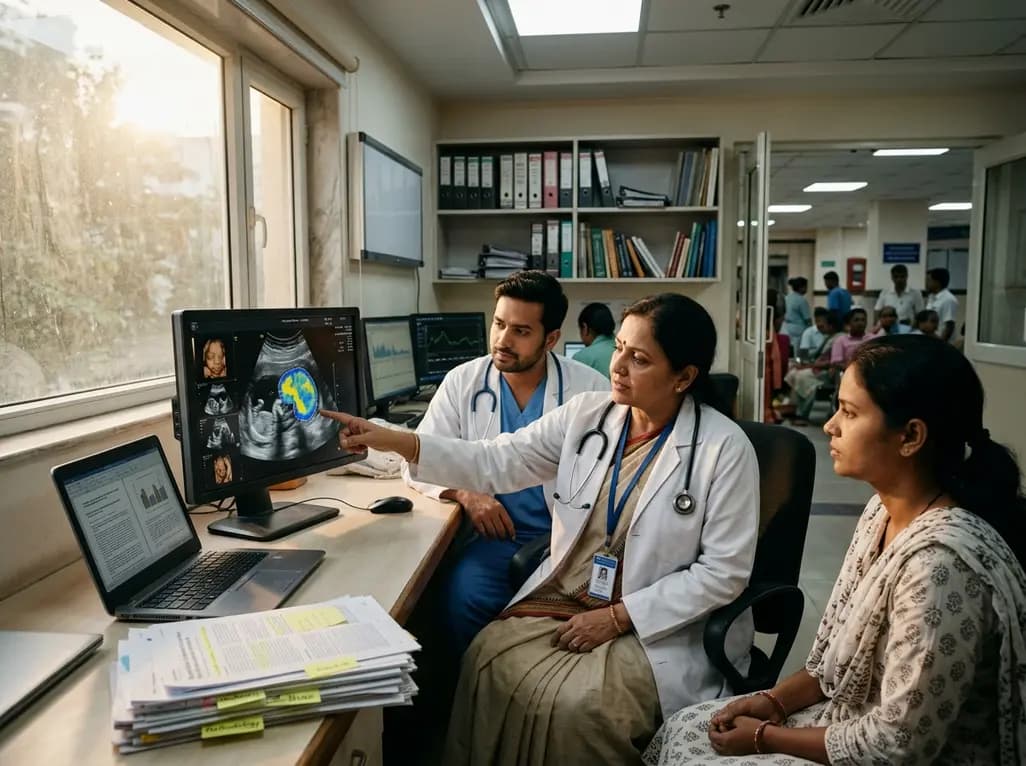
A scoping review evaluates 116 studies on AI in women's reproductive health, finding that 83.6% carry high risk of bias. While ensemble models show promise, disparities and lack of validation hinder LMIC deployment.
Today
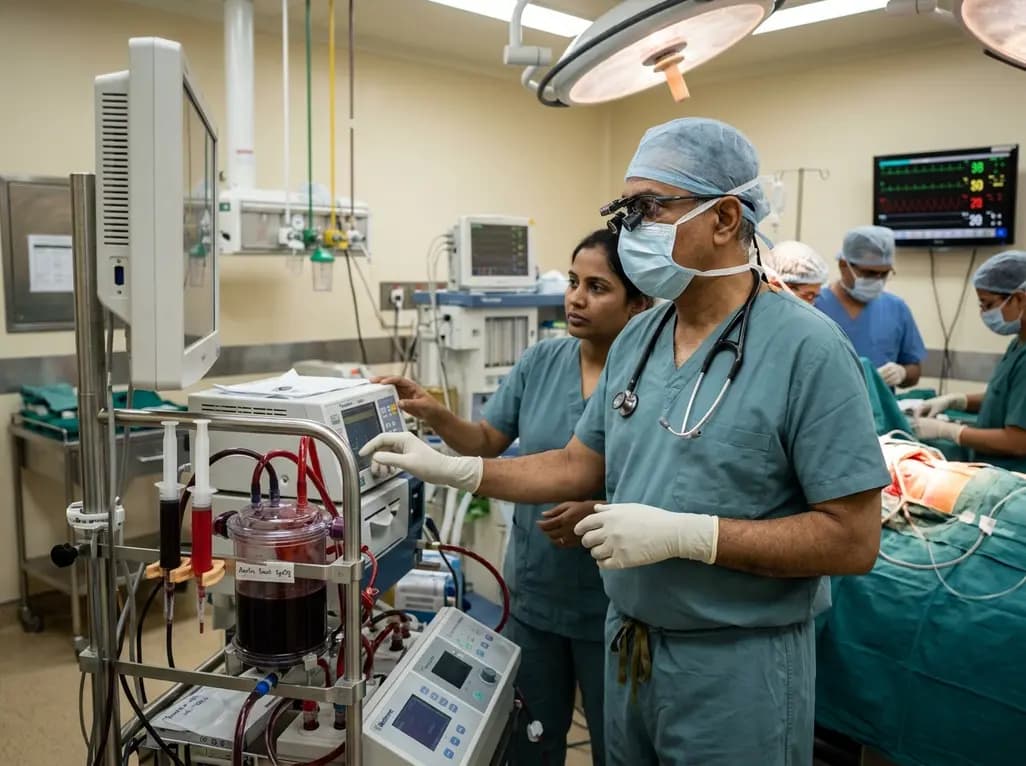
Differential oxygenation during peripheral TA-NRP can cause undetected coronary hypoxemia due to arch vessel clamping. A novel circuit with continuous aortic root monitoring detects desaturation early, facilitating left ventricular unloading and preventing allograft dysfunction and unnecessary heart discard.
Today

India faces significant opportunities to expand medical device exports to high-growth markets like Mexico, Brazil, and the UK. By addressing its trade deficit, advancing domestic component manufacturing, and aligning with global regulatory standards, the country aims to become an international healthcare hub.
Today
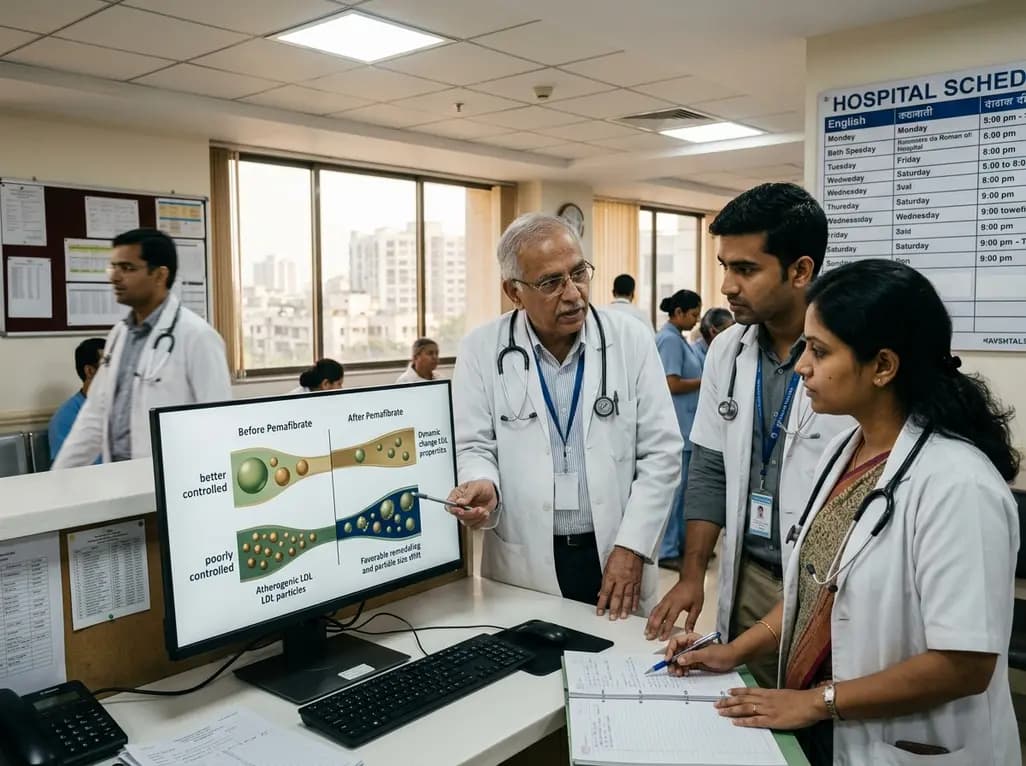
A post hoc analysis of the PARM-T2D study shows pemafibrate exerts baseline-dependent effects on LDL-C and particle size in type 2 diabetes and hypertriglyceridemia. It lowers triglycerides and remnants while favorably remodeling atherogenic LDL particles based on initial lipid control status.
Today
