.webp&w=384&q=75)

Loading, please wait...
Loading, please wait...

Managing drug-resistant epilepsy (DRE) remains a significant challenge when patients are not eligible for traditional resective surgery. Consequently, thalamic neuromodulation for epilepsy has emerged as a vital therapeutic alternative. Common targets include the anterior nucleus of the thalamus (ANT), the centromedian nucleus (CM), and the pulvinar (PUL). However, selecting the most effective nucleus for an individual patient often involves clinical uncertainty. Recent evidence suggests that inpatient stereo-electroencephalography (SEEG) stimulation can provide a patient-specific roadmap for optimal target selection.
A recent illustrative case involved a 32-year-old male with extensive polymicrogyria and DRE. To guide neurostimulation, clinicians utilized multisite thalamic sampling via SEEG. Furthermore, they conducted single-pulse stimulation to screen for acute sensorimotor side effects. During this assessment, stimulation of the CM nucleus caused intolerable paresthesia, which led to its exclusion as a chronic target. In contrast, both the ANT and PUL targets were well tolerated. This phase is crucial because it allows physicians to identify potential side effects before permanent hardware implantation.
Following the initial screening, the team applied continuous stimulation for 12 to 24 hours using clinically relevant parameters. The results demonstrated that PUL stimulation provided superior suppression of interictal epileptiform discharges, particularly during sleep. Therefore, the clinicians chose the pulvinar nucleus for chronic neuromodulation. This systematic approach highlights how inpatient stimulation assessments can verify both the safety and efficacy of novel targets. Moreover, it provides a functional biomarker that shifts treatment from empiric selection toward precision medicine.
Inpatient thalamic SEEG stimulation represents a feasible and safe strategy for evaluating neuromodulation targets. By screening for intolerable side effects and monitoring electrographic responses, surgeons can improve prognostic outcomes for patients with complex focal epilepsy. Ultimately, this methodology bridges the gap between diagnostic monitoring and long-term therapeutic success.
The most common targets are the anterior nucleus (ANT) for temporal/frontal seizures, the centromedian nucleus (CM) for generalized or frontal seizures, and the pulvinar (PUL) for posterior quadrant or temporal lobe epilepsy.
SEEG stimulation allows clinicians to test different nuclei for efficacy in suppressing discharges and to screen for patient-specific side effects, such as paresthesia or motor responses, which might not be predictable by imaging alone.
Yes, recent studies indicate that thalamic sampling during SEEG is safe with a very low risk of permanent neurological deficits, making it a viable tool for network-discovery in drug-resistant cases.
Disclaimer: This content is for informational and educational purposes only and does not constitute medical advice, diagnosis, or treatment. Always seek the advice of a qualified healthcare provider with any questions regarding a medical condition. Refer to the latest local and national guidelines for clinical practice.
References

Read summarized clinical updates, watch expert medical content, and earn CME certifications right from your smartphone.
Open your smartphone camera to scan and install.





This case study illustrates how inpatient thalamic SEEG stimulation optimizes target selection for chronic neuromodulation in drug-resistant focal epilepsy....
6 months ago
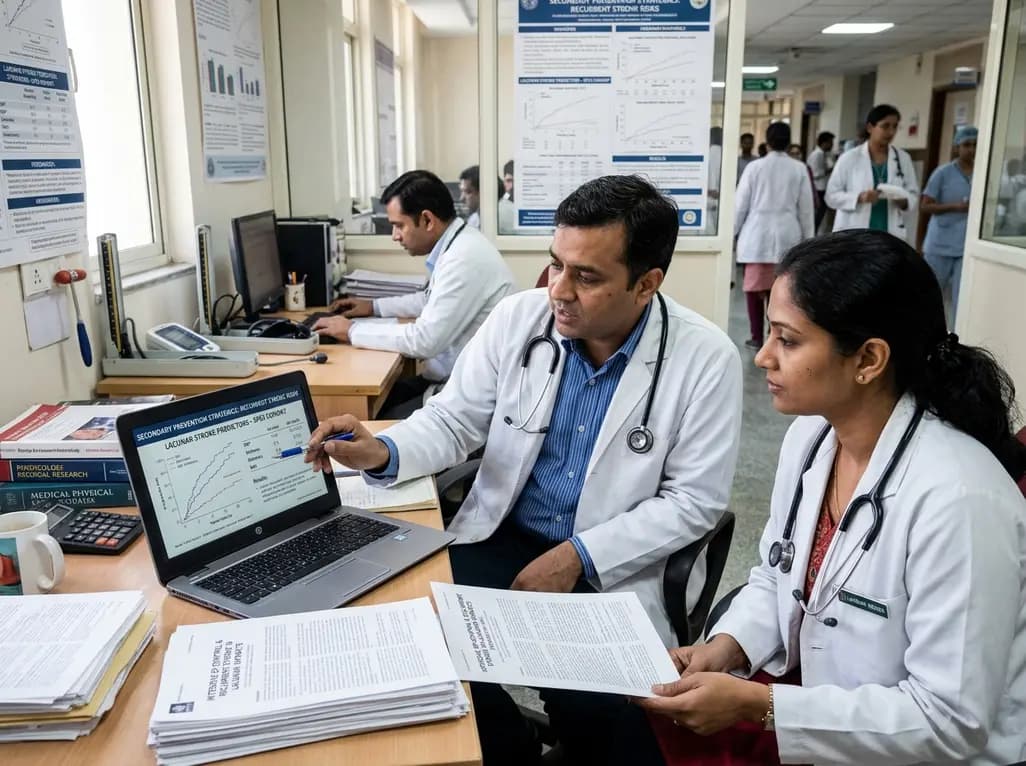
Explore vital recurrent stroke predictors in lacunar stroke patients managed with intensive blood pressure lowering. This analysis examines trial findings from SPS3 to uncover residual vascular risks, metabolic factors, and targeted secondary prevention strategies for high-risk neurological patients.
Today

Odisha has established India's first state-level clinical protocol specifically tailored for pregnant women with sickle cell disease. Developed with NHM and UNICEF, the framework provides structured antenatal screening, crisis mitigation, standardized referral pathways, and specialized interdisciplinary care.
Today

The Directorate General of Health Services directs Indian states to halt the hazardous reuse and reprocessing of single-use medical devices. Discover regulatory implications under the Drugs and Cosmetics Act, critical infection risks, legal liabilities, and operational changes required across clinical specialties.
Today

Mitochondria-targeted nanoparticles self-assembled from EGCG and L-glutamic acid effectively restore mitochondrial homeostasis, suppress synovial inflammation, and attenuate chondrocyte senescence in osteoarthritis, offering a promising disease-modifying nanotherapy.
Today

India is advancing preventive healthcare by integrating genomics, artificial intelligence, and quantum technologies. With the SANGAM programme sequencing one million Indian genomes, clinicians can unlock personalized therapies, detect cardiometabolic risks early, and curb the burden of diabetes and heart disease.
Today
